R Solved Chem2 – Chemistry Solutions and Explanations
R Solved Chem2 provides comprehensive solutions and explanations for various chemistry problems, making it an essential resource for students. This document covers key concepts in chemistry, including atomic structure, ionization energy, and reactivity trends across the periodic table. Ideal for high school and college-level chemistry students preparing for exams or seeking to enhance their understanding of chemical principles. It includes detailed answers to common chemistry questions and IUPAC naming conventions, ensuring clarity and accuracy in chemical nomenclature.
Key Points
Explains atomic radius trends in relation to aluminum and gallium.
Covers ionization energy irregularities in group III-A elements.
Details the strongest oxidizing agent among halogens, focusing on fluorine.
Includes IUPAC naming conventions for various organic compounds.
This link leads to an external site. We do not know or endorse its content, and are not responsible for its safety. Click the link to proceed only if you trust this site.
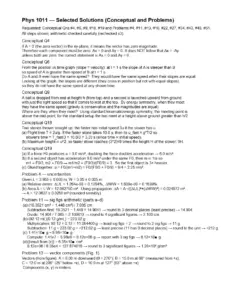
Phys 1011 Selected Solutions for Conceptual Questions and ProblemsSolution Manual
PDFSolution Manual
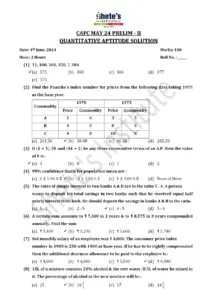
Quantitative Aptitude Solutions – CAFC May 24 Prelim IISolution Manual
PDFSolution Manual
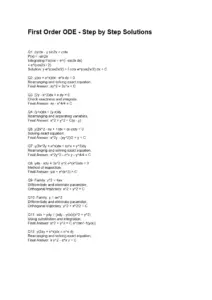
First Order ODE Step By Step SolutionsSolution Manual
PDFSolution Manual
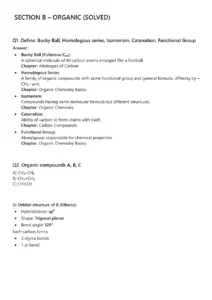
Organic Chemistry Study Guide – Isomerism, Functional Groups, and ReactionsSolution Manual
PDFSolution Manual
Real Estate Finance Home Assignment 3 Solutions ManualSolution Manual
PDFStudy Guide
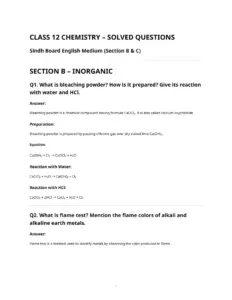
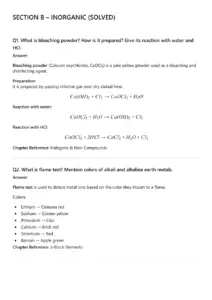
Inorganic Chemistry Study Guide – Section B: Inorganic (Solved)Study Guide
PDFPast Paper
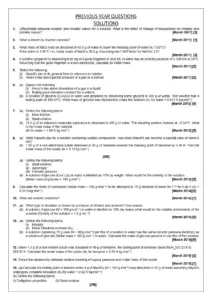
Chemistry Previous Year Questions and SolutionsPast Paper
PDF
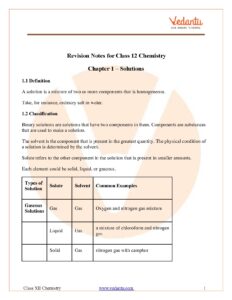
CBSE Class 12 Chemistry Solutions Chapter 1 Notes
PDF
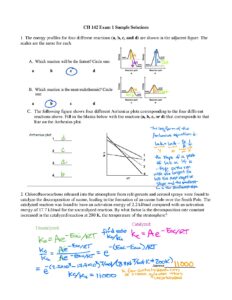
CH142 S26 Exam 1 Sample Solutions for Chemistry Students
PDF
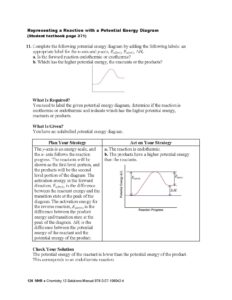
Chemistry 12 Solutions Manual MHR
PDF
GC Lecture Solutions for Chapter 13 Chemistry Concepts
FAQs
What are the reasons for Gallium's smaller atomic radius than Aluminium?
Gallium has a smaller atomic radius compared to Aluminium due to the effective nuclear charge influencing electron interactions. The increased nuclear charge in Gallium leads to a greater pull on the electron cloud, resulting in a smaller atomic size. This phenomenon is primarily attributed to the poor shielding effect of d-electrons, which allows the outer electrons to be drawn closer to the nucleus.
Why does ionization energy in group III-A elements have irregularities?
Ionization energy in group III-A elements exhibits irregularities because of the poor shielding effect of the d-electrons and the increased nuclear charge. As you move across the group, the number of protons increases, which generally raises ionization energy. However, the presence of d-electrons complicates this trend, leading to unexpected variations in ionization energy values.
What is the strongest oxidizing agent among halogens?
Fluorine is identified as the strongest oxidizing agent among halogens due to its high electronegativity and small atomic size. This allows Fluorine to easily gain electrons, making it highly reactive and an effective oxidizing agent. The ability to displace other halides from their salts further emphasizes its strength as an oxidizing agent.
What are the IUPAC names for some organic compounds listed in the document?
The document provides several IUPAC names for organic compounds. For instance, (a) Ethane-1,2-diol is the name for the compound represented as (CH3)2CH-CO-CH2OH. Additionally, 2-Ethyl-4-methylhexan-3-one is another example listed. Other compounds include Pent-3-enoic acid for CH2=CH-CO-CH2-COOH and 4-Hydroxybutanoic acid for HO-CH2-CH2-COOH.
What are some examples of coordination complexes mentioned in the document?
The document lists various coordination complexes along with their IUPAC names. For example, [Fe(CO)5] is referred to as Pentacarbonyliron(0), while [Cu(H2O)3Br]NO3 represents Pentaquabromocopper(II) nitrate. Another example is [Pt(NH3)2(CH2NH2)2]Cl4, which is named Platinum(IV) chloride. These examples illustrate the diversity of coordination chemistry discussed in the document.