Energy changes in electrochemistry are crucial for understanding chemical reactions in Grade 10 chemistry. This unit covers key concepts such as exothermic and endothermic reactions, internal energy, and calorimetry. Students will explore the principles of energy transfer in chemical systems, including the roles of heat and work. The content is designed for students preparing for exams and includes essential formulas and examples relevant to electrochemistry.

Key Points

  • Explains the concepts of exothermic and endothermic reactions in detail.
  • Covers the internal energy changes during chemical reactions.
  • Includes practical applications of calorimetry in measuring heat changes.
  • Discusses the energy transfer mechanisms in electrochemical systems.
Abrham Ab19
8 pages
Language:English
Type:Textbook
Abrham Ab19
8 pages
Language:English
Type:Textbook
92
/ 8
1
UNITFOUR
ENERGYCHANGESINELECTROCHEISTRY
Chemicalreactionischemicalchangethatproducedenergy
Exampleburningoffuelorcarbonitreleasedheatorenergy
C(s)+O
2
(g) CO
2
(g)
CH
4
(g)+O
2
(g) CO
2
(g)+2H
2
O(g)
Energychange,(E),involvedinchemicalreactions.Eg.Combustionreaction.
system(thepartbeingstudied)andthesurroundings(everythingelse).
Universe=System+Surrounding
AsystemispartoftheuniversethatisbeingstudiedandSurroundingisanythingelse
Eachparticleinasystemunderinvestigation,suchasareactionmixtureinatesttube,haspotential
energyandkineticenergy,andthesumofalltheseenergiesistheinternalenergy,Eofthesystem.
Internalenergyofasystemisthesumofpotentialenergyandkineticenergiesofthe
componentsofthesystem.
(InternalEnergy)system=(potentialenergy+kineticenergy)system
Potentialenergyisstoredenergyinchemicalbonds.Kineticenergyistheenergyduetomotion.Itcauses
worktobedonethroughmovement.Whenthereactantsinachemicalsystemchangetoproducts;
thesystemsinternalenergyischanged.Thischange,E,isthedifferencebetweentheinternalenergy
afterthechange(Efinal)andbeforethechange(Einitial):
E=E
final
E
initial
=E
products
-E
reactants
EnergyChangesandElectrochemistry
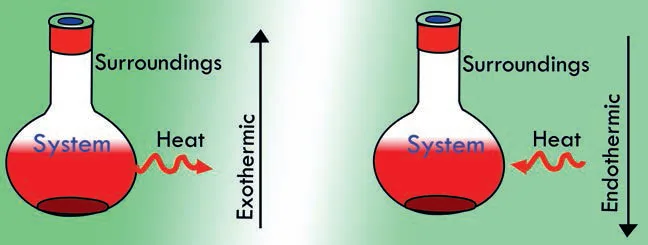
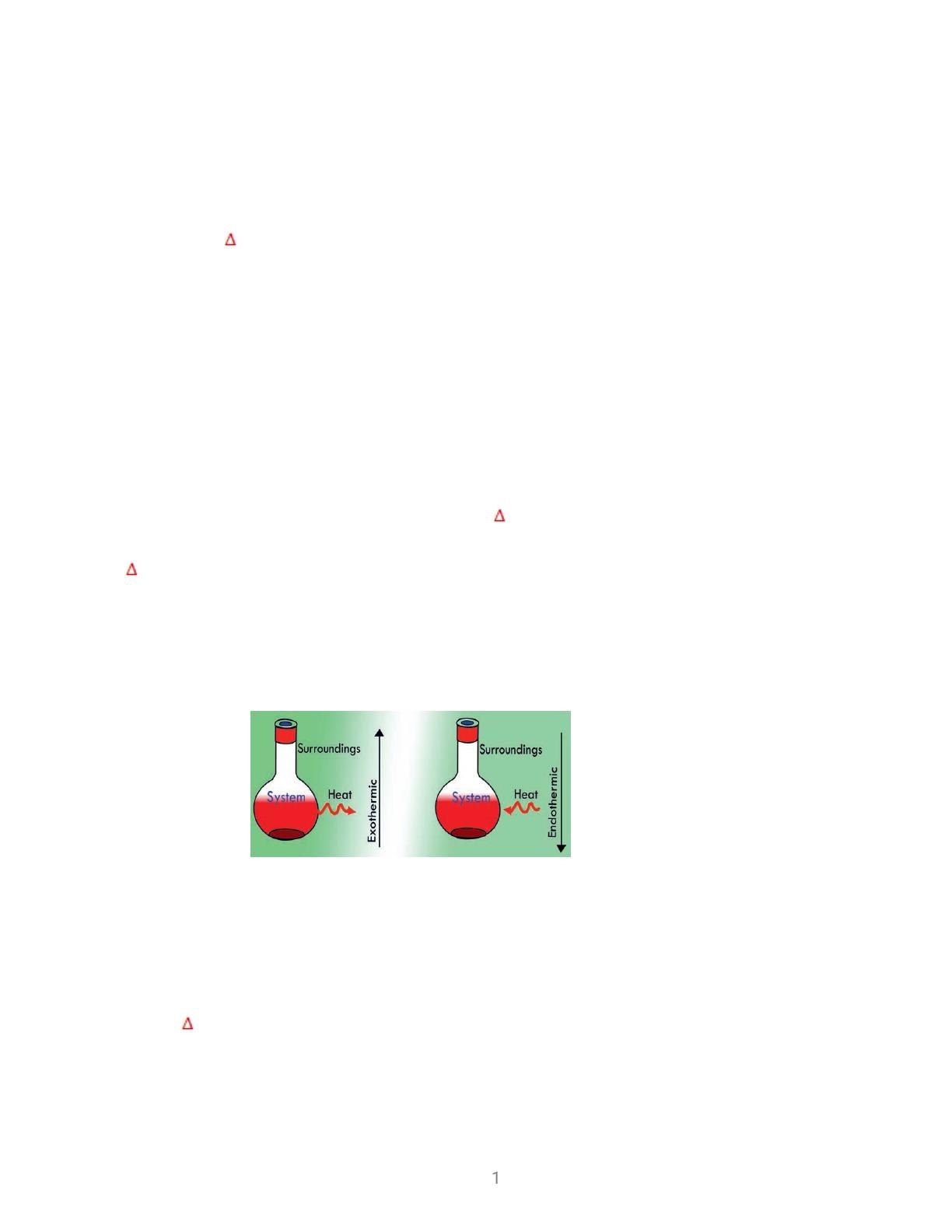
Notethatthetotalenergyoftheuniverseremainsconstant.Whenthesystemloses
acertainamountofenergy,thesurroundinggainsthesameamountofenergy.This
Means,energyissimplybeingexchangedbetweenthetwocomponentsoftheuniverse
keepingthetotalenergyoftheuniverseconstant
Figure4.1Energyexchangebetweensystemandsurrounding.
Energytransferredfromsystemtosurroundingsorviceversaappearsintwoforms:
heatandwork.whenthegasolineisburnedinacontrolledwayintheengineofthecar
someofthepotentialenergyistransformedintowork,whichisusedtomoveacar;atthesametime,
someofthepotentialenergyisconvertedtoheatandmakesthecar'sengineveryhot.Therefore,
theenergychangesofasystemoccuraseitherheat(q)orwork(w),orsomecombinationofboth.
E=q+w
4.1.1ExothermicandEndothermicChemicalReactions
Exothermicchemicalreaction
whenchemicalreactionisoccurheatenergyisreleasedtothesurrounding.Exo.meansout
e.gcompositionreactionanddissolutionofNaOHandCaCl
2
inwater

2
NaOH(s)Na+(aq)+OH¯(aq)+Heat
CaCl
2
(s)+2H
2
O(l)Ca(OH)
2
(aq)+2HCl(g)+heat,
H<0,Hisnegative
heatproductislessthanhetofreactant
Endothermicchemicalreaction
Whenchemicalreactionisoccurheatenergyisabsorbfromthesurrounding.endomeansin
ExampledissolutionofKNO
3
andNH
4
NO
3
inwaterthebeakercold
KNO3(s)+H
2
O+Heat K+(aq)+NO3¯(aq) H>0,H
p
>H
r,
Hispositve
EnergyChangesandElectrochemistry
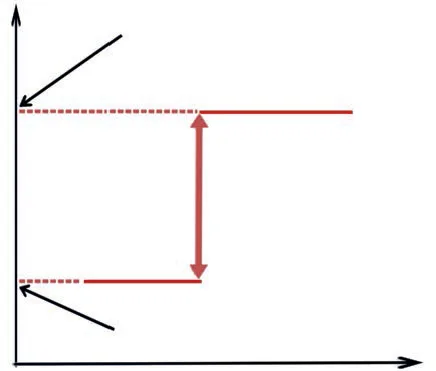
H=H
Products
-H
reactants
H<0 H>0
a.Exothermic,Hp<Hr b.endothermic Hp>Hr
Figure4.1Enthalpydiagramfor(a)exothermicreactions(b)endothermicreactions.
CALORIMETER:-isthedeviceusedtomeasuretheheatreleasedorabsorbedbyachemicalreaction
Tofindtheenergychangeduringchemicalreaction,wemeasurethechangeintemperatureand
determinethequantityofheatreleasedorabsorbedusingthefollowingrelation:
q ΔTorq=constantxΔTorq/ΔT=constant
Theproportionalityconstantintheaboveequationiscalledheatcapacity.Everyobjecthasitsownheat
capacity.HeatCapacityofasubstanceisdefinedasthequantityofheatrequiredtochangeits
temperatureby1K.
Heatcapacity=q/ΔT
TheunitofheatcapacityisJouleperKelvin(J/K).
Forexample,asubstancewithalowheatcapacity,suchasiron,willheatandcoolquickly,whileasubstance
withahighheatcapacity,suchaswater,heatsandcoolsslowly.Arelatedpropertyisspecificheatcapacity
(c).Specificheatcapacity(c)ofa
Specificheatcapacity(c)=(Heatcapacity)/mass=q/(massxΔT)
q=cxmassxΔT
Noticethatmetalshaverelativelylowvaluesofcandwaterhasaveryhighvalue:forinstance,ittakes
over30timesasmuchenergytoincreasethetemperatureofagramofwaterby1Kasitdoesagramof
gold.Thisisoneofthepropertiesthatmake
wateruniqueandresponsibleforitsuseasacoolantincarradiatorsandinindustries
HomeworkExrecise4.1
EnergyChangesandElectrochemistry
4.1.2ImportanceofChemicalChanges(seethediscussionpoints)
Chemicalreactions:-arethemostimportanttypesofeventsintheuniverse.
plantsgrow,photosynthesis,producefruit
humanproduction,growthofheir,digestionoffood,respirationandetc
3
Advantagesofchemicalchangesareproductionenergyandusefulsubstances.
Typeofconductivity
I.Electricalconductivity:-istheabilityofasubstancetotransmitelectricity.
E.gstrongacidandbaseandaqueoussolutionofioniccpd,
II.Electricalconductor:-Thematerialsthatallowthepassageofelectricitythroughthem
Exampleelectricwire,bulb,drycelloradc.source,switchetc.
Typeofelectricalconductivity
a.Metallicconductivity
b.Electrolyticconductivity
a)Metallicconductivity
Metalsconductelectricitytheresultofthemovementofelectricallychargedparticlescalledelectrons.
Theatomsofmetalhavethepresenceofvalenceelectronsorfreelymovingelectronsorfreeelectrons
Silveristhebestelectricalconductor.
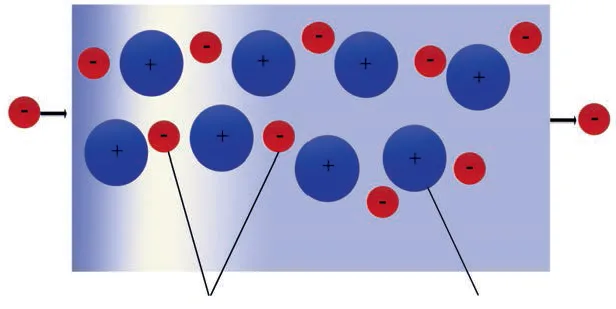
Metalliclatticecanbedescribedasanatmosphereofpositiveionsinaseaofmobileelectrons
Theelectronsenteringthemetaldisplace(repel)thefreelymovingelectronsatthepointofentry.
Thedisplacedelectronsoccupynewpositionsbypushingneighboringelectronsahead.Thiswill
continueuntilelectronsareforcedoutofthewireattheoppositeend.
Thechargecarriersinmetallicconductionareelectrons.Hence,metallicconductivityisalsocalled
electronicconductivity.
Figure4.3Electricalconductivityinmetals.
Non-metalsaregenerallynon-conductorsofelectricity,becausetheydonothave
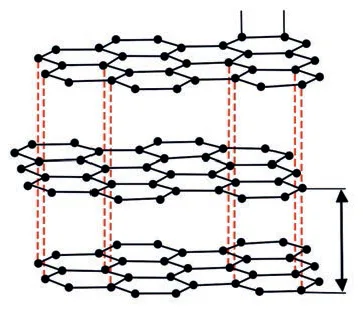
freelymovingelectrons.ExceptGraphiteisaformofcarboninwhichthecarbonatomsare
bondedintrigonalplanarfashiontothethreeothercarbonatoms,toforminterconnected
hexagonalrings,asshownin.Electronsmovefreelythroughthehexagonallayers,making
graphiteagoodconductorofelectricity.
Figure4.4Structureofgraphite.
b)Electrolyticconductivity
Electrolytesaresubstancesthattransmitelectricityinamoltenstateorinaqueous
solution.Unlikemetallicconductivity,theconductivityofelectrolyticsolutionsdepends
onthetypeandconcentrationofionsinsolution.Basedontheirdegreeofionization
ortheextenttowhichtheyproduceanionsandcations,electrolytescanbeclassified
/ 8
End of Document
92

FAQs

what is energy changes in electrochemistry

Energy changes in electrochemistry refer to the transformations of energy during chemical reactions, particularly in electrochemical cells.

These changes can be understood through the concepts of exothermic and endothermic reactions:

  • Exothermic reactions release heat to the surroundings, such as in combustion.
  • Endothermic reactions absorb heat, resulting in a temperature drop in the surroundings.

Overall, the total energy of the universe remains constant during these processes, as energy is exchanged between the system and its surroundings.

how do energy changes in electrochemistry work

Energy changes in electrochemistry involve the conversion of chemical energy into electrical energy and vice versa in electrochemical cells.

In these cells, oxidation-reduction (redox) reactions occur, which are fundamental to understanding energy transformations:

  • Anode: The site of oxidation where electrons are released.
  • Cathode: The site of reduction where electrons are gained.

This process generates electrical energy, which can be harnessed for various applications, such as batteries and fuel cells.

what are examples of energy changes in electrochemistry

Examples of energy changes in electrochemistry can be seen in various electrochemical cells.

Two primary types of cells illustrate these concepts:

  • Galvanic Cells: These convert chemical energy into electrical energy spontaneously, as seen in batteries.
  • Electrolytic Cells: These require electrical energy to drive non-spontaneous reactions, such as electrolysis.

Both types demonstrate how energy is transferred and transformed during chemical reactions.

what is the importance of energy changes in electrochemistry

The importance of energy changes in electrochemistry lies in their applications in everyday technology and industrial processes.

Understanding these changes allows for:

  • Development of efficient batteries and energy storage systems.
  • Advancements in electroplating and corrosion prevention techniques.
  • Improved methods for energy conversion in fuel cells.

These applications are crucial for sustainable energy solutions and technological advancements.

how to measure energy changes in electrochemistry

Energy changes in electrochemistry can be measured using calorimetry, which assesses heat transfer during chemical reactions.

The relationship between heat transfer and temperature change is given by:

  • q = c × mass × ΔT

Where:

  • q = heat absorbed or released
  • c = specific heat capacity
  • ΔT = change in temperature

This method helps quantify the energy changes associated with various electrochemical processes.

what are the types of electrochemical cells

There are two main types of electrochemical cells that illustrate energy changes in electrochemistry.

These include:

  • Galvanic Cells: Convert chemical energy into electrical energy through spontaneous redox reactions.
  • Electrolytic Cells: Use electrical energy to drive non-spontaneous chemical reactions, such as electrolysis.

Both types play significant roles in applications like batteries and electroplating.

what is an example of an exothermic reaction in electrochemistry

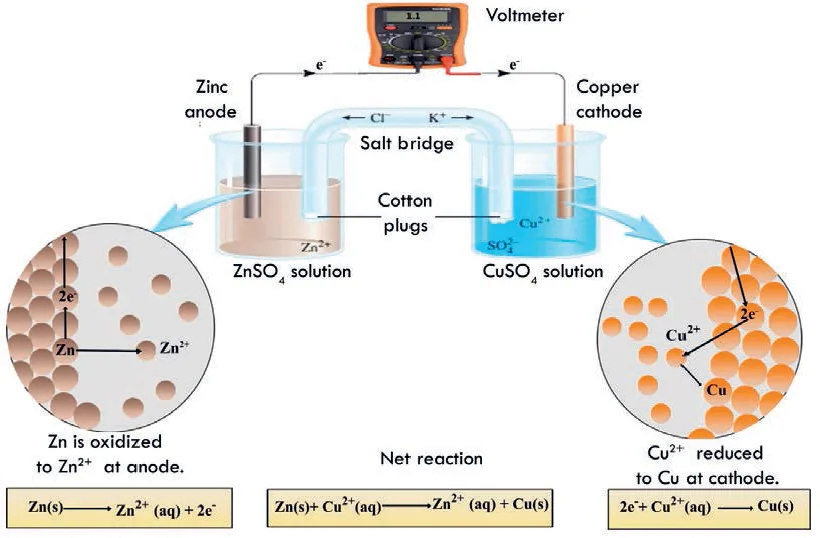
An example of an exothermic reaction in electrochemistry is the reaction occurring in a galvanic cell.

For instance, in a Daniell cell:

  • Anode Reaction: Zn(s) → Zn2+(aq) + 2e-
  • Cathode Reaction: Cu2+(aq) + 2e- → Cu(s)

This overall reaction releases energy, demonstrating the exothermic nature of the process.

what is an example of an endothermic reaction in electrochemistry

An example of an endothermic reaction in electrochemistry is the dissolution of certain salts in water.

For instance, the dissolution of KNO3 in water absorbs heat:

  • KNO3(s) + H2O + Heat → K+(aq) + NO3-(aq)

This process results in a temperature decrease in the solution, illustrating the endothermic nature of the reaction.

what is the role of electrodes in energy changes in electrochemistry

Electrodes play a crucial role in energy changes in electrochemistry by facilitating electron transfer during redox reactions.

There are two types of electrodes:

  • Active Electrodes: Participate directly in chemical reactions, such as zinc or magnesium.
  • Inert Electrodes: Do not participate in reactions but serve to transfer electrons, like platinum or graphite.

This functionality is essential for the operation of both galvanic and electrolytic cells.

how do temperature changes affect energy changes in electrochemistry

Temperature changes significantly affect energy changes in electrochemistry by influencing reaction rates and equilibrium.

Higher temperatures generally increase reaction rates, leading to:

  • Increased energy release in exothermic reactions.
  • Enhanced energy absorption in endothermic reactions.

Understanding these effects is crucial for optimizing electrochemical processes in various applications.