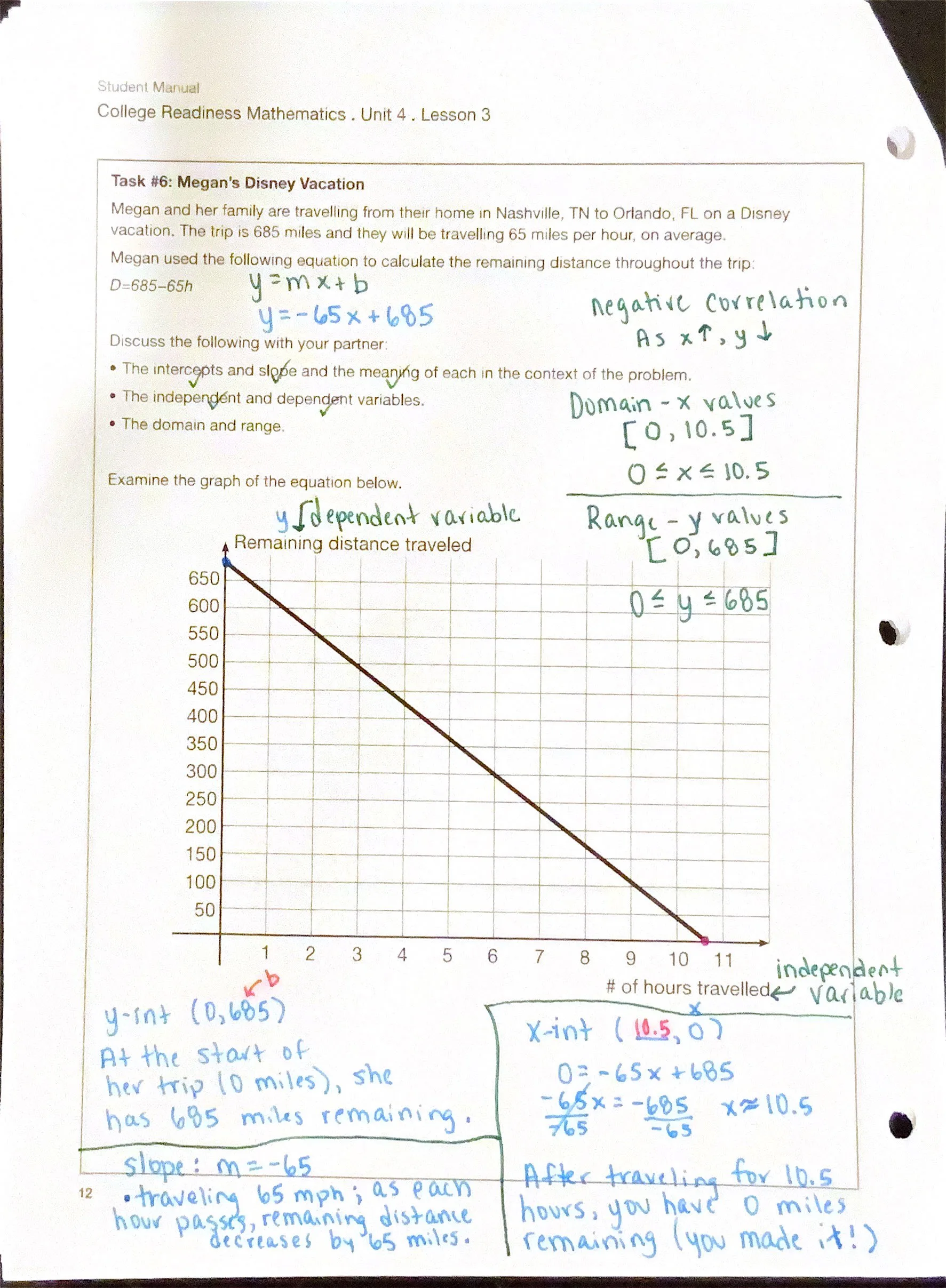
College Readiness Mathematics focuses on essential math skills for high school students preparing for college-level courses. Unit 4, Lesson 3 emphasizes graphing linear equations and understanding their applications in real-world scenarios. This lesson includes examples, practice problems, and a detailed explanation of the correlation between hours traveled and remaining distance. Ideal for students looking to strengthen their mathematical reasoning and problem-solving skills, this resource provides a comprehensive approach to mastering key concepts.
Key Points
Explains the relationship between independent and dependent variables in graphing.
Includes practice problems to reinforce understanding of linear equations.
Demonstrates real-world applications of mathematics in travel scenarios.
Covers key concepts such as slope and correlation in mathematical graphs.
This link leads to an external site. We do not know or endorse its content, and are not responsible for its safety. Click the link to proceed only if you trust this site.
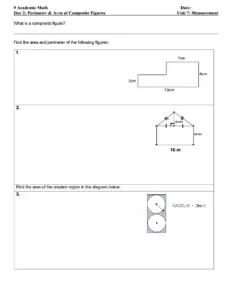
Perimeter and Area of Composite Figures – Unit 7 MeasurementWorksheet
PDFWorksheet
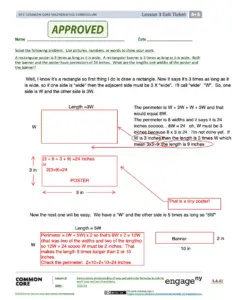
Lesson 3 Exit Ticket 4.3 Answer KeyWorksheet
PDFWorksheet
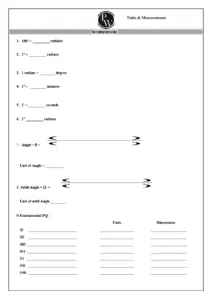
Units and Measurements Workbook – Practice Problems and FormulasWorksheet
PDF
Biology Unit 2 for Biology 152 College Course
PDF
Plotting Scatter Graphs Mathematics Lesson 11.1
PDF
Palm Beach Community College: Prep Math Cluster Agenda
PDFWorksheet
Avonturen op de BSO met Juf Jo – Hoofdstuk 27Worksheet
PDFWorksheet
CNA Gold 1 Oral and Written Tests — Assessment ResourceWorksheet
PDFWorksheet
Kumon Level G Answers NotesWorksheet
PDFWorksheet
Class IX English Unseen Passage WorksheetWorksheet
PDFWorksheet
Chemistry: Significant DigitsWorksheet
PDFWorksheet
Atomic Theory Timeline ProjectWorksheet
FAQs
What is the relationship between hours traveled and remaining distance in Megan's Disney vacation?
In the document, the relationship between hours traveled and remaining distance is depicted as a negative correlation. As the number of hours traveled increases, the remaining distance decreases. This is illustrated in the graph, where the x-axis represents the hours traveled and the y-axis shows the remaining distance. The slope of the line is -65, indicating that for every hour traveled, 65 miles are reduced from the remaining distance.
How do you determine the domain and range for the graph in this lesson?
The domain for the graph representing Megan's Disney vacation is defined as x values from 0 to 10. This indicates the total hours she can travel. The range is determined by the corresponding y values, which represent the remaining distance, starting from 685 miles down to 0 miles. Thus, the range is from 0 to 685 miles.
What formula is used to calculate the remaining distance after traveling hours?
The formula used to calculate the remaining distance after traveling a certain number of hours is y = 685 - 65x. In this equation, 'y' represents the remaining distance in miles, '685' is the initial distance, '65' is the rate at which the distance decreases per hour, and 'x' is the number of hours traveled. This formula allows for the calculation of remaining distance based on the hours traveled.
What does the slope of the line in the graph represent?
The slope of the line in the graph is -65, which signifies the rate of change in the remaining distance as hours are traveled. Specifically, it indicates that for every hour Megan travels, the remaining distance decreases by 65 miles. This negative slope reflects the inverse relationship between the hours traveled and the remaining distance.
How is the remaining distance visualized in the graph provided in the lesson?
The remaining distance is visualized in the graph as a downward sloping line, starting from the point (0, 685) on the y-axis, which represents the initial distance. As the x-axis increases, indicating more hours traveled, the line descends towards the point (10, 0), where the remaining distance reaches zero. This visual representation effectively illustrates the relationship between hours traveled and remaining distance.
Related
PDFWorksheet
Cpctc Worksheet September 2023Worksheet
PDFWorksheet
Algebra 1 Extra Practice: Equations with Variable on Both SidesWorksheet
PDFWorksheet
Lewis Structures Practice Worksheet – 30 ProblemsWorksheet
PDFWorksheet
Blank Hundred Chart for Math Proficiency PracticeWorksheet
PDFWorksheet
Europe Before and After WWI – Map AnalysisWorksheet
PDFWorksheet
Algebraic Vocabulary WorksheetWorksheet
PDFWorksheet
Secondary Math II Module 3: Solving Quadratics and Other EquationsWorksheet
PDFWorksheet
Systems of Equations Answer Key – 5.2.1Worksheet
PDFWorksheet
Sugar Shake Data SheetWorksheet
PDFWorksheet
Animal Cell Answer KeyWorksheet
PDFWorksheet
El Colegio Glenview Answer KeyWorksheet
PDFWorksheet
Economics Development Worksheet for Class X – Session 2026-27Worksheet