CHE26M1 Organic Chemistry II Handbook 2026 provides comprehensive coverage of advanced organic chemistry concepts. This handbook includes detailed explanations of free radical substitution reactions, electrophilic aromatic substitution, and the stability of benzene. Designed for students studying organic chemistry at the university level, it serves as an essential resource for understanding complex reactions and mechanisms. Key topics include atomic and molecular orbitals, hybridization, and the reactivity of chemical substances. Ideal for students preparing for exams or seeking to deepen their understanding of organic chemistry principles.

Key Points

  • Explains free radical substitution reactions and their mechanisms
  • Covers electrophilic aromatic substitution and stability of benzene
  • Details atomic and molecular orbitals relevant to organic chemistry
  • Includes hybridization concepts and their applications in reactions
Sihle Usisa mpongwana
38 pages
Language:English
Type:Lecture Notes
Sihle Usisa mpongwana
38 pages
Language:English
Type:Lecture Notes
343
/ 38
Page | 1
Course notes for CHE26M1- Organic Chemistry II
Prescribed textbook: John McMurry (2016). Organic Chemistry, 9
th
Edition.
Unit I: Introduction to Organic Chemistry
Basic Organic chemistry concepts,
Free radical substitution reactions,
Electrophilic and free radical addition reactions of alkenes
Unit II: Electrophilic aromatic substitution reactions
Characteristics of benzene: structure of benzene, reactions of benzene, stability of
benzene; aromaticity.
Electrophilic substitutions: nitration; Sulphonation; halogenation; Friedel-Crafts
alkylation and acylation; diazo coupling.
Page | 2
Unit I.0: Basic Organic Chemistry concepts
This unit of the module seeks to recap some of the concepts that will help you understand better
the aim of the module and appreciate the inter-convertibility of Organic Chemistry families.
1.1.0 Atomic and Molecular orbitals.
The atomic model comprises of a nucleus surrounded by electrons in energy levels. The energy
levels consist of atomic orbitals, which are defined as regions of electron density, indicating
probabilities to locate an electron.
Wave functions describe orbitals because orbitals and waves have similar properties such as
waves on a body of water or sound waves. For instance, orbitals have a crest and a trough, that
is, they have negative or positive phases, and they have nodes. There is zero probability of
finding an electron at the node.
In the study of Organic Chemistry, the most important atomic orbitals are 1s, 2s, 2p, 3s, and
3p. Shapes and spatial orientations of the 1s and 2p orbitals are shown below.
Figure 1.1: Shapes and spatial orientations of the 1s and 2p orbitals
The 1s orbital has no nodes, is spherically symmetrical about the nucleus and closest to the
nucleus, therefore it has the lowest energy of all the atomic orbitals. The s and p orbitals are
the most important ones in Organic Chemistry, particularly up to 3p orbitals. In atoms with a
number of electrons, the energies of the subshells increase in the order:
1s < 2s <2p < 3s < 3p
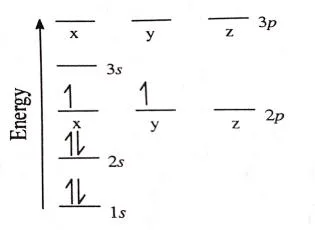
The Aufbau principle suggests the order in which electrons fill up various atomic orbitals, while
the Pauli Exclusion Principle limits the number of electrons in an orbital to two, and the Hund’s
rule dictates how to fill degenerate orbitals of a subshell. Figure 1.2 below summarizes these
principles.
Bond formation involves overlapping of atomic orbitals in the valence energy levels, such that
each bonded atom attains a full outer shell (The octet rule). The bond formation processes
prefer less energetic pathways. Therefore, carbon forms covalent bonds, almost exclusively,
because of the great amount of energy that would be required to transfer or add four electrons.
Figure 1.2: Ground electron configuration of a carbon atom

Page | 3
Atomic orbitals overlap forming molecular orbitals, where the bonding electrons reside.
Scientists use the linear (proportional) combination of atomic orbitals-molecular orbital
method (LCAO-MO) to describe both the shapes of the resultant molecular orbitals and the
probable distribution of the electron density in the molecular orbitals. The LCAO-MO method
states that the shape of the molecular orbital is derived from the shape of the atomic orbitals
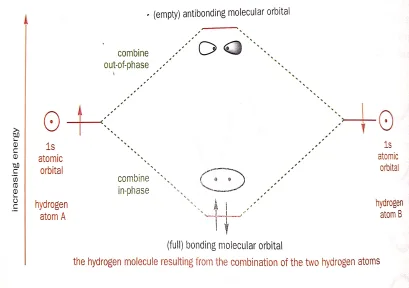
that overlap to form that molecular orbital. Figure 1.3 below illustrates the formation of
bonding and anti-bonding molecular orbitals. Consequently, molecular orbitals have the same
properties as atomic orbitals, such as, beginning to fill up electrons from the lowest orbital, and
containing a maximum of two electrons per orbital.
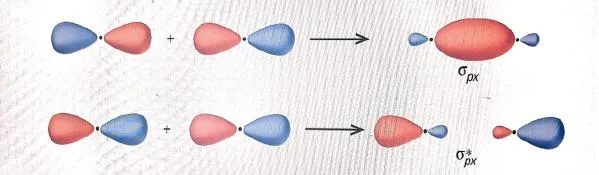
(A) (B)
(C)
Figure 1.3: In-phase (A) and out of phase (B) interference of waves. Diagrammatic
representation (C) of p-atomic orbital overlap.
During bonding, atomic orbitals with the same sign or symmetry overlap in an in-phase
overlap, that is, there is a reinforcement or an increase of the probability of finding electrons
in the region between the bonding nuclei. Therefore, an in-phase overlap forms a bonding
molecular orbital, that is, one of lower energy than that of the atomic orbitals forming it. The
bonding molecular orbital can be sigma (σ), indicating that the atomic orbitals are overlapping
along the axis, also called end-on overlap, or pi (π) when they laterally overlap, also known as
side-on overlap.
Atomic orbitals of different signs or asymmetrical atomic orbitals overlap in an out-of-phase
overlap, that is, they cancel each other, and therefore, a node develops (a decrease of the
probability of finding electrons) between the nuclei. The resultant molecular orbital is an
antibonding molecular orbital, and it has higher energy than that of the atomic orbitals forming
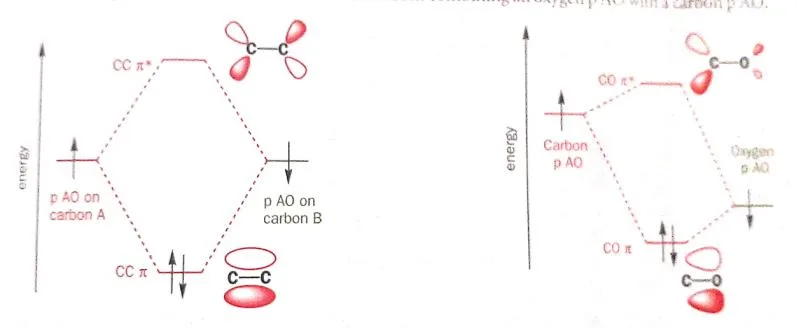
it. The antibonding molecular orbitals are denoted as σ* or π*. Figure 1.4 illustrates the above
discussion with the formation of molecular orbitals from atomic orbitals of the same energy
and from atomic orbitals of different energies.
Figure 1.4: Illustration of atomic orbital overlap
/ 38
End of Document
343

FAQs

what is CHE26M1 Organic Chemistry II Handbook 2026 about

The CHE26M1 Organic Chemistry II Handbook 2026 covers advanced topics in organic chemistry, focusing on concepts essential for understanding complex chemical reactions.

  • Key areas include electrophilic aromatic substitution, free radical reactions, and molecular orbital theory.
  • The handbook also provides detailed examples and mechanisms to illustrate these concepts.
  • It serves as a comprehensive resource for students preparing for exams and understanding organic chemistry principles.

what are the main topics in CHE26M1 Organic Chemistry II Handbook 2026

The CHE26M1 Organic Chemistry II Handbook 2026 includes several critical topics in organic chemistry.

  • Electrophilic Aromatic Substitution: Detailed mechanisms and examples.
  • Free Radical Reactions: Insights into initiation, propagation, and termination stages.
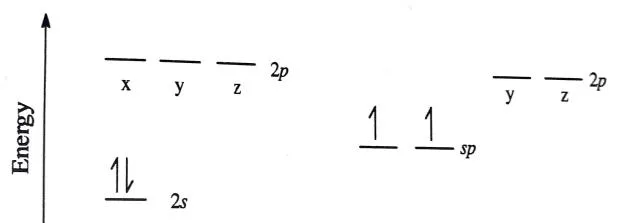
  • Orbital Hybridization: Explanation of sp, sp2, and sp3 hybridization and their significance in bonding.
  • Reactivity Patterns: Analysis of factors affecting the stability of carbocations and radicals.

how to understand electrophilic aromatic substitution in CHE26M1 Organic Chemistry II Handbook 2026

Electrophilic aromatic substitution is a key reaction type discussed in the CHE26M1 Organic Chemistry II Handbook 2026.

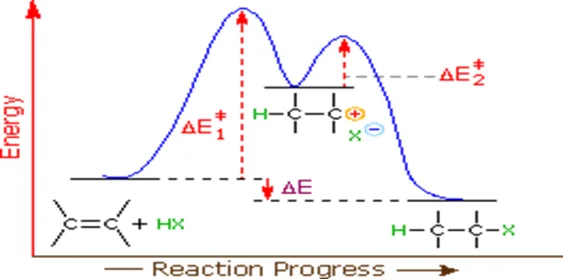
  • The mechanism involves the formation of a carbocation intermediate, which is stabilized by resonance.
  • The electrophile, often a positively charged species, attacks the electron-rich benzene ring.
  • Common electrophiles include nitronium ions and sulfonium ions.
  • Understanding the regioselectivity of these reactions is crucial, as substituents on the benzene ring can influence the position of substitution.

what are the key points of free radical reactions in CHE26M1 Organic Chemistry II Handbook 2026

Free radical reactions are thoroughly explained in the CHE26M1 Organic Chemistry II Handbook 2026.

  • These reactions generally proceed through three stages: initiation, propagation, and termination.
  • Initiation involves the generation of free radicals, often through homolytic fission.
  • Propagation includes the reaction of free radicals with stable molecules to form new radicals.
  • Termination occurs when two free radicals combine to form a stable product.
  • The stability of free radicals is critical, with tertiary radicals being more stable than primary ones.

how does CHE26M1 Organic Chemistry II Handbook 2026 explain molecular orbital theory

The CHE26M1 Organic Chemistry II Handbook 2026 provides a comprehensive overview of molecular orbital theory.

  • This theory describes how atomic orbitals combine to form molecular orbitals, which can be bonding or antibonding.
  • The linear combination of atomic orbitals (LCAO) method is emphasized for understanding molecular shapes.
  • Key concepts include the stability of bonding orbitals compared to antibonding orbitals and the significance of hybridization in molecular geometry.
  • Examples illustrate how these principles apply to various organic compounds.

what examples of reactions are included in CHE26M1 Organic Chemistry II Handbook 2026

The CHE26M1 Organic Chemistry II Handbook 2026 includes various examples of organic reactions.

  • Electrophilic aromatic substitution reactions, such as nitration and sulfonation, are detailed with mechanisms.
  • Free radical reactions, including halogenation of alkanes, are discussed with step-by-step explanations.
  • Hydrogenation and hydration reactions of alkenes are also covered, highlighting their importance in organic synthesis.
  • Each example is accompanied by diagrams and reaction schemes for clarity.

how does CHE26M1 Organic Chemistry II Handbook 2026 address reactivity patterns

The CHE26M1 Organic Chemistry II Handbook 2026 addresses reactivity patterns in organic compounds effectively.

  • It explains how the stability of intermediates, such as carbocations and radicals, influences reaction pathways.
  • Factors such as inductive effects and resonance are discussed to illustrate how substituents affect reactivity.
  • Specific examples demonstrate how these patterns apply to different classes of organic reactions.

what are the applications of concepts in CHE26M1 Organic Chemistry II Handbook 2026

The concepts in the CHE26M1 Organic Chemistry II Handbook 2026 have numerous applications in various fields.

  • Understanding electrophilic aromatic substitution is crucial for synthesizing pharmaceuticals and agrochemicals.
  • Free radical reactions are significant in polymer chemistry and materials science.
  • Molecular orbital theory aids in predicting the behavior of organic compounds in chemical reactions.
  • Overall, the handbook equips students with the knowledge needed for advanced studies and practical applications in organic chemistry.