Access an extensive, community-driven archive of biology PDFs, molecular mechanism worksheets, ecological food web maps, and exam study guides curated to maximize your academic grades and foundational scientific literacy. This dedicated resource library tracks the structural and functional frameworks governing all living systems—ranging from the microscopic precision of nucleotide base pairing and ATP hydrolysis to the vast, interconnected complexities of global biomes and population dynamics. Whether you are troubleshooting the stages of mitosis, mapping out Mendelian cross-inheritance, or preparing for an advanced university introductory biology test bank, these files give you instant, downloadable clarity.
Biology is the formal, scientific study of life and living organisms, systematically categorized by their physical structure, chemical processes, molecular interactions, physiological mechanisms, development, and evolution. Far from a collection of isolated facts, modern biology operates as a rigorous, unified analytical science. Students investigate life at every hierarchical scale: Molecular Biology (the chemical logic of DNA/RNA/Proteins), Cellular Biology (the functional organelles and energy transduction), Organismal Biology (anatomy, physiology, and pathology), and Ecological Biology (the systemic interaction of organisms with their environments). The field demands precision in interpreting experimental data, mastering biochemical nomenclature, and applying evolutionary logic to explain the diversity of existence. Studying biology builds high-level competencies in systemic conflict resolution, multi-variable impact modeling, statistical analysis, and complex diagnostic deduction—skills foundational to medicine, biotechnology, agricultural science, environmental policy, and advanced research.
Our collaborative document network hosts student-shared laboratory reports, metabolic pathway maps, and comprehensive midterm review packages organized across the fundamental branches of biological scholarship:
Genetic Coding & Replication: Download high-yield DNA replication proofreading notes detailing helicase, DNA polymerase, and the molecular mechanics of semiconservative synthesis.
Energy Transduction: Access specialized cellular respiration and photosynthesis equation breakdowns, mapping out the precise stages of glycolysis, the Krebs cycle, and the electron transport chain ($ETC$).
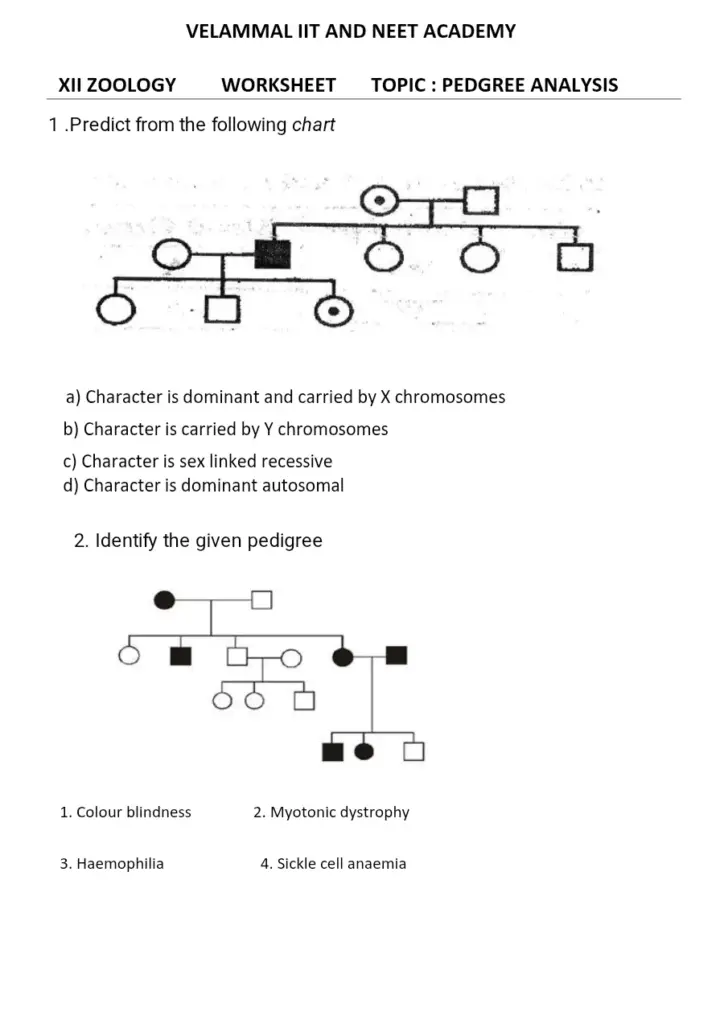
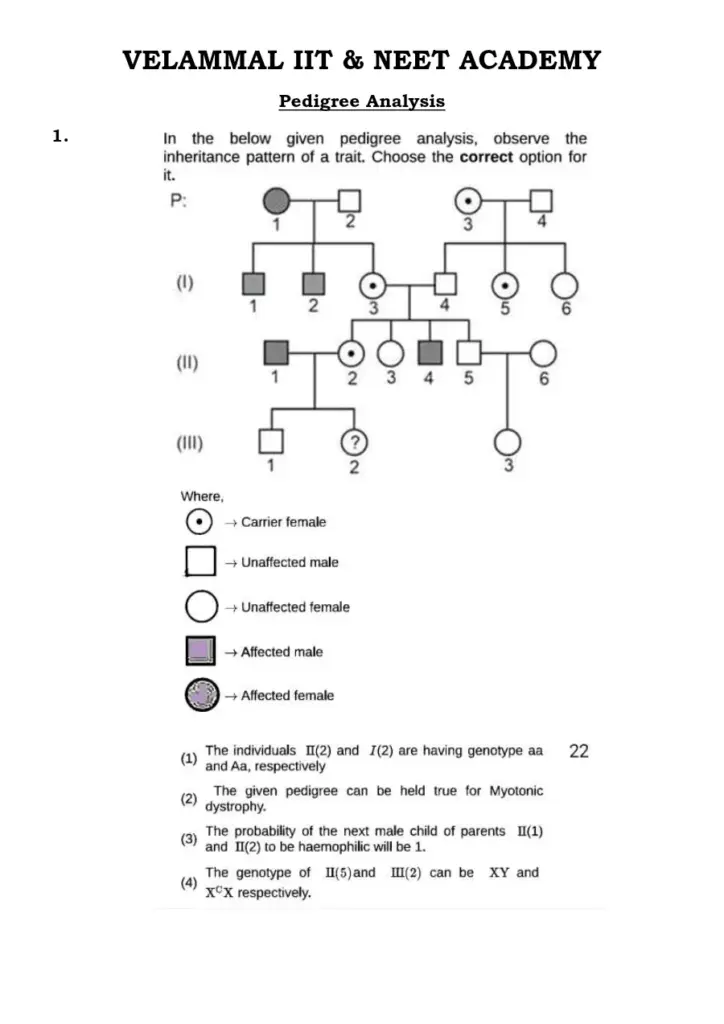
Inheritance Architectures: Access comprehensive genetics inheritance pattern PDFs covering monohybrid/dihybrid crosses, Punnett squares, and non-Mendelian linkage phenomena.
Evolutionary Mechanics: Review lecture summaries tracking natural selection, genetic drift, gene flow, and the molecular evidence for common ancestry across species.
Homeostasis & Regulation: Download anatomical human physiology review sheets breaking down the endocrine, cardiovascular, and nervous systems—tracking how they maintain stable internal environments.
Systemic Interaction: Access reference guides mapping structural interactions (e.g., the relationship between respiratory gas exchange and circulatory oxygen transport).
Trophic Structures: Download functional ecology food web diagrams tracing energy flow efficiency through producers, primary consumers, and decomposers.
Population Dynamics: Access study sets tracking carrying capacity, logistical vs. exponential growth curves, and niche partitioning models.
When analyzing life processes, biology relies on precise chemical transformations governed by thermodynamic laws. The reference matrix below contrasts the core energy-producing metabolic pathways:
| Metabolic Pathway | Primary Goal/Objective | Main Substrate Inputs | Definitive Structural Byproducts |
| Aerobic Respiration | Maximizing ATP extraction for cellular work | Glucose ($C_6H_{12}O_6$) + Oxygen ($O_2$) | Carbon Dioxide ($CO_2$) + Water ($H_2O$) + $36$–$38$ ATP |
| Photosynthesis | Synthesizing glucose for energy storage | $CO_2$ + $H_2O$ + Light Energy | Glucose ($C_6H_{12}O_6$) + Oxygen ($O_2$) |
| Lactic Acid Fermentation | Anaerobic regeneration of NAD+ | Glucose / Pyruvate | Lactic Acid + $2$ ATP |
This section addresses the most frequently searched biological problems, keyword-targeted mechanism breakdowns, and foundational questions sourced from university biology test banks.
These are distinct cellular division modes. Mitosis is a somatic cell division process that produces two genetically identical diploid ($2n$) daughter cells, serving the purposes of tissue repair, organismal growth, and asexual reproduction. Meiosis, conversely, is a specialized germ-cell division occurring only in gonads, producing four genetically unique haploid ($n$) gametes. Meiosis involves two rounds of division (Meiosis I and II) and introduces genetic variation via “crossing over” (homologous recombination) during Prophase I, which is structurally absent in mitosis.
The Central Dogma describes the one-way structural flow of biological information within a cell: DNA $\rightarrow$ RNA $\rightarrow$ Protein. Mechanically, transcription occurs in the nucleus, where a segment of DNA is copied into messenger RNA ($mRNA$). This $mRNA$ then exits to the ribosome, where translation occurs—the $mRNA$ is read in three-base sequences (codons), which recruits specific transfer RNA ($tRNA$) molecules carrying matching amino acids. These amino acids are chained together to form a polypeptide, which then folds into a functional protein structure.
The plasma membrane is not just a container; it is a highly selective gatekeeper. It is composed of a bilayer of phospholipids, where the hydrophilic (“water-loving”) heads face the extracellular and intracellular fluid, while the hydrophobic (“water-fearing”) fatty acid tails cluster in the interior. This structural polarity creates an essential hydrophobic barrier that prevents the free diffusion of polar, charged, or large molecules, forcing the cell to use specific membrane-bound transport proteins to regulate what enters and leaves the cytoplasm.
Enzymes are protein catalysts that speed up chemical reactions by lowering the activation energy—the amount of energy required to trigger the reaction. They do not change the total energy output of a reaction; they simply provide a structural “active site” that forces reactant molecules (substrates) into the optimal position and spatial orientation to react. Once the substrate enters this active site, the enzyme creates an enzyme-substrate complex, stabilizes the transition state, and releases the final product, leaving the enzyme molecule itself unchanged and ready to catalyze the next round.
Yes. Resolving complex metabolic equations, building ecosystem impact models, and debugging genetic inheritance problems are everyday requirements for biology undergraduates. Our global user network frequently uploads marked-up lab protocols, downloadable cellular respiration sheets, and practice exam answers to help you streamline your study workflow before finals week.
Every metabolic matrix, genetic derivation packet, and anatomical layout across our database is maintained by a global network of students, researchers, and lab assistants who believe in open, decentralized educational tools. To see how these biological architectures connect with broader chemistry, environment, or medical fields, return to our primary Chesser Resources Browse Directory.
Ready to download premium biology study guides or DNA replication proofreading notes? Join our shared academic network: navigate to your user dashboard, upload 5 of your own course summaries, lab reports, or scientific research papers, and instantly secure unrestricted access to the high-yield PDFs you need to maximize your grades today.