Tribes, Nomads and Settled Communities explores the evolution of social structures in the Indian subcontinent, detailing the dynamics between tribal societies and caste-based communities. It examines the livelihoods of various tribes, including their agricultural practices, nomadic lifestyles, and cultural traditions. The text also highlights significant tribes such as the Gonds and Ahoms, discussing their historical significance and interactions with larger kingdoms. This resource is valuable for students and researchers interested in the social history of India and the impact of tribal communities on societal development.

Key Points

  • Explores the social hierarchy and changes in the Indian subcontinent.
  • Details the lifestyles and livelihoods of various tribes, including agriculture and nomadism.
  • Highlights significant tribes like the Gonds and Ahoms and their historical contexts.
  • Discusses the interactions between tribal societies and caste-based communities.
Ayaati Jain
12 pages
Language:English
Type:Textbook
Ayaati Jain
12 pages
Language:English
Type:Textbook
356
/ 12
49
TRIBES
, NOMADS AND
SETTLED COMMUNITIES
Y
ou saw in Chapters 2, 3 and 4 how kingdoms
rose and fell. Even as this was happening, new arts,
and villages. Over the centuries important political,
social and economic developments had taken place.
But social change was not the same everywhere,
because different kinds of societies evolved
differently. It is important to understand
how and why this happened.
In large parts of the subcontinent, society
was already divided according to the rules
of . These rules, as prescribed by the
Brahmanas, were accepted by the rulers
of large kingdoms. The difference between
the high and low, and between the rich and
poor, increased. Under the Delhi Sultans
and the Mughals, this hierarchy between
social classes grew further.
Beyond Big Cities: Tribal
Societies
There were, however, other kinds of
societies as well. Many societies in the
subcontinent did not follow the social rules
and rituals prescribed by the Brahmanas.
Nor were they divided into numerous
unequal classes. Such societies are often
called tribes.
TRIBES, NOMADS AND
SETTLED COMMUNITIES
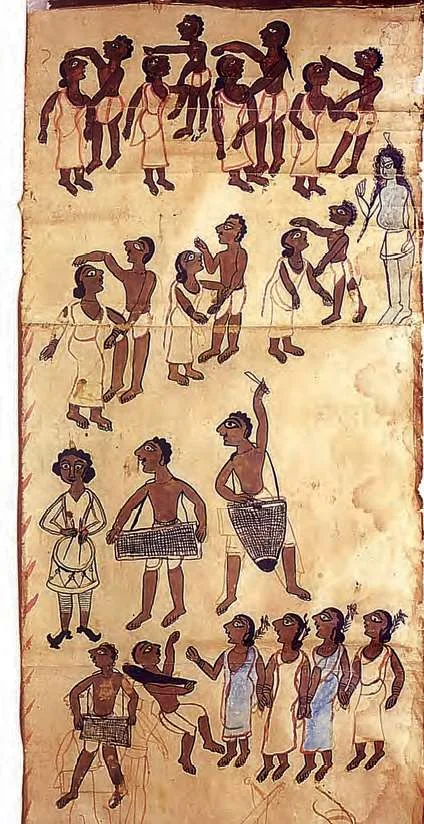
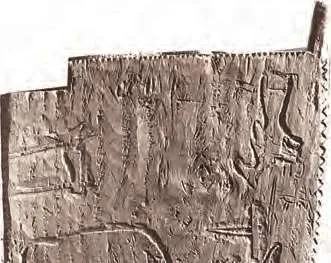
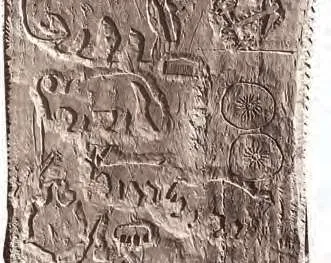
Fig. 1
Tribal dance,
Santal painted scroll.
50
Members of each tribe were united by kinship
bonds. Many tribes obtained their livelihood from
agriculture. Others were hunter-gatherers or herders.
Most often they combined these activities to make
full use of the natural resources of the area in which
they lived. Some tribes were nomadic and moved
from one place to another. A tribal group controlled
land and pastures jointly, and divided these amongst
households according to its own rules.
Many large tribes thrived in different parts of the
subcontinent. They usually lived in forests, hills,
clashed with the more powerful caste-based societies.

In various ways, the tribes retained their freedom and
preserved their separate culture.
But the caste-based and tribal societies also
depended on each other for their diverse needs. This
caused both societies to change.
Who were Tribal People?
Contemporary historians and travellers give very
scanty information about tribes. A few exceptions
apart, tribal people did not keep written records. But
they preserved rich customs and oral traditions. These
were passed down to each new generation. Present-
day historians have started using such oral traditions
to write tribal histories.

Tribal people were found in almost every region of
varied at different points of time. Some powerful tribes
controlled large territories. In Punjab, the Khokhar

fourteenth centuries. Later, the Gakkhars became

more important. Their chief, Kamal Khan Gakkhar,
was made a noble ( ) by Emperor Akbar. In
Multan and Sind, the Langahs and Arghuns dominated
extensive regions before they were subdued by the
Mughals. The Balochis were another large and powerful
On a physical
map of the
subcontinent,
identify the areas
in which tribal
people may have
lived.
?
51
TRIBES
, NOMADS AND
SETTLED COMMUNITIES
tribe in the north-west. They were divided into many
smaller clans under different chiefs. In the western
Himalaya lived the shepherd tribe of Gaddis. The
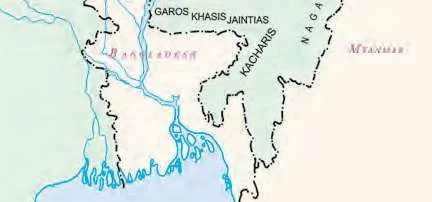
distant north-eastern part of the subcontinent too was
entirely dominated by tribes the Nagas, Ahoms and
many others.
In many areas of present-day Bihar and Jharkhand,
Chero chiefdoms had emerged by the twelfth century.
Raja Man Singh, Akbars famous general, attacked
and defeated the Cheros in 1591. A large amount of
booty was taken from them, but they were not entirely
subdued. Under Aurangzeb, Mughal forces captured
many Chero fortresses and subjugated the tribe. The
Mundas and Santals were among the other important
tribes that lived in this region and also in Orissa
and Bengal.
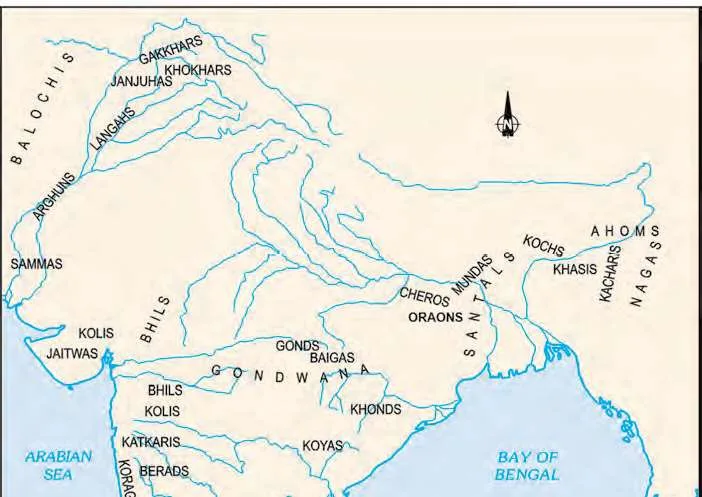
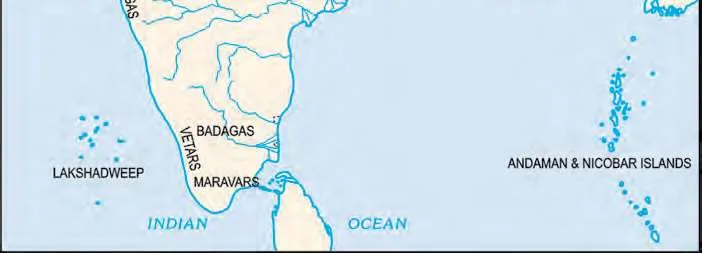
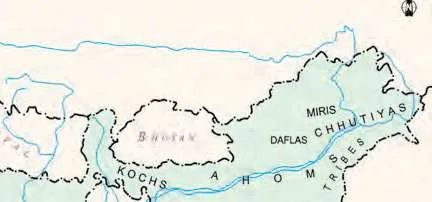
Map 1
Location of some
of the major Indian
tribes.
Clan
/ 12
End of Document
356

FAQs

What social changes occurred among tribal societies in the subcontinent?
Tribal societies in the subcontinent experienced significant social changes due to interactions with caste-based societies. Many tribes retained their distinct cultures and livelihoods, such as agriculture and hunting-gathering, while also depending on caste societies for various needs. Over time, some tribes merged into caste-based society, adopting new roles and hierarchies, while others rejected the caste system altogether, particularly in regions like Punjab and Sind.
Who were the Gonds and what was their significance?
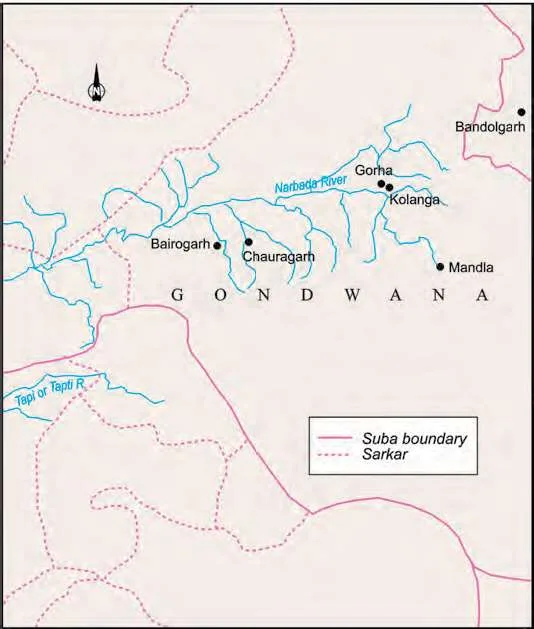
The Gonds were a prominent tribal group living in the forested region of Gondwana. They practiced shifting cultivation and were organized into various clans, each led by a raja. As the power of the Delhi Sultans waned, some Gond kingdoms emerged, such as Garha Katanga, which had 70,000 villages. The Gonds' administrative systems became more centralized, and their society gradually transformed from an egalitarian structure to one with distinct social classes, influenced by interactions with Brahmanas.
How did the Ahoms establish their state in the Brahmaputra valley?
The Ahoms migrated from present-day Myanmar to the Brahmaputra valley in the thirteenth century, where they established a new state by overcoming the existing political structures of landlords. They expanded their territory by annexing neighboring kingdoms, such as the Chhutiyas and Koch-Hajo, during the sixteenth century. The Ahoms developed a centralized administration, requiring forced labor from the population for public works and military service, which ultimately led to a sophisticated society that incorporated elements of both traditional beliefs and Hinduism.
What role did the Banjaras play in the economy?
The Banjaras were crucial as trader-nomads, transporting goods across regions. Their caravans, known as tandas, were vital for moving grain and other products to city markets. Historical accounts, such as those from Emperor Jahangir, highlight their importance in supplying food to the Mughal army during campaigns. They operated as merchants themselves, buying grain where it was cheaper and selling it in areas where it was more expensive, thus facilitating trade and economic exchange.
What characterized the lifestyle of nomadic pastoralists?
Nomadic pastoralists moved over long distances with their herds, relying primarily on milk and other pastoral products for sustenance. They engaged in trade with settled agriculturists, exchanging animal products for grains and other goods. This lifestyle involved continuous movement, which allowed them to utilize various pastures and resources effectively, and their social structures often included tight-knit family units that traveled together.
How did tribal societies interact with caste-based societies?
Tribal societies and caste-based societies interacted in various ways, leading to mutual dependence. While many tribes maintained their distinct cultures and social structures, they also engaged in trade and exchanged goods with caste societies. Over time, some tribes were absorbed into the caste system, adopting new roles and hierarchies, while others, particularly in regions like Punjab, resisted these changes and rejected the caste system altogether.
What changes did the emergence of states bring to tribal societies?
The emergence of states significantly altered tribal societies, leading to the development of more complex social hierarchies. As tribal leaders sought recognition and power, many tribes began to adopt the titles and structures of caste-based societies. This transition often resulted in the division of previously egalitarian tribal communities into unequal social classes, influenced by the integration of Brahmanas and the establishment of formal governance.