The Medical Physics Association Guide provides essential information on the role of medical physicists in healthcare. It covers topics such as radiation safety, imaging technologies, and treatment planning. This guide is designed for medical professionals, students, and anyone interested in the field of medical physics. It includes practical applications, case studies, and the latest advancements in medical technology. Ideal for those preparing for certification exams or seeking to enhance their understanding of medical physics.

Key Points

  • Explains the role of medical physicists in healthcare settings
  • Covers radiation safety protocols and best practices
  • Includes case studies on imaging technologies and treatment planning
  • Discusses advancements in medical technology relevant to practitioners
Collins kipkoech
7 pages
Language:English
Type:Textbook
Collins kipkoech
7 pages
Language:English
Type:Textbook
47
/ 7
Explanation:
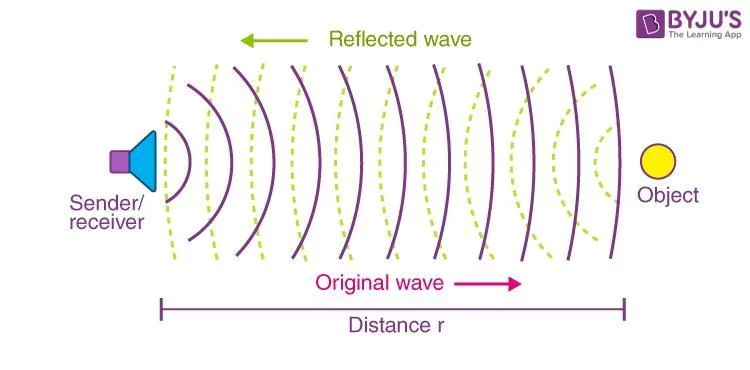
Reflection of sound is the bouncing back of sound waves when they strike a hard surface or
obstacle. Sound obeys the law of reflection, which states that the angle of incidence is
equal to the angle of reflection.
When a sound wave travels through a medium and encounters a large, hard surface such
as a wall, cliff, or metal sheet, it is reflected back into the original medium. The reflected
sound wave follows the law of reflection, where the angle at which the sound strikes the
surface is equal to the angle at which it is reflected.
The extent of reflection depends on the nature of the surface. Hard and smooth surfaces
reflect most of the sound energy, producing strong reflections, while soft and porous
materials such as curtains, carpets, and foam absorb much of the sound energy and
therefore reflect less sound. For effective reflection, the reflecting surface should be large
compared to the wavelength of the sound.
Reflection of sound has many practical applications. It is responsible for the formation of
echoes, which occur when reflected sound is heard after a short delay. Reflection is also
used in SONAR systems to locate underwater objects and measure ocean depth. In
medical ultrasound, reflected sound waves from body tissues are detected and used to
form images of internal organs and structures.
2. Explain how ultrasound is produced and its use.
Production:
Ultrasound is a type of sound wave with a frequency above 20,000 Hz, which is beyond the
upper limit of human hearing. Because of its high frequency, ultrasound has many
important applications in medicine, industry, and navigation. The production of ultrasound
is based mainly on the piezoelectric effect, a phenomenon exhibited by certain crystals.
The most common method of producing ultrasound involves the use of piezoelectric
crystals such as quartz or lead zirconate titanate (PZT). When an alternating electrical
voltage is applied across a piezoelectric crystal, the crystal undergoes rapid expansion and
contraction. These repeated changes in shape cause the crystal to vibrate at very high
frequencies. If the frequency of vibration is greater than 20,000 Hz, ultrasound waves are
generated. The frequency of the ultrasound produced depends on factors such as the
thickness, size, and material properties of the crystal.
In medical ultrasound equipment, the crystal is housed within a device known as a
transducer. The transducer converts electrical energy into mechanical vibrations,
producing ultrasound waves that are directed into the body. As these waves travel through
body tissues, they encounter boundaries between different organs and tissues. Some of
the waves are reflected back as echoes, while others continue to travel deeper into the
body. The same transducer then receives the reflected echoes and converts them back into
electrical signals through the piezoelectric effect. These signals are processed by a
computer to produce detailed images of internal body structures.
The efficiency of ultrasound production depends on the resonance of the crystal. When the
frequency of the applied electrical signal matches the natural frequency of the crystal, the
amplitude of vibration increases, resulting in the production of strong ultrasound waves.
This principle is widely used in modern ultrasound devices to ensure high-quality imaging
and accurate diagnostic results.
Uses in Medicine:

1. Diagnostic Imaging (Sonography): Visualizing fetal development, abdominal organs (liver,
kidneys), cardiac structures (echocardiography), and blood flow (Doppler ultrasound).
2. Therapeutic Applications:
· Physiotherapy: Deep heating of muscles and joints to reduce pain and inflammation.
· Surgery: High-Intensity Focused Ultrasound (HIFU) to ablate (destroy) tumors non-
invasively.
· Lithotripsy: Breaking down kidney stones into smaller fragments using shockwaves.
3. Non-Medical: Industrial flaw detection and marine sonar.
3. Why is ultrasound more preferred than Xrays in terms of imaging?
Ultrasound is often preferred over X-rays for imaging in many situations because:
No ionizing radiation – Ultrasound uses high-frequency sound waves, while X-rays use
ionizing radiation that can damage cells and increase cancer risk with repeated exposure.
This makes ultrasound safer, especially for pregnant women and children.
Real-time imaging Ultrasound provides live images, allowing doctors to observe
movement such as blood flow, fetal movements, heart valve action, and organ motion.
Better soft tissue visualization – Ultrasound is excellent for imaging soft tissues and fluid-
filled structures such as the liver, kidneys, gallbladder, uterus, ovaries, and blood vessels.
X-rays are better suited for bones and dense structures.
Portable and convenient – Ultrasound machines are often portable and can be used at the
patient’s bedside, unlike many X-ray systems.
Cost-effective – Ultrasound examinations are generally less expensive than X-ray and many
other imaging techniques.
No special shielding required – Since there is no radiation exposure, extensive protective
measures are usually unnecessary.
Limitations
Despite these advantages, ultrasound is not always preferred. X-rays are superior for:
•Detecting bone fractures.
/ 7
End of Document
47

FAQs

what is the Medical Physics Association Guide about

The Medical Physics Association Guide provides a comprehensive overview of the principles and practices within the field of medical physics.

This guide covers essential topics such as:

  • Radiation Physics: Understanding the interactions of radiation with matter.
  • Medical Imaging: Techniques and technologies used in diagnostic imaging.
  • Radiation Therapy: Principles of delivering radiation treatment for cancer.
  • Quality Assurance: Ensuring safety and efficacy in medical physics practices.

what topics are covered in the Medical Physics Association Guide

The Medical Physics Association Guide covers a wide range of topics crucial for professionals in the field.

Key topics include:

  • Fundamentals of Medical Physics: Basic principles and concepts.
  • Radiological Safety: Guidelines for safe practices in radiation use.
  • Clinical Applications: Use of physics in various medical settings.
  • Emerging Technologies: Innovations in medical physics and their implications.

how can the Medical Physics Association Guide help in exams

The Medical Physics Association Guide is a valuable resource for exam preparation in medical physics.

It offers:

  • Comprehensive Summaries: Key concepts and definitions for quick review.
  • Practice Questions: Sample questions that reflect exam formats.
  • Study Tips: Strategies for effective studying and time management.
  • Reference Material: Citations to important studies and literature for deeper understanding.

what are the key principles in the Medical Physics Association Guide

The Medical Physics Association Guide emphasizes several key principles essential for medical physicists.

These principles include:

  • Safety: Prioritizing patient and staff safety in all procedures.
  • Accuracy: Ensuring precision in measurements and treatments.
  • Collaboration: Working with healthcare teams to optimize patient care.
  • Continuous Learning: Staying updated with advancements in the field.

what is the importance of quality assurance in the Medical Physics Association Guide

Quality assurance is a critical component highlighted in the Medical Physics Association Guide.

Its importance lies in:

  • Patient Safety: Minimizing risks associated with radiation exposure.
  • Consistency: Ensuring reliable outcomes in medical procedures.
  • Regulatory Compliance: Meeting standards set by health authorities.
  • Performance Monitoring: Regular checks to maintain equipment and procedures.

how does the Medical Physics Association Guide address emerging technologies

The Medical Physics Association Guide discusses emerging technologies and their impact on medical physics.

It covers:

  • Innovative Imaging Techniques: Advancements in MRI and CT technologies.
  • Radiation Treatment Innovations: New methods in radiation therapy.
  • Telemedicine: The role of technology in remote patient care.
  • Artificial Intelligence: Applications of AI in diagnostics and treatment planning.