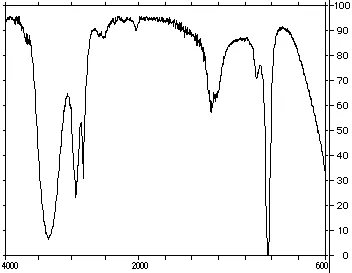
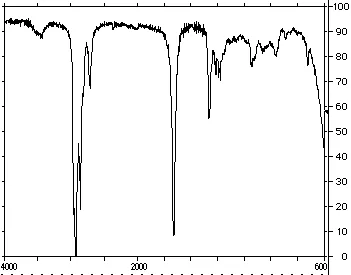
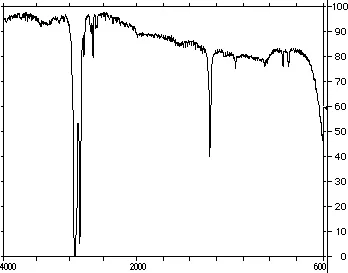
Infrared Spectroscopy (IR) focuses on measuring vibrational frequencies of molecular bonds and functional groups. This unit is essential for organic chemistry, providing methods for identifying compounds through their IR spectra. It covers practical applications, including analysis techniques for liquids and solids, and discusses characteristic vibrational frequencies of various bonds. Ideal for chemistry students and professionals seeking to enhance their understanding of IR spectroscopy.

Key Points

  • Explains the principles of infrared spectroscopy and its applications in organic chemistry.
  • Covers methods for analyzing liquids and solids using IR spectroscopy techniques.
  • Details characteristic vibrational frequencies of different molecular bonds.
  • Discusses the significance of IR spectra in identifying functional groups.
Sihle Usisa mpongwana
20 pages
Language:English
Type:Presentation
Sihle Usisa mpongwana
20 pages
Language:English
Type:Presentation
335
/ 20
Infrared Spectroscopy (IR)
IR is used to measure the vibrational frequencies
of bonds in the molecule and functional groups
Used in organic chemistry
IR spectroscopy provides a 100% identification if the
spectrum is matched.
If not, IR at least provides information about the types of
bonds present.
Easy to use
liquids analyzed between salt plates
solids in a KBr pellet
small amounts of unknowns via an FTIR microscope
analysis time typically < 10 minutes
Inexpensive
FTIR spectrophotometers are found in most labs.
IR region is just above visible (7.8 x 10
-7
m to 10
-4
m) with the
most important region to the chemist is between 2.5 x 10
-6
to
2.5 x10
-5
m (4000 TO 400cm
-1
).
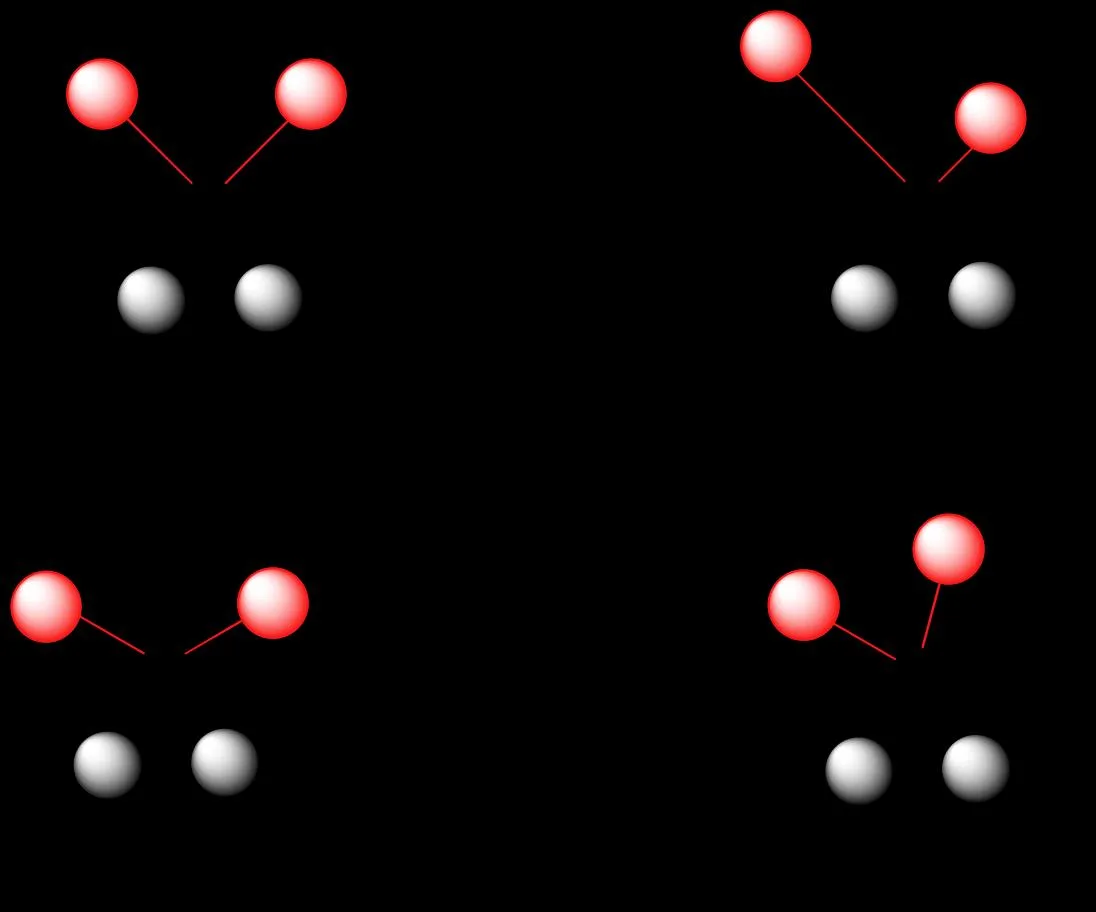
IR is the study of transition of molecules in motion.
In a compound, certain groups of molecule absorbs specific
frequency that are characteristic to their structure.
The frequency of the absorbed radiation matches the
transition energy of the bond or group that vibrates.
The energies are determined by the shape of the molecule,
the masses of the atoms, and the associated vibration
coupling.
/ 20
End of Document
335

FAQs

what is infrared spectroscopy (IR)?

Infrared spectroscopy (IR) is a technique used to measure the vibrational frequencies of bonds in molecules and functional groups.

  • It provides a 100% identification if the spectrum is matched.
  • IR is particularly useful in organic chemistry.
  • The analysis time is typically less than 10 minutes, making it efficient and inexpensive.

how does infrared spectroscopy (IR) work?

Infrared spectroscopy (IR) works by measuring the absorption of infrared radiation by molecules, which causes them to vibrate.

  • Specific groups within a molecule absorb characteristic frequencies of radiation.
  • The frequency of absorbed radiation corresponds to the transition energy of the bond or group that vibrates.
  • This technique can analyze liquids and solids, often using FTIR microscopes for small samples.

what are the applications of infrared spectroscopy (IR)?

Infrared spectroscopy (IR) has numerous applications across various fields, particularly in organic chemistry.

  • It is used for identifying functional groups in organic compounds.
  • IR can analyze complex mixtures and monitor chemical reactions.
  • Additionally, it is employed in quality control and material characterization in industries such as pharmaceuticals and polymers.

what are the characteristic vibrational frequencies in infrared spectroscopy (IR)?

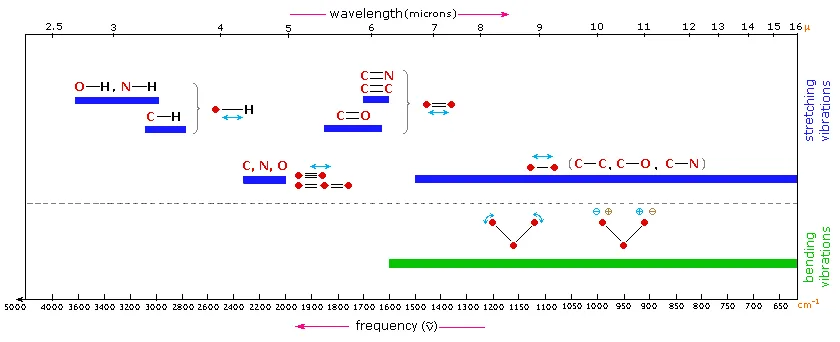
Characteristic vibrational frequencies in infrared spectroscopy (IR) depend on the types of bonds and atoms involved.

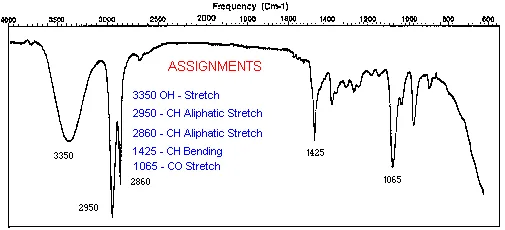
  • C-H bonds typically show frequencies between 2850-2960 cm-1.
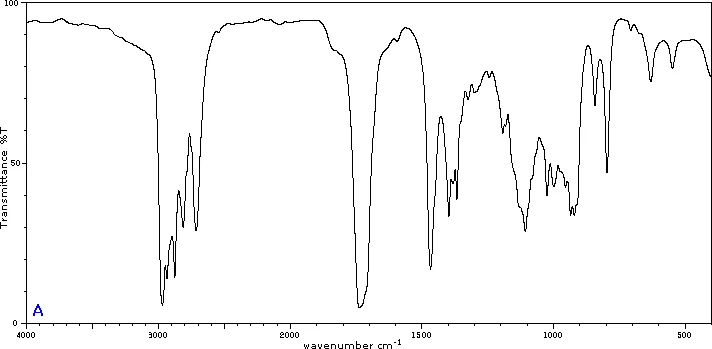
  • C=O bonds absorb strongly between 1670-1780 cm-1.
  • Stretching frequencies are generally higher than bending frequencies, with triple bonds having higher frequencies than double bonds.

how to analyze an infrared spectroscopy (IR) spectrum?

To analyze an infrared spectroscopy (IR) spectrum, focus on the strongest absorptions and their positions.

  • Pay particular attention to peaks left of the fingerprint region (>1250 cm-1).
  • Note the absence of certain peaks, which can indicate specific functional groups.

  • Be cautious of O-H peaks, as water contamination can affect readings.

what is the fingerprint region in infrared spectroscopy (IR)?

The fingerprint region in infrared spectroscopy (IR) refers to the area of the spectrum between 400-1450 cm-1.

  • This region contains unique absorption patterns that can help identify specific compounds.
  • Absorption bands here are often due to bending vibrations and provide critical information for compound identification.
  • It is essential for distinguishing between similar molecules.

what factors affect vibrational frequencies in infrared spectroscopy (IR)?

Vibrational frequencies in infrared spectroscopy (IR) are affected by several factors.

  • The masses of the atoms involved in the bond.
  • The strength of the bond itself; stronger bonds generally have higher vibrational frequencies.
  • For example, C-H bonds have higher frequencies compared to C-C bonds due to the lower mass of hydrogen.

what are common functional groups identified by infrared spectroscopy (IR)?

Common functional groups identified by infrared spectroscopy (IR) include several key absorptions.

Functional GroupAbsorption (cm-1)Intensity
C-H2850-2960Medium
C=O1670-1780Strong
O-H3400-3650Strong, broad

what is the significance of peak intensity in infrared spectroscopy (IR)?

Peak intensity in infrared spectroscopy (IR) is significant as it correlates with the change in dipole moment during molecular vibrations.

  • Stronger bonds, like C=O, typically show higher intensity peaks.
  • This intensity helps in identifying the presence and type of functional groups.
  • General trends indicate that stretching frequencies are higher than corresponding bending frequencies.

how does conjugation affect infrared spectroscopy (IR) results?

Conjugation affects infrared spectroscopy (IR) results by lowering typical absorption frequencies of double bonds.

  • This occurs due to the presence of some single bond character in conjugated systems.
  • In contrast, ring strain in cyclic compounds can increase vibrational frequencies.
  • Understanding these effects is crucial for accurate interpretation of IR spectra.