The Green Revolution notes provide a comprehensive overview of agricultural advancements from the mid-20th century, focusing on high-yield seeds, mechanization, and chemical fertilizers. This resource details the impact of these innovations on global food production and food security, particularly in developing countries. Key themes include the evolution of farming practices, the introduction of hybrid seeds, and the consequences of agricultural industrialization. Ideal for students and educators studying agricultural science or environmental studies, these notes summarize critical developments and their implications for modern agriculture.

Key Points

  • Explains the significance of the Green Revolution in increasing global food production.
  • Covers the role of high-yield and hybrid seeds in agricultural advancements.
  • Discusses the environmental impact of chemical fertilizers and pesticides.
  • Highlights the importance of mechanization in modern farming practices.
Jacky
31 pages
Language:English
Type:Presentation
Jacky
31 pages
Language:English
Type:Presentation
144
/ 31
The Green Revolution
RRHS APHG
2025-2026
1
The US in the 1800s
Industrial north
Agrarian south
By the 1800s the Northern states began to industrialize and export manufactured goods. As
the Northern states industrialized they attracted new immigrants while the South’s
population stagnated. In 1800 half of all Americans lived in the South, but by 1850 only one-
third of the population was there.
The Southern economy relied on producing and exporting cotton, sugar, rice, tobacco and
wheat. The South also depended heavily on food imported from the upper-Mississippi valley.
Production of work intensive cash crops like cotton and tobacco expanded and the Southern
economy became increasingly dependent on slave labor to keep the price of its crops
competitive. Technological improvements like Eli Whitney’s cotton gin also helped increase
cotton production and made slavery profitable.
This regional divide and the growing dependency on slavery in the south for profitable
export-oriented agriculture and the increasing social resistance and call for abolition of
slavery in the north led to an explosive regional divide within the country. There was
relatively little infrastructure or industrial development in the south at that time. The few
railroads that existed served to support the export-oriented agriculture of the southern
states. There was a growing economic divide, which in turn resulted in a growing political
divide. The result of the 1860 presidential election, in which Abraham Lincoln (an abolitionist)
who did not even appear on the ballot in 10 of the southern states won the election, was the
2
proverbial “straw” that broke the nation – South Carolina seceded, followed by 10 other
southern states.
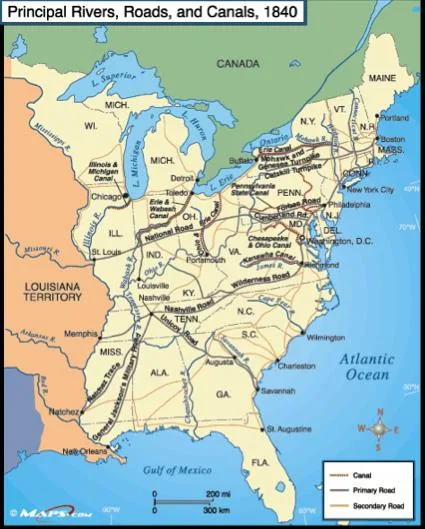
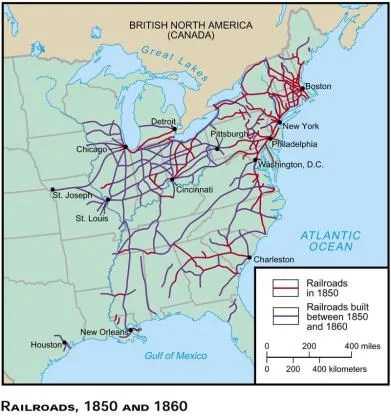
The maps above show the infrastructure of the US prior to the Civil War. The map on the left
shows Rivers, roads, and canals as of 1840 notice there is a significant number more roads
and canals in the north compared to the south. The map on the right shows railroads in 1850
(shown in red) and those built between 1950 and 1960 (shown in blue) note there is a
significantly greater number of lines in the north compared to the south.
2
/ 31
End of Document
144

FAQs

what is the green revolution notes about

The Green Revolution notes cover the significant advancements in agricultural practices that began in the mid-20th century, aimed at increasing food production worldwide.

  • High-Yield Varieties: Introduction of genetically improved seeds that produce higher yields.
  • Chemical Fertilizers: Use of synthetic fertilizers to enhance soil nutrients.
  • Pesticides: Application of chemicals to control pests and diseases affecting crops.
  • Mechanization: Adoption of advanced machinery to increase efficiency in farming.

how did the green revolution impact agriculture

The Green Revolution had a profound impact on agriculture, significantly increasing food production and altering farming practices globally.

  • Increased Yields: Farmers experienced higher crop yields, especially in developing countries.
  • Food Security: It contributed to improved food security by making staple crops more available.
  • Economic Growth: Enhanced agricultural productivity stimulated economic growth in rural areas.
  • Environmental Concerns: However, it also led to issues such as soil degradation and increased use of chemical inputs.

what are the key features of the green revolution

The key features of the Green Revolution include technological advancements that transformed agricultural practices.

  • High-Yield Seeds: Development of seeds that produce more food per plant.
  • Fertilizers and Pesticides: Increased use of chemical fertilizers and pesticides to boost crop health.
  • Mechanization: Introduction of machinery to streamline farming processes.
  • Irrigation Techniques: Improved irrigation methods to support crop growth in various climates.

what are the consequences of the green revolution

The consequences of the Green Revolution are both positive and negative, impacting agriculture and society.

  • Positive: Increased agricultural yield and improved food security.
  • Negative: Environmental issues such as pollution and soil degradation.
  • Social Impact: Economic benefits for some farmers, but challenges for smallholders unable to afford new technologies.

how did the green revolution change farming practices

The Green Revolution changed farming practices by introducing new technologies and methods that increased efficiency and productivity.

  • Adoption of Technology: Farmers began using tractors and other machinery for planting and harvesting.
  • Use of Chemicals: Increased reliance on chemical fertilizers and pesticides became common.
  • Crop Management: New techniques for crop management and irrigation were implemented.
  • Shift in Crop Types: A focus on cash crops and monoculture emerged, affecting biodiversity.

what role did the USDA play in the green revolution

The USDA played a crucial role in the Green Revolution by supporting research and development in agricultural practices.
  • Research Initiatives: The USDA funded agricultural research projects to develop high-yield crops.
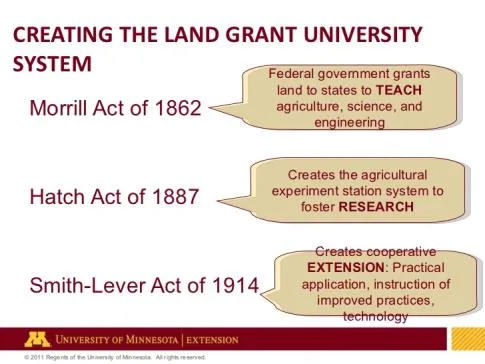
  • Extension Services: Provided education and resources to farmers on new technologies.

  • Policy Support: Implemented policies to support agricultural productivity and food security.

what are hybrid seeds in the context of the green revolution

Hybrid seeds are a significant aspect of the Green Revolution, designed to produce desirable traits for higher yields.

  • Cross-Breeding: Hybrid seeds are created through the cross-breeding of different plant varieties.

  • Terminal Nature: These seeds cannot be saved for future planting, requiring farmers to purchase new seeds each season.
  • Impact on Farmers: While they can increase yields, the cost can be prohibitive for small-scale farmers.

what are the benefits of the green revolution

The Green Revolution brought several benefits that transformed global agriculture.

  • Increased Food Production: Enabled countries to produce more food, reducing hunger.
  • Economic Growth: Boosted rural economies through increased agricultural productivity.
  • Technological Advancements: Fostered innovation in farming practices and equipment.

what challenges did the green revolution face

The Green Revolution faced several challenges that impacted its effectiveness and sustainability.

  • Environmental Issues: Increased chemical use led to soil degradation and water pollution.
  • Social Disparities: Benefits were not evenly distributed, often favoring larger farms over smallholders.
  • Dependency on Chemicals: Farmers became reliant on chemical inputs, raising concerns about long-term sustainability.

how did the green revolution affect food security

The Green Revolution significantly affected food security by increasing the availability of staple crops.

  • Higher Yields: Enabled farmers to produce more food per acre, addressing hunger in many regions.
  • Improved Access: More food production led to lower prices and better access for consumers.
  • Long-Term Sustainability: However, concerns about environmental impacts raise questions about future food security.