The history, evolution, and discoveries in biochemistry explore the chemical processes that define living organisms. This comprehensive overview traces biochemistry from ancient fermentation practices to modern genetic engineering techniques. Key figures like Friedrich Wöhler and Louis Pasteur are highlighted for their groundbreaking contributions. This resource is essential for students and professionals interested in the development of biochemistry and its applications in health and medicine.

Key Points

  • Explores the origins of biochemistry from ancient fermentation to modern techniques.
  • Highlights key figures like Friedrich Wöhler and Louis Pasteur in biochemistry.
  • Covers the evolution of biochemical understanding and its impact on health.
  • Discusses the significance of discoveries in genetic engineering and metabolism.
Hameedah
13 pages
Language:English
Type:Presentation
Hameedah
13 pages
Language:English
Type:Presentation
257
/ 13
History, Evolution, and
Discoveries in Biochemistry
What is Biochemistry
Biochemistry is the study of the chemical processes within and
relating to living organisms
A science that integrates life with chemistry- chemistry of life. It
explains biological processes in the language of molecules and
chemical reactions
It is concerned with the chemical constituents of living cells and with
the reactions and processes they undergo
Involves all chemical processes within the organism- anabolic and
catabolic.
Study of the molecular basis of life
History and Evolution of Biochemistry
Biochemistry is not entirely new; it started way back in history.
Ancient Egyptians and Sumerians in c. 6000BC carried out
fermentation by brewing beer and baking bread using yeast. They did
not know why it worked, but they harnessed glycolysis
In c. 300 BC, Greek physician Praxagoras noted that gastric juices
dissolved food (digestion).
Anton van Leeuwenhoek (1670s) used his primitive microscope to
observe “animalcules” (yeast cells) in fermenting beer, making the
first connection between microorganisms and chemical change.
Pre-History
/ 13
End of Document
257

FAQs

what is history, evolution, and discoveries in biochemistry

History, Evolution, and Discoveries in Biochemistry is a comprehensive overview of the key developments in the field of biochemistry, tracing its origins from ancient practices to modern advancements.

  • It begins with ancient fermentation practices by Egyptians and Sumerians.
  • Key figures like Anton van Leeuwenhoek and Louis Pasteur are highlighted for their contributions.
  • The document discusses major milestones such as the synthesis of urea by Friedrich Wöhler in 1828.
  • Modern techniques like CRISPR and the Human Genome Project are also explored.

who are the key figures in the history of biochemistry

The history of biochemistry features several pivotal figures who made significant contributions to the field.

  • Friedrich Wöhler: Synthesized urea from ammonium cyanate, challenging the vitalism theory.
  • Louis Pasteur: Demonstrated the role of microorganisms in fermentation.
  • Eduard Buchner: Discovered cell-free fermentation, establishing enzymes as biological catalysts.
  • Carl Neuberg: Coined the term "biochemistry" and defined it as the chemistry of life.

what are the major milestones in biochemistry

Major milestones in biochemistry mark significant advancements in our understanding of biological processes.

  • In 1828, Friedrich Wöhler synthesized urea, demonstrating organic synthesis from inorganic compounds.
  • Louis Pasteur's work in the 19th century established the connection between fermentation and living organisms.
  • The discovery of enzymes by Eduard Buchner in 1897 showed that biochemical reactions can occur outside living cells.
  • Modern breakthroughs, such as CRISPR technology and the Human Genome Project, have revolutionized genetic engineering and medicine.

how did biochemistry evolve over time

The evolution of biochemistry spans from ancient practices to cutting-edge modern techniques.

  • Early practices included fermentation by ancient Egyptians and Sumerians around 6000 BC.
  • The Middle Ages saw alchemists laying the groundwork for modern chemistry.
  • The Renaissance introduced ideas about chemical imbalances related to disease.
  • In the 20th century, significant discoveries such as the structure of proteins and the advent of recombinant DNA technology marked new eras in biochemistry.

what is the significance of the Human Genome Project in biochemistry

The Human Genome Project was a landmark initiative that mapped the entire human genome, providing profound insights into genetics.

  • Completed between 1990 and 2003, it identified all human genes and their functions.
  • This project has facilitated advancements in understanding genetic diseases and individual variability.
  • It has also paved the way for personalized medicine, allowing treatments tailored to specific genetic profiles.
  • The findings continue to influence research and therapeutic strategies in biochemistry.

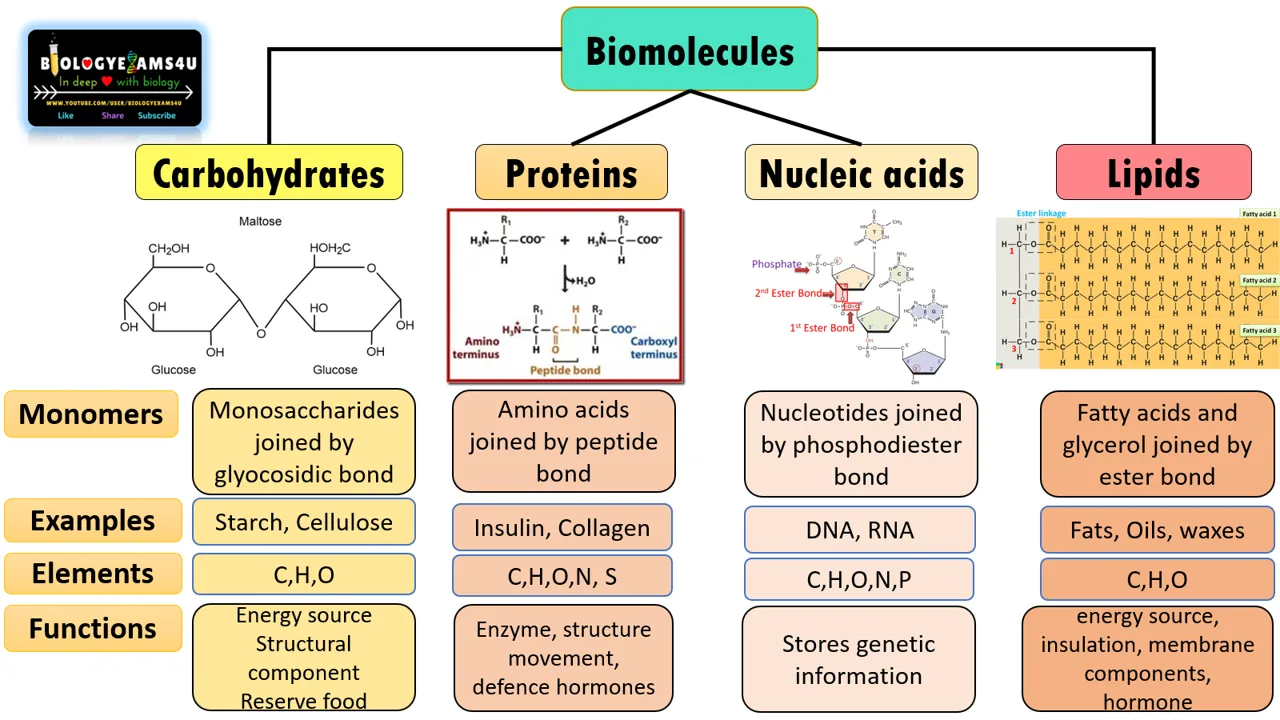
what are the principal classes of biomolecules in biochemistry

Biochemistry studies several principal classes of biomolecules essential for life.

BiomoleculeExamplesFunctions
CarbohydratesMonosaccharides, StarchEnergy source, Structural component
ProteinsAmino acids, InsulinEnzymatic activity, Structural roles
Nucleic AcidsDNA, RNAGenetic information storage
LipidsFats, OilsEnergy storage, Membrane structure

how does biochemistry relate to health care

Biochemistry plays a crucial role in health care, influencing diagnosis and treatment of diseases.

  • Physicians utilize biochemical knowledge to understand disease mechanisms at the molecular level.
  • Biochemical tests, such as blood tests, help in diagnosing conditions like diabetes and inflammatory diseases.
  • Understanding biochemical pathways aids in developing targeted therapies and personalized medicine.
  • Overall, biochemistry is fundamental to advancing medical science and improving patient care.

what are some discoveries in enzymology from biochemistry

Enzymology has seen significant discoveries that have advanced our understanding of biochemical reactions.

  • Eduard Buchner's discovery of cell-free fermentation demonstrated that enzymes can catalyze reactions outside living cells.
  • The Michaelis-Menten equation, developed by Leonor Michaelis and Maud Menten, describes the kinetics of enzyme-catalyzed reactions.
  • Emil Fischer's work on enzyme-substrate specificity led to a deeper understanding of protein structures.
  • These discoveries have laid the groundwork for modern biochemistry and biotechnology.

what role do vitamins play in biochemistry

Vitamins are essential organic compounds that play critical roles in various biochemical processes.

  • They act as coenzymes, assisting in enzymatic reactions.
  • Vitamins are crucial for metabolic pathways, including energy production and DNA synthesis.
  • Deficiencies in vitamins can lead to significant health issues and metabolic disorders.
  • Recognition of vitamins' importance has led to their inclusion in dietary recommendations and health guidelines.

how has recombinant DNA technology impacted biochemistry

Recombinant DNA technology has revolutionized biochemistry and biotechnology since its inception.

  • Developed in the 1970s, it allows for the manipulation of genetic material, enabling gene splicing and cloning.
  • This technology has led to advancements in genetic engineering, including the production of insulin and other therapeutic proteins.
  • It has also facilitated research in genomics and proteomics, enhancing our understanding of biological systems.
  • The implications of recombinant DNA technology extend to agriculture, medicine, and environmental science.