The document explores the comparison between Egyptian hieroglyphics and Maya pictograms, focusing on their unique characteristics and cultural significance. It discusses various aspects of allography, sign development, and the aesthetic culture surrounding these ancient writing systems. This analysis is beneficial for scholars and students interested in ancient civilizations and linguistics. The conference proceedings include insights from experts in the field, making it a valuable resource for understanding the complexities of hieroglyphic writing.

Key Points

  • Analyzes the similarities and differences between Egyptian hieroglyphics and Maya writing systems.
  • Explores allography and sign development in ancient writing.
  • Discusses the cultural significance of hieroglyphs in Egyptian and Maya societies.
  • Includes expert insights from a conference on hieroglyphic domains.
Jmez7
2 pages
Language:English
Type:Presentation
Jmez7
2 pages
Language:English
Type:Presentation
143
/ 2
International Conference,
June 9 – 11, 2017
Egyptian and Maya
Writing:
Comparing Hieroglyphic
Domains
Die Nationalen Forschungsschwerpunkte sind ein
Förderungsinstrument des Schweizerischen Nationalfonds
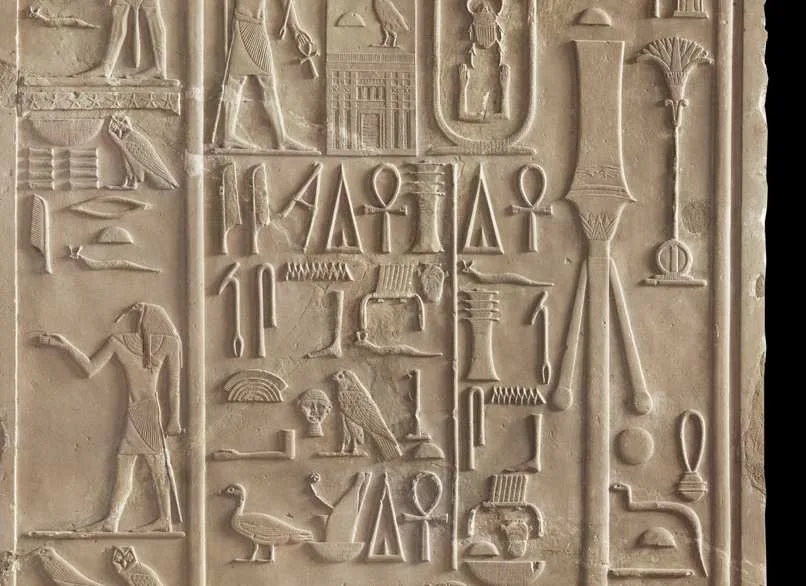
Images: Left: Chapelle Blanche, Karnak, Egypt, Senwosret I,
ca. 1950 BCE, limestone. Appearence of the royal statue.
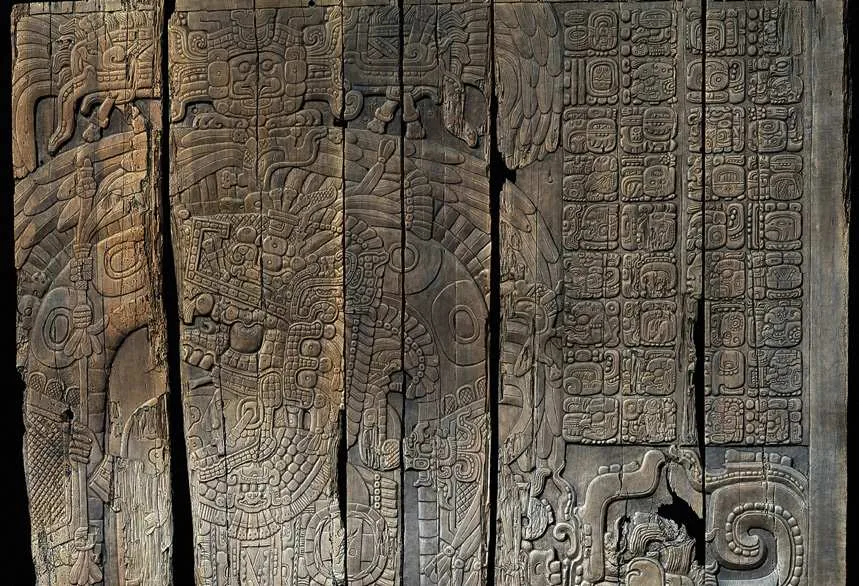
Right: Tikal, Temple IV, Guatemala, AD 743, chicozapote wood.
Lintel commemorating Yax Yik‘in Chan K‘awiil.
Egyptian and Maya Writing: Comparing Hieroglyphic Domains
International Conference, June 9 – 11, 2017
Friday, June 9
8.45 – 9.15 Welcome coffee, registration
9.15 – 9.45 Introduction (Stephen Houston, Andréas Stauder)
Session I – Allography, Variation, Sign Development
discussion leader: Andréas Stauder
9.45 – 12.15 Christian Prager (Universität Bonn):
The Same Difference: Modes of Allography in Maya
Hieroglyphic Texts
Marc Zender (Tulane University, New Orleans):
Towards a Maya Paleography: Aspects of sign
develop ment, regional variation, and idiosyncratic style
in Classic Maya Writing
12.15 – 13.15 Lunch (eikones, Rheinsprung)
(Session II, anticipated)
discussion leader: Simon Martin
13.15 – 14.30 Ludwig Morenz (Universität Bonn):
Superglyphs mimicking a mythem of secret sacral
knowledge. Ways of using hieroglyphs beyond
regular writing
14.30 17.00 Workshop on the Tikal lintels, Museum der Kulturen
18.00 Reception at eikones, Rheinsprung
Saturday, June 10, 2017
(Session I, continued)
9.15 – 10.15 Antonio Loprieno (Universität Basel – eikones):
Divorce between logographic and phonographic
values of hieroglyphic signs: is the Egyptian
case paradigmatic?
Session II – Composition, Elaboration, Agentivity
discussion leader: David Stuart
10.30 13.00 Dimitri Meeks (CNRS, Montpellier / Paris):
Composite hieroglyphs: a typology
Simon Martin (University of Pennsylvania Museum
of Archaeology and Anthropology):
Plasticity and Permeation: Conflation, Infixation,
Superimposition, and other Combinatory Principles in
Classic Maya Writing
13.00 14.30 Lunch (eikones, Rheinsprung)
discussion leader: John Baines
14.30 17.00 David Klotz (Universität Basel / Yale University eikones):
Full-bodied, anthropomorphic hieroglyphs in New
Kingdom and Graeco-Roman cryptography, and
emblematic / rebus analogues in sculpture and reliefs
Stephen Houston (Brown University, Providence):
Sign Definition, Ontological Elaboration, and
Presence-Absence in Maya Glyphs
19.30 Conference dinner – Kunsthalle, “Schluuch”
Sunday, June 11, 2017
Session III – Hieroglyphs and Aesthetic Culture, Relation to Other
Modes of Visual Expression
discussion leader: Antonio Loprieno
9.30 12.00 Dmitri Beliaev (Russian State University for
the Humanities, Moscow):
Classic Maya Hieroglyphic Writing and Imagery:
Between Iconicity and Symbolism
Andréas Stauder (École Pratique des Hautes Études /
PSL Research University, Paris – eikones):
Visual Qualities of Egyptian Hieroglyphic Signs,
and Foregrounded Iconicity
12.00 13.30 Lunch (eikones, Rheinsprung)
discussion leader: Stephen Houston
13.30 16.00 John Baines (University of Oxford):
How do Egyptian hieroglyphs and other images both
work together and stay apart?
David Stuart (University of Texas Austin):
Intersections of Text, Image and Object in Ancient
Maya Hieroglyphic Writing
16.00 16.30 Closing remarks; publication
Conception:
Andréas Stauder, David Klotz, Stephen Houston
eikones NCCR Iconic Criticism, Rheinsprung 11, CH-4051 Basel
www.eikones.ch

/ 2
End of Document
143

FAQs

what is Egyptian and Maya writing: comparing hieroglyphic domains about

The document 'Egyptian and Maya Writing: Comparing Hieroglyphic Domains' explores the similarities and differences between the hieroglyphic writing systems of ancient Egypt and the Maya civilization.

  • It discusses allography and variations in sign development.
  • The conference includes presentations on composite hieroglyphs and their aesthetic qualities.
  • Key sessions focus on the relationship between text and imagery in both cultures.

how do Egyptian and Maya writing systems compare

<p'Egyptian and Maya Writing: Comparing Hieroglyphic Domains' highlights the unique characteristics of both writing systems.
  • Egyptian hieroglyphs are primarily logographic, while Maya writing incorporates both logographic and phonetic elements.
  • Both systems exhibit regional variations and idiosyncratic styles.
  • The document emphasizes the aesthetic and cultural significance of hieroglyphs in both societies.

what are the main themes in Egyptian and Maya writing: comparing hieroglyphic domains

The main themes of 'Egyptian and Maya Writing: Comparing Hieroglyphic Domains' include the exploration of sign development and cultural expression.

  • It examines how hieroglyphs convey mythological narratives and secret knowledge.
  • Discussion on the plasticity of hieroglyphs and their combinatory principles is featured.
  • The document also addresses the intersection of text, image, and object in both cultures.

who are the speakers in Egyptian and Maya writing: comparing hieroglyphic domains

The document features prominent scholars in the field of hieroglyphic studies.

  • Stephen Houston, a noted expert from Brown University, discusses the ontological aspects of Maya glyphs.
  • Andréas Stauder from École Pratique des Hautes Études presents on visual qualities of Egyptian hieroglyphs.
  • Other contributors include Marc Zender and David Stuart, who explore various aspects of hieroglyphic writing.

what are the findings of Egyptian and Maya writing: comparing hieroglyphic domains

'Egyptian and Maya Writing: Comparing Hieroglyphic Domains' presents key findings on the structure and function of hieroglyphs.

  • It reveals how both writing systems serve not only as communication tools but also as artistic expressions.
  • The document highlights the importance of contextual interpretation in understanding hieroglyphs.
  • Findings suggest that hieroglyphs were integral to cultural identity in both civilizations.