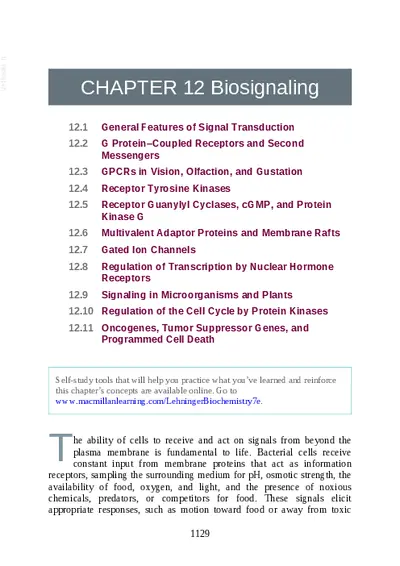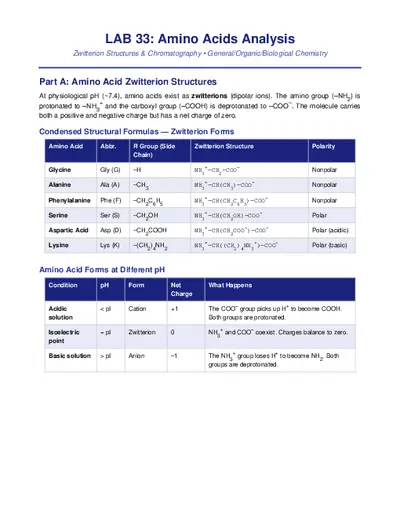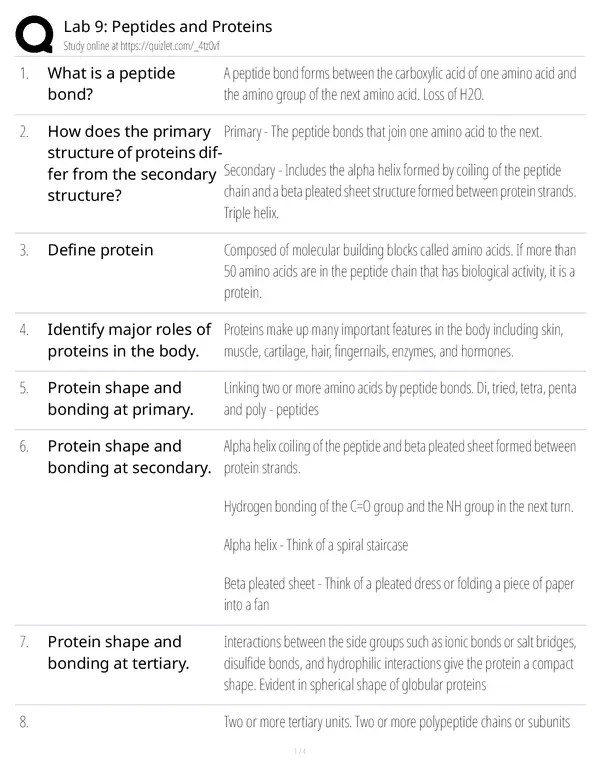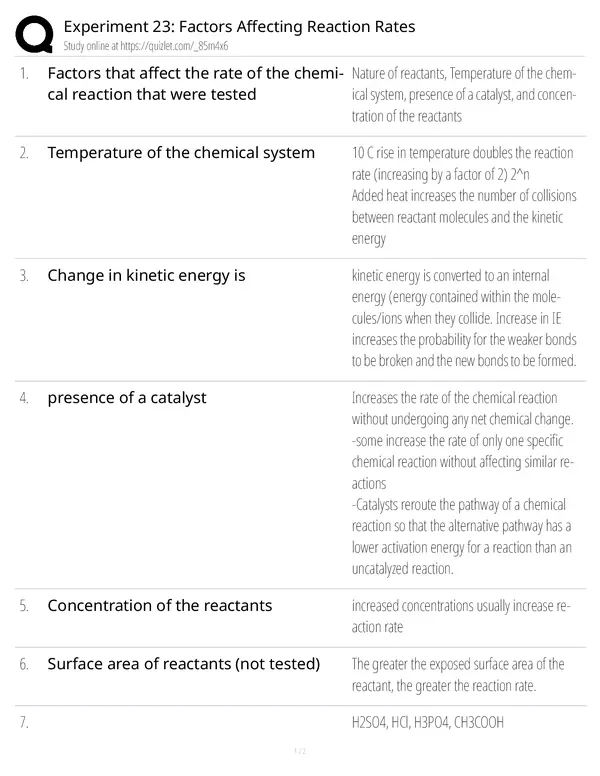


Access an extensive, community-driven library of biochemistry PDFs, metabolic pathway flowcharts, enzyme kinetics worksheets, and molecular biology study guides on Chesser Resources. We provide a centralized, 100% free-to-read hub for chemical and biological study material, featuring over 300,000 documents across the sciences. This dedicated collection tracks the molecular logic of life—ranging from the precise folding patterns of proteins and the complex catalytic rates of enzymes to the systemic flux of glycolysis, the Krebs cycle, and oxidative phosphorylation. Whether you are troubleshooting the thermodynamics of biological reactions, mapping the stages of DNA replication, or preparing for an advanced university biochemistry exam, our browser-based reader, AI summaries, and Ask-AI tools provide instant, deep-dive clarity.
Biochemistry is the bridge between biology and chemistry, the study of the molecular foundations of life. It explores how simple chemical reactions, governed by the laws of thermodynamics, combine to create the complexity of living organisms. The field branches into three fundamental frameworks: Structural Biochemistry (the study of proteins, carbohydrates, lipids, and nucleic acids), Enzymology (the kinetics and regulatory mechanisms of biological catalysts), and Metabolism (the integrated energy-harvesting and biosynthetic pathways of the cell). Studying biochemistry builds advanced competencies in molecular visualization, chemical reaction modeling, and pathological metabolic analysis—skills foundational to every medical, pharmaceutical, genetic, and biotechnological career.
Our library hosts a vast array of student-shared experiment logs, molecular pathway maps, and comprehensive review packages organized for deep study:
Protein Dynamics: Find high-yield protein structure and function PDFs detailing primary through quaternary folding, disulfide bonding, and conformational stability.
Nucleic Acid Logic: Access DNA replication and transcription guides tracking the molecular choreography of polymerases, helicases, and regulatory transcription factors.
Catalytic Rates: Download functional enzyme kinetics worksheets mapping Michaelis-Menten kinetics, $V_{max}$, and $K_m$ parameters.
Energy Flux: Browse comprehensive metabolic pathway charts detailing the breakdown of glucose, fatty acid oxidation, and the generation of $ATP$ via chemiosmosis.
Lab Proficiency: Access biochemistry lab report templates and protocols for chromatography, electrophoresis, and spectrophotometry.
Clinical Integration: Browse dossiers on the pathophysiology of metabolic errors, such as phenylketonuria ($PKU$) and glycogen storage diseases.
| Biochemical Variable | Scientific Definition | Functional Significance |
| Activation Energy ($E_a$) | Energy required to initiate a chemical reaction | Lowered by enzymes to increase reaction rates |
| $K_m$ (Michaelis Constant) | Substrate concentration at $1/2 \ V_{max}$ | Measures enzyme affinity for a substrate |
| Gibbs Free Energy ($\Delta G$) | Thermodynamic potential of a system | Determines if a metabolic reaction is spontaneous |
| Oxidative Phosphorylation | $ATP$ generation via the electron transport chain | Primary source of cellular energy ($ATP$) |
Enzymes are biological catalysts that lower the activation energy required for a chemical reaction to occur. They do this by stabilizing the “transition state” of a substrate, providing a specialized chemical environment (the active site) that encourages bond breaking or forming. By lowering the energy “barrier” of a reaction, enzymes allow processes that would otherwise take years to occur in milliseconds, enabling the rapid metabolic flux required for life.
The Krebs cycle (Citric Acid Cycle) is the central “hub” of aerobic metabolism. It takes acetyl-CoA derived from carbohydrates, fats, or proteins and oxidizes it to produce high-energy electron carriers ($NADH$ and $FADH_2$). While it produces a small amount of $ATP$ directly, its true value is the “harvesting” of electrons, which are then passed to the Electron Transport Chain to drive the mass production of $ATP$ during oxidative phosphorylation.
A protein’s function is dictated by its three-dimensional shape. This shape is determined by the specific sequence of amino acids (primary structure) and how they interact to fold into helices, sheets, and complex globular units. If a protein is misfolded—due to genetic mutations or environmental stress—it can lose its function entirely or, worse, aggregate into toxic clumps, as seen in neurodegenerative diseases like Alzheimer’s or Parkinson’s.
Chesser Resources is a free, open library of study and research material designed to democratize access to academic success. We host over 300,000+ documents—including textbooks, lecture notes, research papers, and study guides—across every subject imaginable. We believe students shouldn’t have to navigate paywalls or blurry preview pages just to get the information they need to learn.
Everything on Chesser Resources is free to read and search in your browser. We’ve built in powerful, free tools to help you actually learn from the material: AI summaries for fast comprehension, an Ask-AI chatbot to answer specific questions about your document, highlighting and annotation tools, and even read-aloud audio. Our platform is kept free by the community; by contributing your own notes or sharing content, you earn credits that unlock document downloads and prints, ensuring the library remains a high-performance, open-access resource for students everywhere.
Ready to dive into biochemistry study guides or metabolic pathway charts? You don’t need to sign up to start learning. Browse our library, use our AI tools to summarize complex molecular mechanisms, and contribute your own notes to help the student community grow.