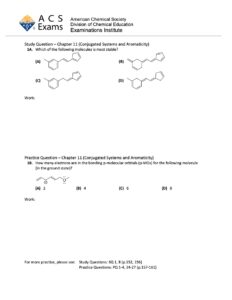
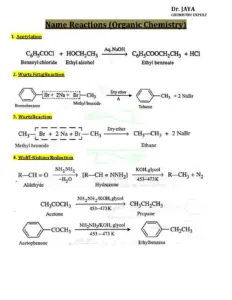
The ACS Exams Organic Chemistry Practice Items provide a comprehensive set of questions designed for students preparing for organic chemistry assessments. This handout includes practice questions covering key topics such as hybridization, isomers, acidity, nucleophilic substitution reactions, and more. Ideal for college-level organic chemistry courses, it serves as a valuable resource for exam preparation and self-assessment. Each question is structured to enhance understanding and application of organic chemistry concepts, making it suitable for both classroom and independent study.
Key Points
Includes practice questions on hybridization and molecular structure
Covers isomer identification and nomenclature in organic chemistry
Features questions on acidity and basicity of organic compounds
Provides insights into nucleophilic substitution and elimination reactions
This link leads to an external site. We do not know or endorse its content, and are not responsible for its safety. Click the link to proceed only if you trust this site.
Practice EKG Strips with Answers for Medical StudentsStudy Guide
PDF
Organic Chemistry ACS Sample Questions
FAQs
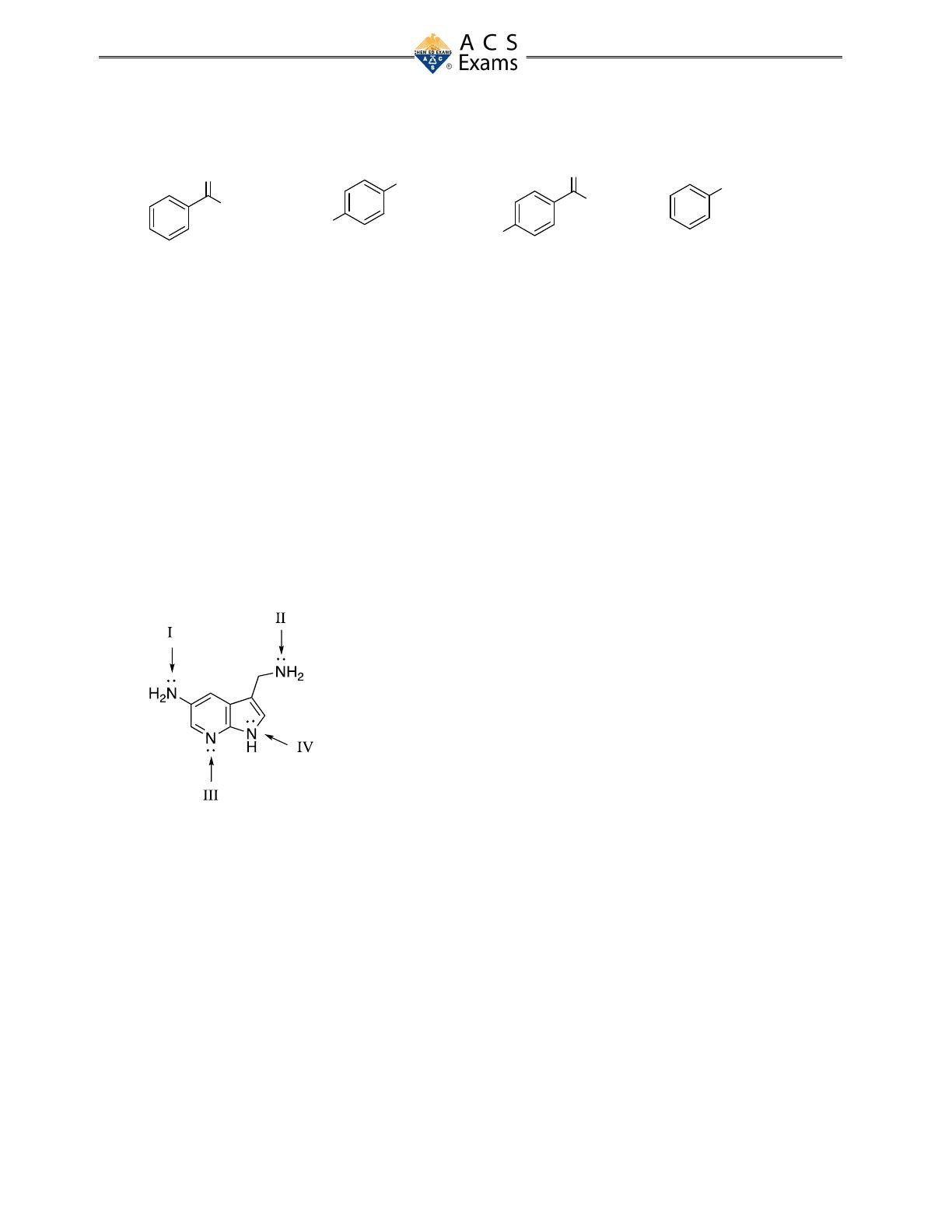
What are the hybrid orbitals used to form sigma bonds in organic chemistry?
In organic chemistry, the hybrid orbitals used to form sigma bonds depend on the types of carbon atoms involved. For instance, the options include sp, sp2, and sp3 hybridization. Specifically, the hybridization can vary based on the molecular structure, such as sp and sp for triple bonds, or sp3 and sp for single bonds. Understanding these hybridizations is crucial for predicting molecular geometry and reactivity.
What is the IUPAC name for a specific organic compound with chlorine and hydroxyl groups?
The IUPAC naming of compounds with functional groups like chlorine and hydroxyl groups involves identifying the correct stereochemistry and substituents. For example, options include names like (2S, 4S) 2-chloro-5-ethylheptan-4-ol and others, which specify the positions and configurations of the substituents on the carbon chain. Correctly naming these compounds is essential for clear communication in organic chemistry.
How do you rank compounds in order of increasing acidity?
Ranking compounds by acidity involves analyzing the stability of their conjugate bases. For example, in the document, compounds are ranked based on their functional groups and resonance effects. The correct order of increasing acidity can be determined by evaluating factors such as electronegativity and the ability to stabilize negative charge. The document provides specific compounds to compare, allowing students to practice this important concept.
What is the major product of a specific elimination reaction?
In elimination reactions, the major product is determined by the stability of the resulting alkene. For instance, when reacting a compound with sodium ethoxide in ethanol, the expected major product can be predicted based on Zaitsev's rule, which states that the more substituted alkene is favored. The document provides specific reaction conditions and substrates to illustrate this principle, helping students understand elimination mechanisms.
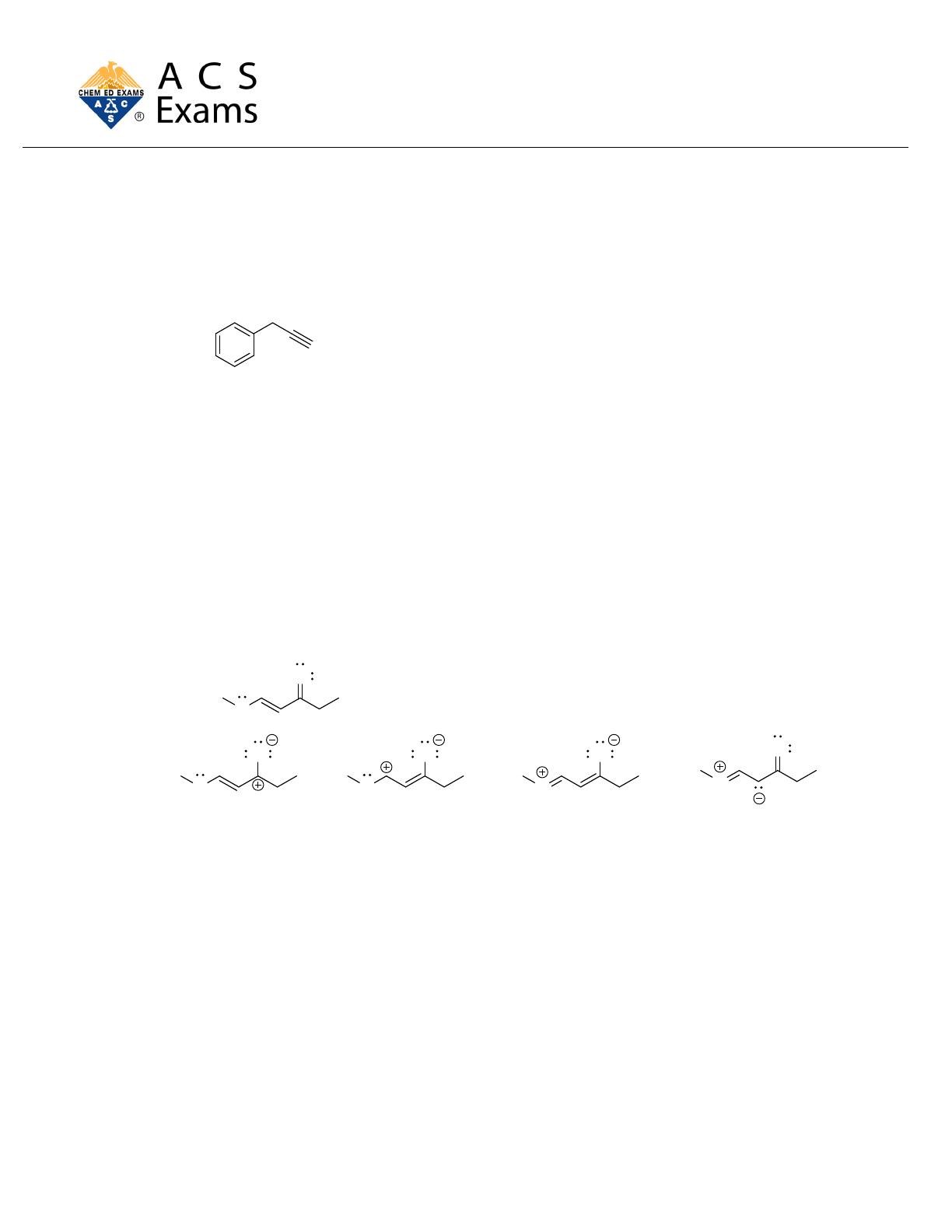
What is the HOMO for 1,3,5-hexatriene?
The Highest Occupied Molecular Orbital (HOMO) for 1,3,5-hexatriene is crucial for understanding its reactivity and electronic properties. The document outlines the molecular structure and the arrangement of π electrons in this conjugated system. Identifying the HOMO helps predict how the molecule will interact with electrophiles and other reagents in organic reactions.
Which substituent is an activating ortho, para-director in electrophilic aromatic substitution?
In electrophilic aromatic substitution reactions, substituents can significantly influence the reactivity and orientation of the incoming electrophile. The document identifies certain groups, such as -OCONH2, as activating ortho, para-directors, which enhance the reactivity of the aromatic ring towards electrophiles. Understanding these directing effects is essential for predicting the outcomes of substitution reactions.
What is the major product of a reaction involving carbonyl chemistry?
In carbonyl chemistry, the major product of reactions often involves nucleophilic attack and subsequent transformations. The document provides examples of reactions where carbonyl compounds react with nucleophiles, leading to specific products. Understanding the mechanisms and conditions that favor certain pathways is key to mastering organic synthesis and reactivity.
Related
PDF
Advanced Organic Chemistry Part B by Carey and Sundberg
PDF
Advanced Organic Chemistry Part B Reactions and Synthesis
PDF
Advanced Organic Chemistry 4th Edition Part B Reactions Synthesis
PDF
Thermodynamics Practice Problems for Chemistry Students
PDF
Electrochemistry Practice Problems for Test 4 Chapter 19