Informed Testing explores effective practices for English as a Foreign Language (EFL) teaching and assessment. It covers essential criteria for effective testing, including validity, reliability, authenticity, practicality, and washback. This resource is designed for educators seeking to enhance their assessment strategies and improve student outcomes. The content includes practical guidelines for test design and administration, making it suitable for teachers and educational professionals. Key topics include the importance of content validity and the impact of test conditions on reliability.

Key Points

  • Explains the five essential criteria for effective EFL testing: practicality, authenticity, validity, reliability, and washback.
  • Provides guidelines for designing assessments that accurately measure student learning outcomes.
  • Discusses the significance of content validity and how to ensure tests reflect the skills being assessed.
  • Covers practical strategies for improving test reliability through effective administration and scoring methods.
Hadouch Amina
5 pages
Language:English
Type:Study Guide
Hadouch Amina
5 pages
Language:English
Type:Study Guide
341
/ 5
1
Informed Testing: Practices for Effective EFL Teaching
and learning
Criteria of an effective test
I. Practicality
II. Authenticity
III. Validity
IV. Reliability
V. Washback
I. Validity
Validity: The test measures exactly what it is supposed to measure.
e.g. to measure writing ability, one might ask students to write a paragraph to describe
their house, not make a list of adjectives that describe their house.
1. Content validity: is defined as any attempt to show that the content of the test is a
representative sample from the component/skill that is to be tested.
2. Construct validity: “is the test supported by a theoretical rationale?”.
e.g. testing reading comprehension through reading aloud?
3. Face validity: “Does the test, on the ‘face’ of it, appear from the learner’s perspective to
test what it is designed to test?”.
Face validity will likely be high if learners encounter:
o A well-constructed, expected format with familiar tasks;
o A test that is clearly doable within the allotted time limit;
o instructions that are crystal clear;
o A difficulty level that presents a reasonable challenge.
II. Reliability
A reliable test is consistent and dependable.
If you give the same test to the same students or matched students on two different
occasions, the test yields similar results.
Test Reliability: sometimes the nature of the test itself can cause measurement errors:
If a test is too long, test-takers may become fatigued by the time they reach the later items
and hastily respond incorrectly;
2
Poorly written test items that are ambiguous or that have more than one correct answer
may be a further source of test unreliability.
a) Test administration reliability:
Unreliability may also result from the conditions in which the test is administered. How:
Noise;
Photocopying variations;
The amount of light in different parts of the room;
Variations in temperature.
b) Rater reliability:
1. Inter-rater reliability occurs when two or more scorers yield inconsistent scores of the
same test, possibly for lack of attention to scoring criteria, inexperience, inattention or
even preconceived bias.
2. Intra-rater reliability is a common occurrence for classroom teachers because of
unclear scoring criteria, fatigue, bias toward a particular “good” and “bad” student, or
simple carelessness.
3. Student-related reliability:
The most common learned-related issue is reliability which may be caused by:
Temporary illness;
Fatigue;
A bad day;
Anxiety;
III. Authenticity
An authentic test:
Contains language that is as natural as possible;
Has items that are contextualized rather than isolated;
Includes meaningful, relevant, interesting topics;
Offers tasks that closely approximate real-world tasks
IV. Practicality
An effective test is practical. This means that it
is not excessively expensive;
can be completed within appropriate time constraints;
3
is relatively easy to administer;
has a scoring procedure that is specific and time-efficient.
V. Washback
Washback generally refers to the effects the tests have on instruction in terms of how
students prepare for the test.
1. Positive washback: It is achieved when students can, through the testing experience,
identify their areas of success and challenge. When a test becomes a learning experience,
it achieves positive washback.
e.g. if you want students to focus on “writing”, include it in the quiz.
2. Negative washback: if you tell students they will have a quiz on vocabulary and you
don’t include it, that is a negative washback effect.
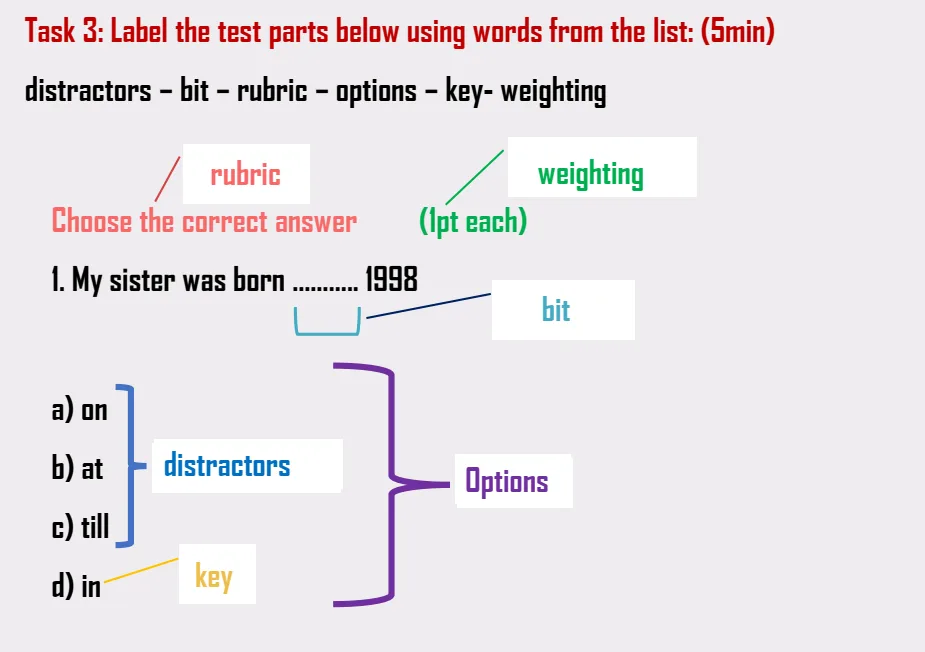
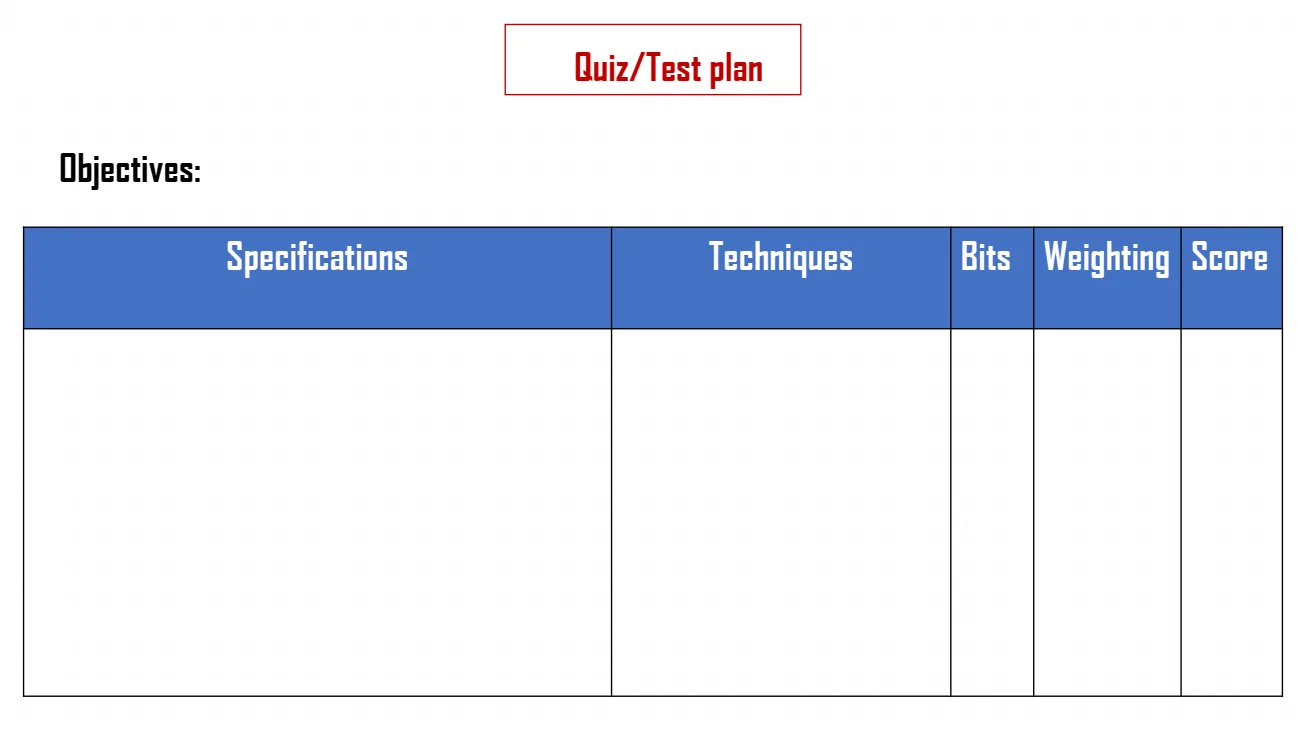
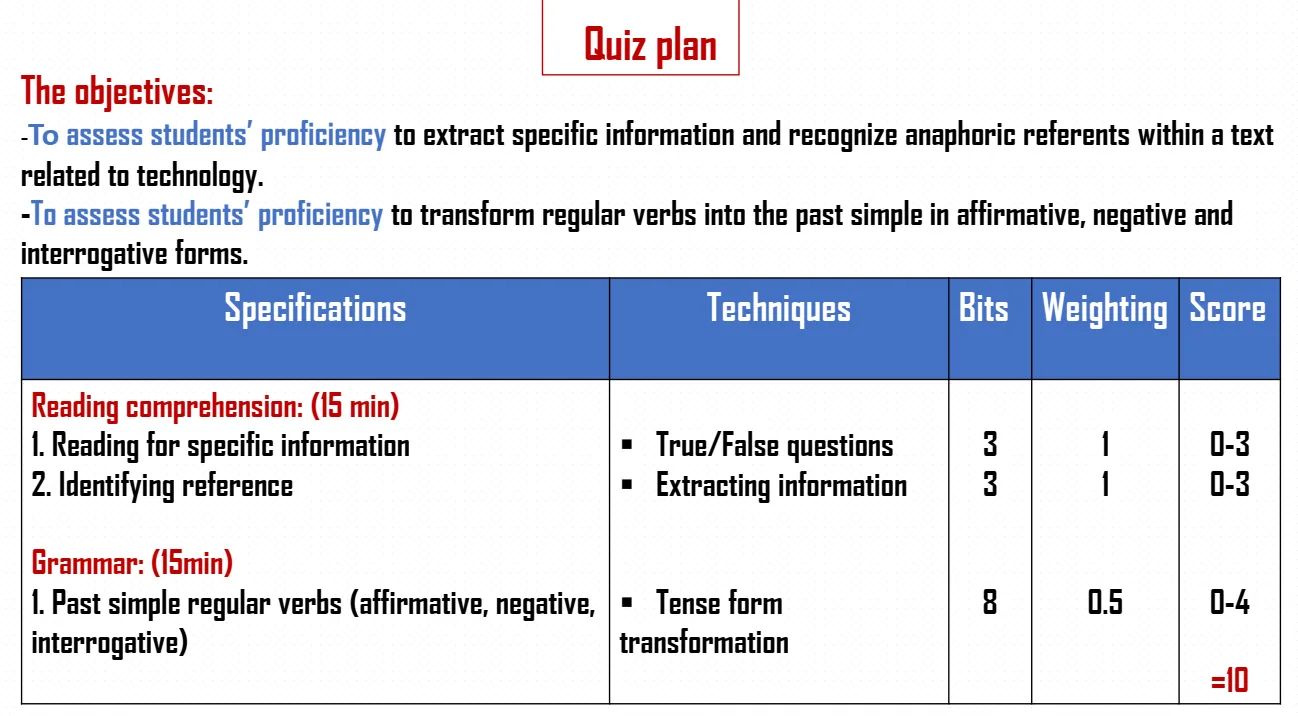
Test Design Procedures
/ 5
End of Document
341

FAQs

What are the criteria of an effective test in EFL teaching?
The criteria of an effective test in EFL teaching include practicality, authenticity, validity, reliability, and washback. Practicality ensures the test is not excessively expensive and can be completed within appropriate time constraints. Authenticity emphasizes the use of natural language and meaningful contexts in test items. Validity refers to the test measuring what it is supposed to measure, while reliability ensures consistency in test results across different occasions. Lastly, washback describes the effects tests have on instruction and how students prepare for them.
What is the difference between content validity and construct validity?
Content validity refers to the extent to which a test represents a sample from the component or skill being assessed, ensuring it covers the relevant content. Construct validity, on the other hand, assesses whether the test is supported by a theoretical rationale, questioning if the method of assessment aligns with the underlying theory of the skill being tested. For example, testing reading comprehension through reading aloud may lack construct validity.
How does washback affect student learning in EFL testing?
Washback refers to the impact tests have on instruction and student preparation. Positive washback occurs when students can identify their strengths and areas for improvement through the testing experience, making the test a valuable learning opportunity. Conversely, negative washback happens when the test does not align with what students have been taught, such as if vocabulary is tested but not included in the preparation, leading to confusion and frustration.
What factors contribute to test reliability in EFL assessments?
Test reliability is influenced by several factors, including test administration conditions, rater reliability, and student-related issues. Conditions such as noise, lighting, and temperature can affect performance. Rater reliability is crucial, as inconsistencies among scorers can lead to unreliable results. Additionally, student-related factors like temporary illness, fatigue, or anxiety can also impact test outcomes, highlighting the importance of a stable testing environment.
What are the key components of the planning phase for test design?
The planning phase for test design involves several key components: preparing students well for the test, creating an inventory of course content and materials, devising clear objectives, and deciding on the test components. It also includes designing a quiz plan and the specific tasks or exercises to be included, as well as preparing an answer key to ensure accurate scoring.