Introductory Organic Chemistry Summary for CHM102 students covers essential concepts in organic chemistry, including the structure and properties of organic compounds, types of bonding, and functional groups. This summary is designed for students preparing for exams or seeking a concise review of organic chemistry principles. Key topics include ionic and covalent compounds, hybridization, and the classification of hydrocarbons. Ideal for undergraduate chemistry courses, this summary aids in understanding the foundational aspects of organic chemistry.

Key Points

  • Covers fundamental concepts of organic chemistry for CHM102 students.
  • Explains the differences between ionic and covalent compounds.
  • Includes details on hybridization and its role in molecular structure.
  • Discusses the classification of hydrocarbons and their properties.
Yahaya Mary
49 pages
Language:English
Type:Study Guide
Yahaya Mary
49 pages
Language:English
Type:Study Guide
65
/ 49
Page 1
CHM102 - INTRODUCTORY ORGANIC CHEMISTRY SUMMARY
_______ is an experimental science.
Chemistry
Chemistry is an _______ science
experimental
Indeed, ______ have played a vital role in the development of Chemistry.
experiments
Indeed, experiments have played a vital role in the development of_______.
Chemistry
_______ have provided evidences for testing theories
Experiments
Experiments have provided evidences for testing ______
theories
We have divided this course into _______ units.
four
The aim of this course is_______
to give you a general introduction to organic chemistry, giving explanations to observed physical and
chemical properties of organic compounds
______ is the study of the relationship between the structures of molecules and their reactions.
Organic Chemistry
The study of the relationship between the structures of molecules and their reactions is called______
Organic Chemistry
Generally, compounds can be broadly divided into _______classes
Two
Compounds can be broadly divided into two classes, ______ and_______
Ionic and covalent
Compounds can be broadly divided into two classes, ionic and______.
Covalent
______ compounds are composed of positively and negatively charged ions which are held together by
electrostatic forces.
Ionic
_______ are composed of positively and negatively charged ions which are held together by electrostatic
forces.
Ionic compounds

Page 2
Ionic compounds are composed of ______ and ______ charged ions which are held together by
electrostatic forces.
Positively, negatively
Ionic compounds are composed of positively and negatively charged ______ which are held together by
electrostatic forces.
Ions
Ionic compounds are composed of positively and negatively charged ions which are held together by
______ forces.
Electrostatic
Ionic compounds are composed of positively and negatively charged ions which are held together
by_______.
electrostatic forces
______ can be regarded as spheres having symmetrical distribution of charge
Ions
Ions can be regarded as ____ having symmetrical distribution of charge
Spheres
Ions can be regarded as spheres having ______ distribution of charge
Symmetrical
Ions can be regarded as spheres having symmetrical distribution of ______
Charge
No particular direction can be assigned to ionic bonding.
True
In ______ lattice, Na
+
and C1
-
ions are held together by electrostatic forces
NaCl
In NaCl______, Na
+
and C1
-
ions are held together by electrostatic forces
lattice
In NaCl lattice, Na
+
and C1
-
ions are held together by _____forces
Electrostatic
In _____ compounds, molecules are the structural units.
Covalent
In covalent_______, molecules are the structural units.
Compounds
In covalent compounds, _______ are the structural units.
Molecules
In covalent compounds, molecules are the ______ units.
Structural
_______ are the structural units in covalent compounds
Molecules
Page 3
In _______ compounds, the molecules are formed by the sharing of electron pair(s) between the
constituent atoms.
Covalent
In covalent compounds, the molecules are formed by the sharing of ______ (s) between the constituent
atoms.
electron pair
The bonds formed by sharing of pair(s) of electrons are called_______.
covalent bonds
The _____ of electrons to form a covalent bond leads to an increase in electron density in between the
nuclei.
Sharing
The sharing of _______ to form a covalent bond leads to an increase in electron density in between the
nuclei.
Electrons
The sharing of electrons to form a covalent bond leads to an _______ in electron density in between the
nuclei.
Increase
The sharing of electrons to form a covalent bond leads to an increase in ______ in between the nuclei.
electron density
The sharing of electrons to form a covalent bond leads to an increase in electron density in between
the_______.
Nuclei
The amount of energy required to break a particular bond (expressed in terms of kJ mo1-1) is called
its______.
bond dissociation energy
The average value for a particular bond is called______
Bond energy
______ is an average value for a particular bond
Bond energy
The parameters associated with a covalent bond which determine the shape of a molecule are known as
______and_______
bond length, bond angle
There are two more parameters associated with a covalent bond which determine the shape of a molecule
and are known as______.
bond length and bond angle
______ can be defined as the average distance between the nuclei of the atoms which are covalently bound
together.
Bond length
_______ can be defined as the angle between the atoms, forming the bonds to the same atom.
Bond angle
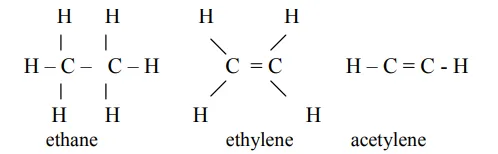
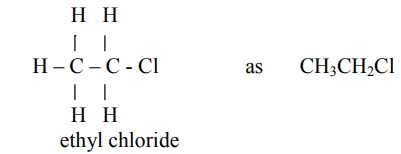
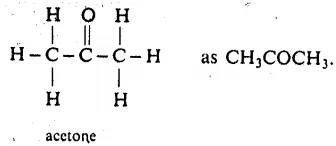
The _______ of a compound is its Lewis structure
structural formula
/ 49
End of Document
65

FAQs

what is CHM102 Introductory Organic Chemistry Summary

CHM102 Introductory Organic Chemistry Summary provides a comprehensive overview of the fundamental concepts in organic chemistry.

  • It covers topics such as the structure and properties of organic compounds.
  • Key concepts include ionic and covalent bonding, hybridization, and functional groups.
  • The summary also discusses important reactions and mechanisms in organic chemistry.

how to study for CHM102 Introductory Organic Chemistry

To effectively study for CHM102 Introductory Organic Chemistry, utilize the summary as a key resource.

  • Focus on understanding the relationship between molecular structure and reactivity.
  • Practice drawing and interpreting Lewis structures and resonance forms.
  • Utilize flashcards for memorizing functional groups and reaction mechanisms.
  • Engage in group study sessions to discuss complex topics.
  • Complete practice problems and past exam questions to reinforce learning.

what are the key topics in CHM102 Introductory Organic Chemistry

Key topics in CHM102 Introductory Organic Chemistry include various essential concepts.

  • Structure and bonding: Understanding ionic and covalent bonds.
  • Functional groups: Identifying and categorizing different organic compounds.
  • Reactions: Learning about substitution, addition, and elimination reactions.
  • Mechanisms: Grasping the mechanisms behind organic reactions.
  • Stereochemistry: Analyzing the spatial arrangement of atoms in molecules.

what is the importance of functional groups in CHM102 Introductory Organic Chemistry

Functional groups are crucial in CHM102 Introductory Organic Chemistry as they determine the chemical properties of organic compounds.

  • They influence reactivity and interaction with other molecules.
  • Common functional groups include alcohols, aldehydes, and carboxylic acids.
  • Understanding functional groups aids in predicting reaction outcomes and mechanisms.
  • They also play a significant role in the classification of organic compounds.

how does CHM102 Introductory Organic Chemistry relate to real-world applications

CHM102 Introductory Organic Chemistry has numerous real-world applications in various fields.

  • It is foundational for fields such as pharmaceuticals, where understanding organic compounds is essential for drug development.
  • In agriculture, organic chemistry principles are used to create pesticides and fertilizers.
  • Environmental science relies on organic chemistry to study pollutants and their effects.
  • Additionally, it is crucial in materials science for developing new materials and polymers.

what are common reactions studied in CHM102 Introductory Organic Chemistry

Common reactions studied in CHM102 Introductory Organic Chemistry include several key types.

  • Substitution reactions: where one atom or group is replaced by another.
  • Addition reactions: involving the addition of atoms to a double bond.
  • Elimination reactions: where elements are removed from a molecule.
  • Rearrangement reactions: where the structure of a molecule is rearranged to form a different compound.

what is hybridization in CHM102 Introductory Organic Chemistry

Hybridization in CHM102 Introductory Organic Chemistry refers to the mixing of atomic orbitals to form new hybrid orbitals.

  • It explains the geometry of molecular structures, such as sp3, sp2, and sp hybridization.
  • For example, sp3 hybridization results in a tetrahedral shape with a bond angle of approximately 109.5°.
  • This concept is fundamental for understanding how atoms bond in organic compounds.

what is the significance of stereochemistry in CHM102 Introductory Organic Chemistry

Stereochemistry is significant in CHM102 Introductory Organic Chemistry as it studies the spatial arrangement of atoms in molecules.

  • It helps in understanding isomerism, where compounds have the same molecular formula but different arrangements.
  • Stereochemistry affects the physical and chemical properties of compounds.
  • It is crucial for drug design, as the orientation of molecules can influence their biological activity.

what are the main objectives of CHM102 Introductory Organic Chemistry

The main objectives of CHM102 Introductory Organic Chemistry are to provide foundational knowledge in organic chemistry.

  • Students will learn to identify and describe organic compounds and their functional groups.
  • They will understand reaction mechanisms and predict the outcomes of reactions.
  • The course aims to develop problem-solving skills through practical applications and laboratory work.

how can I apply concepts from CHM102 Introductory Organic Chemistry in daily life

Concepts from CHM102 Introductory Organic Chemistry can be applied in various aspects of daily life.

  • Understanding the composition of household products, like cleaners and cosmetics.
  • Recognizing the role of organic compounds in food and nutrition.
  • Making informed choices about medications and health supplements.
  • Appreciating the chemistry behind cooking and food preservation.