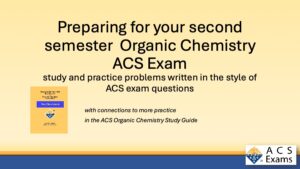
The ACS Exams Organic Chemistry First-Term Exam Practice provides essential study materials for students preparing for their first-term organic chemistry exams. This resource includes practice problems and study questions in the style of ACS exam questions, covering key concepts and topics essential for success. Ideal for students enrolled in introductory organic chemistry courses, this guide helps reinforce understanding of hybridization, molecular geometries, and functional groups. It serves as a valuable tool for exam preparation and review.

Key Points

  • Includes practice problems aligned with ACS exam formats for organic chemistry.
  • Covers essential topics such as hybridization states and VSEPR shapes.
  • Features detailed explanations for each practice question to aid understanding.
  • Ideal for first-term organic chemistry students preparing for their exams.
Kayla Tomasik
49 pages
Language:English
Type:Study Guide
Kayla Tomasik
49 pages
Language:English
Type:Study Guide
56
/ 49
Preparing for your First-Term
Organic Chemistry ACS Exam
study and practice problems written in the style of
ACS exam questions
with connections to more practice
in the ACS Organic Chemistry Study Guide
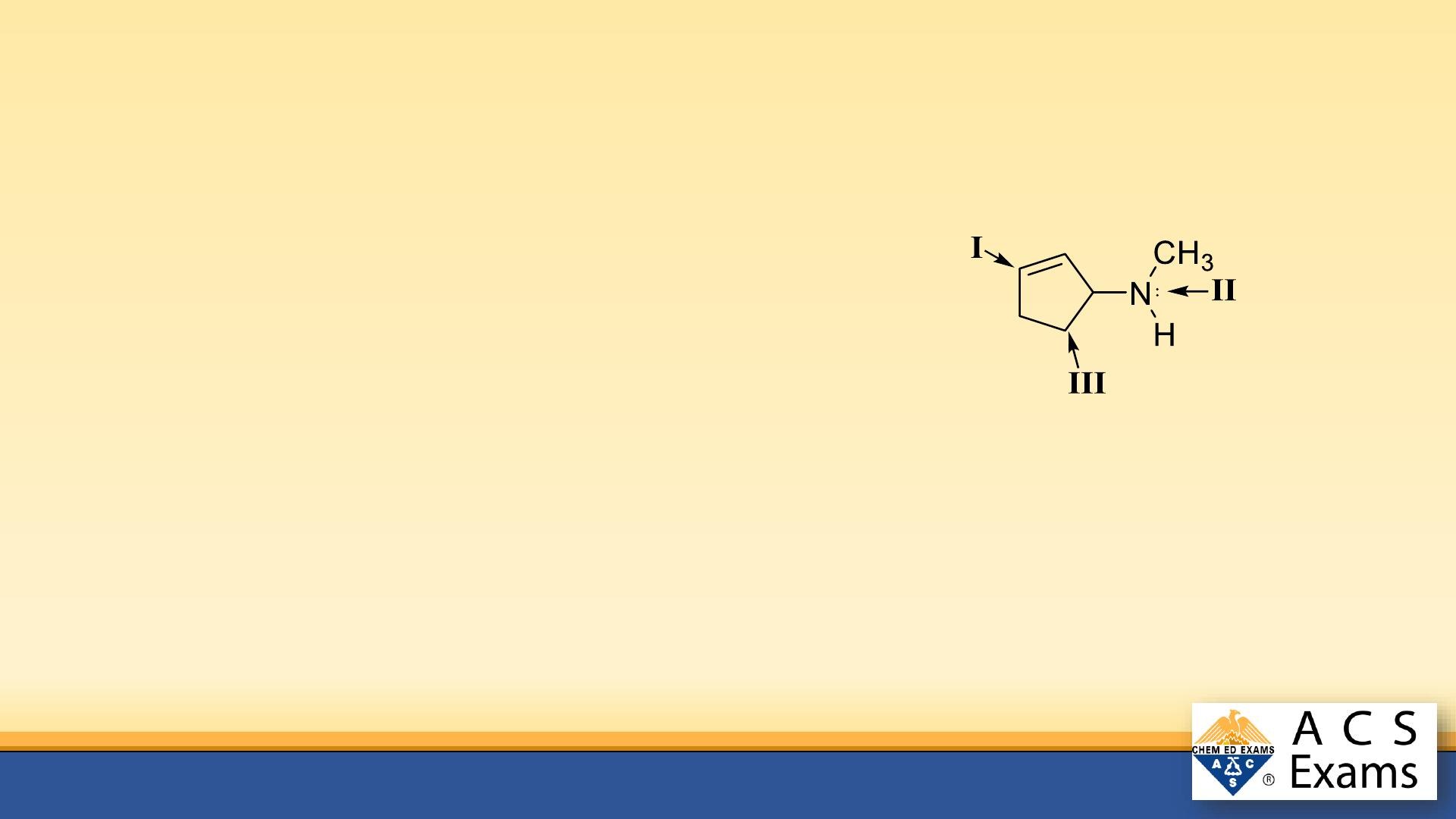
What are the hybridization states of the indicated atoms?
(A)
I = sp
2
II = sp
2
III= sp
3
(B)
I = sp
2
II = sp
3
III= sp
3
(C)
I = sp
II = sp
3
III= sp
(D)
I = sp
II = sp
2
III=
sp
Structure: Shape and Stability: Question #1
ACS Exams, Organic Chemistry-First Term Exam Practice
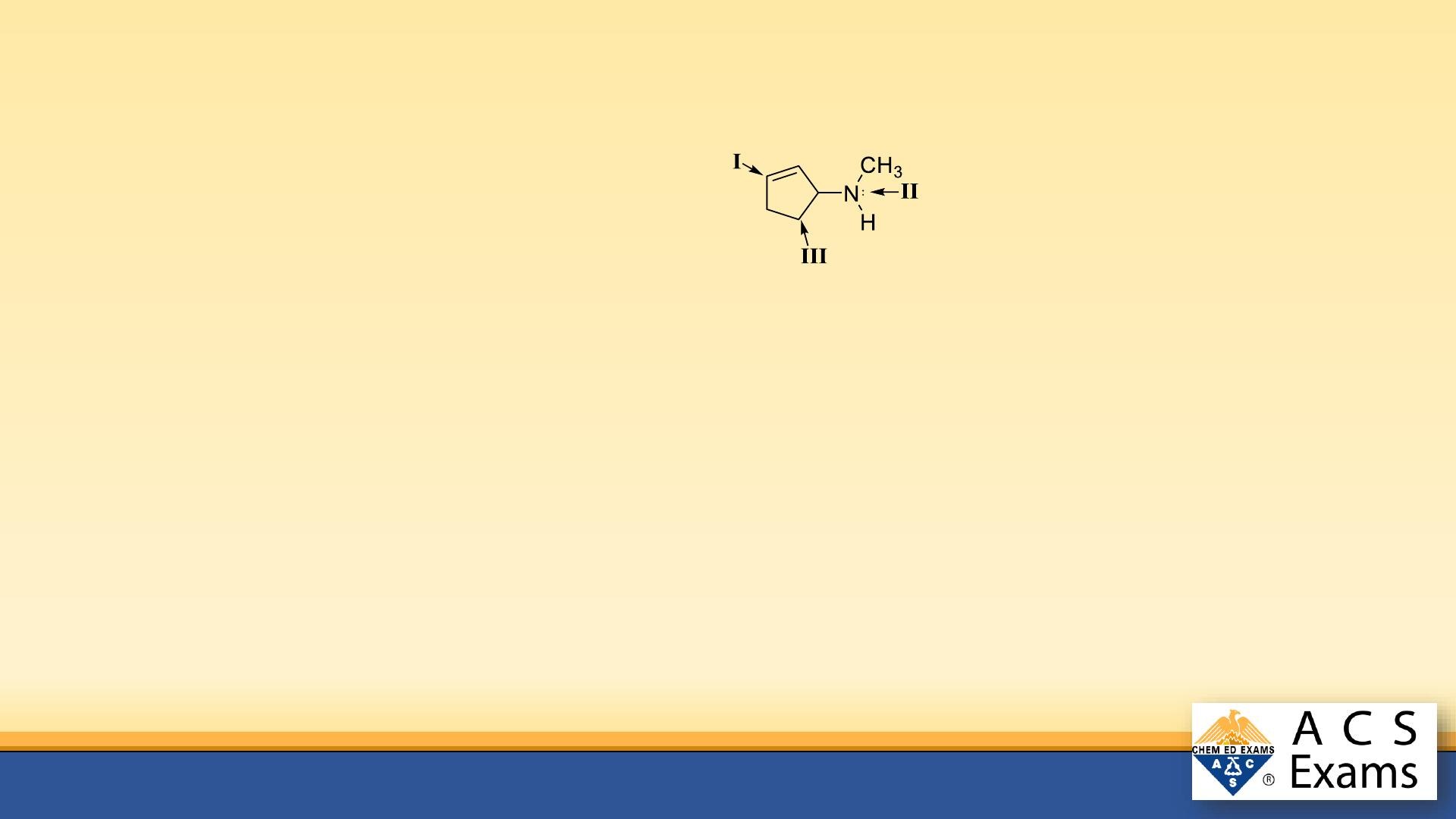
What are the hybridization states of the indicated atoms?
(A)
I = sp
2
II = sp
2
III= sp
3
(B)
I = sp
2
II = sp
3
III= sp
3
(C)
I = sp
II = sp
3
III= sp
(D)
I = sp
II = sp
2
III=
sp
Structure: Shape and Stability: Question #1
The correct answer is (B) I = sp
2
, II = sp
3
, III = sp
3
.
ACS Exams, Organic Chemistry-First Term Exam Practice
To solve this problem, you begin by noting that carbon - I is bonded to 3 other atoms (draw in your hydrogens) and one of these is
connected through a double bond which consists of one bond and one bond. Carbon - I is therefore sp
2
hybridized.
Next, you recognize that carbon - II is bonded to three atoms and contains a lone pair of electrons. Since we hybridize electrons in
bonds and lone pairs, carbon - II is therefore sp
3
hybridized.
Finally, you note that carbon - III is bonded to four atoms, two carbons and two hydrogens. Carbon - III is therefore sp
3
hybridized.
Choices (A), (C), and (D) all have at least 1 incorrect hybridization state listed.
/ 49
End of Document
56

FAQs

What are the hybridization states of indicated atoms in organic molecules?
In the document, hybridization states are identified for various carbon atoms in organic structures. For example, carbon I is sp2 hybridized as it is bonded to three other atoms with one double bond. Carbon II is sp3 hybridized due to its three bonds and a lone pair. Lastly, carbon III is also sp3 hybridized as it is bonded to four atoms, including two carbons and two hydrogens.
What VSEPR shapes correspond to specific carbon atoms?
The document outlines the VSEPR shapes associated with specific carbon atoms in organic molecules. For instance, carbon I has a bent shape, carbon II is trigonal pyramidal, and carbon III is tetrahedral. This classification is based on the number of bonds and lone pairs around each carbon atom, which influences their spatial arrangement.
Which compound is NOT a constitutional isomer of the others?
According to the document, among the compounds presented, structure D is not a constitutional isomer of the others. This conclusion is drawn from analyzing the degrees of unsaturation; while structures A, B, and C each have four degrees of unsaturation, structure D has five, indicating a different molecular structure.
What functional group is NOT present in cortisone?
The document specifies that cortisone does not contain a carboxylic acid functional group. It includes a primary alcohol, ketone, and tertiary alcohol, but lacks the terminal carboxylic acid structure, which is characterized by a carbonyl group bonded to a hydroxyl group.
What is the IUPAC name of a specific compound in the document?
The document provides the IUPAC name for a compound as 5-ethyl-2,2-dimethyloctane. This naming follows the conventions for identifying the longest carbon chain, substituents, and their positions within the molecule.
How do you determine the stereochemical assignments for chiral carbons?
To determine stereochemical assignments for chiral carbons, the document advises using the Cahn-Ingold-Prelog priority rules. For instance, when assessing carbon-3 and carbon-5, you assign priorities based on atomic numbers of the atoms directly attached to these carbons. The orientation of the lowest priority substituent determines whether the configuration is R or S.
What is the preferred conformation of trans-3-tert-butyl-1-bromocyclohexane?
The document states that the preferred conformation of trans-3-tert-butyl-1-bromocyclohexane is when the bromo group is axial and the tert-butyl group is equatorial. This arrangement minimizes steric strain and stabilizes the molecule, as bulky groups prefer to occupy equatorial positions.