

Access an extensive, community-driven library of genetics PDFs, inheritance pattern worksheets, DNA structure diagrams, and molecular genomics study guides on Chesser Resources. We provide a centralized, 100% free-to-read hub for biological and genetic study material, featuring over 300,000 documents across the sciences. This dedicated collection tracks the fundamental code of life—ranging from the microscopic precision of nucleotide pairing and transcription to the macroscopic complexity of pedigree analysis and population evolution. Whether you are troubleshooting the mechanics of CRISPR-Cas9, mapping Mendelian traits via Punnett squares, or preparing for an advanced university molecular genetics exam, our browser-based reader, AI summaries, and Ask-AI tools provide instant, deep-dive clarity.
Genetics is the branch of biology concerned with the study of genes, genetic variation, and heredity in organisms. It explores how traits are passed from parents to offspring and how the molecular “blueprints” in DNA are interpreted to build and maintain complex life. The field branches into three fundamental frameworks: Classical (Mendelian) Genetics (the laws of inheritance and probability), Molecular Genetics (the chemistry of DNA, transcription, and translation), and Genomics & Bioinformatics (the analysis of entire genomes and gene regulation). Studying genetics builds advanced competencies in molecular visualization, statistical modeling, and diagnostic reasoning—skills foundational to every career in medicine, biotechnology, evolutionary research, and pharmacology.
Our library hosts a vast array of student-shared experiment logs, mapping flowcharts, and comprehensive review packages organized for deep study:
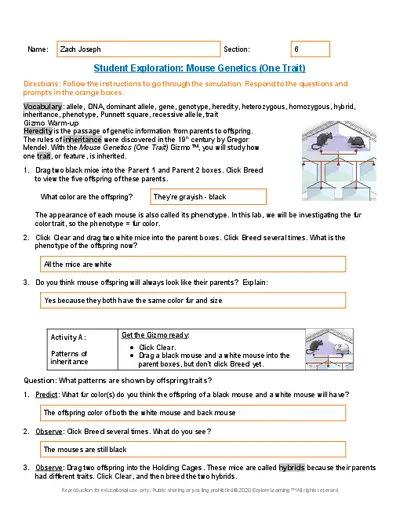
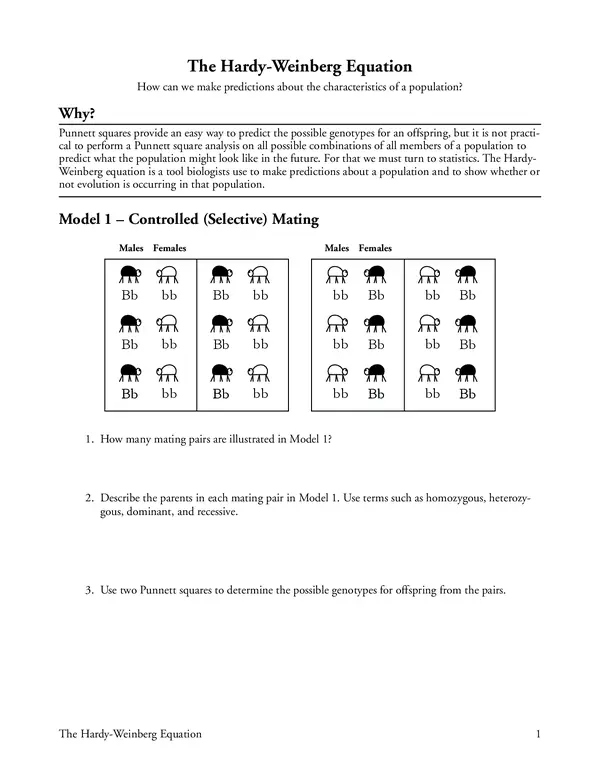
Inheritance Laws: Find high-yield Punnett square worksheets detailing monohybrid, dihybrid, and sex-linked inheritance patterns.
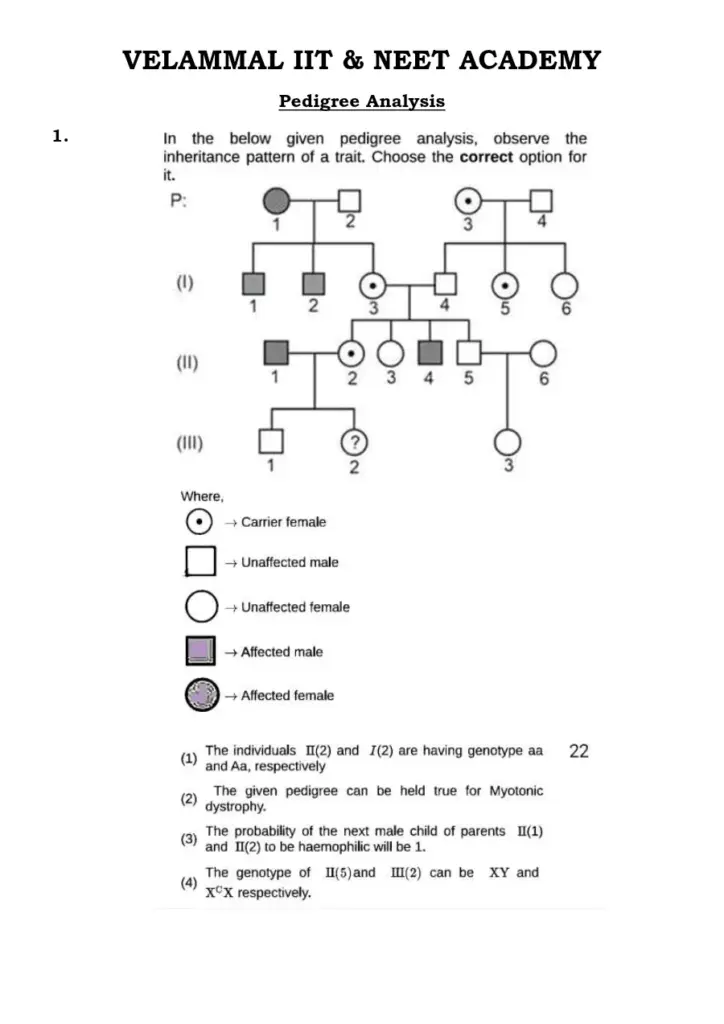
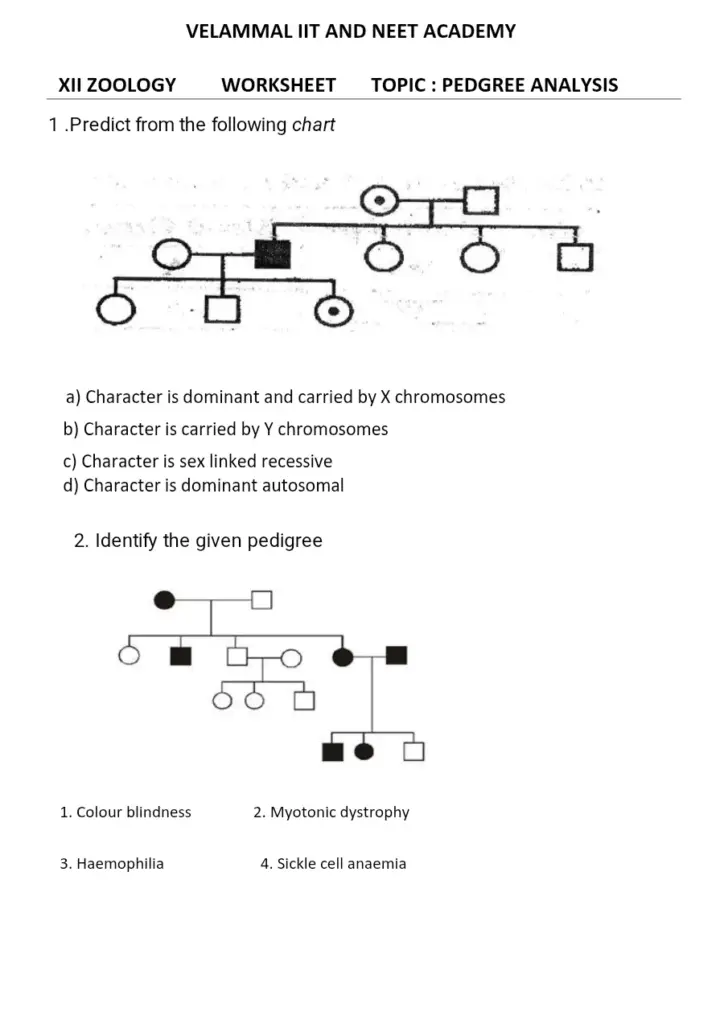
Pedigree Analysis: Access pedigree chart guides tracking the transmission of dominant, recessive, and X-linked traits through generations.
The Blueprint: Download functional DNA structure and replication guides analyzing the chemical bond dynamics and enzymatic process of $DNA$ duplication.
Central Dogma: Browse transcription and translation notes mapping how genes are converted into protein functional units.
Gene Expression: Access epigenetics and gene regulation PDFs focusing on methylation, histone modification, and operon models (like the lac operon).
Modern Tech: Browse dossiers on CRISPR and genetic engineering tools that define the modern era of precision medicine.
| Genetic Variable | Definition | Clinical/Biological Significance |
| Genotype | The genetic constitution of an organism | Determines the potential phenotypic range |
| Allele Frequency | Proportion of specific variants in a population | Primary metric for evolutionary change |
| $N$ (Nucleotide) | The basic structural unit of DNA | Site of mutation and genetic variation |
| Exon/Intron | Coding vs. non-coding regions | Dictates RNA splicing and protein diversity |
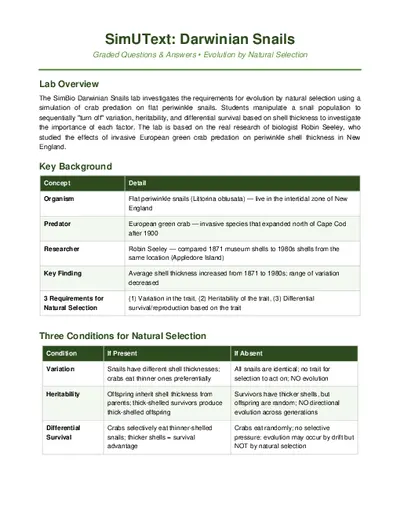
The Genotype is the internal “code” stored in your DNA (e.g., $AaBb$). The Phenotype is the observable physical expression of that code (e.g., blue eyes, tall height), which is often the result of complex interactions between your genotype and environmental factors (epigenetics). Understanding this bridge is essential for clinical genetics, as it explains why two people with the same mutation can express different disease severity.
Proposed by Mendel, independent assortment states that genes for different traits (like hair color vs. height) are passed on independently of one another. This happens because chromosomes align randomly during Meiosis. This process shuffles the deck of genetic cards in every generation, ensuring that offspring are not mere “clones” of their parents, which provides the diversity required for survival in changing environments.
Cells use a process called the Central Dogma: $DNA \to RNA \to Protein$. First, a segment of $DNA$ is transcribed into $mRNA$ inside the nucleus. This $mRNA$ then leaves the nucleus and is “read” by ribosomes in the cytoplasm, which translate the code into a specific chain of amino acids, folding them into functional proteins. Every trait you have—from your immune response to your metabolism—is the result of this precise manufacturing pipeline.
Chesser Resources is a free, open library of study and research material designed to democratize access to academic success. We host over 300,000+ documents—including textbooks, lecture notes, research papers, and study guides—across every subject imaginable. We believe students shouldn’t have to navigate paywalls or blurry preview pages just to get the information they need to learn.
Everything on Chesser Resources is free to read and search in your browser. We’ve built in powerful, free tools to help you actually learn from the material: AI summaries for fast comprehension, an Ask-AI chatbot to answer specific questions about your document, highlighting and annotation tools, and even read-aloud audio. Our platform is kept free by the community; by contributing your own notes or sharing content, you earn credits that unlock document downloads and prints, ensuring the library remains a high-performance, open-access resource for students everywhere.
Ready to dive into genetics study guides or Punnett square worksheets? You don’t need to sign up to start learning. Browse our library, use our AI tools to summarize complex molecular pathways, and contribute your own notes to help the student community grow.