


Access an extensive, community-driven library of neuroscience PDFs, neural signaling worksheets, brain anatomy diagrams, and neurobiology study guides on Chesser Resources. We provide a centralized, 100% free-to-read hub for biological and medical study material, featuring over 300,000 documents across the sciences. This dedicated collection tracks the complex architecture of the nervous system—ranging from the microscopic precision of ion-channel gated action potentials and synaptic transmission to the systemic integration of sensory processing, memory, and motor control. Whether you are troubleshooting the complexities of the central nervous system, mapping the neurotransmitter pathways of the synapse, or preparing for an advanced university psychology or neurobiology exam, our browser-based reader, AI summaries, and Ask-AI tools provide instant, deep-dive clarity.
Neuroscience is the multidisciplinary scientific study of the nervous system. It integrates anatomy, physiology, molecular biology, developmental biology, psychology, and computer science to understand the fundamental mechanisms underlying behavior, consciousness, and neurological disease. The field branches into three fundamental frameworks: Molecular & Cellular Neuroscience (the properties of individual neurons and glial cells), Systems Neuroscience (the integration of neural circuits and pathways), and Cognitive & Behavioral Neuroscience (the neural basis of higher-order functions like memory, language, and emotion). Studying neuroscience builds advanced competencies in complex systems analysis, clinical diagnostic modeling, and behavioral interpretation—skills foundational to every career in neurology, psychiatry, biomedical research, and artificial intelligence.
Our library hosts a vast array of student-shared electrophysiology logs, pathway maps, and comprehensive review packages organized for deep study:
Signal Transmission: Find high-yield action potential and synapse worksheets detailing the ionic basis of neural signaling, including $Na^+/K^+$ pump dynamics and voltage-gated channels.
Neurochemistry: Access neurotransmitter and receptor guides mapping the chemical communication between neurons, from dopamine to glutamate.
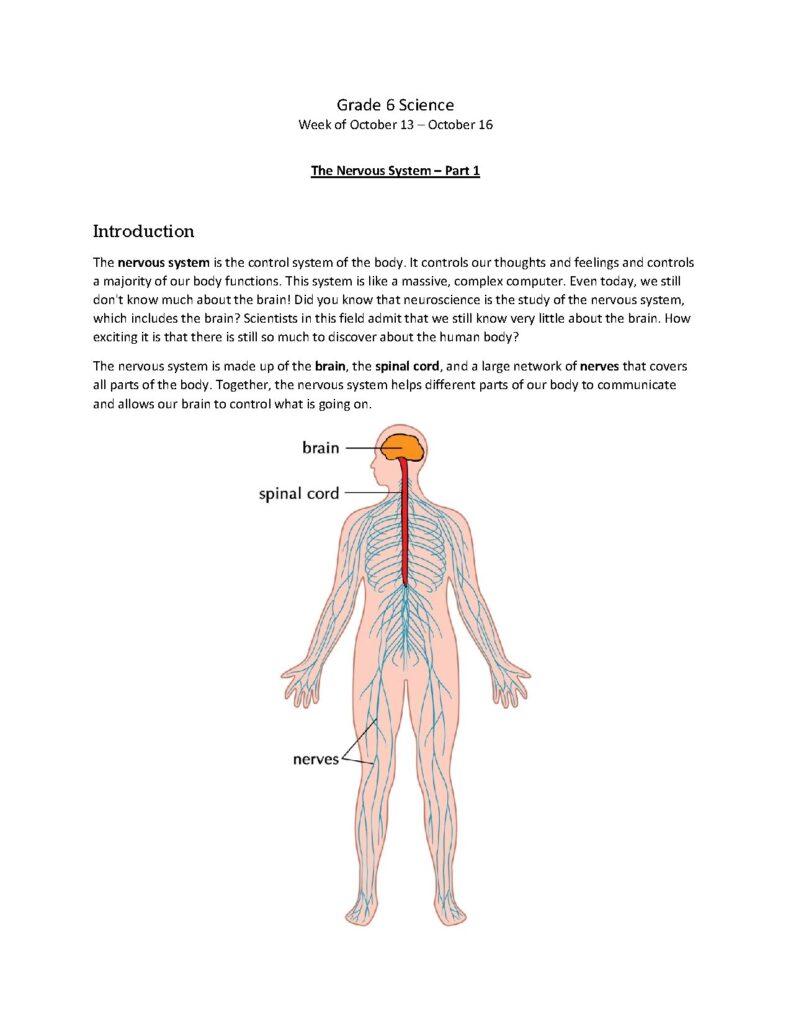
Neural Architecture: Download functional brain anatomy and CNS/PNS diagrams analyzing the physical structure of the brain, spinal cord, and cranial nerves.
Circuitry: Browse study materials on sensory and motor systems, tracking how environmental input is converted into neural code and translated into movement.
Higher Order Functions: Access cognitive science and neurobiology guides focusing on the neural mechanisms of learning, memory, and executive function.
Pathology: Browse dossiers on neurodegenerative disease and clinical neurology, exploring the biological failure points in conditions like Alzheimer’s, Parkinson’s, and multiple sclerosis.
| Neural Component | Definition | Functional Significance |
| Neuron | Primary signaling cell | Integration and transmission of signals |
| Synapse | Gap between neurons | Site of chemical and electrical communication |
| Myelin | Insulating sheath | Increases signal conduction velocity |
| Action Potential | Electrical impulse | The “all-or-nothing” unit of neural information |
A neuron is essentially a biological computer. It receives thousands of inputs from other neurons—some excitatory, some inhibitory—at its dendrites. These signals are summed up at the “axon hillock.” If the cumulative charge reaches a specific threshold (the action potential threshold), the neuron triggers an electrical impulse that travels down its axon. This threshold-gating is the core “logic” of the brain.
The Central Nervous System (CNS)—the brain and spinal cord—serves as the primary control center, processing information and making decisions. The Peripheral Nervous System (PNS) acts as the communication network, relaying sensory information to the CNS and carrying motor commands from the CNS to the rest of the body. This division allows the body to react to environmental changes with both rapid reflexes (spinal level) and complex conscious reasoning (brain level).
Memory is not stored in one place like a hard drive; it is distributed across neural networks. When you learn something new, the connections (synapses) between specific neurons strengthen—a process called Long-Term Potentiation (LTP). The more you revisit that information, the stronger those synaptic connections become. Essentially, your memories are physically encoded in the reinforced geometry of your neural network.
Chesser Resources is a free, open library of study and research material designed to democratize access to academic success. We host over 300,000+ documents—including textbooks, lecture notes, research papers, and study guides—across every subject imaginable. We believe students shouldn’t have to navigate paywalls or blurry preview pages just to get the information they need to learn.
Everything on Chesser Resources is free to read and search in your browser. We’ve built in powerful, free tools to help you actually learn from the material: AI summaries for fast comprehension, an Ask-AI chatbot to answer specific questions about your document, highlighting and annotation tools, and even read-aloud audio. Our platform is kept free by the community; by contributing your own notes or sharing content, you earn credits that unlock document downloads and prints, ensuring the library remains a high-performance, open-access resource for students everywhere.
Ready to dive into neuroscience study guides or brain anatomy diagrams? You don’t need to sign up to start learning. Browse our library, use our AI tools to summarize complex neural pathways, and contribute your own notes to help the student community grow.