

Access an extensive, community-driven library of parasitology PDFs, parasite life cycle worksheets, vector-transmission diagrams, and clinical pathology study guides on Chesser Resources. We provide a centralized, 100% free-to-read hub for biological and medical study material, featuring over 300,000 documents across the sciences. This dedicated collection tracks the complex, often insidious, biological relationships between parasites and their hosts—ranging from the microscopic precision of protozoan cell invasion to the macroscopic complexity of helminth infections and vector-borne transmission cycles. Whether you are troubleshooting the identification of intestinal protozoa, mapping the multi-host life cycle of malaria, or preparing for an advanced university medical microbiology or infectious disease exam, our browser-based reader, AI summaries, and Ask-AI tools provide instant, deep-dive clarity.
Parasitology is the scientific study of parasites, their hosts, and the intricate, often co-evolved interactions between them. It encompasses the classification, life cycles, pathogenicity, and epidemiology of eukaryotic organisms (protozoa, helminths, and arthropods) that derive sustenance from a host organism, often to the detriment of the host. The field branches into three fundamental frameworks: Medical Parasitology (human-infecting parasites and clinical disease), Veterinary Parasitology (impacts on animal health and agriculture), and Ecological Parasitology (the evolutionary strategy of parasitism in natural ecosystems). Studying parasitology builds advanced competencies in diagnostic morphology, life-cycle modeling, and epidemiological surveillance—skills foundational to every career in medicine, public health, global development, and veterinary science.
Our library hosts a vast array of student-shared clinical logs, life-cycle flowcharts, and comprehensive review packages organized for deep study:
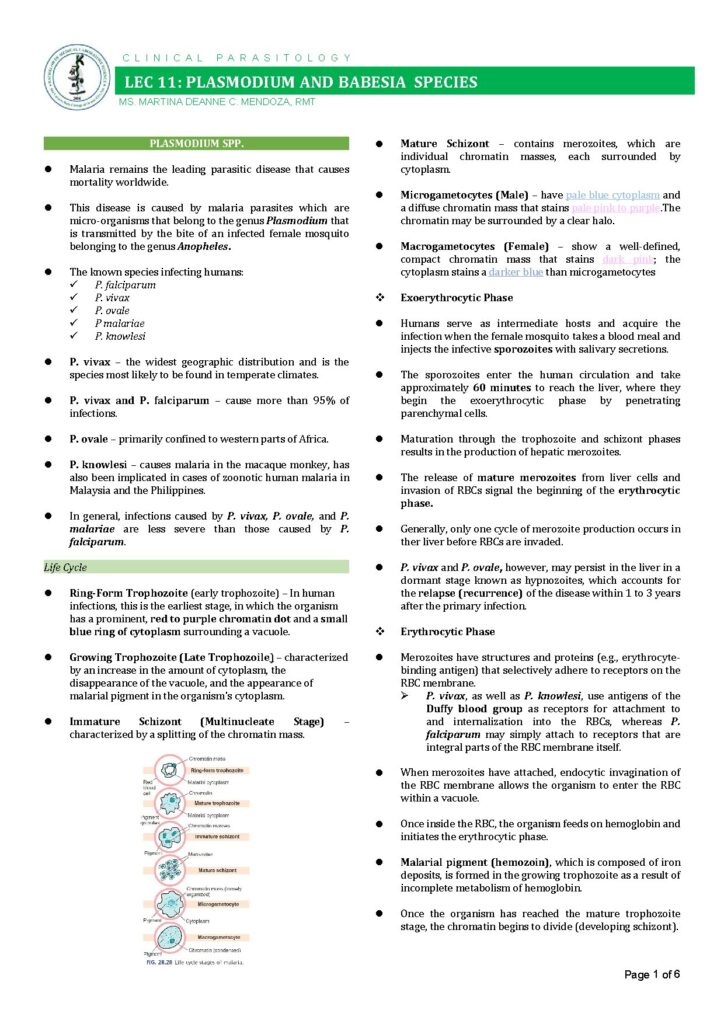
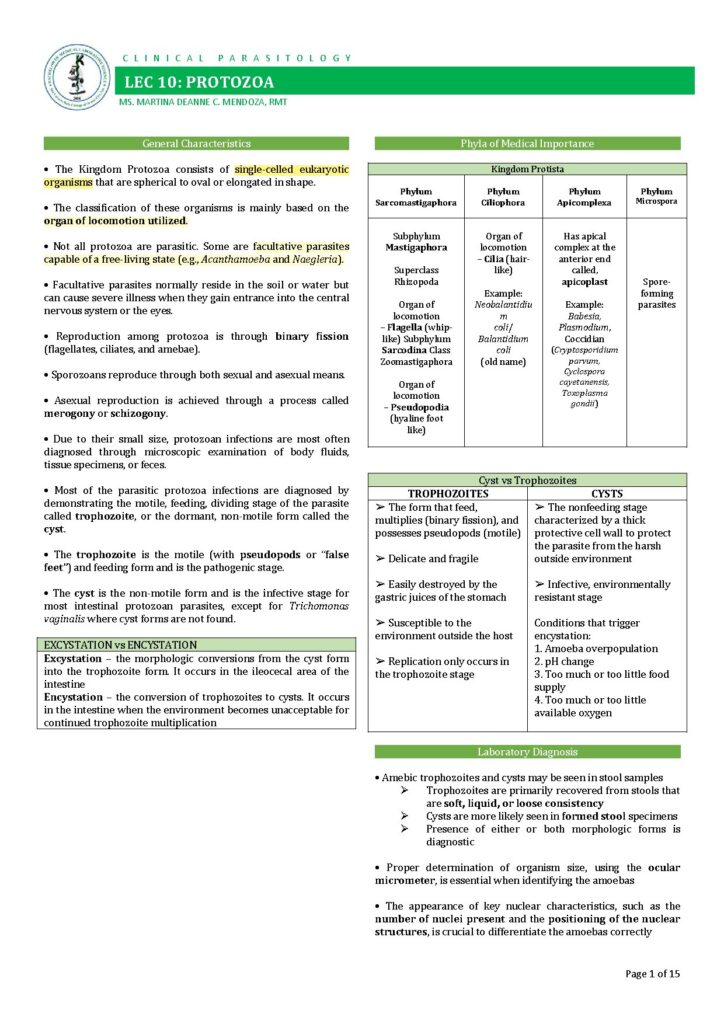
Protozoa: Find high-yield protozoan identification worksheets detailing the structures and life stages of amoebae, flagellates, ciliates, and sporozoans.
Helminths: Access cestode, trematode, and nematode guides mapping the morphological features and organ systems of parasitic worms.
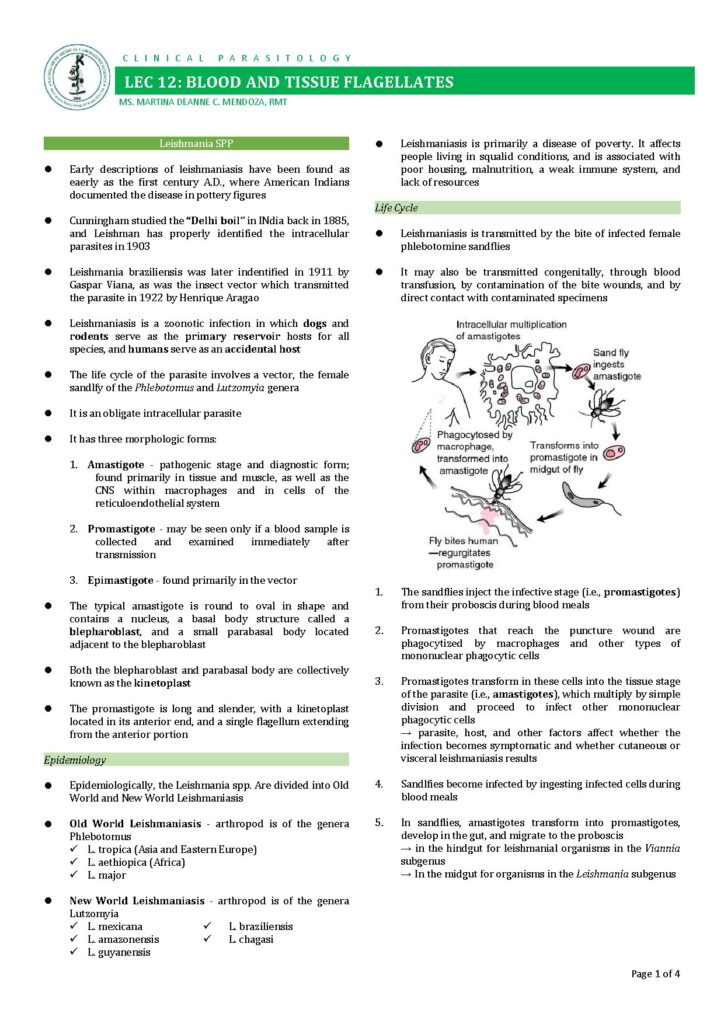
The Transmission Pipeline: Download functional parasite life cycle diagrams tracking the transition between definitive hosts, intermediate hosts, and biological vectors (like mosquitoes or ticks).
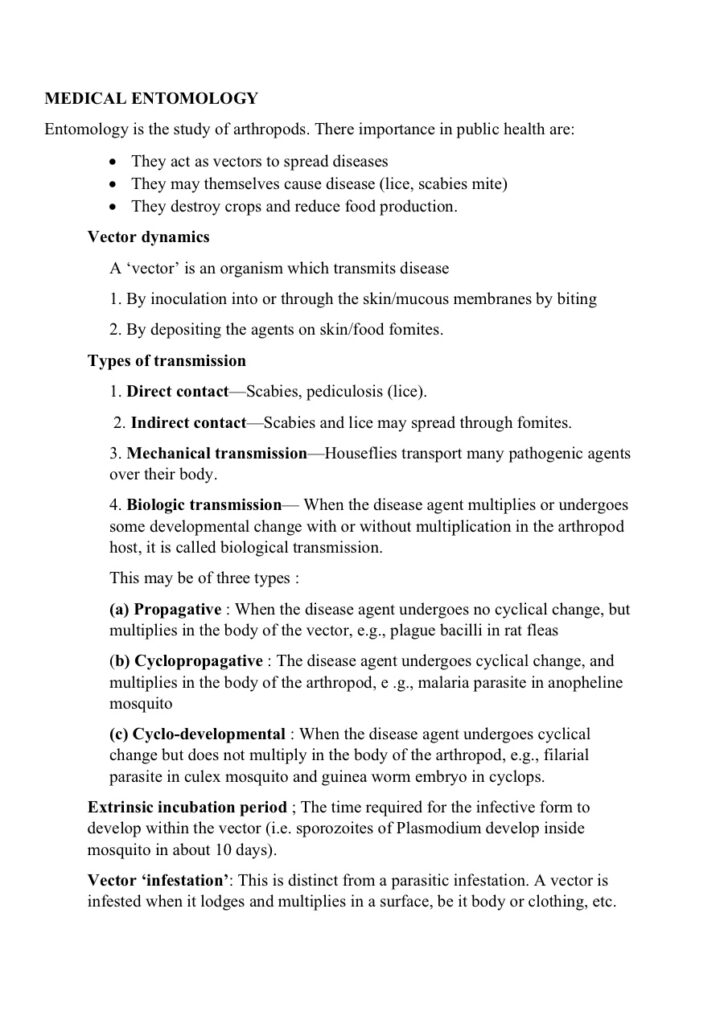
Vector Biology: Browse study materials on arthropod vector dynamics, focusing on the species that transmit diseases like malaria, Lyme disease, and leishmaniasis.
Pathogenesis: Access parasitic infection pathology PDFs analyzing how these organisms damage host tissues, sequester nutrients, and evade host immune responses.
Diagnostic Methods: Browse dossiers on clinical diagnosis of parasites, covering fecal microscopy, serological assays, and molecular identification protocols.
| Parasite Group | Primary Example | Transmission Method |
| Protozoa | Plasmodium falciparum | Vector (Anopheles mosquito) |
| Nematodes | Ascaris lumbricoides | Fecal-oral (ingestion of eggs) |
| Cestodes | Taenia solium | Consumption of undercooked meat |
| Trematodes | Schistosoma spp. | Percutaneous (larval penetration) |
In ecology, a parasite is an organism that lives in or on another organism (the host) and benefits at the host’s expense. Unlike predators, which typically kill their prey, parasites generally aim to keep their host alive long enough to complete their own reproductive life cycle. This has led to some of the most remarkable evolutionary adaptations in nature, as parasites must constantly “evolve” alongside the host’s immune system to survive.
Many parasites use complex life cycles involving multiple hosts to maximize their chances of survival and dispersal. By moving from an intermediate host (where they may multiply asexually) to a definitive host (where sexual reproduction occurs), the parasite can exploit different environmental niches and increase its population density, making the infection harder for the host’s immune system to clear.
A zoonosis is a parasitic or infectious disease that can be naturally transmitted from animals to humans. Because many parasites utilize animals as reservoirs, they are incredibly difficult to eradicate. Public health efforts in parasitology focus heavily on these zoonotic links, aiming to break the chain of transmission between wild/domestic animal populations and human communities.
Chesser Resources is a free, open library of study and research material designed to democratize access to academic success. We host over 300,000+ documents—including textbooks, lecture notes, research papers, and study guides—across every subject imaginable. We believe students shouldn’t have to navigate paywalls or blurry preview pages just to get the information they need to learn.
Everything on Chesser Resources is free to read and search in your browser. We’ve built in powerful, free tools to help you actually learn from the material: AI summaries for fast comprehension, an Ask-AI chatbot to answer specific questions about your document, highlighting and annotation tools, and even read-aloud audio. Our platform is kept free by the community; by contributing your own notes or sharing content, you earn credits that unlock document downloads and prints, ensuring the library remains a high-performance, open-access resource for students everywhere.
Ready to dive into parasitology study guides or life cycle diagrams? You don’t need to sign up to start learning. Browse our library, use our AI tools to summarize complex transmission pathways, and contribute your own notes to help the student community grow.