Elementary Mathematics II by J Black Educational Consult provides comprehensive insights into mathematical functions, their properties, and applications. This resource covers essential topics such as functions, domain and range, differentiation techniques, and integration principles. Ideal for students studying mathematics at the college level, it includes practical examples and exercises to enhance understanding. The document serves as a valuable study guide for those preparing for exams in mathematics and related fields.

Key Points

  • Explains the concept of functions, including domain and range.
  • Covers differentiation techniques and integration principles.
  • Includes practical examples and exercises for better understanding.
  • Ideal for college-level mathematics students preparing for exams.
Yahaya Mary
Author:J Black Educational Consult
41 pages
Language:English
Type:Study Guide
Yahaya Mary
Author:J Black Educational Consult
41 pages
Language:English
Type:Study Guide
73
/ 41
J BLACK EDUCATIONAL CONSULT
1
J BLACK
EDUCATIONAL
CONSULT
MOTTO: KNOWLEDGE FOR CAREER CONSCIOUSNESS
FOR MORE SUMMARY CONTACT ME
ON: WHATSAPP: 08122993587/08063755610
MTH102: ELEMENTARY MATHEMATICS II
Many quantities in everyday life depend on one or more___________
Changing variables
_________ is a phenomenon that relates how one variable or quantity depends on the other variable or
quantity
A function OR
The relationship between two variables such that, to each value of the dependent there is exactly one
corresponding value of the dependent variable
A function
_______________of the function is the set of all values of the independent variable for which the
function is defined. The domain the set of all values taken on by the dependent variable. Is called
The Range
A ____________is a correspondence from a first set, called the domain,
Function
A Function is a correspondence to a second set, called__________
J BLACK EDUCATIONAL CONSULT
2
The Range
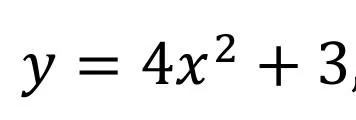
A function is mostly specified by _________
Equations or formulas
____________ can Also be described using tables, graphs and diagram
A function
The equation above describes Y as a function of ________
Function of X
From the equation above is the independent variable and y is_____________
The dependent variable.
Why is it helpful to isolate the dependent variable on the left side?
To decide whether an equation defines a function
FOR EXAMPLE
In the equation. X+Y =1
In the above equation to determine where the equation defines Y and a function of X,
The equation is written as Y= V~X
From this form, you can see that for any value of X , there is exactly one value of Y . So, Y is
a function of X .
equations that assign two values (_+) to the dependent variable for a given value of the
independent variable do not______________ define functions of x
You generally isolate the dependent variable on the left. When using____________
an equation to define a function,
THEREFOR..........
J BLACK EDUCATIONAL CONSULT
3
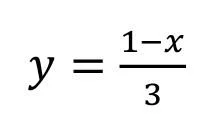
The equation X+3y=1 is then written as _________
From the equation above Y is ____________
The dependent variable
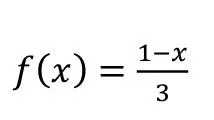
In function notation the above formula is written as__________
from this equation____________is The independent variable (input).
X the name of the function is _____________
‘’f’’.
The symbol f(x) is read as _________
‘’f of x’’ or ‘’f at x’’
The symbol f(x) represent ___________ the
value of the function at the number x.
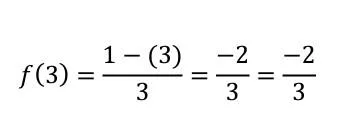
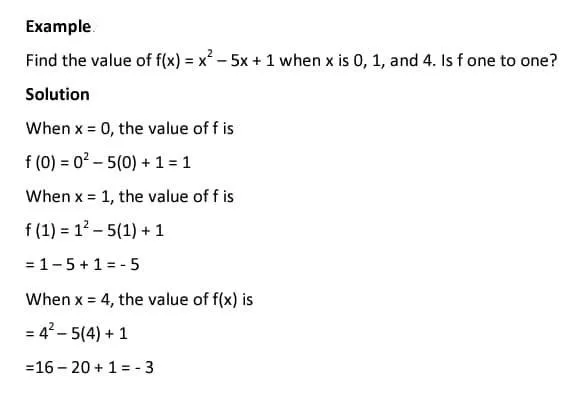
What is the value of f when x =3?
__________is the value of f (3) in the above value of F when x=3?
A function value
/ 41
End of Document
73

FAQs

what is elementary mathematics ii about

Elementary Mathematics II focuses on foundational mathematical concepts essential for further studies in mathematics and related fields.
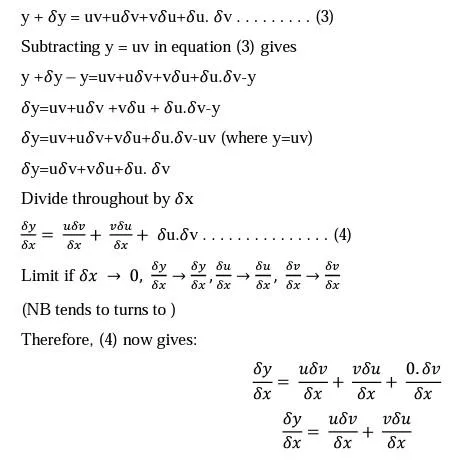
  • Topics include functions, limits, continuity, differentiation, and integration.
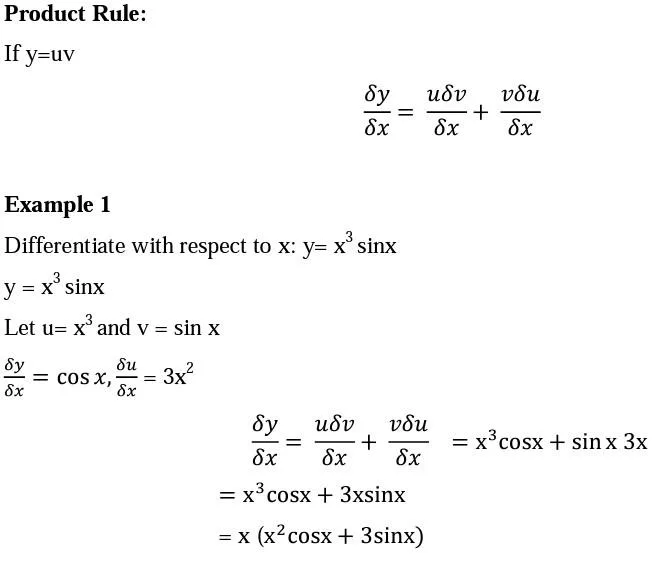
  • The course emphasizes problem-solving techniques and mathematical reasoning.
  • It is designed to build a strong mathematical base for students.

what are the key formulas in elementary mathematics ii

Elementary Mathematics II includes several key formulas that are fundamental to understanding the subject.

  • Function Notation: f(x) = mx + b, where m is the slope and b is the y-intercept.
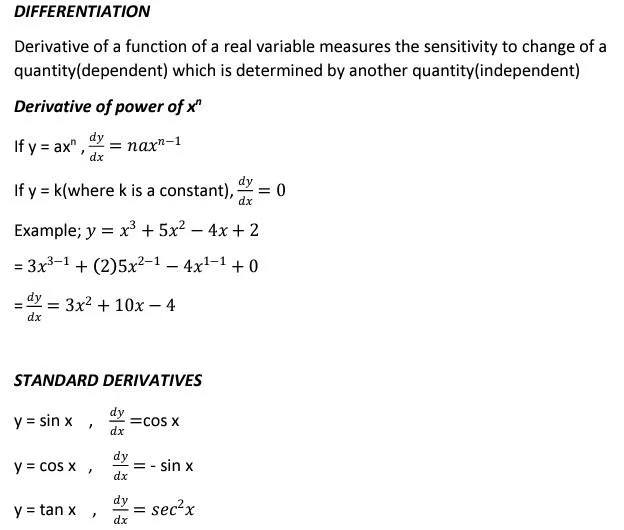
  • Derivative of a function: If y = f(x), then dy/dx represents the rate of change of y with respect to x.
  • Integration: The integral of f(x) dx represents the area under the curve of the function f.

what are some tips for elementary mathematics ii exams

To excel in Elementary Mathematics II exams, consider the following tips.

  • Practice Regularly: Solve various problems to strengthen your understanding of concepts.
  • Understand Key Concepts: Focus on understanding functions, limits, and derivatives rather than just memorizing formulas.
  • Review Past Papers: Familiarize yourself with the exam format by reviewing previous exam questions.
  • Study in Groups: Collaborate with peers to clarify doubts and gain different perspectives on problem-solving.

what is the importance of functions in elementary mathematics ii

Functions are a central concept in Elementary Mathematics II, serving as a foundation for advanced mathematical studies.

  • They describe relationships between variables, allowing for the modeling of real-world scenarios.
  • Understanding functions helps students grasp concepts such as limits, continuity, and differentiation.
  • Functions are essential in various applications, including physics, engineering, and economics.

how does differentiation work in elementary mathematics ii

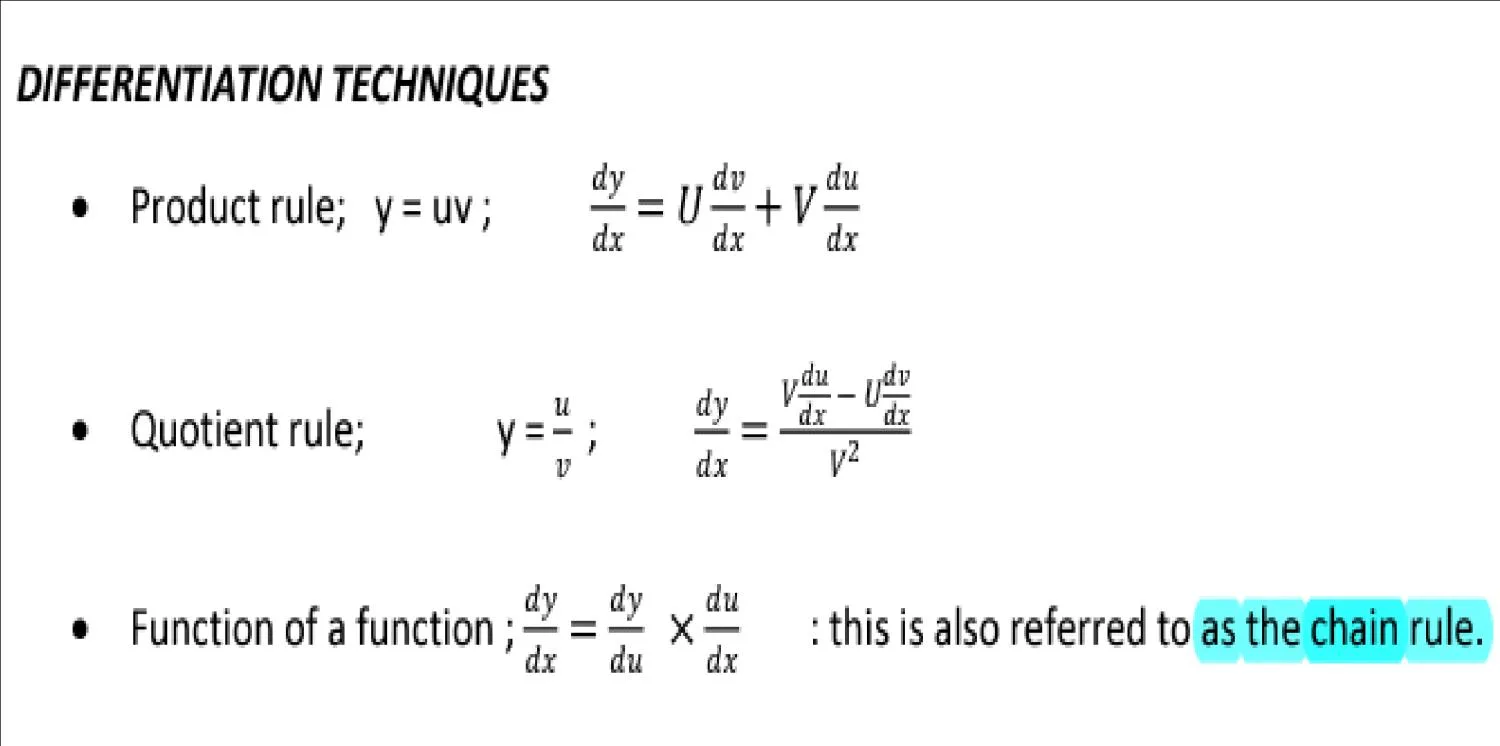
Differentiation in Elementary Mathematics II is the process of finding the derivative of a function, which measures how a function changes as its input changes.

  • The derivative is represented as f'(x) or dy/dx.
  • Key rules include the product rule, quotient rule, and chain rule.
  • Applications of differentiation include finding slopes of tangent lines and optimizing functions.

what are the properties of limits in elementary mathematics ii

Limits are a crucial concept in Elementary Mathematics II, with several important properties that guide their evaluation.

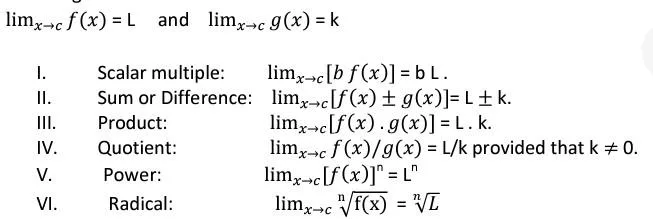
  • Sum Rule: The limit of a sum is the sum of the limits.
  • Product Rule: The limit of a product is the product of the limits.
  • Quotient Rule: The limit of a quotient is the quotient of the limits, provided the limit of the denominator is not zero.

what is integration in elementary mathematics ii

Integration in Elementary Mathematics II is the process of finding the integral of a function, which represents the area under the curve of that function.

  • It is the reverse operation of differentiation.
  • Common techniques include substitution and integration by parts.
  • Applications of integration include calculating areas, volumes, and solving differential equations.

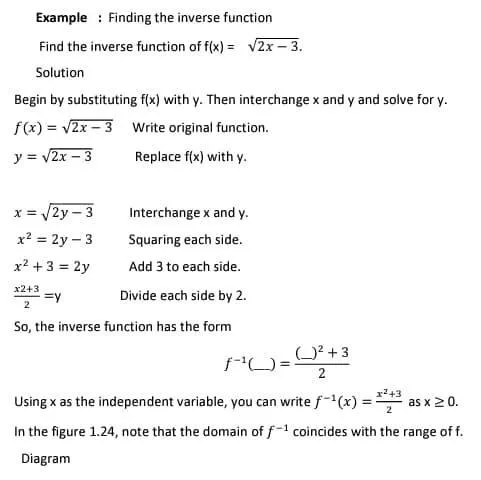
how to find the inverse of a function in elementary mathematics ii

Finding the inverse of a function in Elementary Mathematics II involves swapping the input and output variables.

  • Start with the equation y = f(x).
  • Swap x and y to get x = f(y).
  • Solve for y to find the inverse function, denoted as f⁻¹(x).

what are piecewise functions in elementary mathematics ii

Piecewise functions in Elementary Mathematics II are defined by different expressions based on the input value.

  • They can model real-world situations where a rule changes at certain points.
  • Each piece of the function corresponds to a specific interval.
  • Understanding piecewise functions is essential for analyzing complex functions.

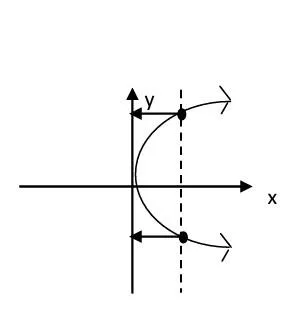
what is the vertical line test in elementary mathematics ii

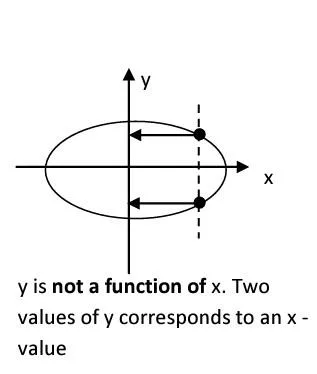
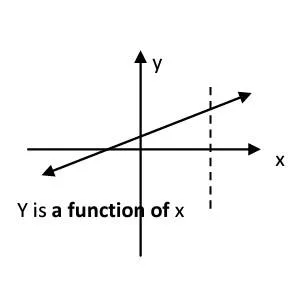
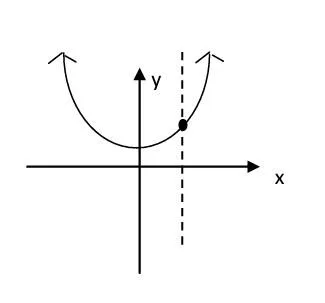
The vertical line test is a method used to determine if a curve is a function in Elementary Mathematics II.

  • If a vertical line intersects the graph at more than one point, the curve does not represent a function.
  • This test helps in visualizing the relationship between variables.
  • It is a fundamental concept in understanding functions and their graphs.