© R.B. Thohe Pou M.A. PhD, HoD, Dept. of Geography (Class Notes for students only) Page 3
Key Term:
1. The World population in 2011 was 7.0 Billion
2. Population: the number of people living in a particular geographical areas
3. Population explosion – the rapid growth of world population is known as
population explosion. There was a sudden increase of world population is 1950s.
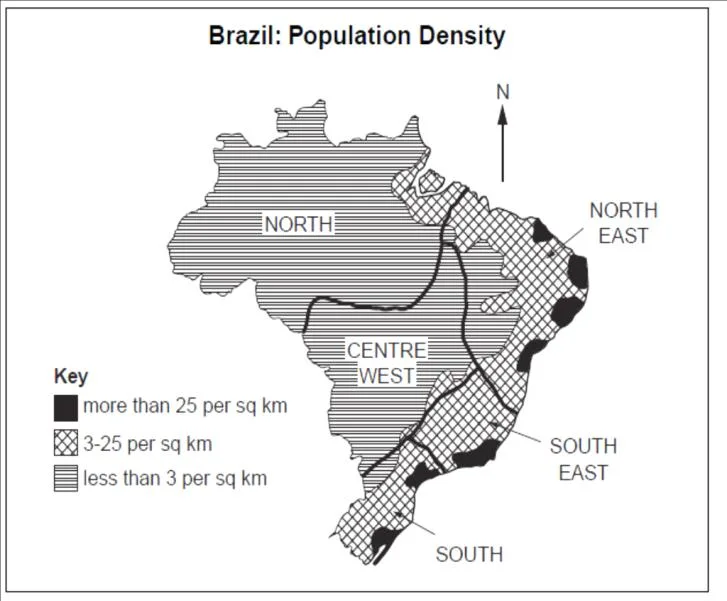
4. Population density: the average number of people in a given area per square
kilometer. Or the total number of people living in a square kilometer of land.
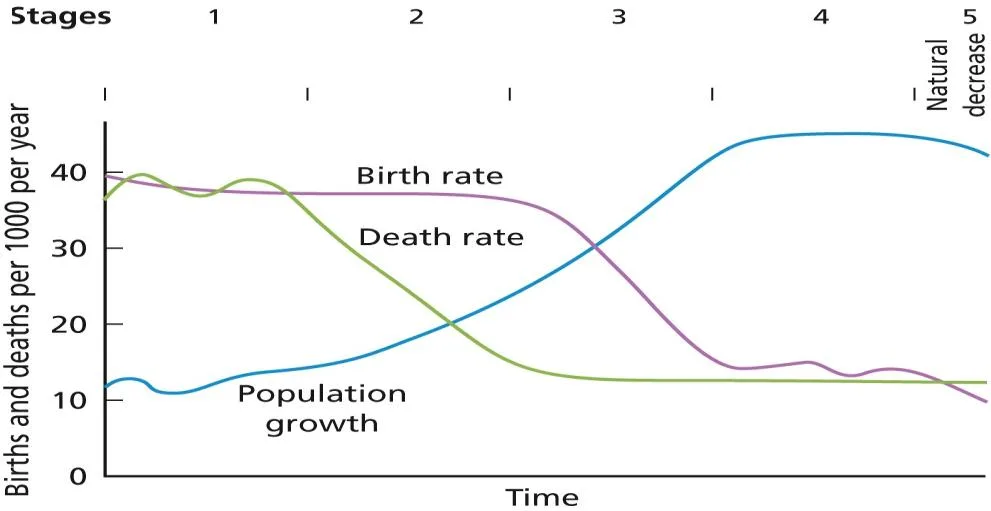
5. Birth rate: the number of live births per 1000 people in a year
6. Death rate: the number of deaths per 1000 people in a year
7. Natural increase: the difference between birth and death rate is known as
natural increase.
Natural increase = Birth rate – Death rate
8. Census: an official count of the population at a regular interval.
9. Infant mortality rate: the number of death in a year per 1000 children below the
age of one
10. Life expectancy: the average number of year of a person is expected to live
11. Demography: the study of human population, their size, distribution and
composition.
12. Population structure: Age and sex composition of a country population
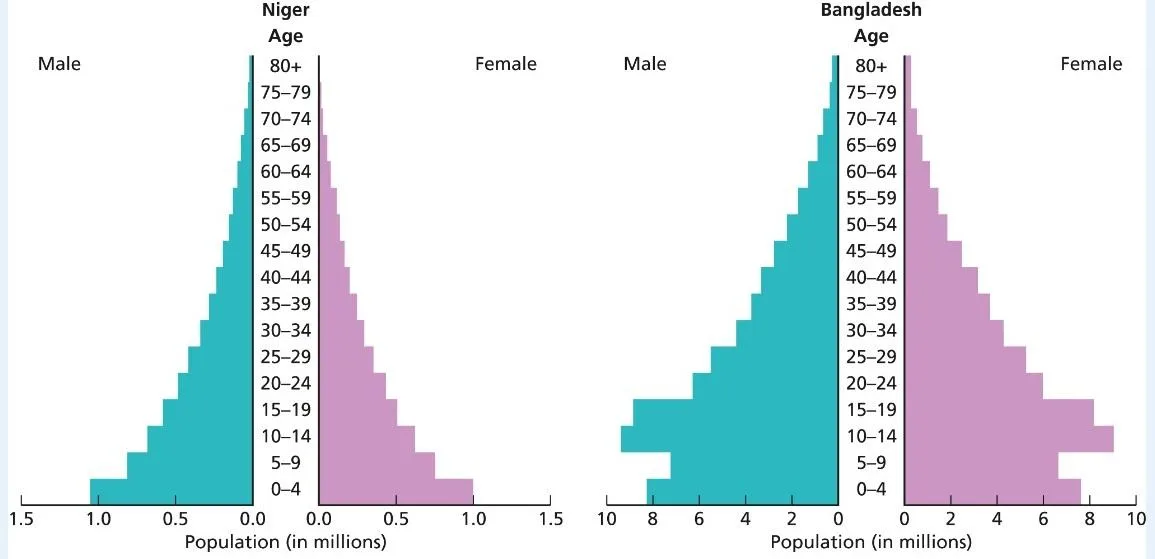
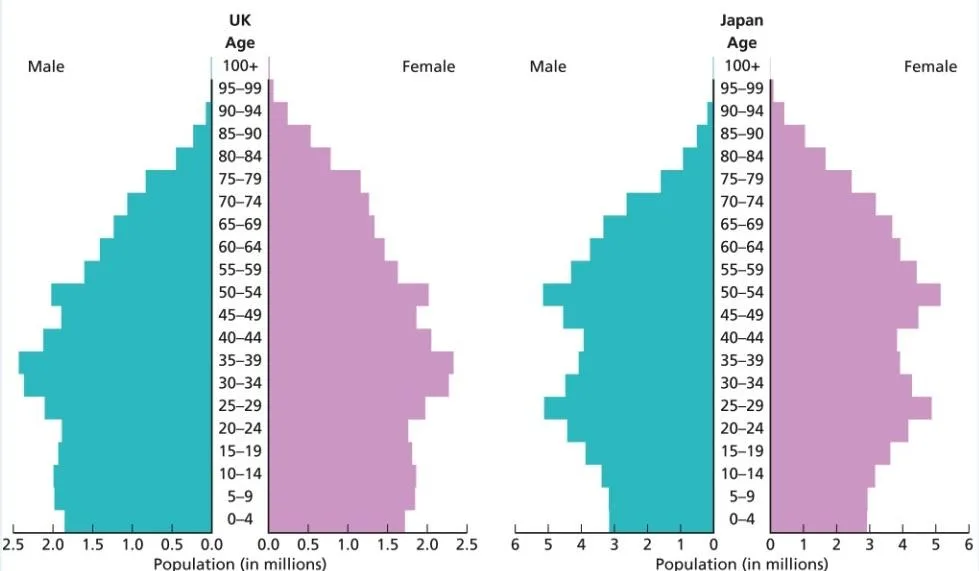
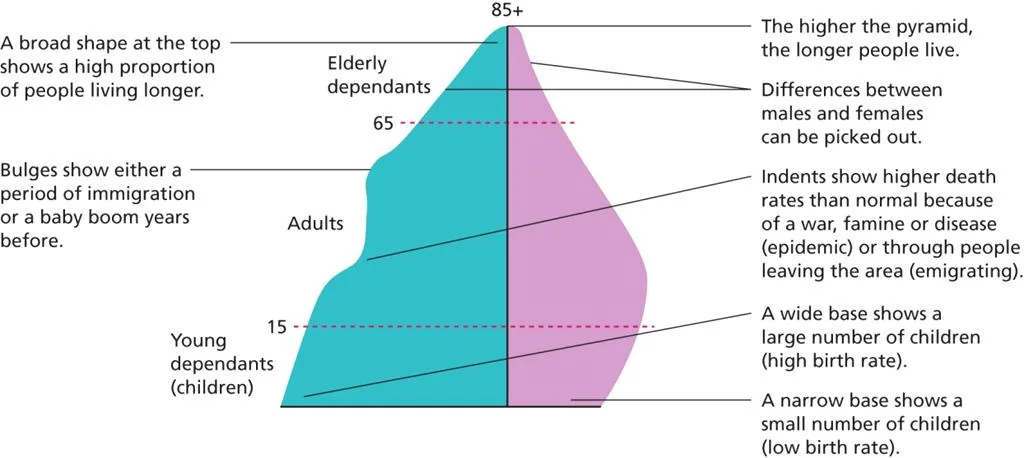
13. Population Pyramid: Is a diagram that shows the proportion of the total
population of sex (male and female) and their age group. The population Pyramid
helps us to judge and predict about the future population.
14. Old age group: the age group of 60 years and above is considered as Old
15. Young age group: the age group between 14 year and under is considered as
young
16. Working population: the age group between 15 years and 64 year is the
working population
17. Ageing population: A population is considered ‘ageing’ when the proportion of
‘young’ people is less than 30% and the proportion of Old people is greater than
6%
18. Young population: a population is considered as ‘young’ when the proportion of
‘young’ people is more than 30% and the proportion of ‘Old’ people is less than
6%
Paper 1: Theme 1 Population and Settlement
Topic 1.1: Population dynamics