My Children! My Africa! is a play by Athol Fugard that explores themes of education, race, and social justice in apartheid South Africa. The study guide provides an in-depth analysis of the characters, including Thami and Isabel, and their conflicting perspectives on political issues. It also examines the tone and mood of key scenes, enhancing understanding for Grade 12 English First Additional Language students. This guide is essential for learners preparing for exams or seeking to deepen their comprehension of the play's themes and conflicts. Published by the Department of Basic Education, it aligns with the CAPS curriculum for Grade 12.

Key Points

  • Analyzes the main themes of My Children! My Africa! including education and apartheid.
  • Explores character dynamics between Thami and Isabel in the context of political conflict.
  • Examines the tone and mood of key scenes to enhance literary understanding.
  • Includes activities and discussion questions for Grade 12 English students.
ovayo
Author:Athol Fugard
68 pages
Language:English
Type:Study Guide
ovayo
Author:Athol Fugard
68 pages
Language:English
Type:Study Guide
397
/ 68
English First Additional Language
My Children! My Africa!
Athol Fugard.
Study Guide
Grade
12
MIND THE GAP!
Department of Basic Education 2020
MIND THE GAP!
2
This content may not be sold or used for commercial purposes.
Curriculum and Assessment Policy Statement (CAPS) Grade 12 English First Additional Language Mind the Gap study
guide for the Drama: My Children! My Africa! by Athol Fugard.
This publication has a Creative Commons Attribution Noncommercial Sharealike Licence. You can use, modify, upload,
download, and share content, but you must acknowledge the Department of Basic Education, the authors and contributors.
If you make any changes to the content you must send the changes to the Department of Basic Education. This content
may not be sold or used for commercial purposes. For more information about the terms of the license please see: http://
creativecommons.org/licenses/by-nc-sa/3.0/.
Copyright © Department of Basic Education 2019 222 Struben Street, Pretoria, South Africa
Contact persons: Ms C. Weston and Dr S. Malapile
Email: Weston.C@dbe.gov.za / Malapile.s@dbe.gov.za
Tel: (012) 357 4183 / 012) 357 3811
http://www.education.gov.za Call Centre: 0800202933
Acknowledgements
The extracts from the drama in this study guide are from My Children! My Africa! by Athol Fugard.
Mind the Gap Team
Senior Project Leaders: Dr S. Malapile, Ms C Weston
Production co-ordinators:
B. Monyaki, B. Ras, M. Phonela, M. Nematangari
Authors: Mr Norman Fumba, Ms Renske Pieterse, Mr Harold Takalo, Mr Emmanuel Mpumelelo Thobela, Ms Nonhlanhla
Mzila, Ms Thembeka Mtolo, Ms Thokozile Joyfull Sabelo, Ms Monica Mamakara Karabo Seitei, Ms Elizabeth Marianne
Meyer, Ms Doreen Mpho Mongale, Ms Vuyelwa Gladys Mnguni, Ms Pila Masakane and Mr Moses Nkosi.
Critical reader: Monyaki BS
Designer and editor: Page82 Media
Onsite writers’ workshop support: J. Mphidi, V. Magelegeda, P. Hlabiwa, R. Maboye and N. Malope
Department of Basic Education 2020 Department of Basic Education 2020
MIND THE GAP!
3
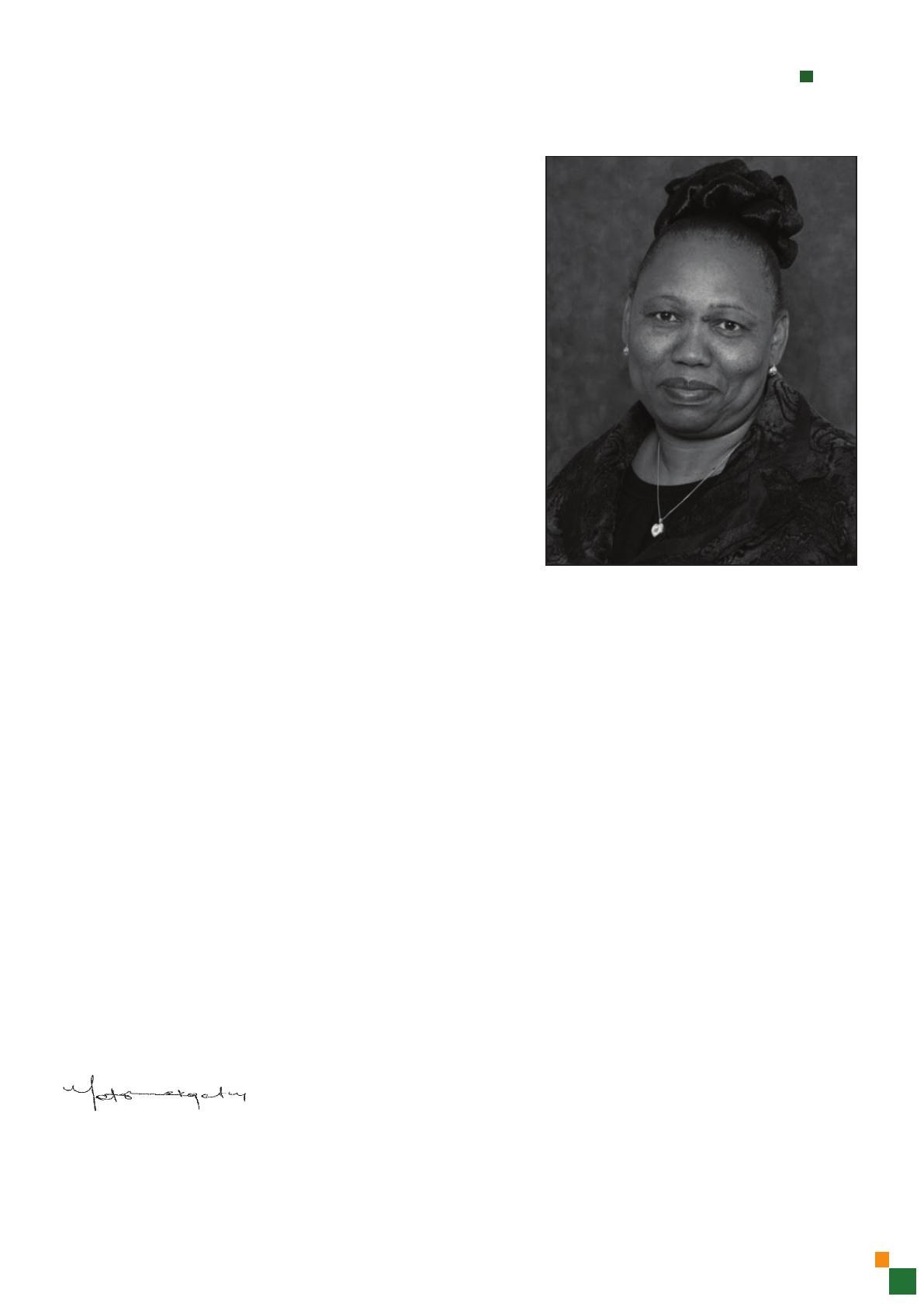
Matsie Angelina Motshekga, MP
Minister of Basic Education
The Department of Basic Education remains steadfastly committed
to innovative strategies aimed at enhancing learner attainment.
Consistent with the government’s commitment in promoting the
indigenous languages that form the tapestry of our democratic
landscape, this Mind the Gap Self study guide is a concrete
demonstration of this commitment.
The release of this self-study guide incorporates all the official
African Home Languages focusing on the novel genre at this stage.
Not only does the study guide incorporate the African languages, but
it also incorporates South African Sign Language Home Language,
Afrikaans Home Language and English First Additional Language.
The Mind the Gap Literature Self Study Guide is responding to the
broader sectoral reading challenges that the country is experiencing.
It seeks to strengthen the following strands of the National Reading
Sector Plan: Teacher Development and Support; Direct Learner
Support; and Provisioning and Utilisation of the Learning and
Teaching Support Materials. Its interactive nature will make it easier
for both teachers and learners to read, to learn or study. It is hoped
that through this Study Guide, the reading and learning outcomes
will be achieved.
Key terminologies are explained or illustrated in a simplified manner
and examples of the types of questions as a learner you may expect
to be asked in an examination, are included in this study guide. In
order to build your understanding, specific questions and possible
responses forms part of the study guide package.
The study guide is designed to appeal to any learner offering Grade
12, whether as a part-time or a full-time candidate. Educators in the
field will also find it an invaluable resource in their practice.
Every learner is a national asset, all you need now is to put in the
hours required to prepare for the examinations and excel!
We wish each and every one of you good luck and success.
Ministerial Foreword
MRS AM MOTSHEKGA, MP
MINISTER
DATE: 14 NOVEMBER 2019

/ 68
End of Document
397

FAQs

What are the main themes in My Children! My Africa!?
The main themes in My Children! My Africa! include justice and injustice, the generational gap, and the importance of education. The play explores racial injustice and how characters respond to it, particularly through Mr M's belief in the power of words for peaceful negotiations. Additionally, the generational conflict is highlighted through Thami's frustration with Mr M's traditional views, contrasting with the urgency of the youth's struggle for freedom. Lastly, the theme of education is central, as Mr M advocates for its importance in the fight against apartheid.
Who are the main characters in My Children! My Africa!?
The three main characters in My Children! My Africa! are Mr M (Anela Myalatya), Isabel Dyson, and Thami Mbikwana. Mr M is a dedicated teacher at Zolile High School who believes in the power of education. Isabel is an 18-year-old White girl from Camdeboo who becomes friends with Thami and learns about the realities of apartheid. Thami is a 19-year-old Black student at Zolile High School who struggles with the oppressive education system and ultimately decides to join the fight against apartheid.
How does Isabel's character develop throughout the play?
Isabel's character undergoes significant development throughout the play. Initially, she has limited contact with Black individuals, primarily through her maid and a delivery man. However, after visiting Zolile High School and engaging with Thami, she begins to understand the complexities of apartheid and her own privilege. As the play progresses, Isabel becomes more aware of the struggles faced by Black South Africans and expresses a desire to make her life useful in honor of Mr M's teachings.
What does Thami mean by 'Isiqalo' in the play?
In the play, Thami refers to 'Isiqalo' as the beginning of their struggle against apartheid. It signifies the start of a movement where Black students decide to boycott school in order to demand change. Thami believes that this action is necessary to bring attention to the injustices of Bantu Education and to fight for their rights. This concept highlights the urgency and determination of the youth in their quest for freedom.
How does Mr M view the use of words versus violence?
Mr M believes that using words is the most effective way to bring about political and social change, especially in education. He argues that violence, represented by stones and other means, is not the answer to achieving freedom. Throughout the play, Mr M emphasizes the importance of dialogue and education as tools for liberation, contrasting with Thami's belief that more aggressive actions are necessary.
What is the significance of Wapadsberg Pass in the play?
Wapadsberg Pass holds significant meaning in the play as it is where Mr M was inspired to become a teacher. It serves as a symbolic location for Isabel when she visits to pay her last respects to Mr M. Isabel promises to make her life useful and acknowledges that the future belongs to the youth. This location represents hope and the potential for change, linking back to Mr M's ideals and the aspirations of the new generation.
What does Thami's decision to leave signify in the context of the play?
Thami's decision to leave signifies his commitment to the struggle against apartheid and his desire to join the movement for change. It reflects his frustration with the current education system and the limitations it imposes on him and his peers. Thami's departure also highlights the generational conflict between him and Mr M, as he chooses action over the traditional educational path that Mr M advocates.