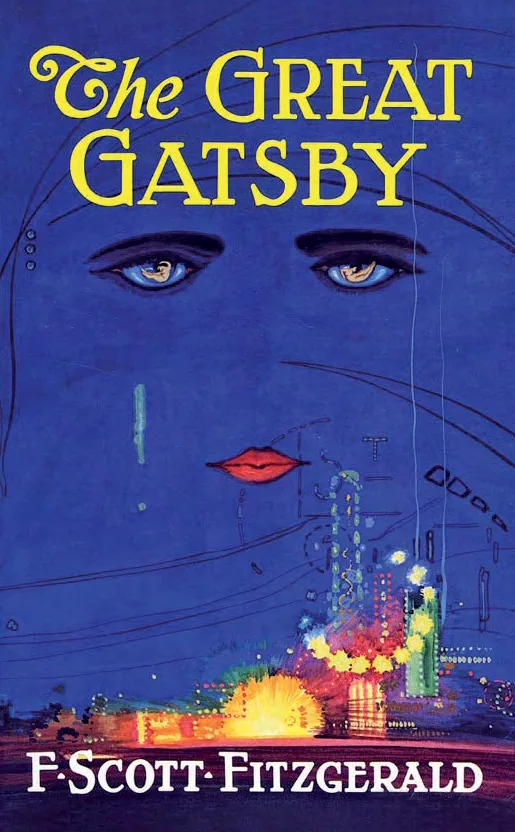
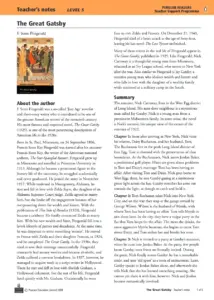
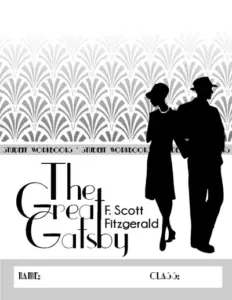
The Connell Guide to F. Scott Fitzgerald’s The Great Gatsby offers a comprehensive analysis of the novel, exploring its key themes, characters, and narrative techniques. This guide delves into the significance of the narrator, Nick Carraway, and how his perspective shapes the story of Jay Gatsby and the American Dream. Readers will find discussions on the role of wealth, the portrayal of women, and the nature of dreams within the context of 1920s America. Ideal for students and literature enthusiasts, this guide enhances understanding of Fitzgerald's work and its enduring relevance. The content includes chapter summaries, critical insights, and key quotes that illuminate the text's complexities.

Key Points

  • Analyzes the character of Jay Gatsby and his pursuit of the American Dream
  • Explores the significance of Nick Carraway as the unreliable narrator
  • Discusses themes of wealth, class, and social status in the 1920s
  • Examines Fitzgerald's portrayal of women and their roles in the novel
newtopiccyclegrowin
Author:John Sutherland, Jolyon Connell
Edition:2010 Edition
65 pages
Language:English
Type:Study Guide
newtopiccyclegrowin
Author:John Sutherland, Jolyon Connell
Edition:2010 Edition
65 pages
Language:English
Type:Study Guide
91
/ 65
The
Great
Gatsby
by
John Sutherland &
Jolyon Connell
The
Connell Guide
to
F. Scott Fitzgerald’s
Introduction 4
A summary of the plot 6
What is The Great Gatsby about? 10
How important is the narrator in the
novel? 21
How do Nick’s shortcomings as a man
affect the way he tells his tale? 28
How plausible is Gatsby? 35
Is Gatsbys dream always doomed? 45
How much does money matter in the
novel? 55
How does Gatsby compare with Tom? 63
What does The Great Gatsby tell us about
the American Dream? 72
How does Fitzgerald treat women in the
novel? 87
What does the novel tell us about the
nature of dreams? 94
How great is The Great Gatsby? 104
The title 10
Why “Gatsby”? 14
Elegiac romance 19
Meet Mr Gatz 36
Six key quotes 44
What exactly is Gatsby’s “racket”? 47
Gatsby believed in the green light 50
Meyer Wolfshiem/Arnold Rothstein 54
Newly rich 56
Fitzgerald and money 58
Great? 63
Ten facts about The Great Gatsby 64
Gatsby’s heroic military career (or not) 76
Scott Fitzgerald’s unheroic military career 78
Drink and remembrance of times past 97
Fitzgeraldian overwriting 107
How the novel was received 108
A brief biography 112
What the critics say... 119
A short chronology 120
Bibliography 122
Index 124
Contents
4
5
Introduction
When The Great Gatsby was first published, in
1925, reviews were mixed. H.L. Mencken called it
“no more than a glorified anecdote”. L.P. Hartley,
author of The Go-Between, thought Fitzgerald
deserved “a good shaking”: “his imagination is
febrile and his emotion over-strained… The Great
Gatsby is evidently not a satire; but one would like
to think that Mr Fitzgerald’s heart is not in it, that
it is a piece of mere naughtiness.
Yet gradually the book came to be seen as one
of the greatest – if not the greatest – of American
novels. Why? What is it that makes this story of a
petty hoodlum so compelling? Why has a novel so
intimately rooted in its own time “lasted” into ours?
What is it that posterity, eight decades later, finds
so fascinating in this chronicle of the long-gone
Jazz Age”, flappers, speakeasies and wild parties?
It is, after all, scarcely a novel at all, more a long
short story. But it has a power out of all proportion
to its length. It is beautifully written, making it
feel even shorter than it is, and is full of haunting
imagery. It is also, perhaps, the most vivid literary
evocation of the “Great American Dream”, about
which it is profoundly sceptical, as it is about dreams
generally. In the end, however, as D.H. Lawrence
would put it, it is “on the side of life”.
Gatsbys dream may be impossible, so much so
that the book can end in no other way than with his
death, but up to a point he is redeemed by it
and by the tenacity with which he clings to it. It
is this that makes the novel so moving and so
haunting.
The overwhelming majority of novels come,
enjoy their brief moment, and go into oblivion
never to return, but not this one. As George
Orwell said, “Ultimately there is no test of literary
merit except survival”. As every bookshop and
educational syllabus testifies, The Great Gatsby
has survived.
/ 65
End of Document
91

FAQs

What is the significance of the green light in The Great Gatsby?
The green light at the end of Daisy's dock symbolizes Gatsby's unattainable dream and desire for Daisy. It represents hope and the elusive nature of the American Dream, as Gatsby believes it embodies his aspirations for a future with her. However, when Daisy is with him, the green light loses its power, illustrating that dreams can become hollow when reality sets in.
How does Fitzgerald portray the American Dream in The Great Gatsby?
Fitzgerald presents the American Dream as a corrupted ideal throughout The Great Gatsby. The novel suggests that the initial promise of America has been overshadowed by greed and materialism, leading to a moral decay. Gatsby's pursuit of wealth and status ultimately ends in tragedy, reflecting the emptiness of his dream and the disillusionment of a society that prioritizes wealth over genuine connections.

What role does Nick Carraway play as the narrator in the novel?
Nick Carraway serves as the narrator of The Great Gatsby, providing a unique perspective on the events and characters. His Midwestern background and moral compass allow him to critique the excesses of East Coast society while remaining somewhat detached. Nick's admiration for Gatsby contrasts with his disapproval of other characters, highlighting his role as both an observer and a participant in the unfolding drama.
How does Fitzgerald depict women in The Great Gatsby?
Fitzgerald's portrayal of women in The Great Gatsby is largely critical, emphasizing their moral shortcomings and dependence on men. Characters like Daisy Buchanan and Myrtle Wilson are depicted as shallow and self-absorbed, reflecting a society where women are valued primarily for their beauty and ability to attract wealthy men. This critique extends to the notion that women, trapped in a male-dominated world, lack agency and depth.
What does the Valley of Ashes symbolize in the novel?
The Valley of Ashes symbolizes the moral and social decay resulting from the uninhibited pursuit of wealth in The Great Gatsby. It serves as a stark contrast to the opulence of East and West Egg, representing the consequences of a society obsessed with materialism. The desolation of the Valley highlights the emptiness of the American Dream and the lives of those like George Wilson, who are left behind in the pursuit of success.
How does Gatsby's background influence his character?
Gatsby's background as James Gatz, born to unsuccessful farmers in North Dakota, profoundly shapes his character and ambitions. His desire to reinvent himself and escape his humble origins drives him to accumulate wealth and status. This transformation into Jay Gatsby reflects the broader theme of self-invention in the novel, as he strives to achieve his dream of winning Daisy's love and acceptance in high society.
What is the relationship between Gatsby and Tom Buchanan?
The relationship between Gatsby and Tom Buchanan is marked by tension and rivalry, primarily over Daisy Buchanan. Tom represents the established old money class, while Gatsby embodies the new money, which Tom looks down upon. Their confrontation at the Plaza Hotel reveals the underlying class conflicts and moral decay, culminating in a struggle for Daisy's affection and ultimately leading to tragic consequences.