Operations Research Summary for ECO314 provides a comprehensive overview of key concepts and methodologies in operations research. It covers essential topics such as linear programming, inventory control, and decision analysis. This summary is designed for students and professionals seeking to enhance their understanding of operations research principles. It includes practical applications and examples to illustrate the concepts effectively. Ideal for those preparing for exams or looking to apply operations research techniques in real-world scenarios.

Key Points

  • Covers key concepts in operations research including linear programming and inventory control.
  • Includes practical applications and examples for real-world scenarios.
  • Designed for students and professionals seeking to enhance their understanding of operations research.
  • Ideal for exam preparation and application of operations research techniques.
Laura Okoli
47 pages
Language:English
Type:Textbook
Laura Okoli
47 pages
Language:English
Type:Textbook

197
/ 47
NB: STUDY THE CALCULATIONS IN EXAM PAST QUESTIONS & ECO314 TEXTBOOK Page 1
LA GOLDMINE SOLUTIONS
Your Academic Solutions Ground.
WHATSAPP: 08039407882
Campusflava.com -
goldminceo@gmail.com
ECO314 - OPERATIONS RESEARCH SUMMARY
Q. Briefly discuss what linear programming involves.
Mathematical Programming (Linear Programming)
Linear programming deals with the optimisation (maximisation or minimisation) of a function of
variables known as objective function, subject to a set of linear equations and/or inequalities known
as constraints. The objective function may be profit, cost, production capacity or any other measure
of effectiveness, which is to be obtained in the best possible or optimal manner. The constraints may
be imposed by different resources such as market demand, production process and equipment,
storage capacity, raw material availability, etc. By linearity is meant a mathematical expression in
which the expressions among the variables are linear e.g., the expression a1x1 + a2x2 + a3x3 + ... +
aⁿxⁿ is linear.
Requirements for a Linear Programming Problem
All organisations, big or small, have at their disposal, men, machines, money and materials, the supply
of which may be limited. If the supply of these resources were unlimited, the need for management
tools like linear programming would not arise at all.
Generally speaking, linear programming can be used for optimisation problems if the following
conditions are satisfied:
1. There must be a well-defined objective function (profit, cost or quantities produced) which is to
be either maximised or minimised and which can be expressed as a linear function of decision
variables.
2. There must be constraints on the amount or extent of attainment of the objective and these
constraints must be capable of being expressed as linear equations or inequalities in terms of
variables.
3. There must be alternative courses of action. For example, a given product may be processed by two
different machines and problem may be as to how much of the product to allocate to which machine.
4. Another necessary requirement is that decision variables should be interrelated and nonnegative.
The non-negativity condition shows that linear programming deals with real life situations for which
negative quantities are generally illogical.
Q. Identify and discuss five assumptions of linear programming.
Assumptions in Linear Programming Models
A linear programming model is based on the following assumptions:
1. Proportionality
NB: STUDY THE CALCULATIONS IN EXAM PAST QUESTIONS & ECO314 TEXTBOOK Page 2
A basic assumption of linear programming is that proportionality exists in the objective function and
the constraints. This assumption implies that if a product yields a profit of #10, the profit earned from
the sale of 12 such products will be # (10 x 12) = #120. This may not always be true because of quantity
discounts.
2. Additivity
It means that if we use t1 hours on machine A to make product 1 and t2 hours to make product 2, the
total time required to make products 1 and 2 on machine A is t1 + t2 hours. This, however, is true
only if the change-over time from product 1 to product 2 is negligible. Some processes may not behave
in this way. For example, when several liquids of different chemical compositions are mixed, the
resulting volume may not be equal to the sum of the volumes of the individual liquids.
3. Continuity
Another assumption underlying the linear programming model is that the decision variables are
continuous i.e., they are permitted to take any non-negative values that satisfy the constraints.
However, there are problems wherein variables are restricted to have integral values only. Though
such problems, strictly speaking, are not linear programming problems, they are frequently solved by
linear programming techniques and the values are then rounded off to nearest integers to satisfy the
constraints. This approximation, however, is valid only if the variables have large optimal values.
Further, it must be ascertained whether the solution represented by the rounded values is a feasible
solution and also whether the solution is the best integer solution.
4. Certainty
Another assumption underlying a linear programming model is that the various parameters, namely,
the objective function coefficients, R.H.S. coefficients of the constraints and resource values in the
constraints are certainly and precisely known and that their values do not change with time. Thus, the
profit or cost per unit of the product, labour and materials required per unit, availability of labour and
materials, market demand of the product produced, etc. are assumed to be known withcertainty. The
linear programming problem is, therefore, assumed to be deterministic in nature.
5. Finite Choices
A linear programming model also assumes that a finite (limited) number of choices (alternatives) are
available to the decision-maker and that the decision variables are interrelated and non-negative. The
non-negativity condition shows that linear programming deals with real-life situations as it is not
possible to produce/use negative quantities.
Applications of Linear Programming Method
Though, in the world we live, most of the events are non-linear, yet there are many instances of linear
events that occur in day-to-day life. Therefore, an understanding of linear programming and its
application in solving problems is utmost essential for today’s managers.
Linear programming techniques are widely used to solve a number of business, industrial, military,
economic, marketing, distribution and advertising problems. Three primary reasons for its wide use
are:
1. A large number of problems from different fields can be represented or at least approximated to
linear programming problems.
2. Powerful and efficient techniques for solving L.P. problems are available.
NB: STUDY THE CALCULATIONS IN EXAM PAST QUESTIONS & ECO314 TEXTBOOK Page 3
3. L.P. models can handle data variation (sensitivity analysis) easily.
Q. List and explain three areas where linear programming can be applied.
Areas of Application of Linear Programming
Linear programming is one of the most widely applied techniques of operations research in business,
industry and numerous other fields. A few areas of its application are given below.
1. Industrial applications
(a) Product mix problems: An industrial concern has available a certain production capacity (men,
machines, money, materials, market, etc.) on various manufacturing processes to manufacture
various products. Typically, different products will have different selling prices, will require different
amounts of production capacity at the several processes and will, therefore, have different unit profits;
there may also be stipulations (conditions) on maximum and/or minimum product levels. The
problem is to determine the product mix that will maximise the total profit.
(b) Blending problems: These problems are likely to arise when a product can be made from a variety
of available raw materials of various compositions and prices. The manufacturing process involves
blending (mixing) some of these materials in varying quantities to make a product of the desired
specifications.
(c) Production scheduling problems: They involve the determination of optimum production
schedule to meet fluctuating demand. The objective is to meet demand, keep inventory and
employment at reasonable minimum levels, while minimising the total cost Production and inventory.
(d) Trim loss problems: They are applicable to paper, sheet metal and glass manufacturing industries
where items of standard sizes have to be cut to smaller sizes as per customer requirements with the
objective of minimising the waste produced.
(e) Assembly-line balancing: It relates to a category of problems wherein the final product has a
number of different components assembled together. These components are to be assembled in a
specific sequence or set of sequences. Each assembly operator is to be assigned the task / combination

of tasks so that his task time is less than or equal to the cycle time.
2. Management applications
(a) Media selection problems: They involve the selection of advertising mix among different
advertising media such as T.V., radio, magazines and newspapers that will maximise public exposure
to company’s product. The constraints may be on the total advertising budget, maximum expenditure
in each media, maximum number of insertions in each media and the like.
(b) Portfolio selection problems: They are frequently encountered by banks, financial companies,
insurance companies, investment services, etc. A given amount is to be allocated among several
investment alternatives such as bonds, saving certificates, common stock, mutual fund, real estate,
etc. to maximise the expected return or minimise the expected risk.
(c) Profit planning problems: They involve planning profits on fiscal year basis to maximise profit
margin from investment in plant facilities, machinery, inventory and cash on hand.
(d) Transportation problems: They involve transportation of products from, say, n sources situated at
different locations to, say, m different destinations. Supply position at the sources, demand at
/ 47
End of Document
197

FAQs

What are the key assumptions of linear programming?

Linear programming is based on several key assumptions. First, there must be a well-defined objective function that is either maximised or minimised, expressed as a linear function of decision variables. Second, constraints must be expressed as linear equations or inequalities. Third, there should be alternative courses of action available. Additionally, decision variables must be interrelated and non-negative, as negative quantities are generally illogical in real-life situations.

What is the difference between PERT and CPM?

The main differences between PERT (Program Evaluation and Review Technique) and CPM (Critical Path Method) lie in their focus and nature. PERT is event-oriented, focusing on the events that occur within the project, while CPM is activity-oriented, concentrating on the activities that need to be completed. PERT activities are probabilistic, meaning the time required to complete them is uncertain, whereas CPM assumes deterministic activities with fixed durations.

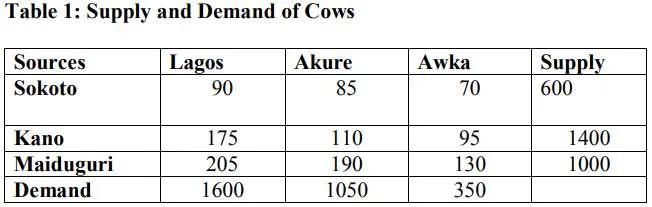
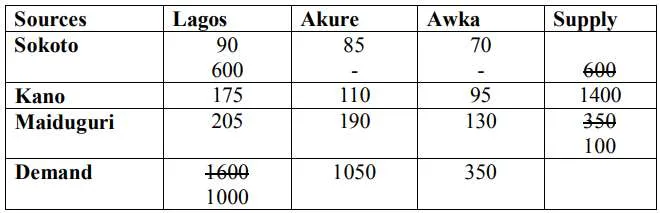
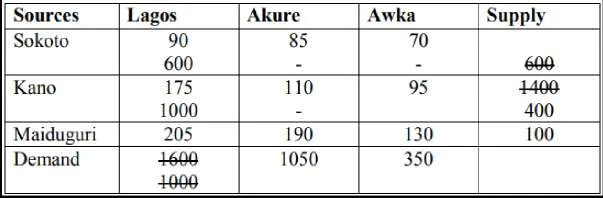
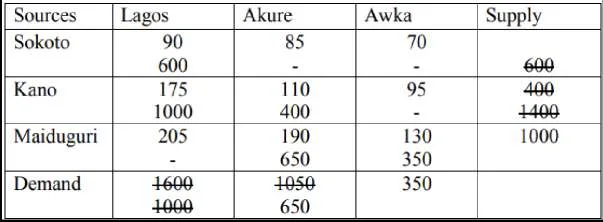
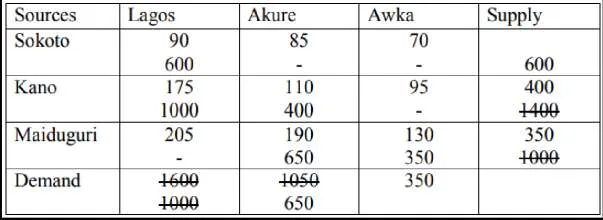
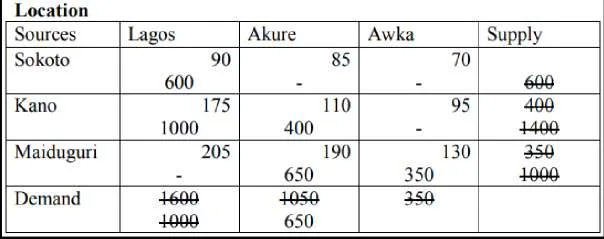
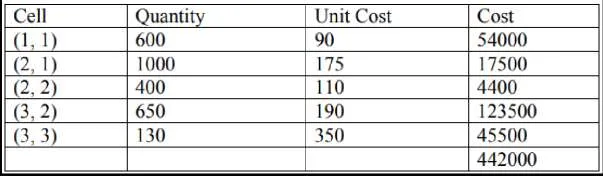
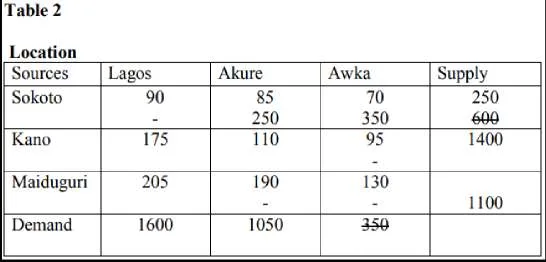
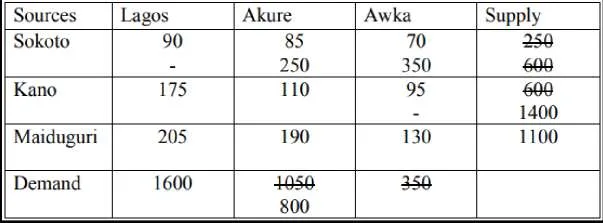
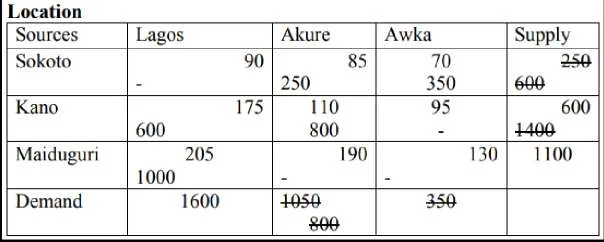
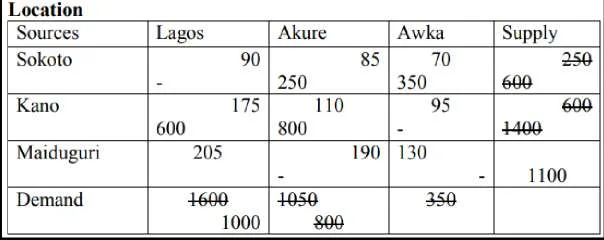
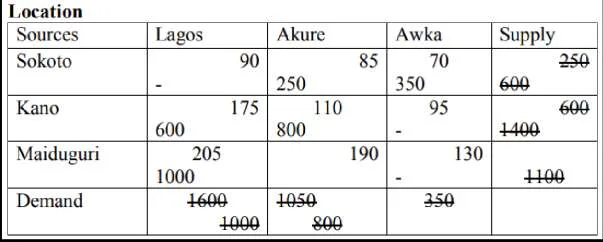
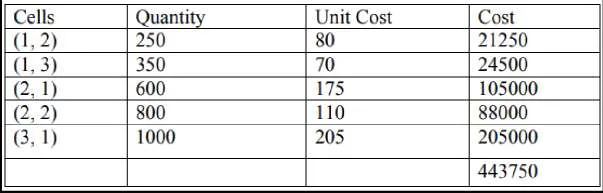
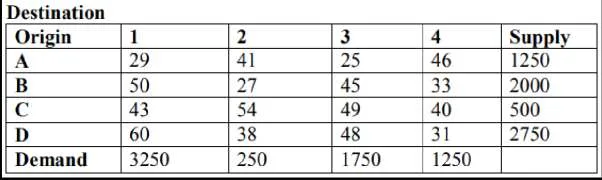
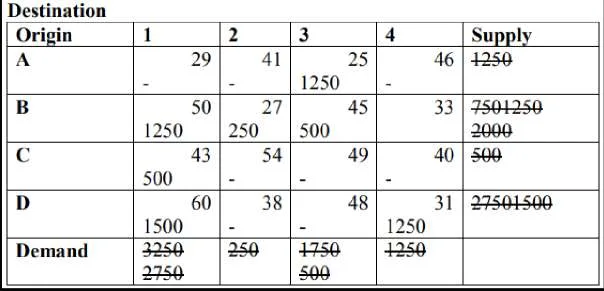
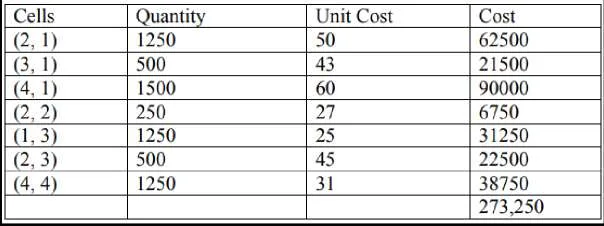
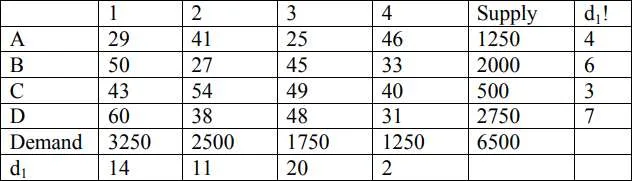
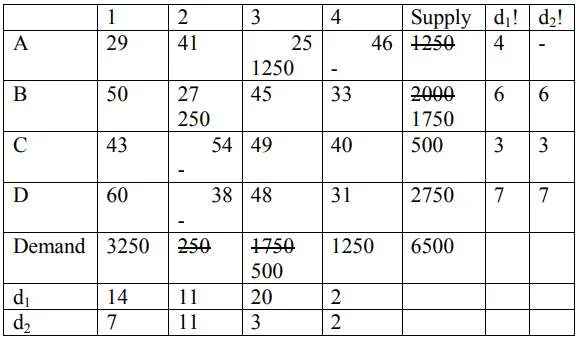
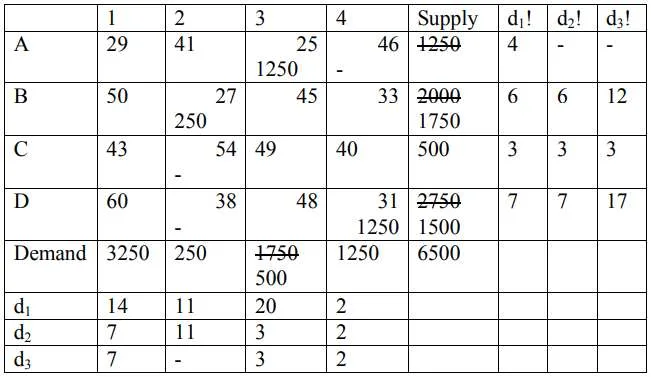
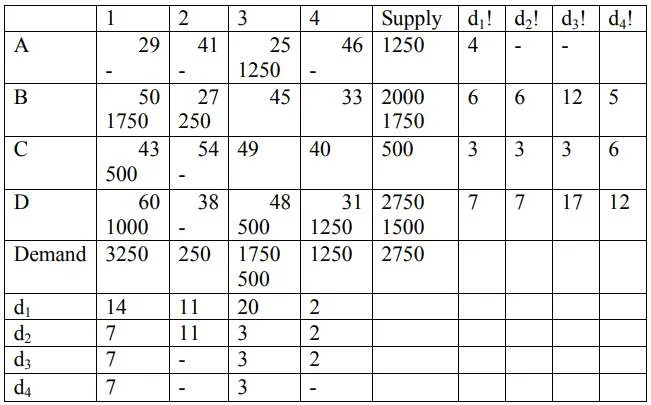
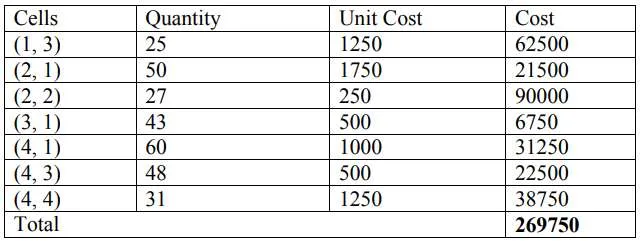
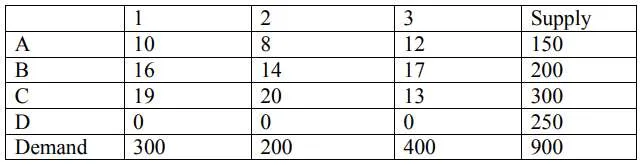
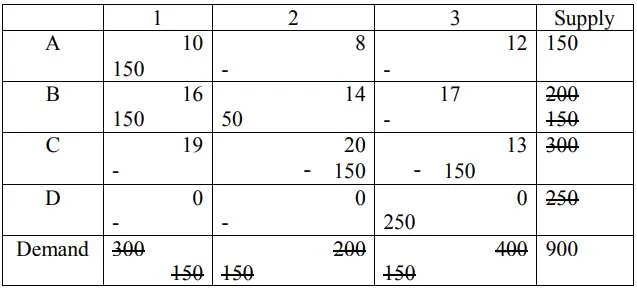
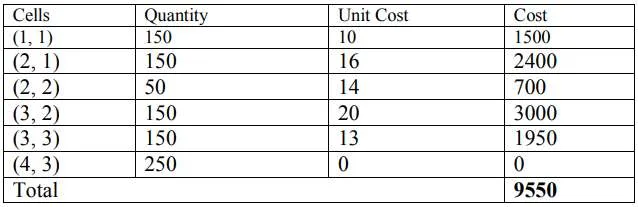
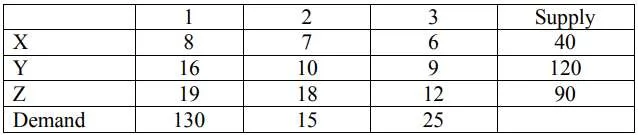
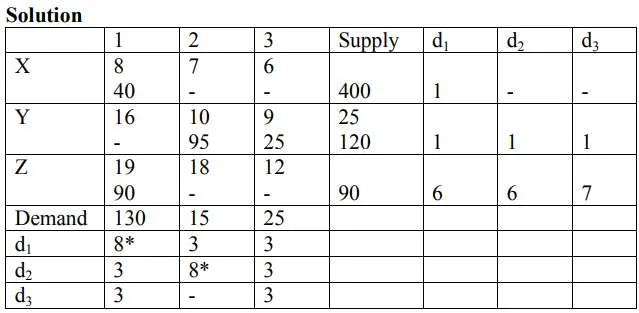
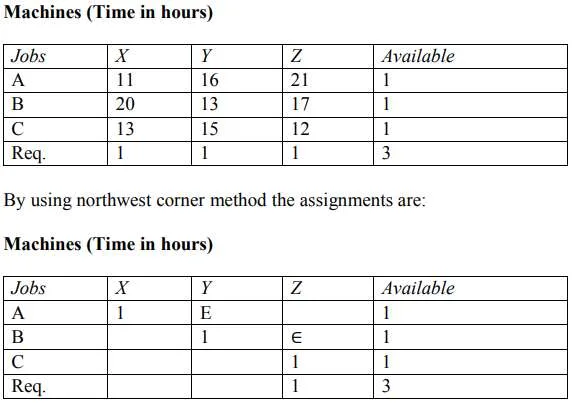
How is the transportation problem solved using the North West Corner Method?

The North West Corner Method begins by allocating as many resources as possible to the top-left cell of the transportation table, which represents the first source and destination. The allocation continues until either the supply or demand is exhausted. The process is repeated by moving to the next cell in the row or column, ensuring that all supply and demand constraints are met. This method typically results in a feasible solution, although it may not be optimal.

What are the advantages of linear programming methods?

Linear programming methods offer several advantages, including optimal use of productive factors, which helps managers allocate resources more effectively. They improve decision-making quality by providing a systematic approach to complex problems. Additionally, linear programming models can easily handle data variations through sensitivity analysis, allowing businesses to adapt to changing conditions and constraints.

What are the applications of linear programming in management?

Linear programming is widely applied in various management areas, including media selection for advertising, where it helps determine the optimal mix of media to maximise exposure within budget constraints. It is also used in portfolio selection by financial institutions to allocate investments among various options to maximise returns or minimise risks. Additionally, linear programming aids in profit planning and transportation problems, optimising the distribution of goods from multiple sources to destinations.

What is the significance of the objective function in linear programming?

The objective function in linear programming is crucial as it defines the goal of the optimization problem, whether it is to maximise profit or minimise costs. This function is expressed as a linear equation of decision variables, guiding the decision-making process. The effectiveness of the solution is measured against this function, and it is subject to constraints that represent limitations in resources or requirements.

What are the limitations of linear programming models?

Despite their advantages, linear programming models have limitations. For large problems with numerous constraints, computational difficulties can arise, even with advanced digital computers. Additionally, linear programming may yield fractional values for decision variables, which can be impractical if only integer values are logical. Lastly, these models are applicable primarily to static situations and do not account for time variations.