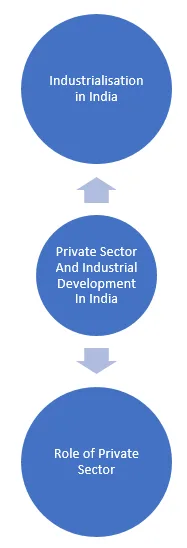
Unit 7 of the Economic Environment in India course focuses on the critical role of industrial development and the private sector in India’s economy. It explores the historical context of industrialization, the contributions of the private sector, and the challenges faced by this sector. Key topics include the importance of private investment, government initiatives to enhance private sector participation, and the impact of industrialization on economic growth. This unit is essential for students studying commerce and economics, providing insights into India’s economic landscape and the dynamics of industrial growth.

Key Points

  • Explores the historical context of industrialization in India and its impact on economic growth.
  • Discusses the role of the private sector in creating employment and driving innovation in the economy.
  • Examines government initiatives like Make in India and Production-Linked Incentive schemes to boost private sector participation.
  • Analyzes the challenges faced by the Indian private sector, including regulatory hurdles and financing issues.
Sariq khan
25 pages
Language:English
Type:Textbook
Sariq khan
25 pages
Language:English
Type:Textbook
Sariq khan
25 pages
Language:English
Type:Textbook
198

Economic Environment in India – Unit 7: Industrial Development and Private Sector pdf

/ 25
DCM1206: Economic Environment in India Manipal University Jaipur (MUJ)
Unit 7: Industrial Development and Private Sector in India 1
BACHELOR OF COMMERCE
SEMESTER 2
DCM1206
ECONOMIC ENVIRONMENT IN INDIA
DCM1206: Economic Environment in India Manipal University Jaipur (MUJ)
Unit 7: Industrial Development and Private Sector in India 2
Unit 7
Industrial Development and Private Sector in
India
SL
No
Topic
Fig No / Table
/ Graph
SAQ /
Activity
Page No
1
Introduction
-
-
3
1.1
Learning Objectives
-
-
2
Role of Private Sector
1
1
4 - 12
2.1
The Importance of the Private Sector
-
-
2.2
Contribution of Private Sector in
Indian Economy
-
-
2.3
Challenges faced by Indian Private
Sector
-
-
2.4
Initiatives Adopted by Government to
Increase the Role of Private Sector
-
-
3
Industrialisation in India
2
2
13 - 20
3.1
History of Industrialisation in India
-
-
3.2
Role of Industrialisation in Indian
Economy
-
-
4
Concept Map
3
-
21
5
Summary
-
-
22
6
Glossary
-
-
22
7
Terminal Questions
-
-
23
8
Answers
-
-
23 - 25
9
Suggested Books and E-References
-
-
25
Table of Contents
DCM1206: Economic Environment in India Manipal University Jaipur (MUJ)
Unit 7: Industrial Development and Private Sector in India 3
In the previous unit, you learned about NITI Aayog that designs long-term policies and
programmes for the Government of India. The government of India has also realised the
importance of private sector and industrialisation in the Indian economy. The private sector
of India is the major engine of growth and employment. The contribution to gross domestic
product (GDP) growth has increased from around 66% in the 1980s to 80% in 1990s with
overall employment more than 90% since the 1980s. Private sector contributes more than
75% of capital formation and the main driver of investment in India. Private sector of Indian
economy has surpassed the public sector in the areas of transport, financial services, etc.
Industrialisation can be defined as the process of manufacturing consumer goods and capital
goods, as well as building infrastructure. Industrialisation plays a major role in the economic
development of underdeveloped countries such as India with vast manpower and varied
resources. In an economy, industrial development is imparted in the form of rapid growth
and a diversified economic structure, which makes it a progressive economy. With
Industrialisation, managerial and technical skills are helpful in increasing the efficiency of
operations.
In this unit, you will learn about the role of private sector and challenges faced by the Indian
private sector. The role of Industrialisation in India is explained well in the unit.
1.1 Learning objectives
After studying this unit, you should be able to:
Explain the role of private sector
Discuss about the challenges faced by Indian private sector
Describe the industrialization in India
1. INTRODUCTION
/ 25
End of Document
198

FAQs

What is the role of the private sector in India's economic development?
The private sector plays a crucial role in India's economic development by creating employment, enhancing competitiveness, and driving innovation. It contributes significantly to GDP growth, accounting for over 75% of capital formation and more than 90% of overall employment since the 1980s. The sector has surpassed public enterprises in areas like transport and financial services, making it a major engine of growth and investment in the economy.
What are the challenges faced by the Indian private sector?
The Indian private sector faces several challenges, including increasing disparity between the rich and poor, which can lead to inequality in development. Regulatory laws imposed by the government often result in delays and lengthy procedures in industrial production. Additionally, inadequate diversification restricts private sector participation in heavy and infrastructural sectors, while a lack of finance and credit can hinder small-scale enterprises from accessing necessary funds.
How has industrialisation impacted the Indian economy?
Industrialisation has significantly transformed the Indian economy by providing greater employment opportunities and increasing community income. It has shifted the economy from agrarian to industrial, enhancing technological progress and expanding trade. The process has also facilitated self-reliance in various sectors, including defence production, thereby strengthening the overall economic structure. Rapid industrialisation is deemed essential for making India self-reliant and competitive in the global market.
What initiatives has the Indian government adopted to boost the private sector?
The Indian government has implemented several initiatives to enhance the role of the private sector, including the 'Make in India' program, which aims to strengthen manufacturing and attract global investments. Additionally, the Production-Linked Incentive (PLI) schemes encourage local companies to expand their manufacturing capabilities. The SWAMIH Investment Fund focuses on providing debt financing for stalled housing projects, thereby promoting infrastructure development and job creation.
What is the importance of industrial development in India?
Industrial development is vital for India's economic growth as it contributes to increased income, changes in the economy's structure, and the absorption of surplus labor. It also fosters technological progress, which is essential for producing goods efficiently and at lower costs. Moreover, industrialisation supports self-reliance in critical areas, such as defence production, and facilitates the transition from an agrarian economy to a more diversified industrial one.
What historical factors influenced industrialisation in India?
During British rule, India followed a non-industrial model, which hindered economic growth. After independence, Prime Minister Jawaharlal Nehru recognized industrialisation as key to eliminating poverty and promoting self-sufficiency. The focus shifted towards heavy industries and import substitution policies. Economic reforms in the late 20th century further liberalized the economy, dismantling restrictive licensing systems and encouraging private sector participation, which has led to significant growth in industrial output.
How does the private sector contribute to agricultural development in India?
The private sector plays a crucial role in India's agricultural development, controlling around 60% of the working population in this sector. Reports indicate that 80% of agricultural activities are driven by private companies, which introduce advanced technologies and infrastructure improvements. Private financial institutions also provide essential credit to farmers, enabling them to sustain and enhance their agricultural practices, thus contributing to a more robust agro-economy.