Big Data and Cloud Computing Applications explores the fundamental concepts of big data, traditional data processing, and cloud computing. It covers the classification of big data through the 5 V’s: Volume, Velocity, Variety, Veracity, and Value. The document also discusses various cloud computing models, including public, private, and hybrid clouds, and their applications in data analytics and business continuity. Ideal for IT professionals and students, this resource provides insights into job opportunities in the fields of big data and cloud computing.
Key Points
Explains the 5 V’s of big data: Volume, Velocity, Variety, Veracity, and Value.
Describes traditional data processing methods and their limitations.
Covers cloud computing models: public, private, and hybrid clouds.
Highlights applications of cloud computing in data backup, analytics, and AI.
Discusses job opportunities in big data and cloud computing fields.
This link leads to an external site. We do not know or endorse its content, and are not responsible for its safety. Click the link to proceed only if you trust this site.
Universal Gravitation – Physics Concepts and ApplicationsPresentation
PDFPresentation
Ethical Principles and Their ApplicationsPresentation
PDFPresentation
DC-SCM 2.0: Datacenter Secure Control Module OverviewPresentation
PDFPresentation
Asynchronous Transfer: Data Communication Without a Shared ClockPresentation
PDFPresentation
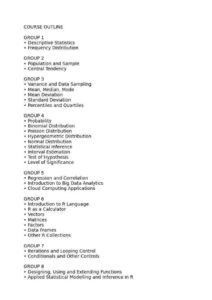
Variance Data Sampling and Statistical Analysis PresentationPresentation
PDFPresentation
Soil Stabilization: Processes, Applications, and ExamplesPresentation
PDFForm
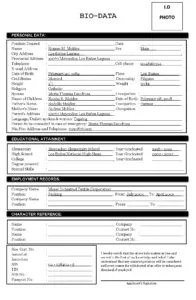
Bio Data Form for Employment ApplicationsForm
PDF
Designing Data Intensive Applications
PDFPresentation
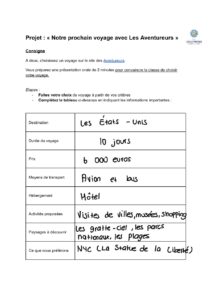
Présenter Un Projet De VoyagePresentation
PDFPresentation
History of Ethiopia and the Horn – Lecture Notes Chapters 1 and 2Presentation
PDFPresentation
Infrared Spectroscopy (IR) – Unit 5Presentation
PDFPresentation
Business Proposal Presentation: Blue Modern DesignPresentation
FAQs
What is the definition of Big Data in this document?
Big data is defined as the massive amount of data that cannot be stored, processed, and analyzed using traditional tools. It refers to data sets that are so large and complex that they become difficult to process with standard database management tools or traditional data processing applications.
What are the characteristics of traditional data processing?
Traditional data processing is characterized by structured data, which fits into tables with rows and columns, and centralized storage, where all data is typically stored in one central location. Examples include retail sales tracking and banking processes, where transactions and account balances are updated in a centralized system.
What are the 5 V's of Big Data classification?
The classification of Big Data is based on the concept of the 5 V's: Volume, Velocity, Variety, Veracity, and Value. Volume refers to the sheer scale of data generated, Velocity is the speed at which data is created and processed, Variety indicates the diversity of data formats, Veracity pertains to the quality and accuracy of data, and Value signifies the actionable insights derived from data.
What is cloud computing according to the document?
Cloud computing is described as the delivery of on-demand computing services over the internet on a pay-as-you-go basis. This allows users to manage files over the internet rather than relying on local storage devices, making data access more flexible and scalable.
What are the types of cloud computing deployment models mentioned?
The document categorizes cloud computing deployment models into three types: Public, Private, and Hybrid clouds. Public clouds are available to the general public and owned by cloud providers, Private clouds are exclusive to a single organization, and Hybrid clouds combine elements of both public and private clouds, allowing data and applications to move between them.
What are the main service models of cloud computing?
The document outlines three main service models in cloud computing: IaaS (Infrastructure as a Service), PaaS (Platform as a Service), and SaaS (Software as a Service). IaaS provides raw infrastructure, PaaS offers a framework for app development, and SaaS delivers fully functional applications over the internet.
What job opportunities are available in Big Data and cloud computing?
The document highlights several job opportunities in Big Data and cloud computing, including Cloud Architect, Cloud Engineer, DevOps Engineer, and Cloud Security Specialist. Each role has specific responsibilities, such as designing cloud strategies, implementing technical solutions, automating software deployment, and protecting data from cyber threats, with average salaries ranging from $60,000 to over $180,000.