Metallic bonding is a key concept in chemistry, explaining how metals are held together by strong electrostatic forces. This chapter covers the structure of metallic lattices, the behavior of delocalized electrons, and the resulting physical properties of metals such as conductivity and malleability. It is essential for students studying for IGCSE or O Level exams in chemistry. Key topics include the formation of ions from metal atoms and the implications of metallic bonding on the physical characteristics of metals.

Key Points

  • Explains the structure of metallic lattices and their representation in 2-D diagrams.
  • Describes the electrostatic attractions in metallic bonding and their significance.
  • Covers the physical properties of metals, including conductivity and malleability.
  • Discusses the role of delocalized electrons in metallic structures.

Rifa Hasan
Author:KMS TARAKKY
3 pages
Language:English
Type:Lecture Notes
Rifa Hasan
Author:KMS TARAKKY
3 pages
Language:English
Type:Lecture Notes
197
/ 3
CHAPTER 9:
METALLIC BONDING
CONTENTS COVERED
know how to represent a metallic lattice
by a 2-D diagram
understand metallic bonding in terms of
electrostatic attractions
explain typical physical properties of metals,
including electrical conductivity and
malleability
EDEXCEL IGCSE
O LEVEL
Teacher: KMS TARAKKY
Chapter 9: Metallic Bonding
Metals are held together strongly by metallic bonding.
When sodium atoms bond together to form sodium metal, the outer electron on each
sodium atom becomes free to move throughout the structure.
When a sodium atom loses an electron, it leaves behind a Na+ ion.
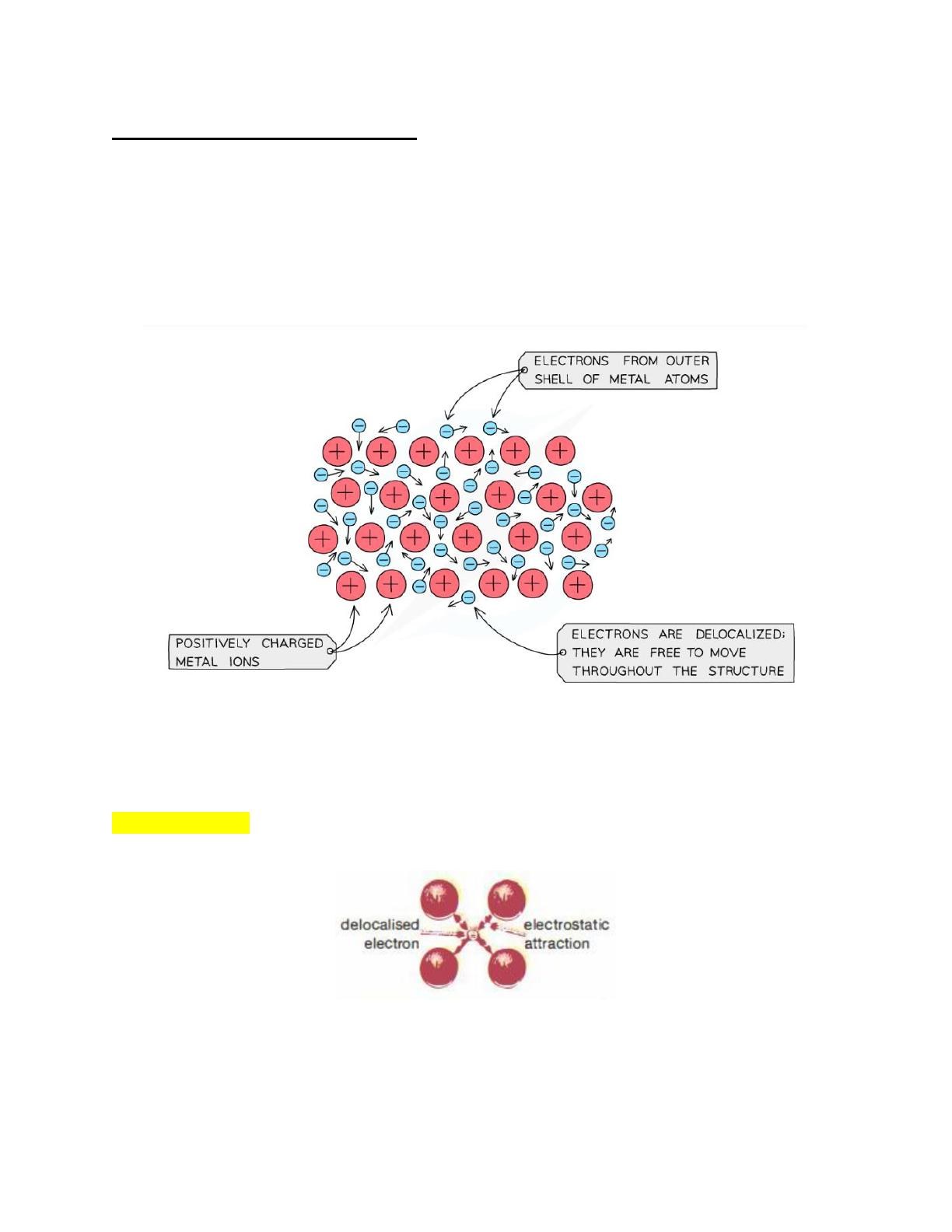
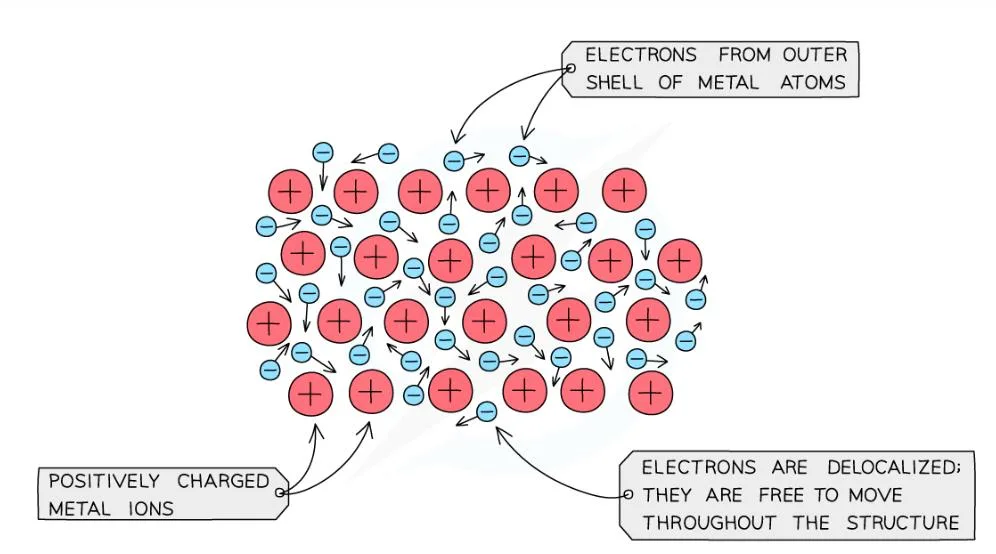
A metallic structure consists of a lattice of positive ions in a sea of delocalized electrons.
Figure: Structure of a Metal
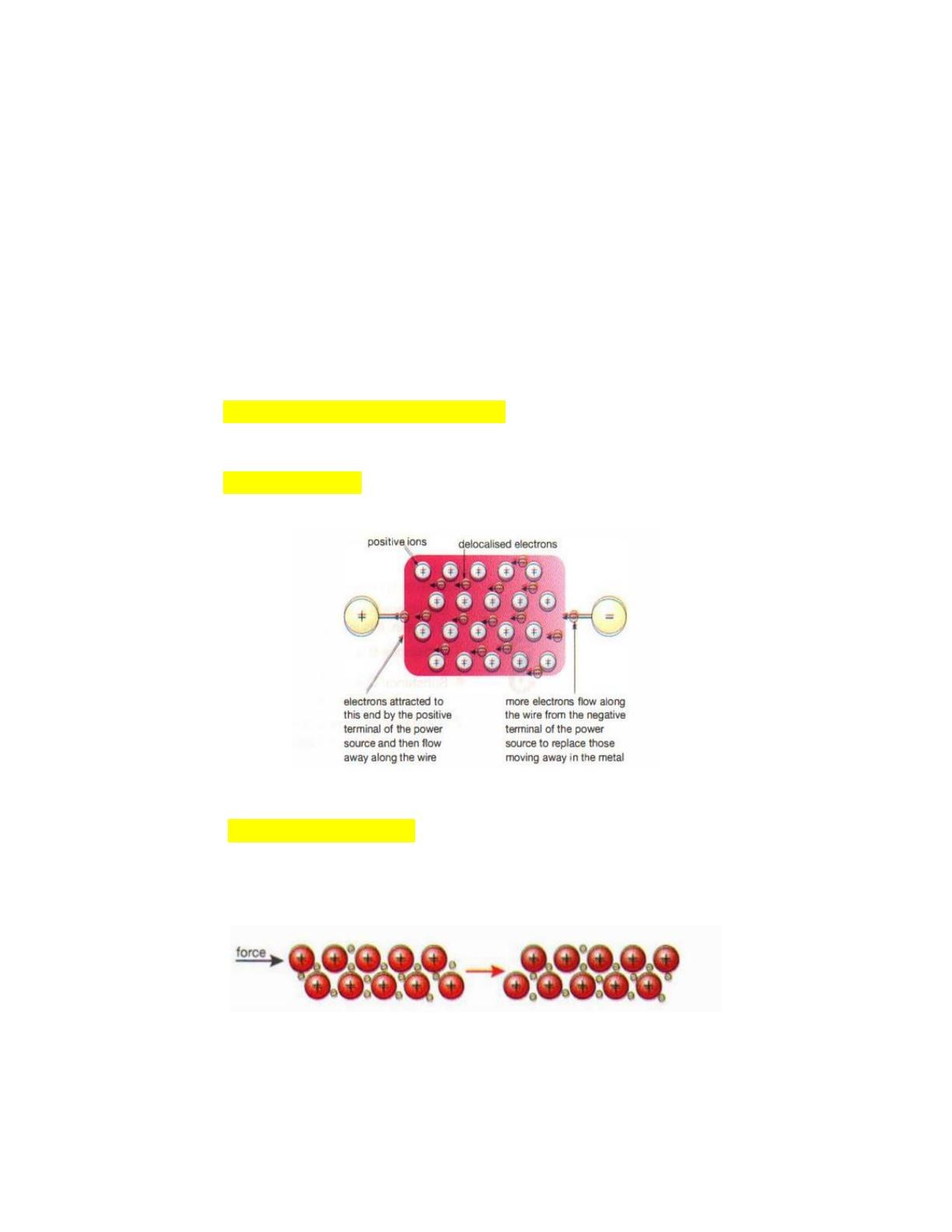
Metallic Bonding is the strong electrostatic forces of attraction between each positive ion and
the delocalized electrons.
Figure: Metallic Bonding
Teacher: KMS TARAKKY
Structure of metals:
All metals have giant structures.
There are no individual molecules in the structure. All the positive ions in the lattice
attract all the delocalized electrons.
The ion formed by the metal depends on the number of electrons the original atom has in
its outer shell.
All group 1 elements form +1 ions.
All group 2 elements form +2 ions.
Physical properties of metals:
Metals are hard and have high melting points. There are many strong metallic bonds in
giant metallic structures. A lot of heat energy is needed to overcome forces and break

these bonds.
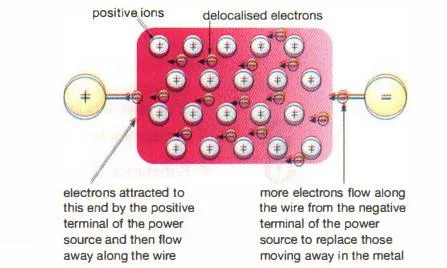
Metals conduct electricity because they have delocalized electrons which are free to
move throughout the structure.
Metals are malleable and ductile. The layers of positive charge slide over each other
when a force is applied. This does not affect the bonding in the structure; the positive
ions are still attracted to delocalized electrons. As a result, metals are strong but flexible.
They can be hammered and bent into different shapes without breaking.
/ 3
End of Document
197

FAQs

what is metallic bonding

Metallic bonding refers to the strong electrostatic forces of attraction between positively charged metal ions and delocalized electrons.

  • Metals form a giant structure where positive ions are surrounded by a sea of delocalized electrons.
  • This bonding is responsible for many physical properties of metals, such as conductivity and malleability.
  • When sodium atoms bond to form sodium metal, each outer electron becomes free to move, creating a metallic lattice.

how does metallic bonding affect conductivity

Metallic bonding significantly affects the electrical conductivity of metals.

  • Delocalized electrons in metallic structures are free to move, allowing metals to conduct electricity efficiently.
  • This property is crucial for applications in electrical wiring and electronic components.
  • In contrast to insulators, metals can easily transfer electric charge due to their metallic bonds.

what are the physical properties of metals due to metallic bonding

The physical properties of metals are largely attributed to metallic bonding.

  • Metals are typically hard and have high melting points due to the strong metallic bonds that require substantial energy to break.
  • They exhibit malleability and ductility, allowing them to be shaped without breaking.
  • This is because the layers of positive ions can slide over each other while maintaining their attraction to delocalized electrons.

how do metallic bonds contribute to malleability

Metallic bonds contribute to the malleability of metals by allowing layers of atoms to slide over one another.

  • When a force is applied, the positive ions can shift positions without breaking the metallic bond.
  • This flexibility is a result of the delocalized electrons that maintain the attraction between the ions.
  • Consequently, metals can be hammered or bent into various shapes without fracturing.

what is the structure of metals in metallic bonding

The structure of metals in metallic bonding consists of a giant lattice of positive ions surrounded by delocalized electrons.

  • There are no individual molecules; all positive ions attract delocalized electrons throughout the structure.
  • The ion formed by a metal depends on the number of electrons in its outer shell.
  • For example, group 1 elements form +1 ions, while group 2 elements form +2 ions.

how do sodium atoms bond in metallic bonding

Sodium atoms bond in metallic bonding by losing their outer electrons to form positive ions.

  • When sodium atoms bond to create sodium metal, each atom loses one electron, resulting in Na+ ions.
  • This process creates a lattice structure where these ions are surrounded by delocalized electrons.
  • The movement of these electrons contributes to the metallic properties of sodium metal.

what is the difference between metallic bonding and ionic bonding

Metallic bonding and ionic bonding are two distinct types of chemical bonding.

PropertyMetallic BondingIonic Bonding
Electron MovementDelocalized electronsElectrons transferred between atoms
StructureGiant metallic latticeCrystal lattice of ions
ConductivityGood conductors of electricityPoor conductors in solid state

what are examples of metals with metallic bonding

Examples of metals that exhibit metallic bonding include sodium, magnesium, and aluminum.

  • Sodium (Na) forms a +1 ion and has a simple metallic structure.
  • Magnesium (Mg) forms a +2 ion and has a more complex lattice.
  • Aluminum (Al) is known for its lightweight and strong metallic bonds.

how does metallic bonding explain the high melting points of metals

Metallic bonding explains the high melting points of metals due to the strength of the bonds between ions and delocalized electrons.

  • Breaking these bonds requires significant energy, resulting in high melting points.
  • For example, metals like tungsten and iron have very high melting points due to their strong metallic bonds.
  • This property makes metals suitable for high-temperature applications.

what role do delocalized electrons play in metallic bonding

Delocalized electrons play a crucial role in metallic bonding by allowing electrical conductivity and structural flexibility.

  • These electrons are not bound to any specific atom, enabling them to move freely throughout the metallic structure.
  • This movement facilitates the conduction of electricity and heat.
  • Additionally, the presence of delocalized electrons contributes to the malleability and ductility of metals.