Osmoregulation in fish explores how aquatic organisms maintain water and electrolyte balance in varying salinity environments. This document discusses the mechanisms used by both freshwater and marine fish to regulate osmotic pressure, including the roles of kidneys and gill tissues. It highlights the differences between stenohaline and euryhaline fish, detailing their adaptations to specific habitats. This resource is essential for students studying aquatic biology and physiology.

Key Points

  • Explains osmoregulation mechanisms in freshwater and marine fish.
  • Discusses the roles of kidneys and gill tissues in maintaining osmotic balance.
  • Differentiates between stenohaline and euryhaline fish adaptations.
  • Covers the impact of salinity on fish physiology and survival.
Anahit Kaur
Author:Dr. R. Prasad
7 pages
Language:English
Type:Lecture Notes
Anahit Kaur
Author:Dr. R. Prasad
7 pages
Language:English
Type:Lecture Notes
322
/ 7
Dr. R. Prasad, Department of Zoology, Eastern Karbi Anglong College, Sarihajan
_________________________________________________________________________________
Page | 1
Osmoregulation in Fishes
Osmoregulation is a type of homeostasis which controls both the volume of water
and the concentration of electrolytes. It is the active regulation of the osmotic
pressure of an organism’s body fluids, detected by osmoreceptors. Organisms in
aquatic and terrestrial environments must maintain the right concentration of
solutes and amount of water in their body fluids. The nature of osmoregulatory
problem is quite different in various groups of fishes in different environments.
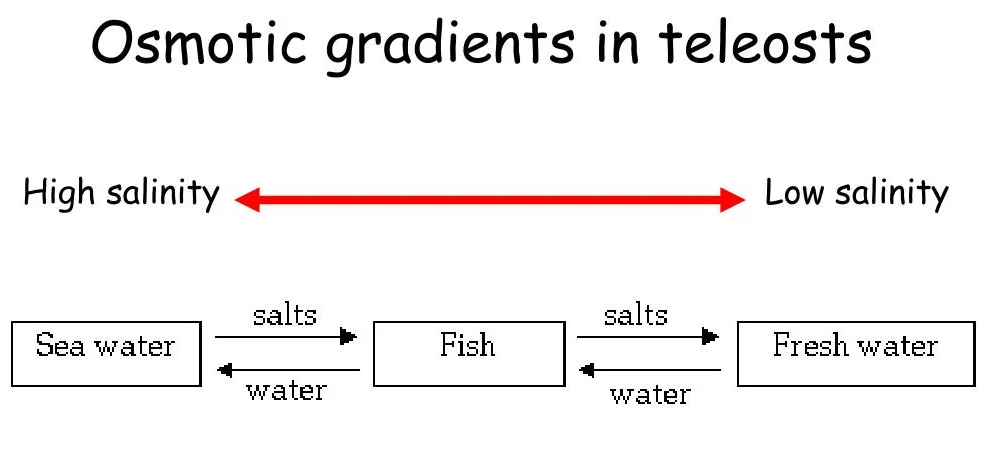
There is always a difference between the salinity of a fish’s environment and the
inside of its body, whether the fish is fresh water or marine. Regardless of the
salinity of their external environment, fish use osmoregulation to fight the process
of diffusion and osmosis and maintain the internal balance of salt and water
essential to their efficiency and survival. Kidneys do play a role in osmoregulation
but overall extra-renal mechanisms are equally more important sites for
maintaining osmotic homeostasis. Extra-renal sites include the gill tissue, skin, the
alimentary tract, the rectal gland and the urinary bladder.
Stenohaline and Euryhaline Fishes:
Stenohaline (steno=narrow, haline=salt): Most of the species live either in
fresh water or marine water and can survive only small changes in salinity.
These fishes have a limited salinity tolerance and are called stenohaline.
e.g., Goldfish
Euryhaline (eury=wide, haline=salt): Some species can tolerate wide
salinity changes and inhabit both fresh water and sea water. They are called
euryhaline.
e.g., Salmon

Dr. R. Prasad, Department of Zoology, Eastern Karbi Anglong College, Sarihajan
_________________________________________________________________________________
Page | 2
According to habitat, fishes can be distinguished as (i) Marine, and (ii) Fresh
water.
(i) The marine fishes fall into two distinct groups:
a) Those whose osmotic concentration is the same as or slightly above sea
water, e.g., hagfish, elasmobranchs, Latimeria etc. This group has no major
problem of water balance, because it’s inside and outside concentrations are
equal, there is no osmotic water flow.
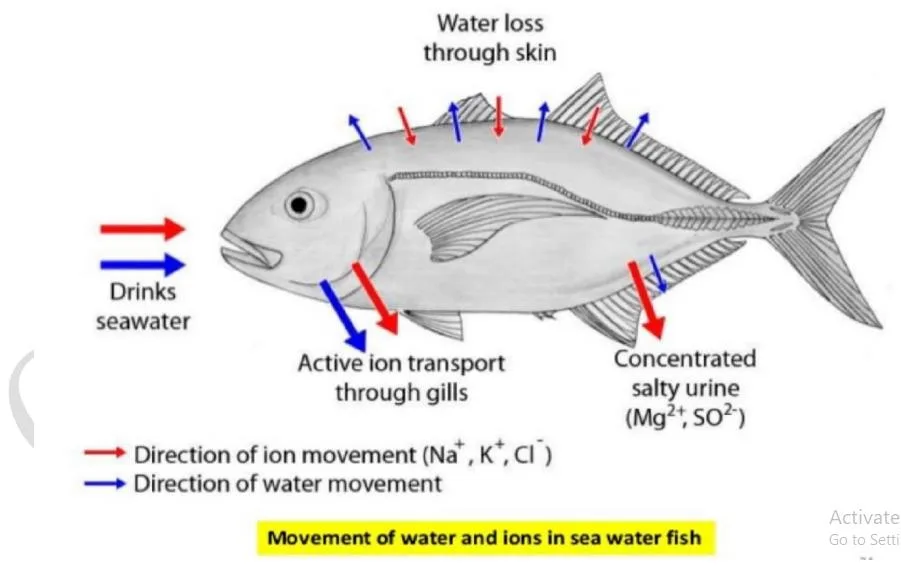
b) Those whose osmotic concentrations are about one third of that of sea water,
e.g., lampreys, teleosts, etc. These are hyposmotic animals. They live in
constant danger of losing water to the osmotically more concentrated
medium.
(ii) The fresh water fishes, on the other hand, have internal concentrations greater
than that of their external medium. Thus, they are hyperosmotic to the medium.
Therefore, the osmotic problems and the means to solve them differ drastically
among fishes of different habitats.
Dr. R. Prasad, Department of Zoology, Eastern Karbi Anglong College, Sarihajan
_________________________________________________________________________________
Page | 3
Osmoregulation in Freshwater Fishes
Water Balance:
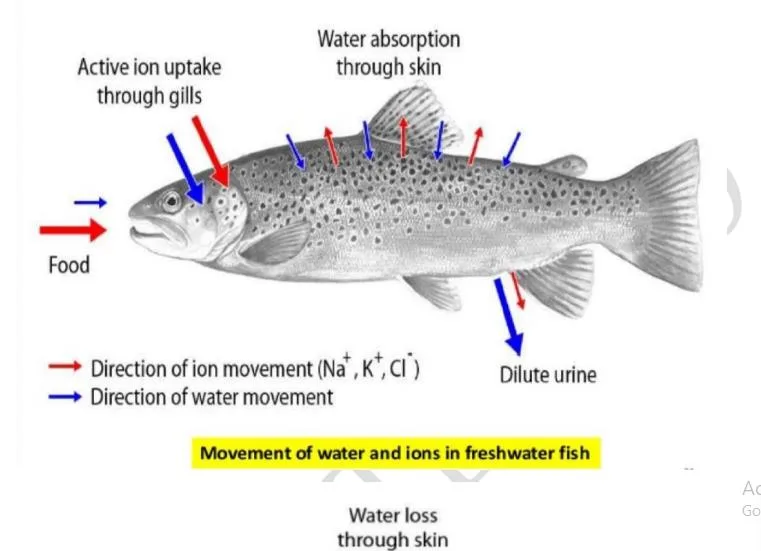
The osmotic pressure of body fluids depends on mineral and organic
compound content. The osmotic pressure of body fluids in fresh water fishes
is always higher than that of the surrounding water (hyperosmotic) and the
later diffuses into the body through oral membranes, gills and even intestinal
surfaces.
In certain species of fish water may enter through the skin also. To counter
the continuous inflow of water through gills, a large amount of hypotonic
urine is produced by the freshwater fishes in general.
The freshwater fishes possess more glomeruli (even more than 10000 in
number in the kidney). The kidney is also larger in size and is well
vascularized. Water excretion is the main function of the kidneys in these
fishes but small quantity of nitrogenous compounds, containing creatine,
creatinine, amino acids, ammonia and urea are also present in the urine.
A freshwater teleost does not drink water as large amount of water enters the
body by osmosis and is more than necessary for the fish.
/ 7
End of Document
322

FAQs

what is osmoregulation in fish

Osmoregulation in fish refers to the process by which these organisms maintain the balance of water and electrolytes in their bodies.

  • It is essential for survival in varying aquatic environments.
  • Fish can be classified as stenohaline (tolerating narrow salinity ranges) or euryhaline (tolerating wide salinity changes).
  • Freshwater fish are typically hyperosmotic to their environment, while marine fish are often hyposmotic.

how do fish regulate osmoregulation

Fish regulate osmoregulation through various physiological mechanisms to maintain internal salt and water balance.

  • Freshwater fish produce large amounts of dilute urine to expel excess water.
  • They absorb salts from their environment through gills and food.
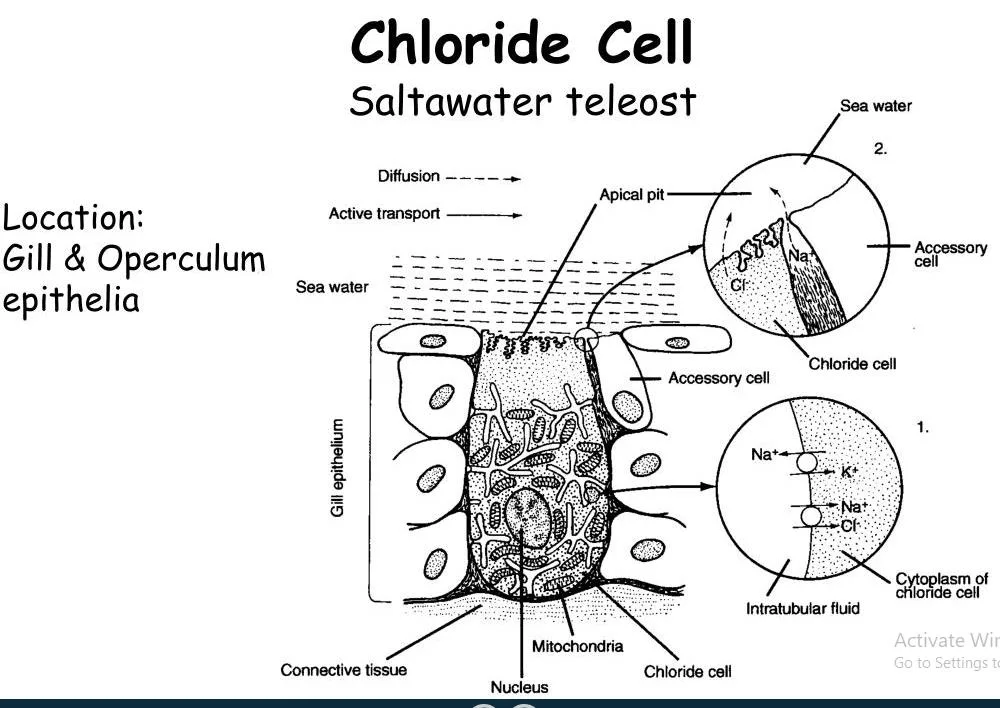
  • Marine fish, on the other hand, drink seawater and excrete excess salts through specialized cells in their gills.
  • The kidneys also play a crucial role in filtering and reabsorbing necessary ions.

what are the types of osmoregulation in fish

There are two main types of osmoregulation in fish: freshwater osmoregulation and marine osmoregulation.

  • Freshwater fish face challenges of water influx and must excrete large volumes of dilute urine.
  • Marine fish experience water loss to their environment and must drink seawater while excreting excess salts.
  • Both types involve adaptations in kidney function and gill structure to maintain osmotic balance.

how do freshwater fish maintain osmoregulation

Freshwater fish maintain osmoregulation by managing the constant influx of water from their environment.

  • They possess a higher osmotic pressure in their body fluids compared to surrounding water.
  • To counteract water intake, they produce large amounts of dilute urine.
  • Salt loss occurs through diffusion, but they actively reabsorb salts in their kidneys and absorb ions from food and water.

how do marine fish achieve osmoregulation

Marine fish achieve osmoregulation by adapting to the high salinity of seawater.

  • They drink seawater to compensate for water loss through osmosis.
  • Excess salts are excreted through specialized cells in their gills.
  • Urine output is minimized to conserve water, and kidneys are adapted to handle the high salt concentration.

what role do kidneys play in fish osmoregulation

The kidneys play a vital role in osmoregulation in fish by filtering blood and managing water and salt balance.

  • In freshwater fish, kidneys produce large volumes of dilute urine to expel excess water.
  • In marine fish, kidneys conserve water and produce concentrated urine.
  • Active reabsorption of salts occurs in renal tubules to minimize salt loss.

what are the endocrine controls of osmoregulation in fish

Endocrine controls play a significant role in osmoregulation in fish, influencing water-salt balance and urine flow.

  • Hormones like cortisol help fish adapt to seawater, while prolactin aids in freshwater adaptation.
  • Growth hormone works with cortisol to enhance seawater tolerance.
  • Thyroid hormones also support osmoregulatory functions in certain species.

what is the difference between stenohaline and euryhaline fish

Stenohaline and euryhaline fish differ in their salinity tolerance and habitat adaptability.

  • Stenohaline fish can only survive in a narrow salinity range, such as goldfish.
  • Euryhaline fish can tolerate a wide range of salinities, like salmon, allowing them to inhabit both freshwater and marine environments.

how does osmoregulation affect fish survival

Osmoregulation is crucial for fish survival as it maintains the balance of water and salts in their bodies.

  • Proper osmoregulation ensures efficient physiological functions and prevents dehydration or overhydration.
  • It allows fish to thrive in diverse environments, from freshwater to salty seas.
  • Failure in osmoregulation can lead to stress, impaired growth, and even mortality.

what adaptations do fish have for osmoregulation

Fish have developed several adaptations for effective osmoregulation in different environments.

  • Freshwater fish have specialized gill cells for salt absorption and produce large volumes of dilute urine.
  • Marine fish possess salt-excreting cells in their gills and adapt their kidney functions to conserve water.
  • Behavioral adaptations, such as drinking seawater, also play a role in maintaining osmotic balance.