Fish migration involves various types of movements for feeding and reproduction. This study guide details the different types of fish migration, including alimentary, gametic, climatic, osmo-regulatory, and juvenile migrations. It also explores the physiological changes fish undergo during migration, such as those seen in salmon and eels. This resource is ideal for students studying zoology or marine biology, providing insights into the migratory behaviors of fish species.

Key Points

  • Explains the types of fish migration, including feeding and spawning migrations.
  • Details physiological changes in fish during migration, such as those in salmon.
  • Covers diadromous, potamodromous, oceanodromous, and latitudinal migrations.
  • Discusses the significance of fish migration for survival and genetic diversity.
Anahit Kaur
Author:Dr. Vandana Kumari
6 pages
Language:English
Type:Lecture Notes
Anahit Kaur
Author:Dr. Vandana Kumari
6 pages
Language:English
Type:Lecture Notes
378
/ 6
Migration in fishes
B. Sc. Part-I, Paper II, Group- B
By- Dr. Vandana Kumari, Department of Zoology, R. C. S.
College, Manjhaul
Migration involves movement of animals on a larger scale and
duration for a particular reason. The purposes for migration
vary accordingly with the types of animals. In fishes various
types of migratory movements are seen on a regular basis, on
a particular time scale ranging from daily to annually or longer,
and over a distance ranging from few meters to thousands of
kilometres. Migratory behaviour of fish is a regular
phenomenon. Their journey is purposed mainly for feeding and
reproduction.
Types of fish migration on the basis of needs:
1. Alimentary or Feeding migration: migration for search of
feeding ground. It occurs when food resources get
exhausted.
2. Gametic or spawning migration: it occurs during breeding
season in search for the suitable spawning ground.
3. Climatic or seasonal migration: migration in search for
suitable climatic condition.
4. Osmo-regulatory migration: migration for water and
electrolytes balance from sea to fresh water and vice-
versa.
5. Juvenile migration: it is larval migration from spawning
ground to the feeding habitats of their parent.
Movement of fishes during the migration
1. Drifting movement: It is a passive movement of fish along
with water currents.
2. Dispersal movement: It is a random locomotory movement
of fish from a uniform habitat to diverse direction.
3. Swimming movement: It is an orientated movement of fish
either toward or away from the source of stimulus.
4. Denatant and Contranatant movement: It is an active
swimming movement. Denatant movement is swimming
with the water current while contrantant movement is
swimming against water current
Types of fish migration
The migration of some fishes is a regular journey and is truly an
innate animal behaviour. Many fish migrate long distances to
spawn. These migrations are classified into different categories.
1. Diadromous migration:
it is the migration of fish between sea and fresh water.
As we know, most of the fishes are restricted to either fresh
water or sea water. Changes in habitat may causes
osmotic imbalance in those fishes. However, some fishes
regularly migrate between sea and fresh water and have
perfect osmotic balance, they are the true migratory fish.
This migration is of two types-
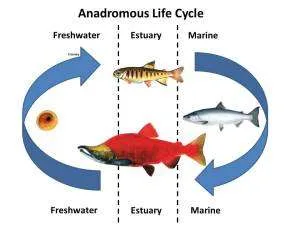
Anadromous migration:
it is the migration of marine fishes from sea to fresh water
for spawning.
Fishes spend most of their life living and feeding in sea.
They only migrate during breeding season to the river for
spawning ground.
Eg. Salmon, Hilsa, Lamprey, American shad etc.
Salmon migrate for breeding during winter from sea to
river. While migrating, some physiological changes occurs:
stops feeding during journey.
changes colour from silver to dull reddish brown.
gonads mature.
They select suitable spawning ground and make a saucer-
like nest in which female lays eggs and male releases
smelt over them. Juvenile larva hatched out from the egg
known as Alevins (a newly hatched salmon when still
attached to the yolk sac). Alevins then transform into a
juvenile fish called parr and metamorphose into adult when
return to the sea.
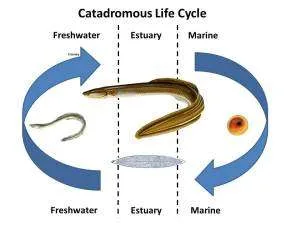
Catadromous migration:
It is the migration of fresh water fishes from river to sea
during breeding season for spawning. Ex. Eels
/ 6
End of Document
378

FAQs

what is fish migration notes about

Fish migration notes cover the various types and movements of fish as they migrate for feeding and spawning purposes.

  • Types of Migration: Includes alimentary, gametic, climatic, osmo-regulatory, and juvenile migration.
  • Movement Patterns: Discusses drifting, dispersal, swimming, denatant, and contrantant movements.
  • Diadromous Migration: Explains anadromous and catadromous migrations, highlighting species like salmon and eels.

how do fish migrate according to fish migration notes

Fish migrate through various movements that are essential for their survival and reproduction.

  • Drifting Movement: Passive movement along water currents.
  • Swimming Movement: Active orientation toward or away from stimuli.
  • Denatant and Contrantant Movement: Swimming with or against the current, respectively.

what are the types of fish migration in fish migration notes

Fish migration notes categorize migration into several types based on the habitat and purpose.

  1. Diadromous Migration: Involves migration between fresh and saltwater.
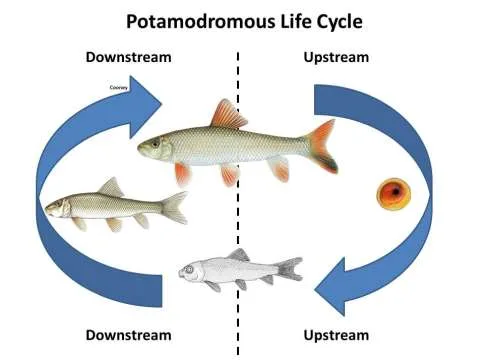
  2. Potamodromous Migration: Limited to freshwater habitats.
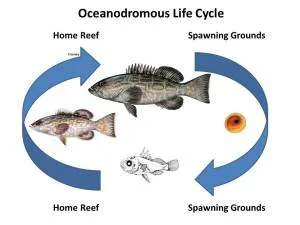
  3. Oceanodromous Migration: Occurs within the sea.
  4. Latitudinal Migration: North-south movement based on climatic conditions.
  5. Vertical Migration: Daily movement from deep waters to the surface.
  6. Shoreward Migration: Temporary migration from water to land.

what is the significance of fish migration notes

The significance of fish migration is multifaceted, impacting ecological balance and species survival.

  • Feeding and Spawning: Helps fish find suitable grounds for these essential activities.
  • Protection: Migration can offer safety from predators.
  • Genetic Diversity: Increases genetic variation within populations.
  • Adaptation: Migration is a key adaptation for survival in changing environments.

how does anadromous migration work in fish migration notes

Anadromous migration involves marine fish moving from the sea to freshwater for spawning.

  • Life Cycle: Fish like salmon spend most of their lives in the ocean and migrate to rivers during breeding season.
  • Physiological Changes: Changes include stopping feeding, color alteration, and gonad maturation.
  • Spawning Process: Females lay eggs in nests while males fertilize them, leading to the hatching of alevins.

what is catadromous migration in fish migration notes

Catadromous migration refers to freshwater fishes migrating to the sea for spawning.

  • Example Species: European and American eels migrate to the Sargasso Sea.
  • Physiological Adaptations: Include fat deposition, digestive tract shrinkage, and enhanced sensory organs.
  • Spawning Outcome: After spawning, adult eels die, and the larvae develop into young eels before returning to freshwater.

what are the movements of fish during migration in fish migration notes

Fish exhibit various movements during migration that are crucial for their journey.

  • Drifting Movement: Passive movement with water currents.
  • Dispersal Movement: Random movement from a uniform habitat.
  • Swimming Movement: Active orientation towards stimuli.
  • Denatant Movement: Swimming with the current.
  • Contrantant Movement: Swimming against the current.

what is potamodromous migration in fish migration notes

Potamodromous migration involves fish migrating within freshwater environments.

  • Feeding and Spawning: This type of migration is typically for feeding or spawning purposes.
  • Example Species: Common examples include carps and catfish.

how does vertical migration occur in fish migration notes

Vertical migration is a daily movement of fish between deep waters and the surface.

  • Purpose: This movement is often for food, protection, and spawning.
  • Example Species: Swordfish typically move to greater depths during the day for feeding.

what is shoreward migration in fish migration notes

Shoreward migration is the temporary movement of fish from water to land.

  • Example: Eels may migrate between ponds via moist meadows.
  • Significance: This type of migration is generally short-term and linked to environmental conditions.