Amphibians are a diverse group of vertebrates that have adapted to both terrestrial and aquatic environments. This overview covers their classification, including key groups such as Apoda, Anura, and Urodela, and highlights their unique physiological traits like moist skin and a three-chambered heart. The document also explores various amphibian species, their habitats, and reproductive behaviors, making it a valuable resource for biology students and enthusiasts. Ideal for those studying vertebrate zoology or preparing for exams in biology.

Key Points

  • Explains the classification of amphibians into Apoda, Anura, and Urodela.
  • Describes the unique physiological traits of amphibians, including their skin and heart structure.
  • Covers various amphibian species and their specific habitats.
  • Discusses reproductive behaviors and developmental stages of amphibians.
Anahit Kaur
20 pages
Language:English
Type:Lecture Notes
Anahit Kaur
20 pages
Language:English
Type:Lecture Notes
346
/ 20
AMPHIBIANS
PHYLUM- CORDATA
SUBPHYLUM- VERTEBRATA[ NOTOCORD REPLACE BYVERTIBRAL
COLOMN]
SECTION-GANETHOSTOMA[HAVE JAWS]
SUPERCLASS-TETRAPODA[ HAVE FOUR APPENDAGES]
BY- HARSHITA JUND & NIHARIKA
WHAT ARE AMPHIBIANS?
Animals that have adapted for terrestrial habitat but still depend
upon water for breeding, respiration etc
Habitat- totally aquatic or terrestrial, no amphibian is marine
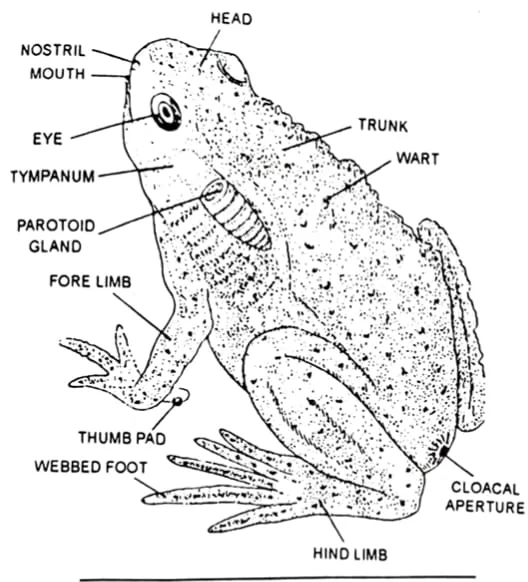
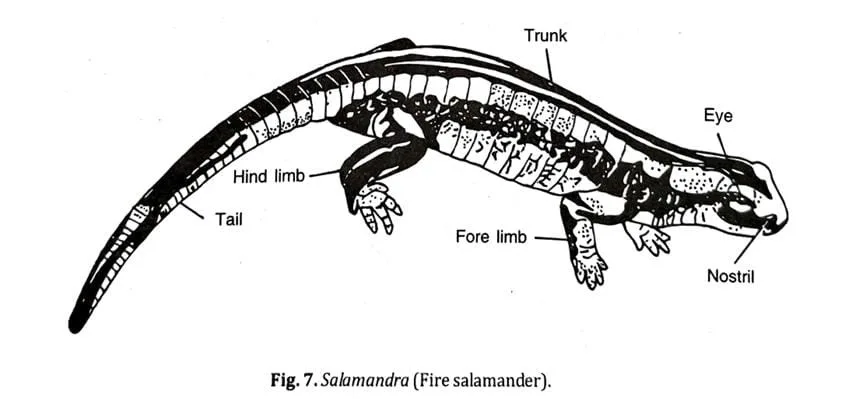
Body have 3 parts - HEAD, TRUNK, TAIL.
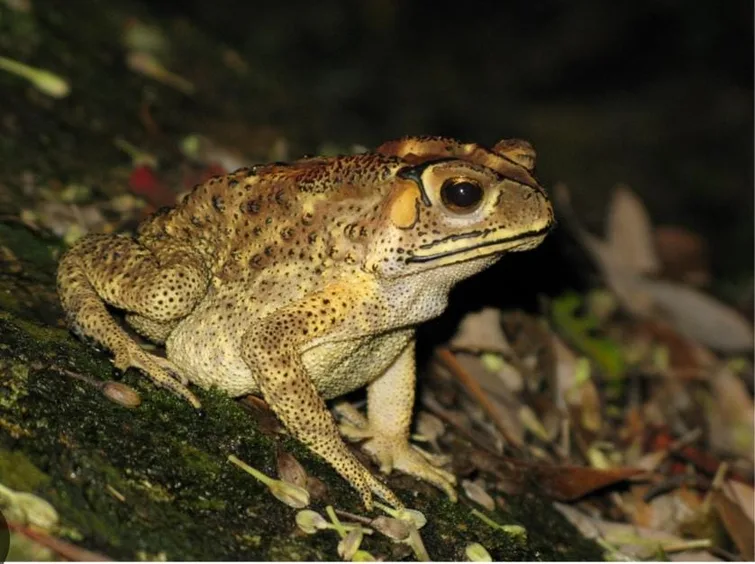
3 TYPES; APODA[limb less],ANEURAN[tail less],Eurodela[have tail]
SKIN is thin, moist, glandular, vascular and respiratory
They generally lack EXOSKELETON [hard outer covering]
HEART 3 chambered along with double circulation
Kidney is PRONEPHROS[primitive]in youngs;
MESONEPHROS[increase in level[ embryos of roughly 6-10
weeks]] in adults.
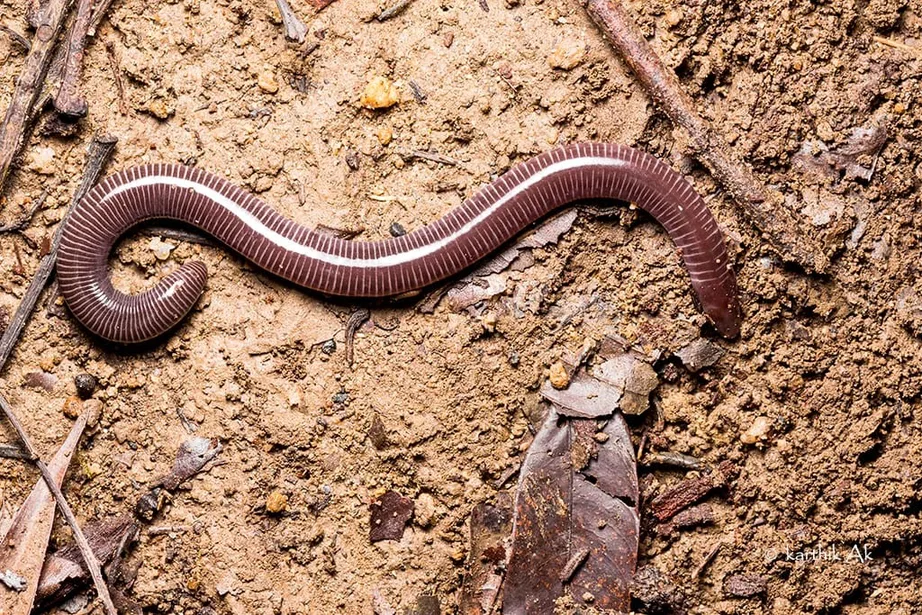
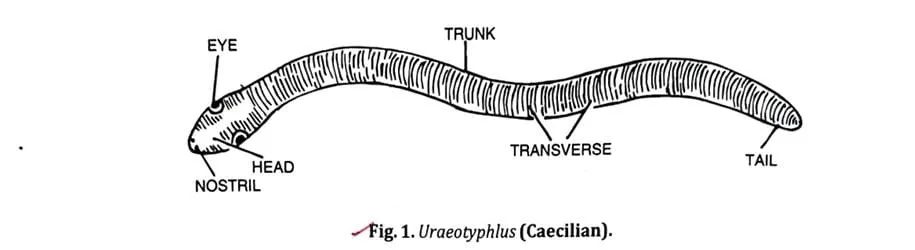
UREOTYPHLUS
[cacaelian, blind worm]
Habitat-1. It is fossorial apod found in burrows in moist ground.
Habits-
1. Locomotion - creeping type as they are limbless.
2. Feeding- carnivorous
3. Respration- shows cutaneous through slimy skin and pulmonary through
lungs
4. Reproduction- unisexual, direct development, male have copulatory organs
and female shows maternal care and coils around eggs
Morphology-
1. Body is elongated, divided into head, trunk, tail
2. Head is non functional , subcutaneous eyes
3. Trunk is annulated and limbless. Skin is covered by slimy skin
4. Tail is very short and vestigeal as cloaca is terminal.
/ 20
End of Document
346

FAQs

what are amphibians overview and classification

Amphibians are a diverse group of animals that typically undergo metamorphosis from a larval stage to an adult form.

They are classified into three main groups: Apoda (limbless), Anura (frogs and toads), and Urodela (salamanders). Amphibians are characterized by their ability to live both in water and on land, relying on moist environments for breeding and respiration.

  • Apoda: Limbless amphibians like caecilians.
  • Anura: Frogs and toads, known for their jumping abilities.
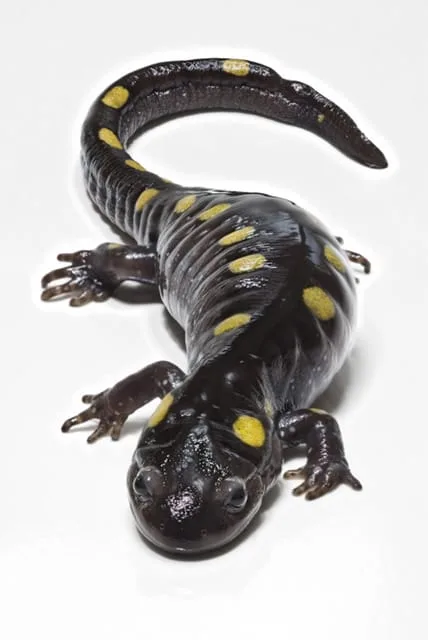
  • Urodela: Salamanders, which retain a tail throughout life.

how do amphibians breathe

Amphibians have a unique respiratory system that allows them to breathe through both their skin and lungs.

They exhibit cutaneous respiration, where oxygen is absorbed through their moist skin, and pulmonary respiration, which involves lungs. This dual method is crucial for their survival in varying environments.

  • Skin Respiration: Requires moist skin for gas exchange.
  • Lung Respiration: More prominent in terrestrial adults.

what is the habitat of amphibians

Amphibians are primarily found in moist environments, which are essential for their reproduction and survival.

They inhabit a range of ecosystems, including freshwater bodies, forests, and wetlands, but no amphibians are truly marine. Their dependence on water for breeding and hydration makes them sensitive to environmental changes.

  • Freshwater: Ponds, lakes, and streams.
  • Terrestrial: Forests and grasslands.
  • Moist environments: Essential for skin respiration.

how do amphibians reproduce

Amphibians typically reproduce through external fertilization, although some exhibit internal fertilization.

Most species lay eggs in water, where fertilization occurs, and the larvae undergo metamorphosis to become adults. Parental care varies among species, with some, like the mud puppy, showing significant maternal care.

  • Eggs: Laid in water, often in clusters or strings.
  • Larval Stage: Aquatic and often herbivorous.
  • Metamorphosis: Transition from larva to adult form.

what are the main characteristics of amphibians

Amphibians possess several distinctive characteristics that set them apart from other vertebrates.

These include a three-chambered heart, moist skin for respiration, and a life cycle that typically involves metamorphosis. They also lack an exoskeleton, which allows for greater flexibility and movement.

  • Heart: Three-chambered, facilitating double circulation.
  • Skin: Thin, moist, and glandular for respiration.
  • Limbs: Most have four limbs adapted for various modes of locomotion.

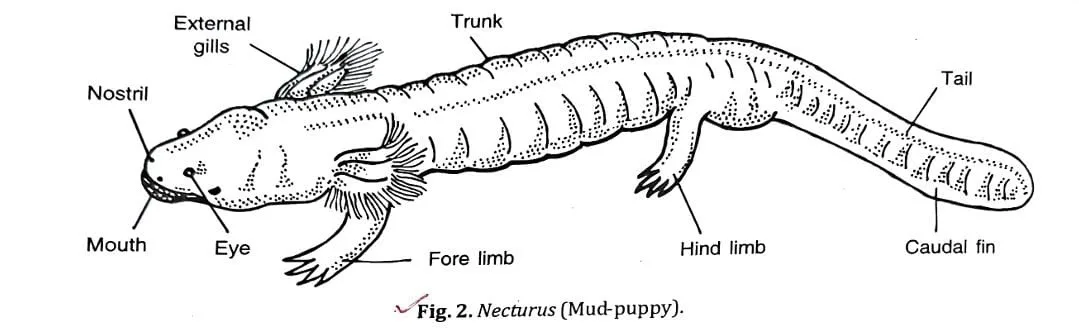
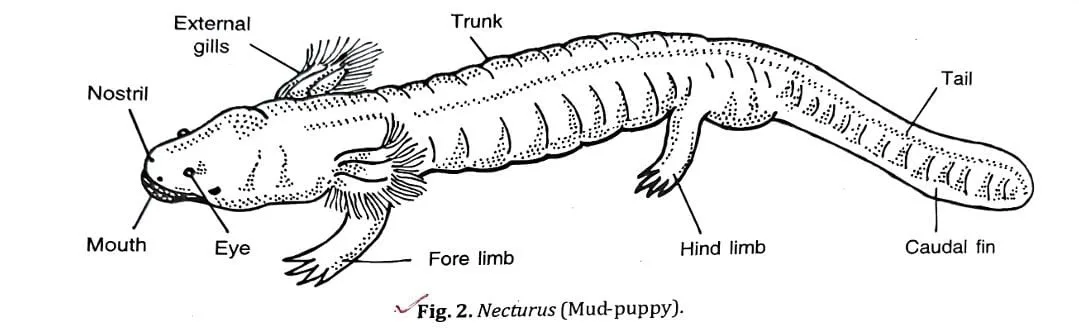
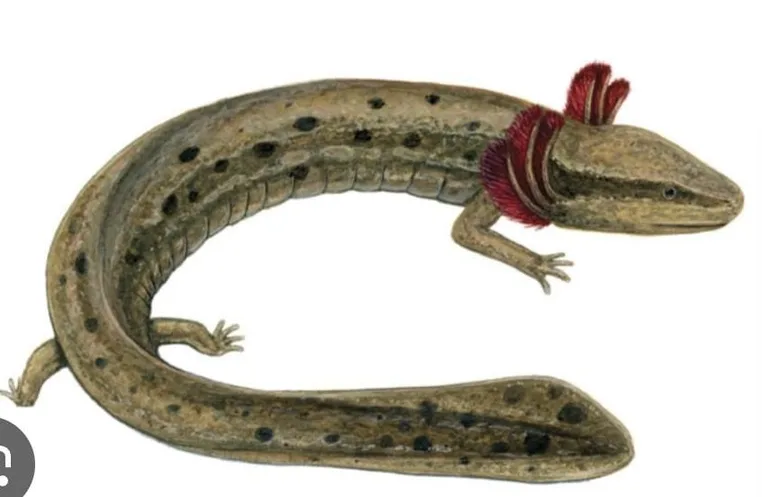
what is neoteny in amphibians

Neoteny is a phenomenon where amphibians retain juvenile characteristics into adulthood.

This is particularly evident in species like the mud puppy (Necturus), which maintains external gills and other larval traits throughout its life. Neoteny allows these amphibians to thrive in aquatic environments without undergoing complete metamorphosis.

  • Example: Necturus retains gills and does not metamorphose into a terrestrial form.
  • Advantages: Adaptation to specific ecological niches.

what are the types of amphibians

Amphibians are classified into three primary types based on their physical characteristics and life stages.

These types include Apoda (limbless), Anura (frogs and toads), and Urodela (salamanders). Each group exhibits unique adaptations suited to their environments.

  • Apoda: Caecilians, which are limbless and burrowing.
  • Anura: Frogs and toads, known for their jumping abilities.
  • Urodela: Salamanders, which often retain tails throughout life.

what is the diet of amphibians

Amphibians are primarily carnivorous, feeding on a variety of prey depending on their life stage.

Adult amphibians typically consume insects, worms, and small invertebrates, while larvae may be herbivorous or feed on smaller aquatic organisms. Their diet plays a crucial role in maintaining ecological balance.

  • Adults: Insects and small invertebrates.
  • Larvae: Often herbivorous or detritivorous.

how do amphibians adapt to their environment

Amphibians have developed various adaptations that enable them to thrive in diverse environments.

These adaptations include their permeable skin for respiration, the ability to undergo metamorphosis, and specialized reproductive strategies that ensure survival in moist habitats.

  • Skin: Moist and glandular for gas exchange.
  • Metamorphosis: Transition from aquatic larvae to terrestrial adults.
  • Reproductive Strategies: Laying eggs in water to ensure moisture for developing young.

what is the significance of amphibians in ecosystems

Amphibians play a vital role in maintaining ecological balance within their habitats.

They serve as both predators and prey, helping to regulate insect populations while providing food for larger animals. Additionally, their sensitivity to environmental changes makes them important indicators of ecosystem health.

  • Predators: Control insect populations.
  • Prey: Serve as food for birds, mammals, and reptiles.
  • Indicators: Sensitive to pollution and habitat changes.