Structural Systems Composite Construction for Gravity and Lateral Loading
Structural Systems Composite Construction for Gravity and Lateral Loading focuses on innovative composite construction methods used in civil engineering. This document, authored by Prof. Arth. J. Patel from Nirma University, explores various structural systems designed to handle both gravity and lateral loads effectively. Key topics include composite metal decks, beams, shear wall systems, and the integration of services within structural depths. Ideal for civil engineering students and professionals, this resource provides insights into modern construction techniques and their applications in tall buildings and other structures.
Key Points
Explains composite construction methods for gravity and lateral loading in buildings
Covers various structural systems including composite beams and shear walls
Discusses the integration of services within structural depths for efficient design
Provides insights into the benefits of using composite materials in construction
This link leads to an external site. We do not know or endorse its content, and are not responsible for its safety. Click the link to proceed only if you trust this site.
PGE 101: Fundamental Concepts for Petroleum Reservoir Engineering Systems – Chapter 5Presentation
PDFPresentation
Use of AR and VR in ConstructionPresentation
PDFPresentation
CPE 321 Presentation on Computer Systems and HardwarePresentation
PDFPresentation
Présenter Un Projet De VoyagePresentation
PDFPresentation
History of Ethiopia and the Horn – Lecture Notes Chapters 1 and 2Presentation
PDFPresentation
Infrared Spectroscopy (IR) – Unit 5Presentation
PDFPresentation
Universal Gravitation – Physics Concepts and ApplicationsPresentation
PDFPresentation
Business Proposal Presentation: Blue Modern DesignPresentation
PDFPresentation
Blue Modern Business Proposal Presentation 20260104 211018Presentation
PDFPresentation
Ethical Principles and Their ApplicationsPresentation
PDFPresentation
Clinical Toxicology of Alcohol Abuse and Addiction 2025Presentation
PDFPresentation
Nutrition Disorders 2026Presentation
FAQs
What are the key components of composite construction for gravity loading?
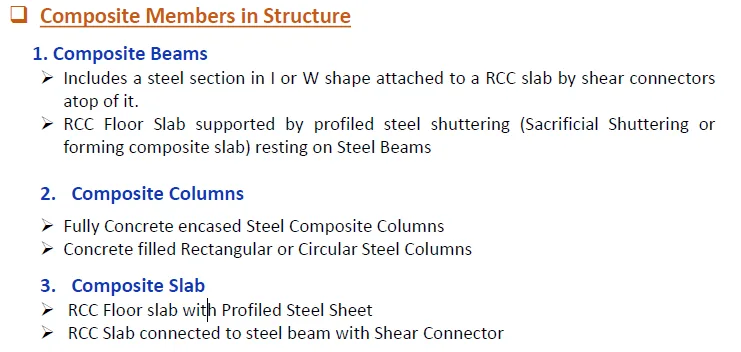
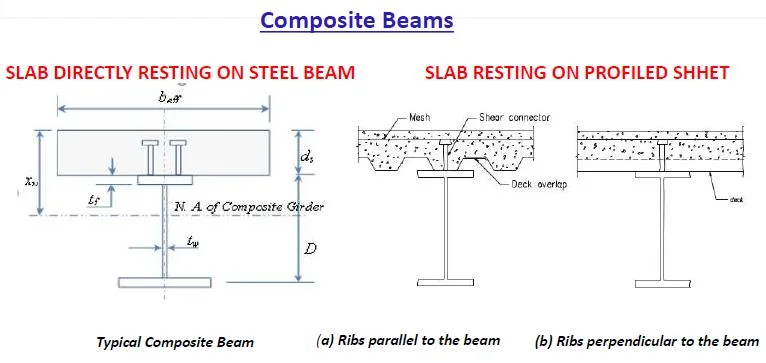
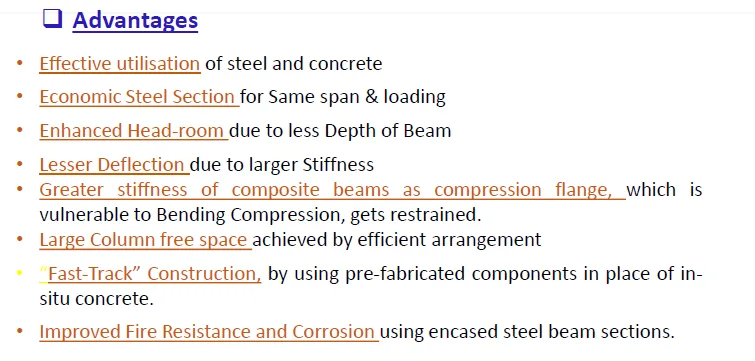
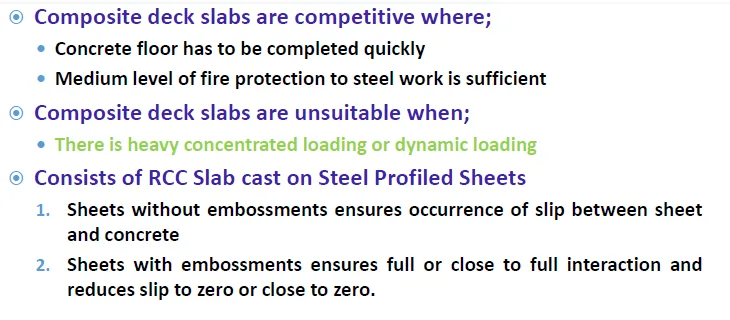
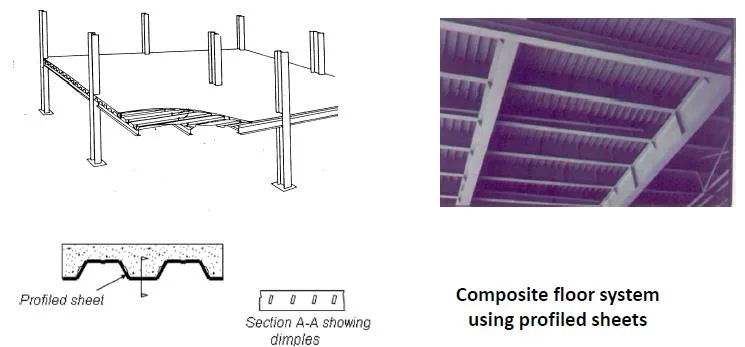
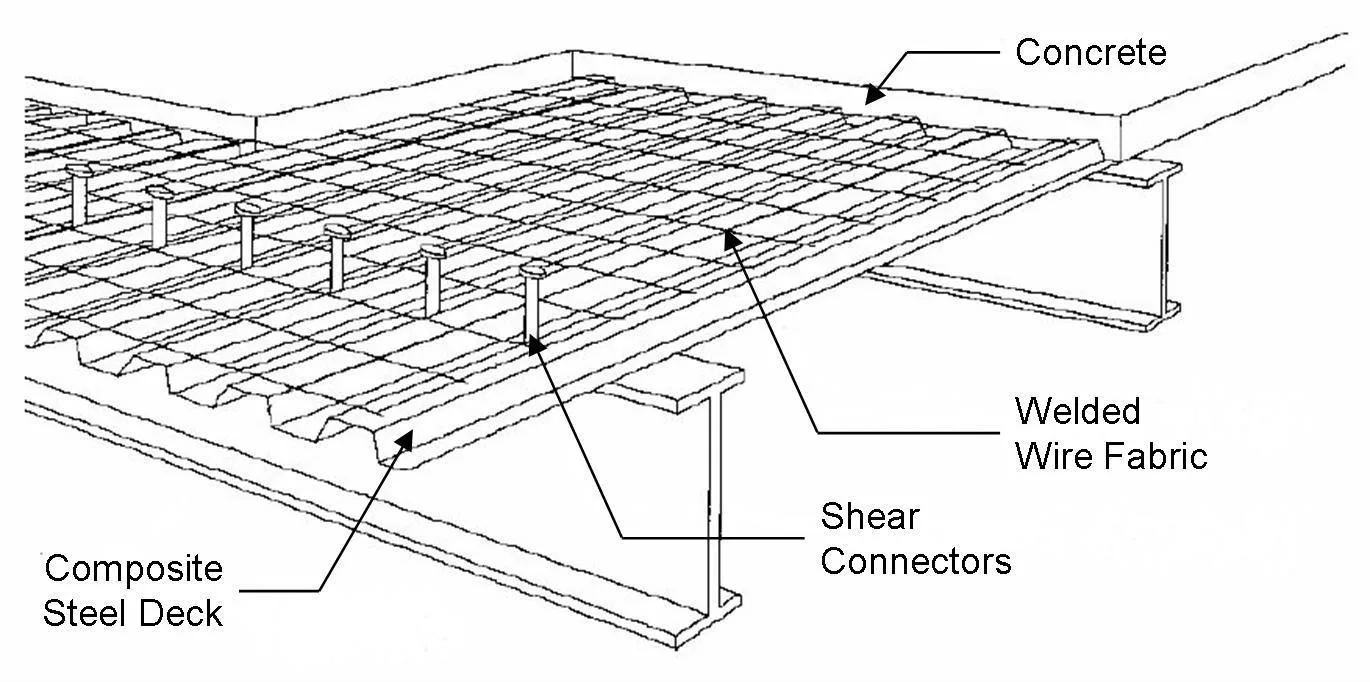
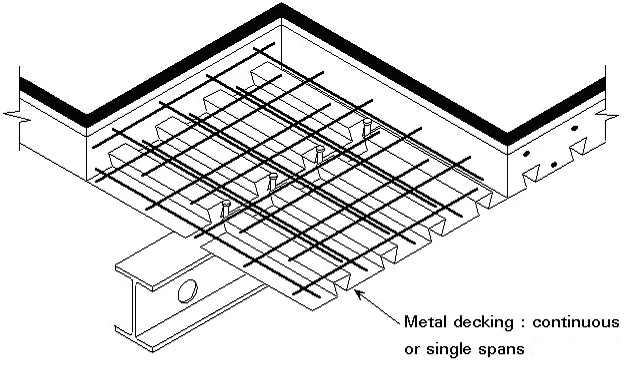
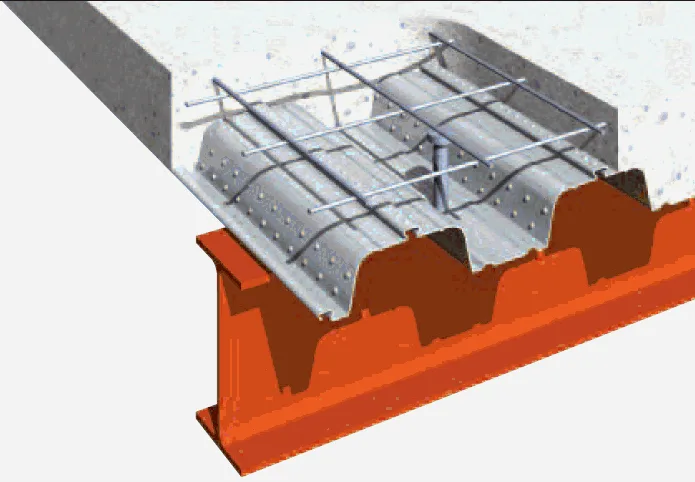
The key components of composite construction for gravity loading include composite metal decks, composite beams, composite haunch girders, composite trusses, composite stub girders, and composite columns. Each of these elements plays a critical role in ensuring structural integrity and efficiency. For instance, composite beams are designed to utilize both steel and concrete, allowing for effective load distribution and reduced dead weight.
How does composite construction address lateral loading?
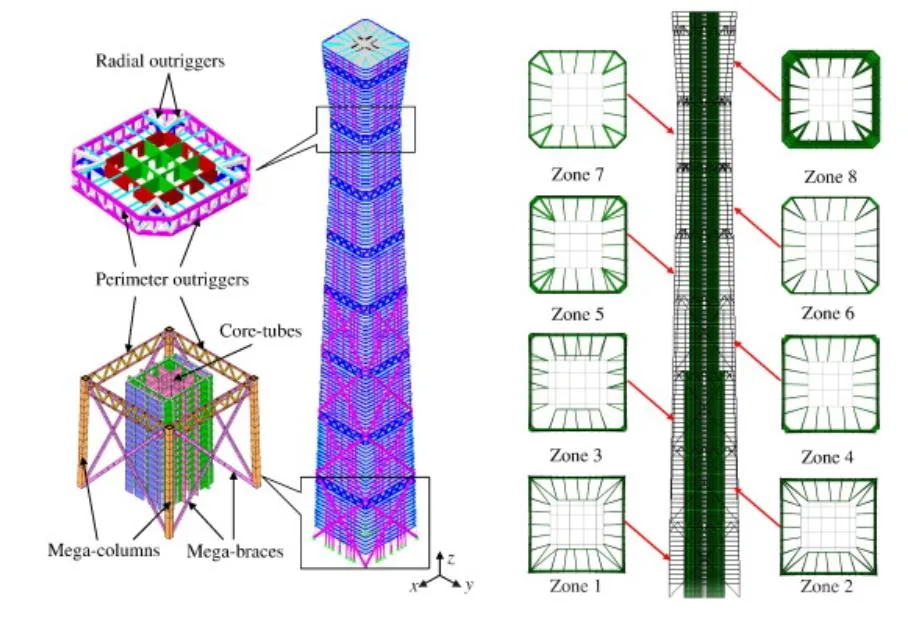
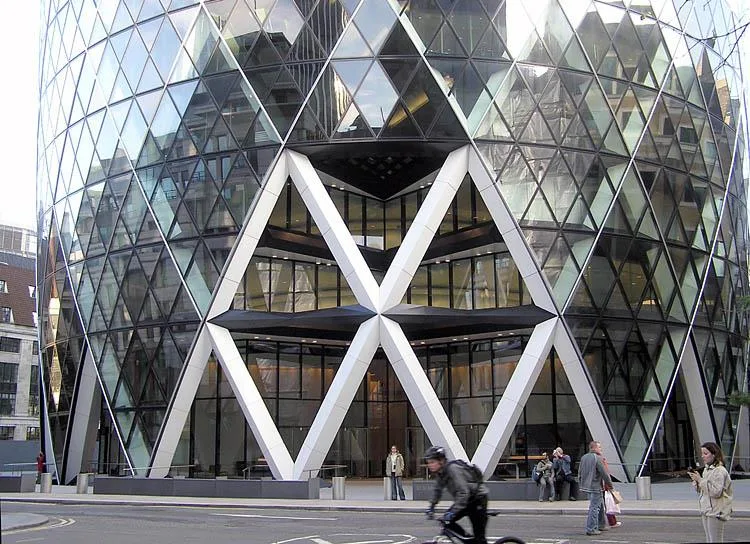
Composite construction addresses lateral loading through systems such as composite shear wall systems, composite shear wall-frame interacting systems, composite tube systems, and composite mega frames with super columns. These systems are specifically designed to resist lateral forces, ensuring stability in high-rise buildings. The integration of these elements enhances the overall strength and flexibility of the structure, making it capable of withstanding dynamic loads such as wind and seismic activities.
What advantages does composite construction offer over conventional methods?
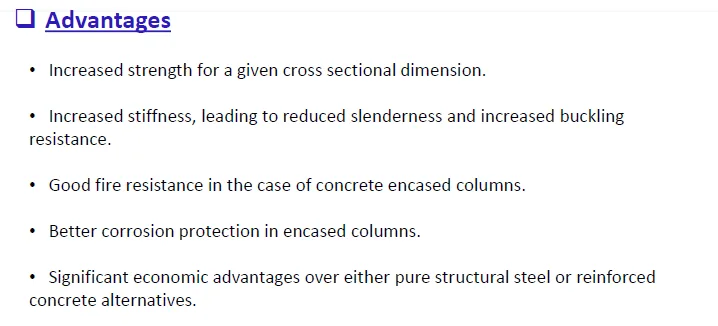
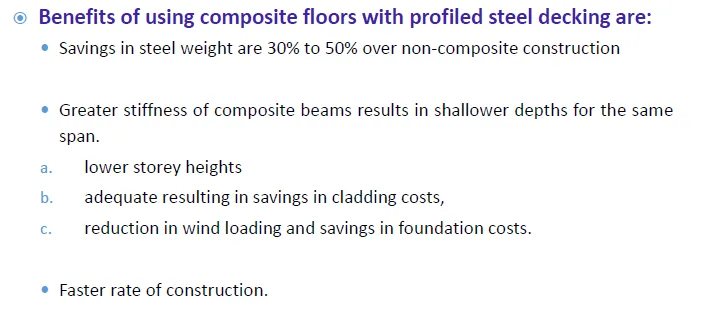
Composite construction offers several advantages over conventional methods, including increased architectural flexibility, reduced material usage, and enhanced load-bearing capabilities. For example, the combination of steel and concrete allows for longer spans and thinner slabs, which can lead to significant savings in cladding area and overall construction costs. Additionally, the use of composite materials provides better fire resistance and allows for faster construction times, making it a preferred choice for modern high-rise buildings.
What is the role of shear connectors in composite construction?
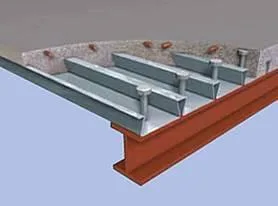
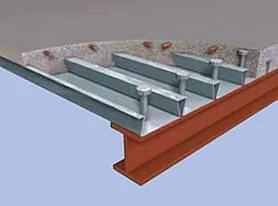
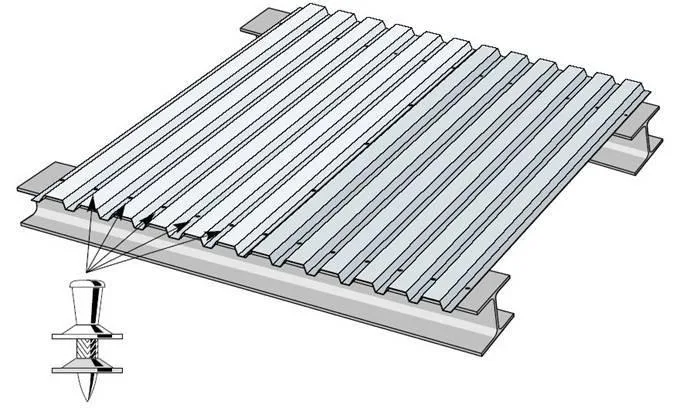
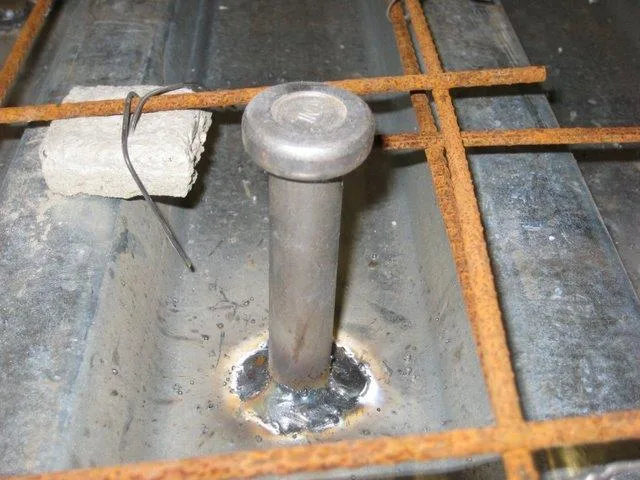
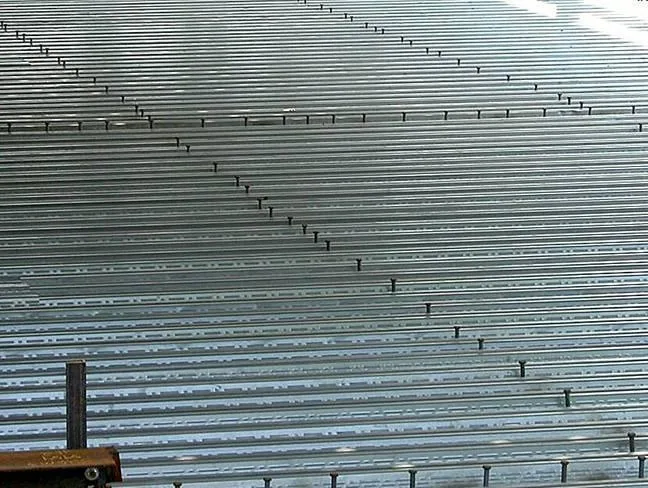
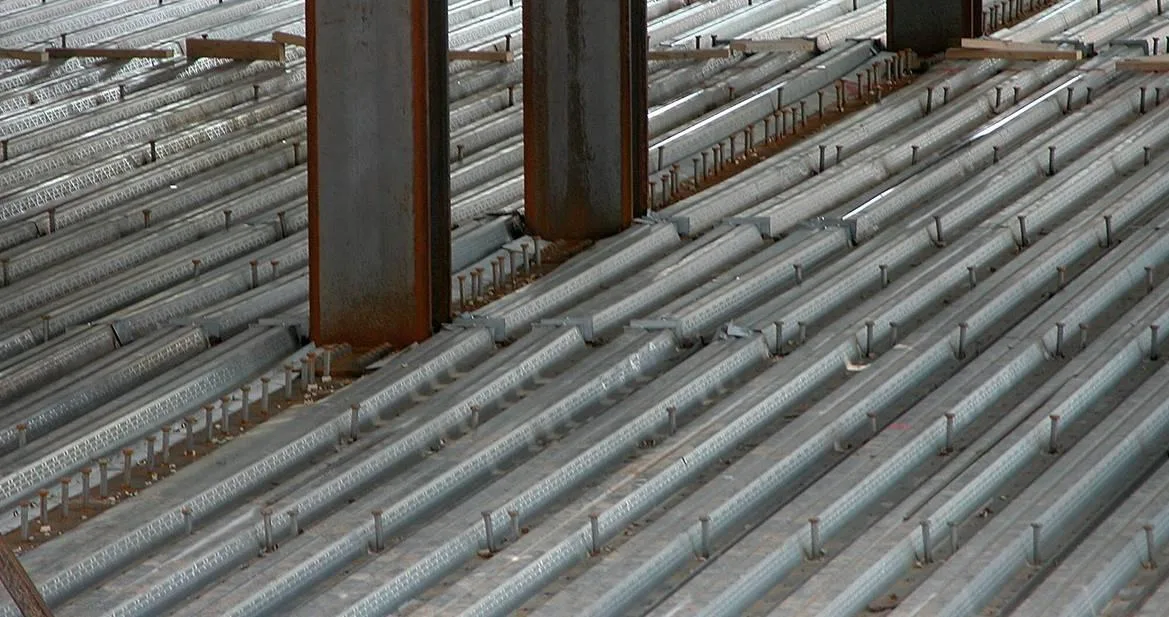
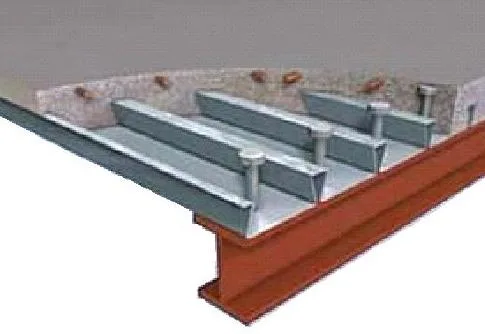
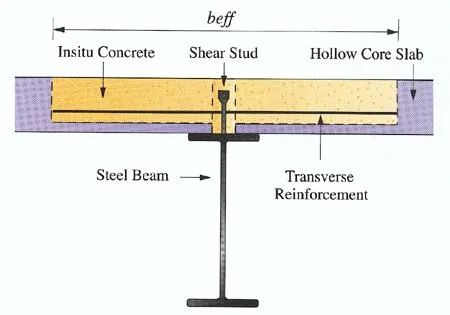
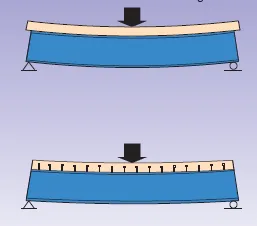
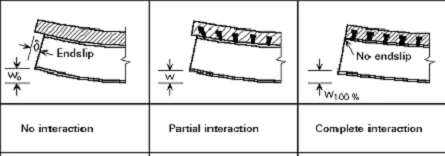
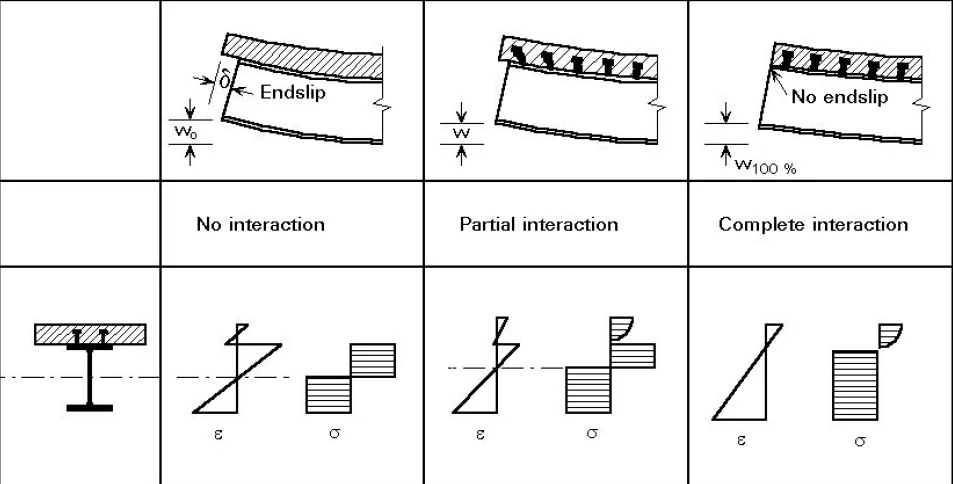
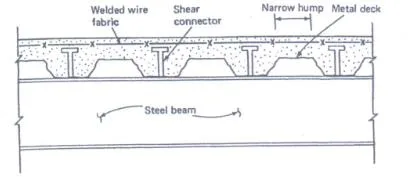
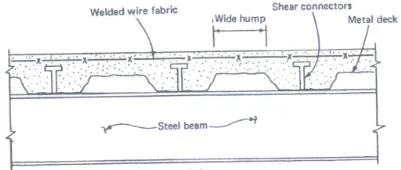
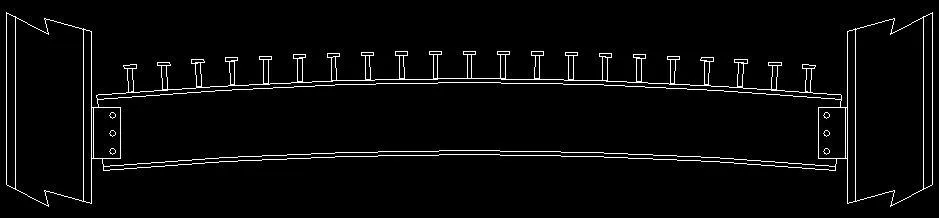
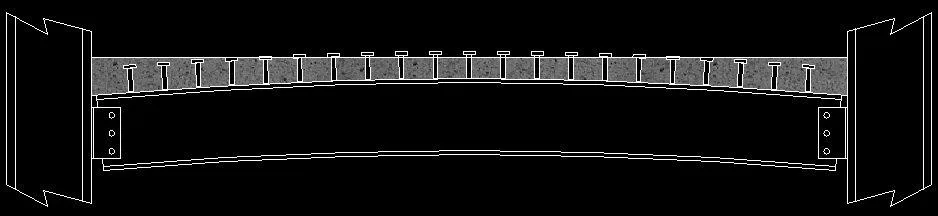
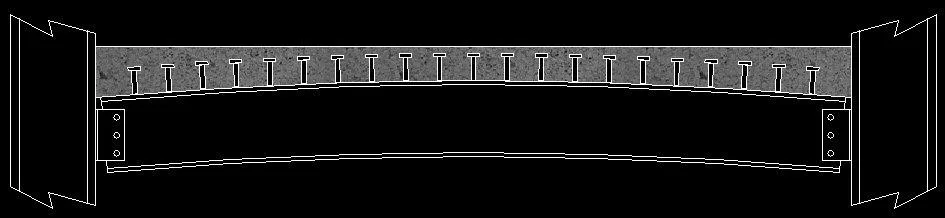
Shear connectors play a crucial role in composite construction by transmitting longitudinal shear along the interface between the concrete slab and the steel beam. They prevent separation of the two materials, ensuring that the composite action is effective during loading. This integration enhances the load-carrying capacity and overall rigidity of the structure, making shear connectors essential for maintaining structural integrity under various loading conditions.
What are the disadvantages of using conventional materials like concrete and steel?
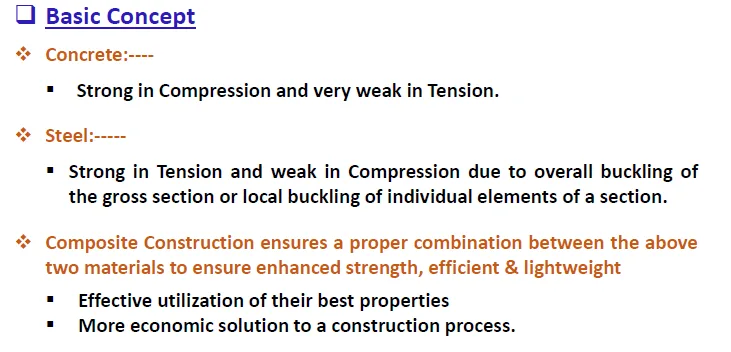
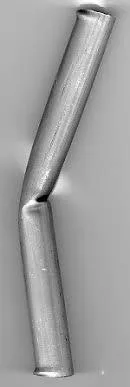
Conventional materials such as concrete and steel have their disadvantages. Concrete, while strong in compression, is weak in tension and can be sensitive to tensile forces. It also requires time-consuming shuttering and can slow down construction. Steel, on the other hand, is strong and lightweight but has low fire resistance and requires skilled personnel for handling. Composite construction aims to mitigate these disadvantages by combining the strengths of both materials.
How does composite action between steel and concrete improve structural systems?
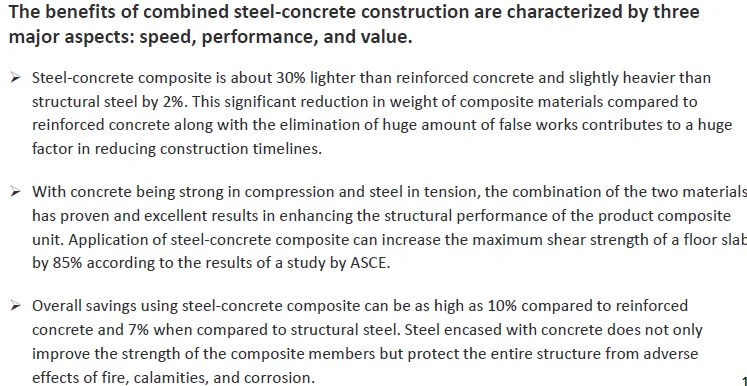
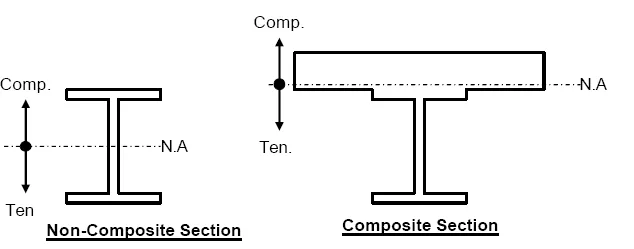
Composite action between steel and concrete improves structural systems by utilizing the compressive strength of concrete alongside the tensile strength of steel. This synergy allows for the development of a more effective and economical structural system, where both materials work together to resist loads. By leveraging the unique properties of each material, composite construction results in structures that are lighter, more efficient, and capable of spanning greater distances.
What are the design considerations for composite columns?
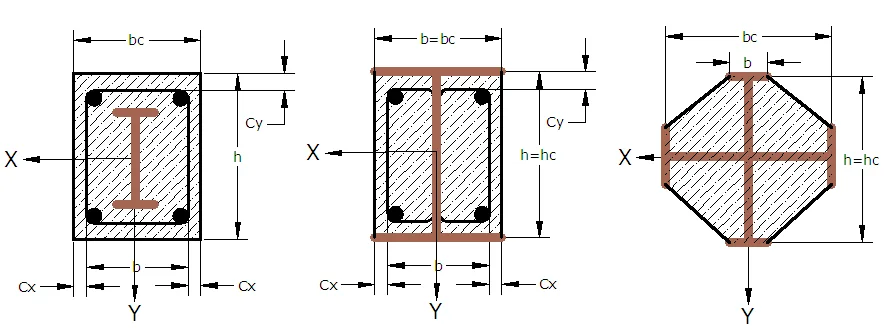
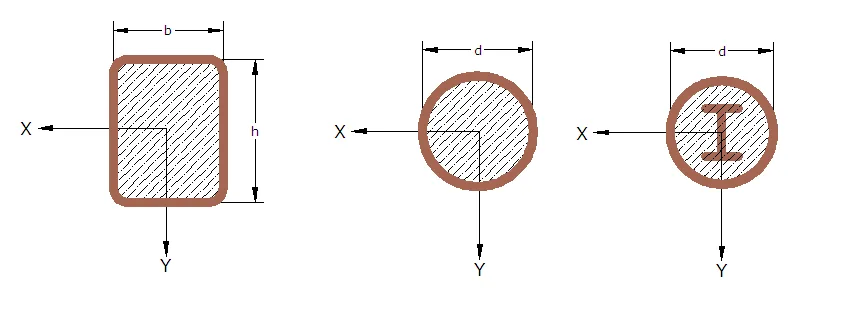
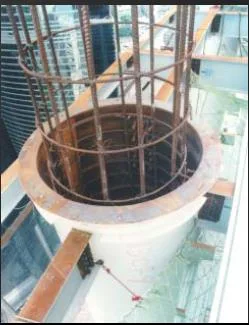
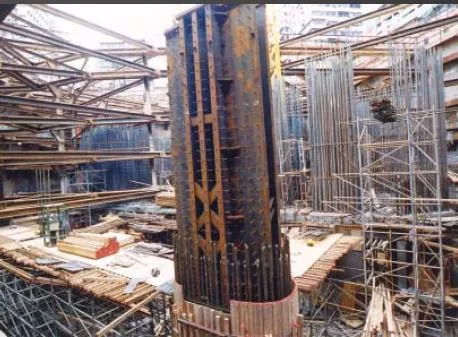
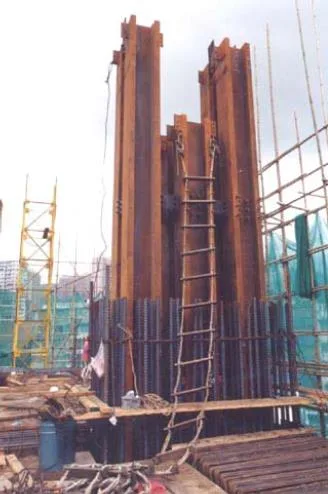
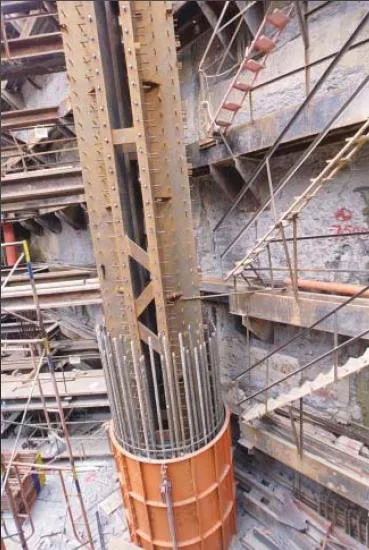
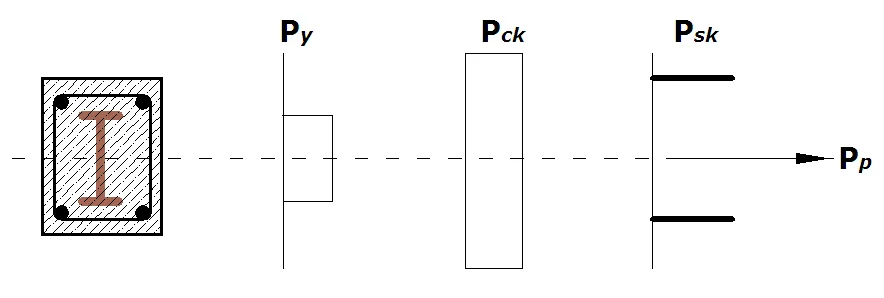
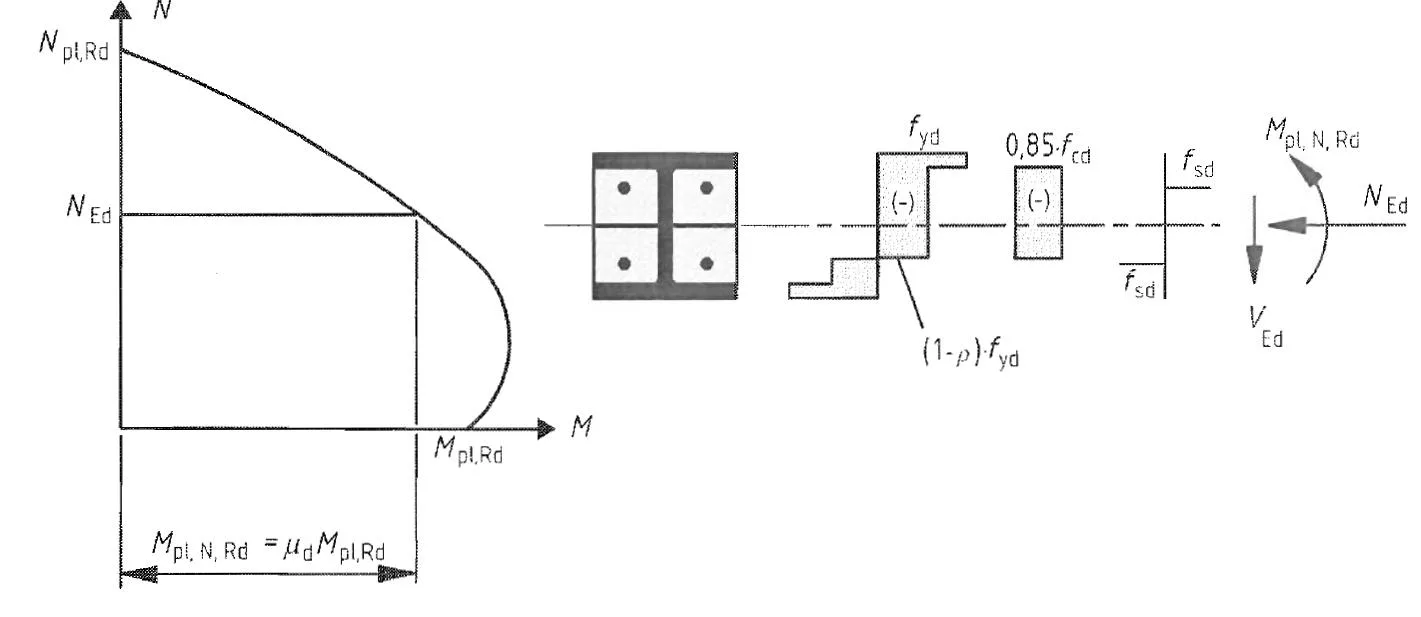
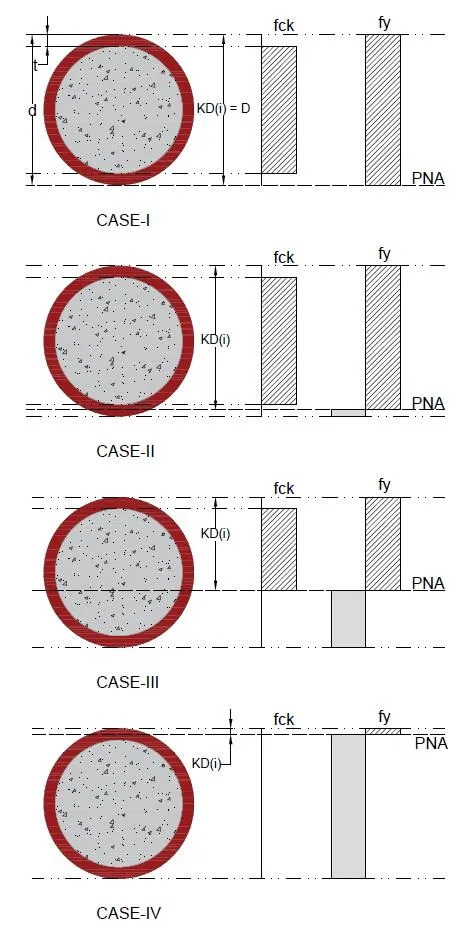
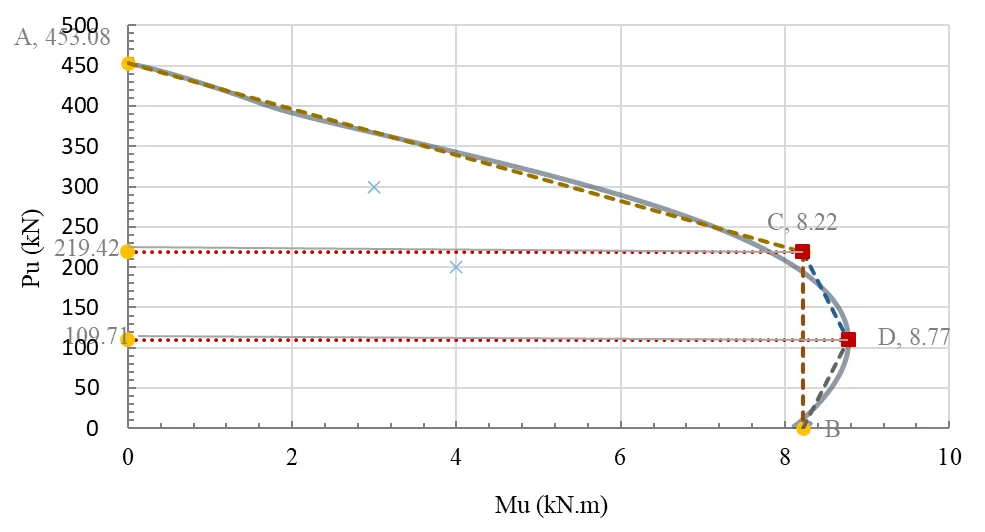
Design considerations for composite columns include ensuring adequate fire resistance, structural stability, and effective load transfer. Composite columns may be fully encased or partially encased with concrete, which provides added strength and protection against buckling. The interaction between the steel section and the concrete is crucial, as it enhances the overall performance of the column under axial loads and lateral forces.