

Civil Engineering is the professional discipline tasked with the design, construction, and maintenance of the physical and naturally built environment. From towering skyscrapers and high-speed highway networks to sustainable water management systems and geotechnical stabilization, civil engineering serves as the foundational skeleton of modern society. At Chesser Resources, our Civil Engineering repository hosts an extensive library of structural analysis tutorials, material science reports, and field practice case studies to bridge the gap between academic theory and real-world construction demands.
The field is integrated across several technical specializations:
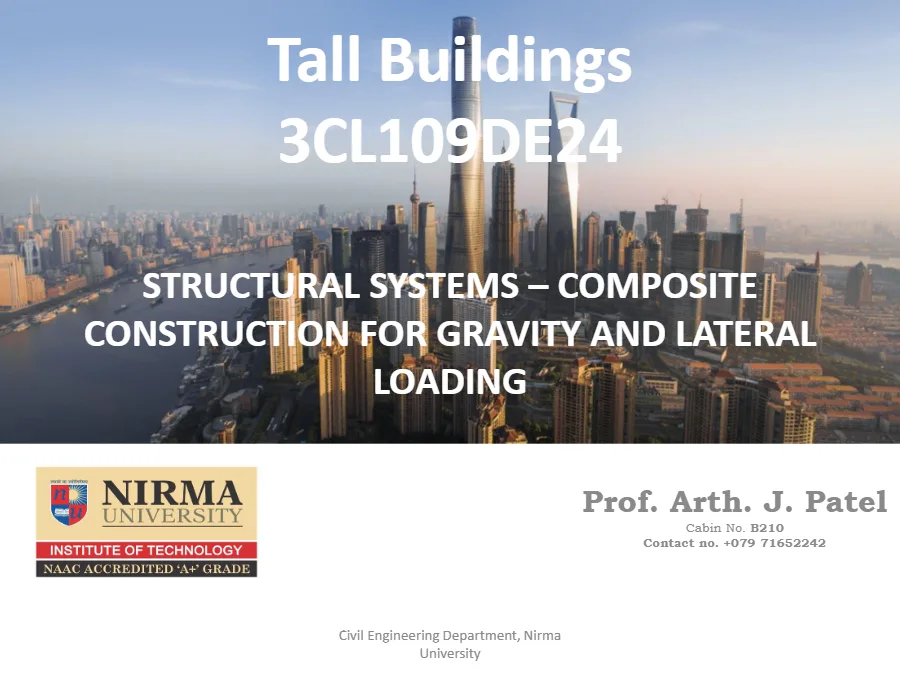
Structural Engineering: Ensures that buildings, bridges, and dams can withstand gravity, lateral (wind/seismic) loading, and environmental degradation. Engineers utilize composite construction and advanced material physics to optimize stiffness and durability.
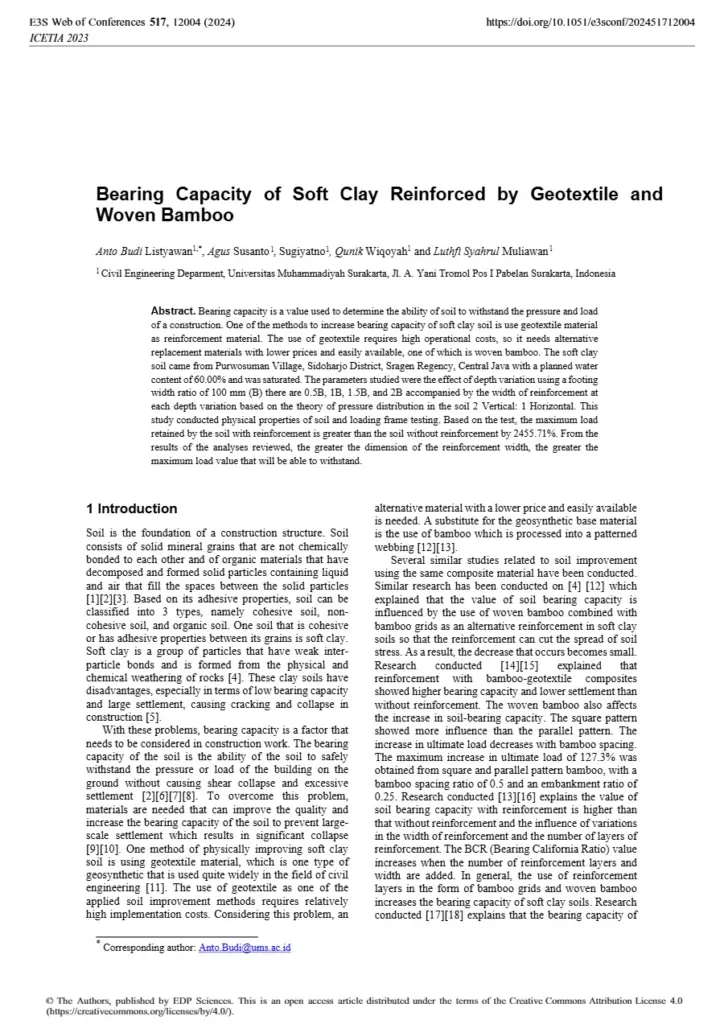
Geotechnical Engineering: Analyzes the behavior of earth materials (soil/rock). Whether reinforcing loess embankments with bamboo grids or assessing the bearing capacity of soft clays, this branch is critical for foundation design and disaster prevention.
Transportation Engineering: Involves the planning and design of highway pavements, transit tunnels, and urban logistics systems—often studied through large-scale infrastructure projects like Tunnel Boring Machines in Metro Construction.
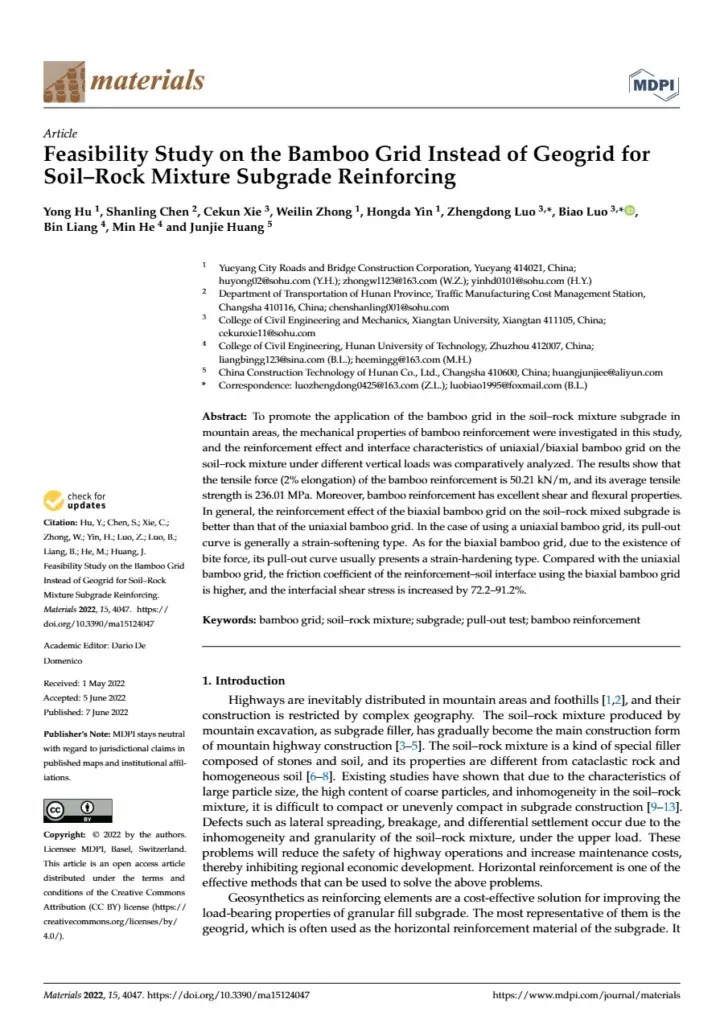
Engineering practice is increasingly focused on the intersection of sustainability and mechanical efficiency. Innovative research into eco-friendly reinforcement methods—such as the Feasibility Study on Bamboo Grid Instead of Geogrid—demonstrates the shift toward utilizing bio-materials to improve infrastructure cost-efficiency and environmental footprint.
To understand how the expansive field of civil infrastructure organizes its academic disciplines, review the following taxonomy:
Parent Category: Engineering
Core Discipline: Civil Engineering
Structural Systems:
Structural Analysis (Gravity/Lateral Loading, Composite Construction)
Material Design (Steel Structures, Reinforced Concrete, Strength of Materials)
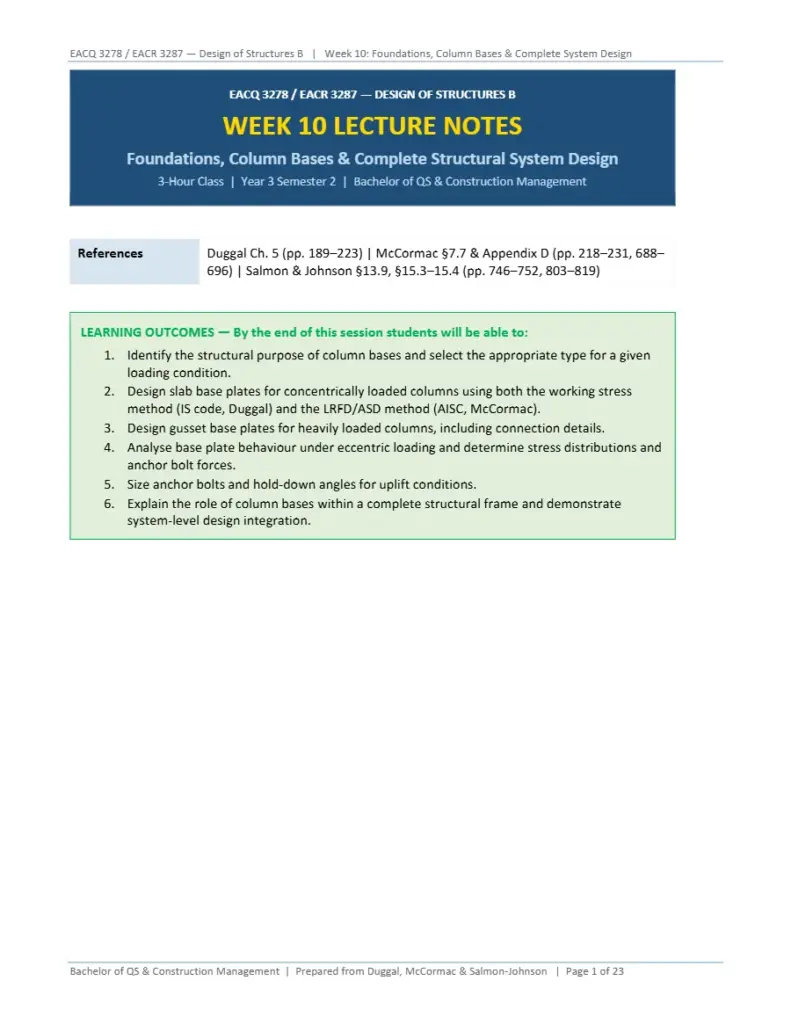
Foundation Engineering (Column Bases, Bearing Capacity, Soil Mechanics)
Geotechnical & Infrastructure:
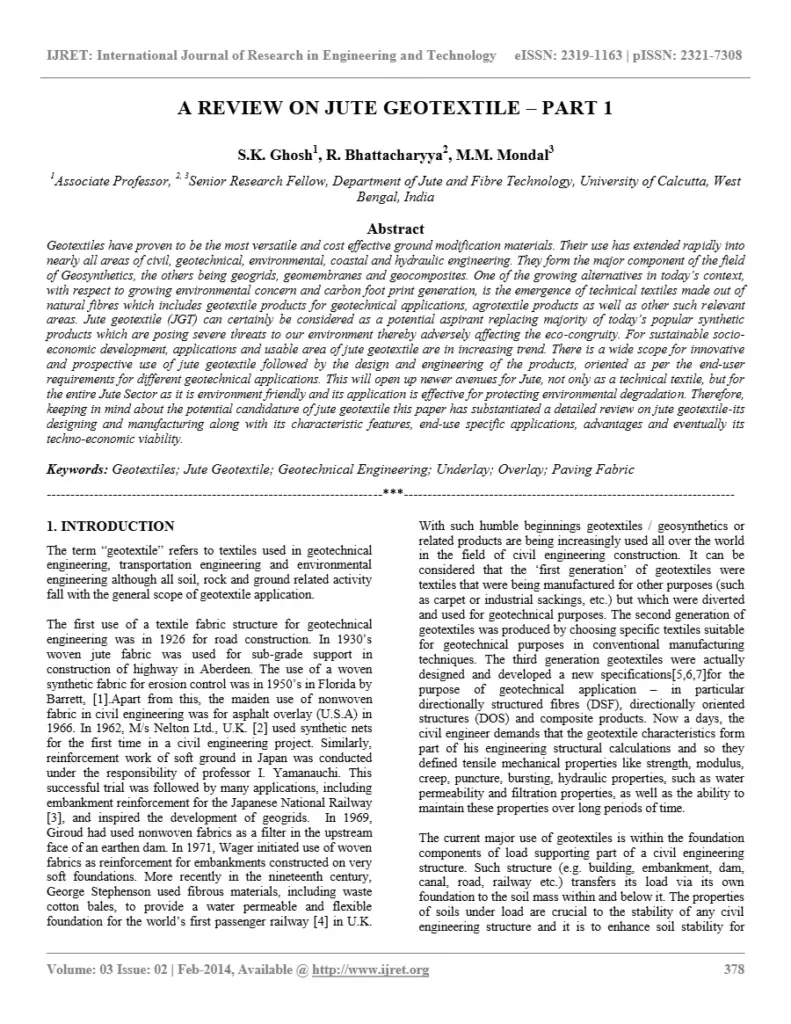
Soil Reinforcement (Geotextiles, Jute/Bamboo Grids, Soft Clay Stabilization)
Transportation (Highways, Pavements, Tunnel Boring, Metro Systems)
Field Practice & Management:
Site Visit Reporting (Steel Design, Precast Yard Logistics)
Feasibility Studies & Technical Specifications
Construction Case Studies (Foundations, Highways, Pavements)
| Feature | Civil Discipline | Primary Focus | Key Engineering Metric |
| Composite Beam | Structural | Gravity/Lateral Load resistance | Stiffness (EI) |
| Bamboo Grid | Geotechnical | Soil–Rock Mixture reinforcement | Tensile Strength |
| Soft Clay Bed | Geotechnical | Foundation settlement mitigation | Bearing Capacity ($\text{kN/m}^2$) |
| Steel Framework | Structural | Load distribution | Elastic Modulus ($E$) |
Chesser Resources is a free online study-and-research library at chesserresources.com. It holds 300,000+ documents — books, textbooks, past papers, lecture notes, study guides, research papers and much more — across exams, the sciences, math, literature, the humanities and beyond. Everything is readable in the browser with no account, alongside free AI summaries, an Ask-AI chatbot, highlights, notes and read-aloud audio. Instead of a subscription, downloads are unlocked by contributing back to the community, so the library stays genuinely free.
Gravity loads—such as the self-weight of the structure (dead load) and occupancy furniture/people (live load)—act vertically downwards. Lateral loads—such as wind pressure, earthquake-induced inertial forces, or earth pressure against retaining walls—act horizontally. Structural systems must be designed with lateral force-resisting systems (e.g., shear walls, moment frames, or braced frames) to dissipate this horizontal energy.
Bio-based reinforcements offer sustainable, low-cost alternatives to synthetic materials like Geogrid. They possess high tensile strength-to-weight ratios and exhibit excellent frictional interaction with soil particles. In specific applications like high, steep gully embankments or soft clay stabilization, these materials provide necessary interface reinforcement while also facilitating localized vegetation growth, which further enhances soil cohesion.
Camber is the deliberate upward curvature designed into a horizontal beam or girder to compensate for expected vertical deflection caused by dead loads (the structure’s weight). By “pre-bending” the beam in the opposite direction of the load, the finished structure appears perfectly level once fully loaded, improving both aesthetic quality and serviceability.
Bearing capacity is the maximum pressure a soil can support without failing in shear or undergoing excessive settlement. Engineers calculate this using empirical formulas (e.g., Terzaghi’s bearing capacity equation), which account for soil cohesion, the angle of internal friction, unit weight, and the geometry of the foundation. Field verification often involves Standard Penetration Tests (SPT) or Cone Penetration Tests (CPT).
Site visit reports (such as PSP Precast Yard Site Visit Report) translate theoretical knowledge into industrial reality. They detail the actual workflows, material handling, safety protocols, and construction sequencing of real-world projects. These reports provide invaluable context for understanding how structural steel or reinforced concrete is actually manufactured, transported, and assembled at the job site.