Buildings 2024, 14, 3423
2 of 20
the compressibility of soil [
19
] and the settlement of the embankment [
20
–
22
], as well as
improve the bearing capacity of soil [
23
]. It was also employed to enhance slope stability,
which showed that the bamboo grid was able to resist the applied loads and maintain the
stability of the slope [
24
,
25
]. In terms of differential settlement treatment, Luo et al. [
26
]
compared the performance of the bamboo grid and geogrid set at the widening interface of
the embankment. The results showed that, after being reinforced with the bamboo grid
in the new fill, differential settlement on top of the embankment was effectively reduced,
and its reinforcement effect was better than that of the geogrid. To sum up, due to better
mechanical properties and reinforcement performance than traditional geogrids, bamboo
grids can be used to constrain the differential settlement of the filled loess embankment in
a high and steep gully.
Generally, to restrain the differential settlement of the widening embankment, rein-
forcement materials are used in three ways. The first is to set reinforcement materials only
in the new fill [
27
,
28
]. The second is to set reinforcement materials in the new fill and the
interface [
29
]. The final way is to set reinforcement materials both in the new fill and the
existing soil [
30
]. Similarly, to restrain the differential settlement of the filled embankment
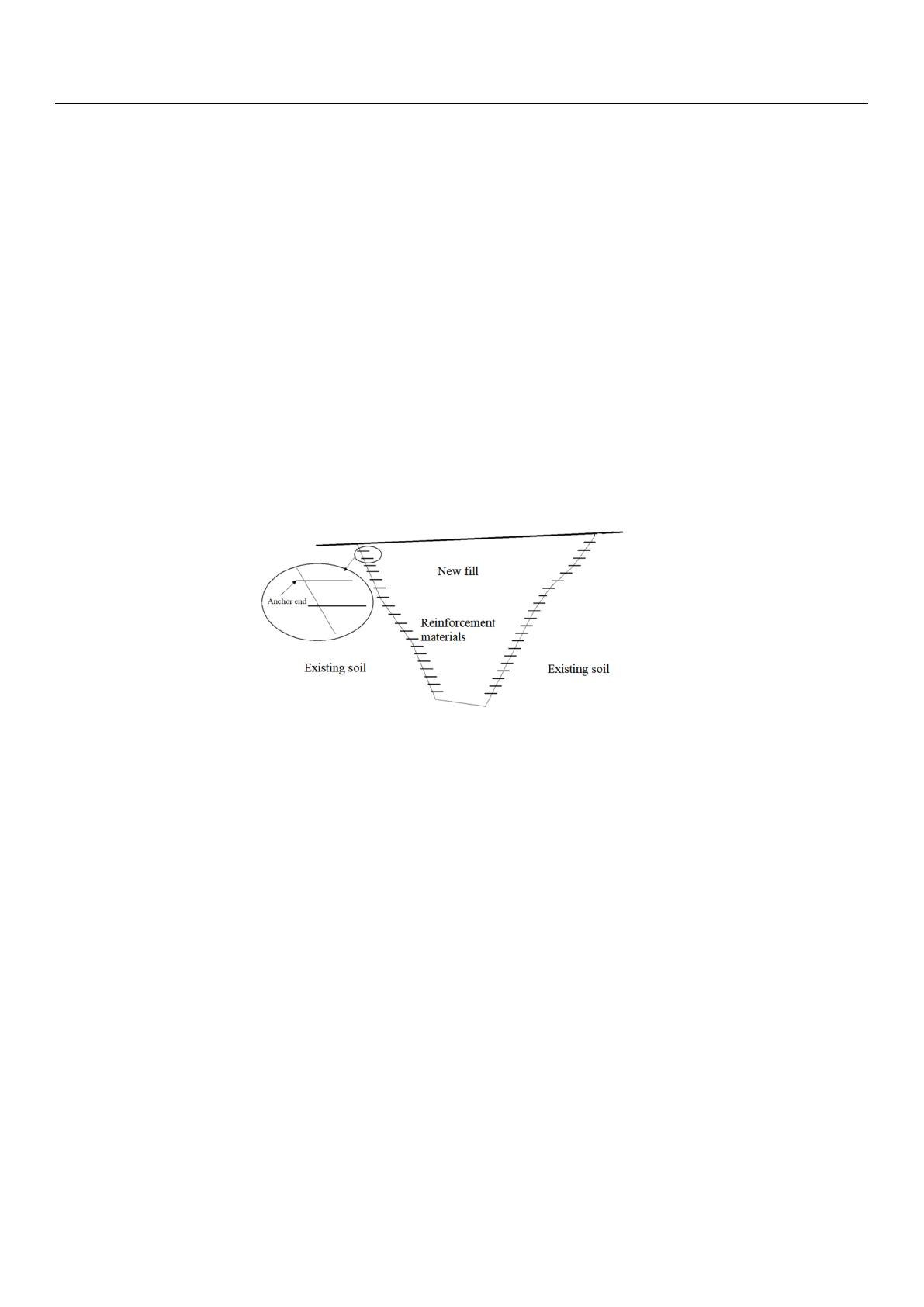
in a high and steep gully, there will be several reinforcement schemes as well. This paper
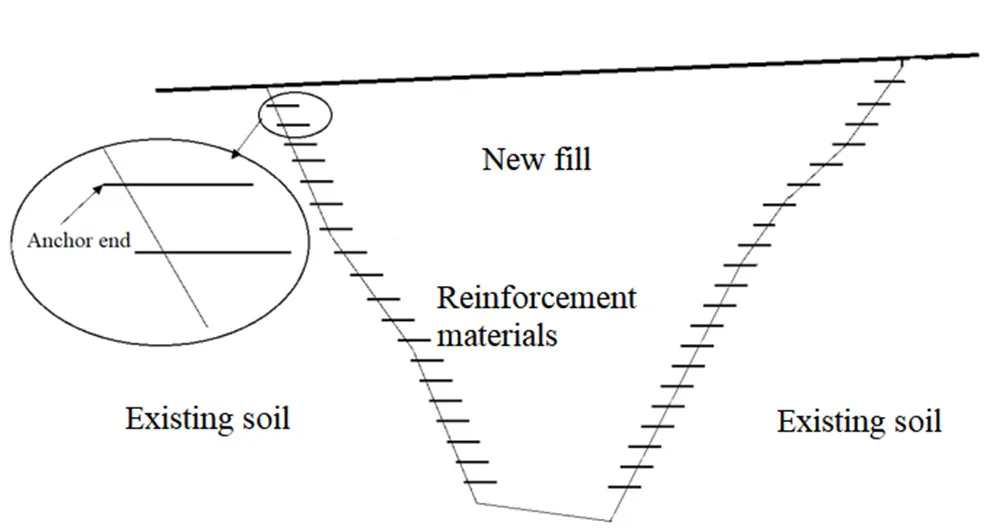
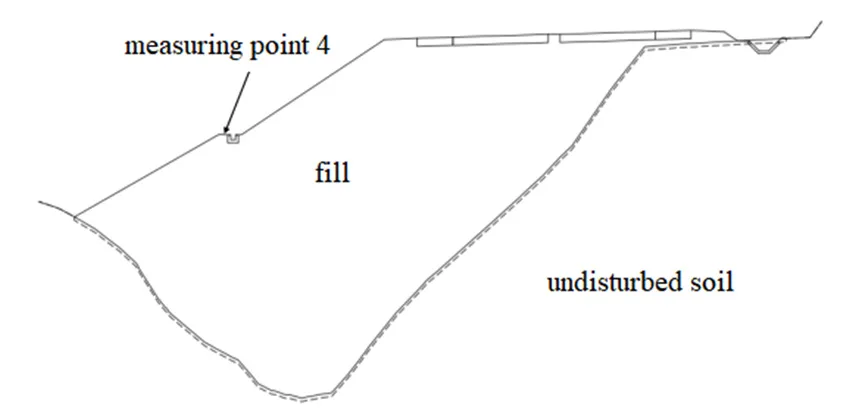
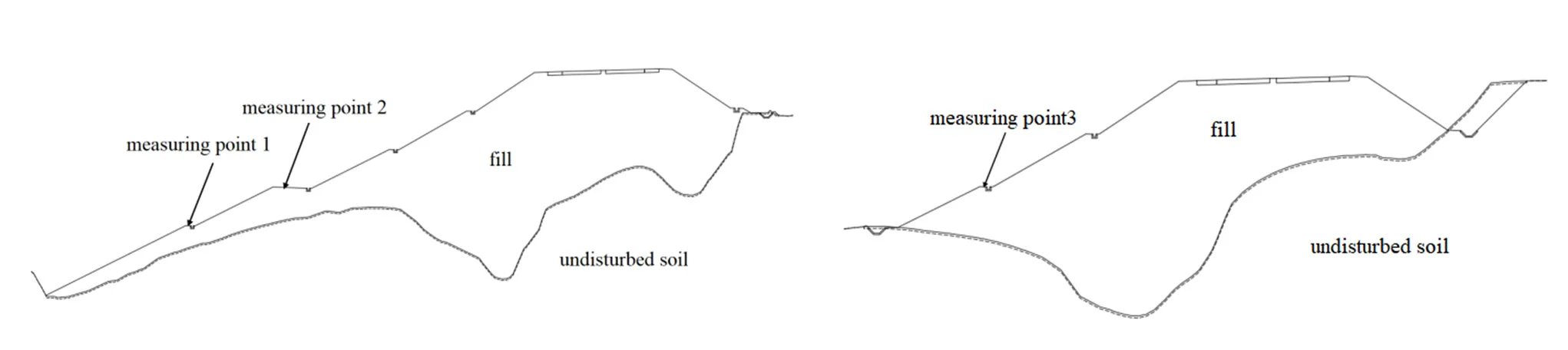
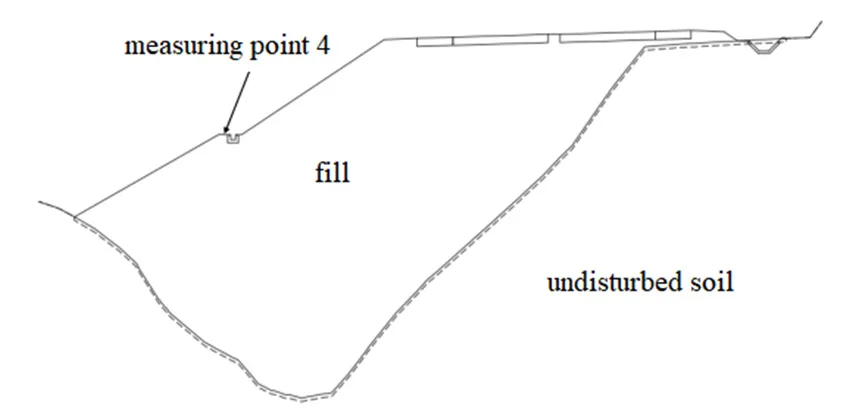
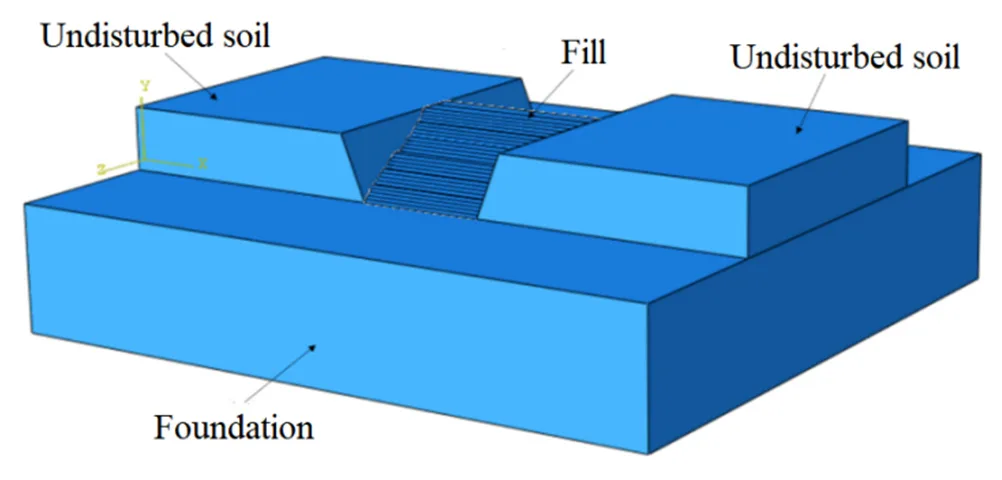
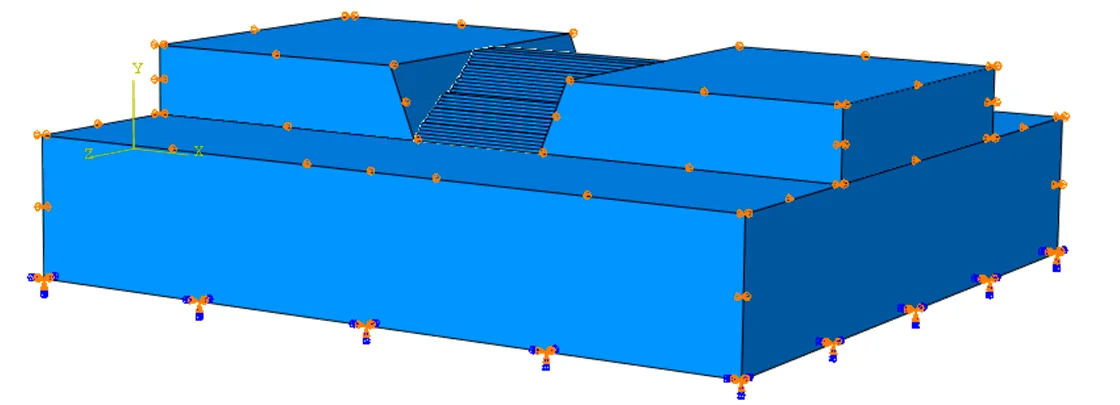
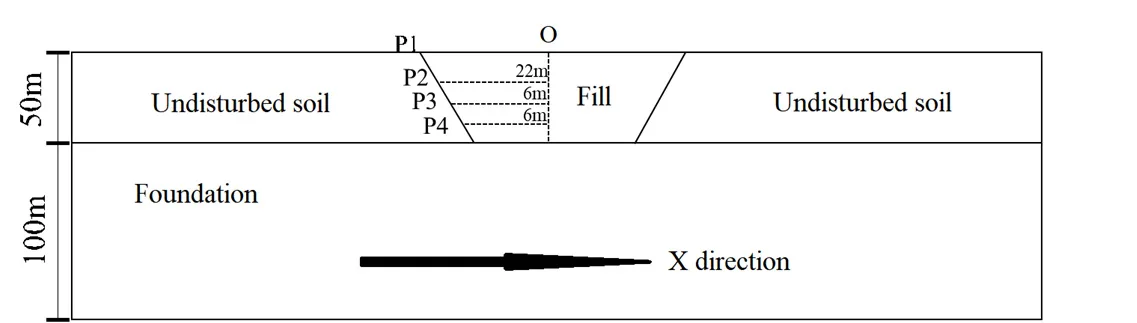
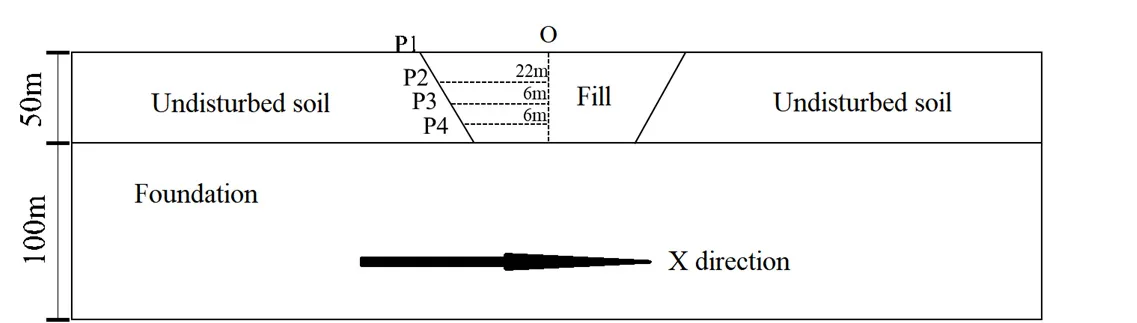
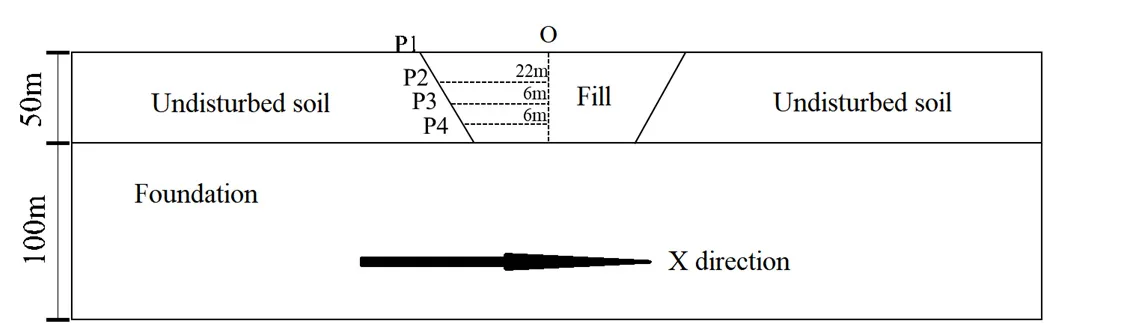
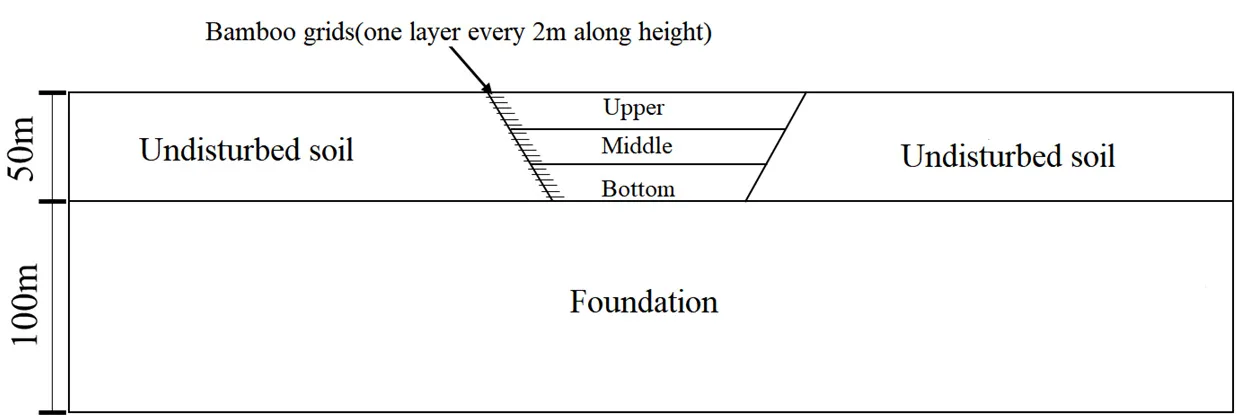
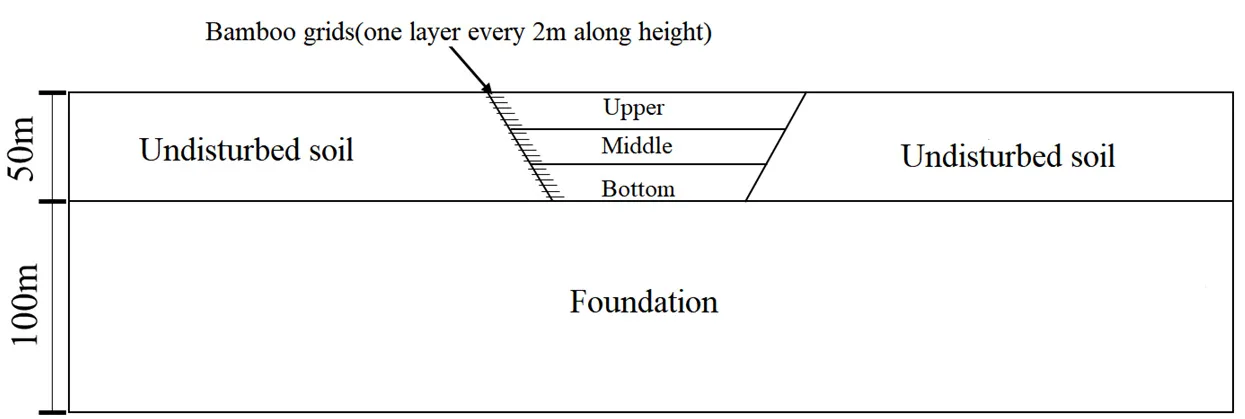
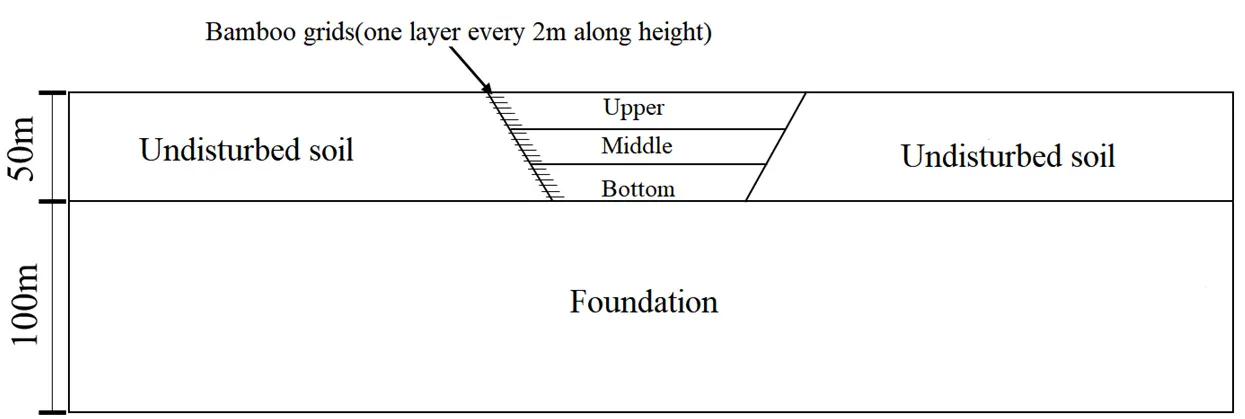
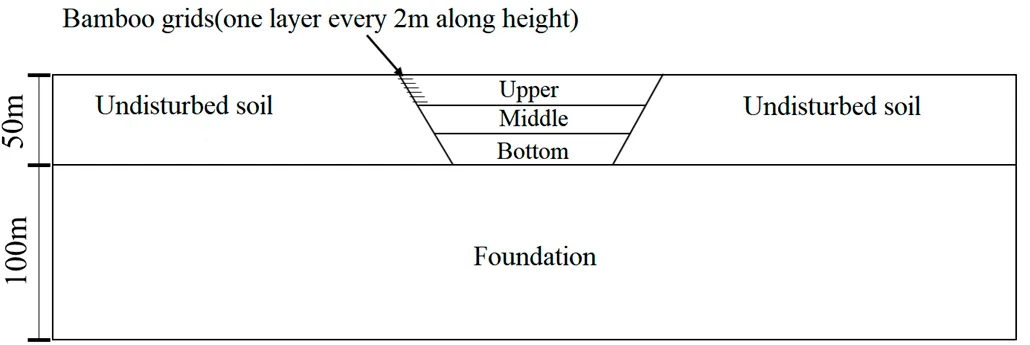
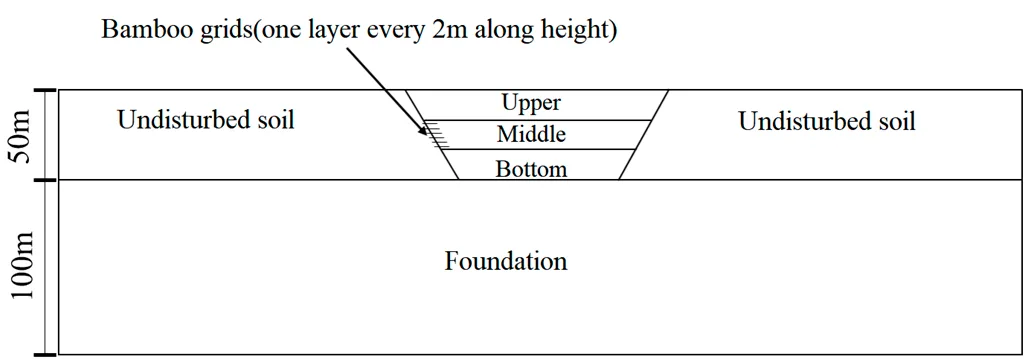
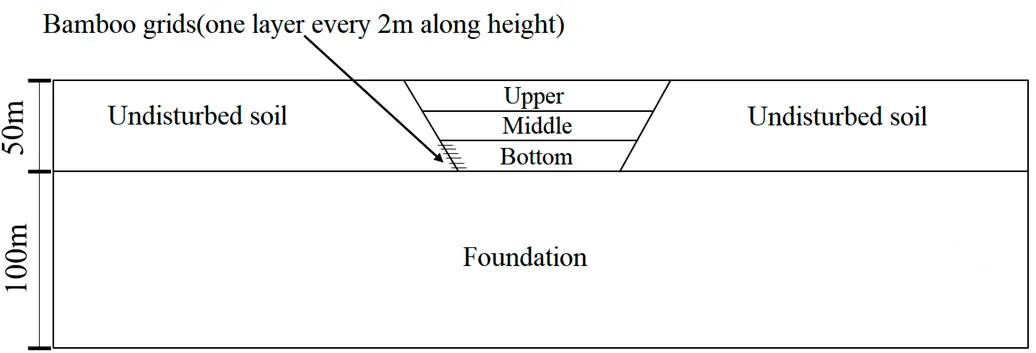
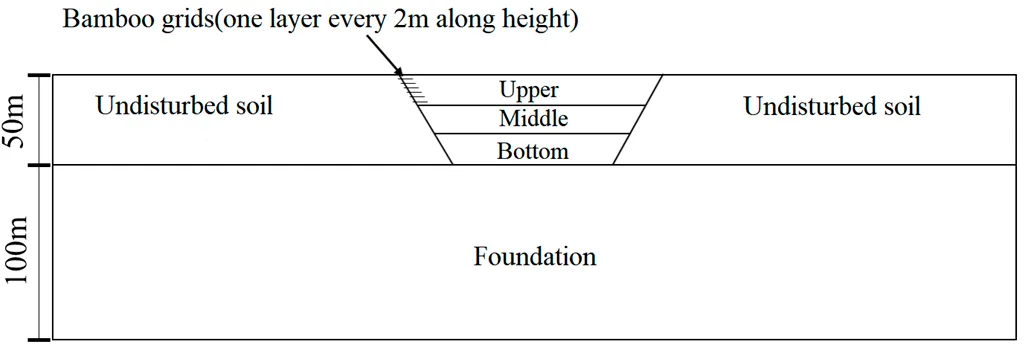
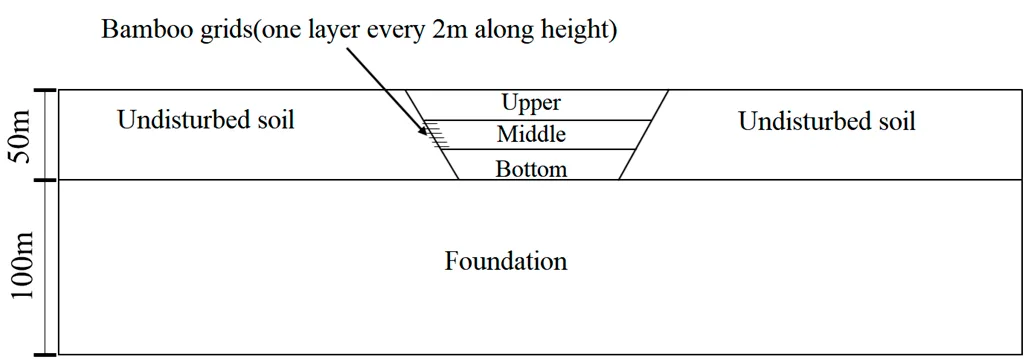
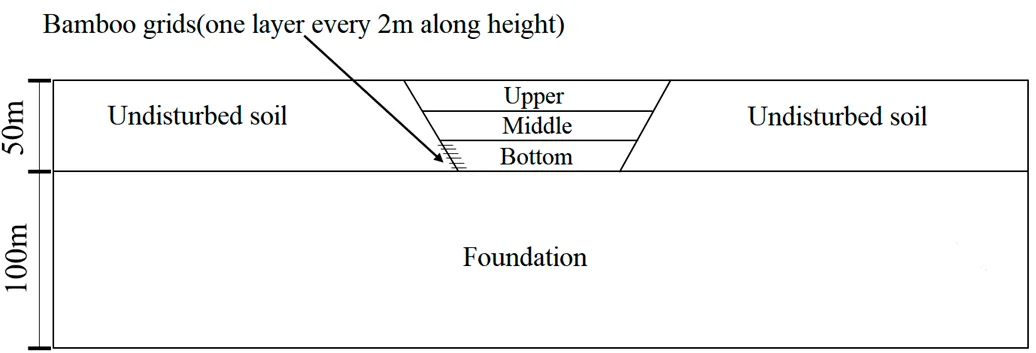
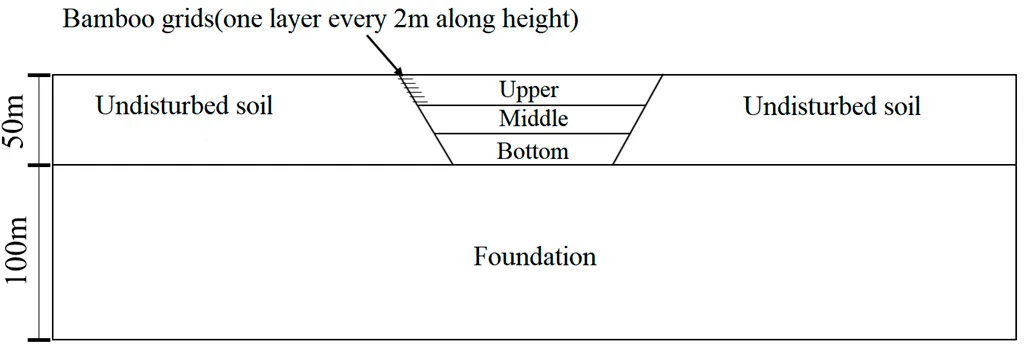
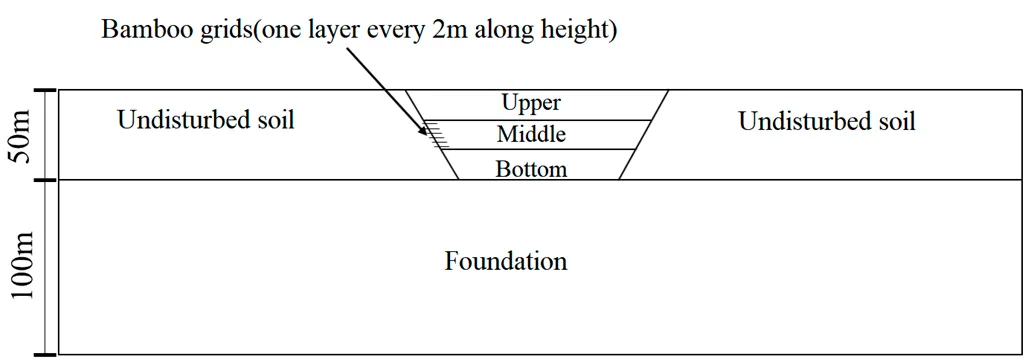
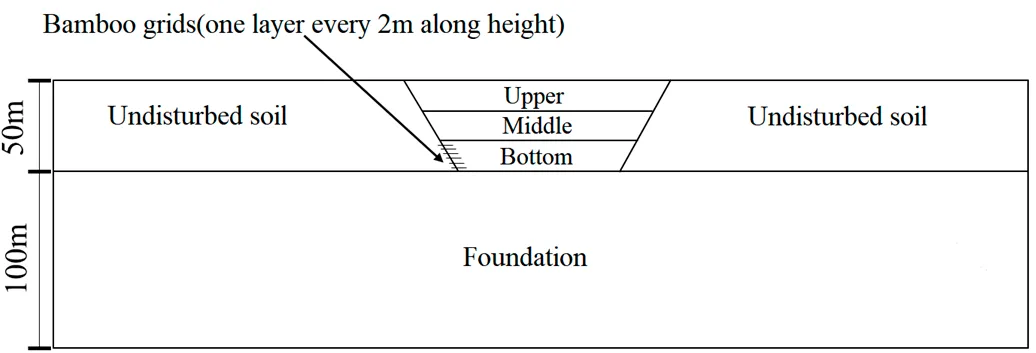
only focuses on the scheme of setting reinforcement materials at the interface, as shown in
Figure 1.
Buildings 2024, 14, x FOR PEER REVIEW 2 of 21
technology with bamboo grid. As a kind of reinforcement material, a bamboo grid can
significantly reduce the compressibility of soil [19] and the settlement of the embankment
[20–22], as well as improve the bearing capacity of soil [23]. It was also employed to en-
hance slope stability, which showed that the bamboo grid was able to resist the applied
loads and maintain the stability of the slope [24,25]. In terms of differential settlement
treatment, Luo et al. [26] compared the performance of the bamboo grid and geogrid set
at the widening interface of the embankment. The results showed that, after being rein-
forced with the bamboo grid in the new fill, differential settlement on top of the embank-
ment was effectively reduced, and its reinforcement effect was better than that of the ge-
ogrid. To sum up, due to better mechanical properties and reinforcement performance
than traditional geogrids, bamboo grids can be used to constrain the differential settle-
ment of the filled loess embankment in a high and steep gully.
Generally, to restrain the differential settlement of the widening embankment, rein-
forcement materials are used in three ways. The first is to set reinforcement materials only
in the new fill [27,28]. The second is to set reinforcement materials in the new fill and the
interface [29]. The final way is to set reinforcement materials both in the new fill and the
existing soil [30]. Similarly, to restrain the differential settlement of the filled embankment
in a high and steep gully, there will be several reinforcement schemes as well. This paper
only focuses on the scheme of setting reinforcement materials at the interface, as shown
in Figure 1.
However, the interface reinforcement technology with bamboo grids has rarely been
studied. Therefore, it is necessary to study the reinforcement effect of the bamboo grid set
at the interface and its influencing factors. In this study, a large-scale direct shear test was
conducted to analyze the shear characteristics of the interface between the reinforcement
materials and the reinforced soil. A settlement measurement of a practical engineering
case was conducted to study the settlement law of the filled loess embankment. By using
ABAQUS 2022 software, a numerical simulation was carried out, and the interface rein-
forcement effect of the bamboo grid and its influential factors including reinforcement
position and grid spacing were analyzed.
Figure 1. Scheme of reinforcement materials only set at the interface.
2. Large-Scale Direct Shear Test
Interface characteristics between the bamboo grid and the reinforced soil have a sig-
nificant influence on the reinforcement effect of the bamboo grid. To study the interface
characteristics, large-scale direct shear tests with different reinforcement types and grid
spacings were conducted.
2.1. Test Materials
Moso bamboo aged 5 to 6 years old was selected for tests. The chest-height diameter
of these 5- to 6-year-old bamboos was more than 50 mm. The wall thickness was 2–3 mm.
The bamboo was processed into strips. The width of these strips was 20 mm. In practical
engineering cases which need long-term anticorrosion, bamboo is soaked in boric acid
Figure 1. Scheme of reinforcement materials only set at the interface.
However, the interface reinforcement technology with bamboo grids has rarely been
studied. Therefore, it is necessary to study the reinforcement effect of the bamboo grid set
at the interface and its influencing factors. In this study, a large-scale direct shear test was
conducted to analyze the shear characteristics of the interface between the reinforcement
materials and the reinforced soil. A settlement measurement of a practical engineering
case was conducted to study the settlement law of the filled loess embankment. By us-
ing ABAQUS 2022 software, a numerical simulation was carried out, and the interface
reinforcement effect of the bamboo grid and its influential factors including reinforcement
position and grid spacing were analyzed.
2. Large-Scale Direct Shear Test
Interface characteristics between the bamboo grid and the reinforced soil have a
significant influence on the reinforcement effect of the bamboo grid. To study the interface
characteristics, large-scale direct shear tests with different reinforcement types and grid
spacings were conducted.
2.1. Test Materials
Moso bamboo aged 5 to 6 years old was selected for tests. The chest-height diameter
of these 5- to 6-year-old bamboos was more than 50 mm. The wall thickness was 2–3 mm.
The bamboo was processed into strips. The width of these strips was 20 mm. In practical
engineering cases which need long-term anticorrosion, bamboo is soaked in boric acid
solution for 24 h first to prevent fungi, bacteria, and ants from proliferating inside the
bamboo. Then, asphalt paint is applied on the surface of the bamboo to prevent external