Operations Research Summary for ECO314 provides a comprehensive overview of key concepts and methodologies in operations research. It covers essential topics such as linear programming, inventory control, and decision analysis. This summary is designed for students and professionals seeking to enhance their understanding of operations research principles. It includes practical applications and examples to illustrate the concepts effectively. Ideal for those preparing for exams or looking to apply operations research techniques in real-world scenarios.
Key Points
Covers key concepts in operations research including linear programming and inventory control.
Includes practical applications and examples for real-world scenarios.
Designed for students and professionals seeking to enhance their understanding of operations research.
Ideal for exam preparation and application of operations research techniques.
This link leads to an external site. We do not know or endorse its content, and are not responsible for its safety. Click the link to proceed only if you trust this site.
Economic Environment in India – Unit 6: An Introduction to NITI AayogTextbook
PDFTextbook
Economic Environment in India – Unit 7: Industrial Development and Private SectorTextbook
PDFTextbook
Economic Environment in India – Unit 8: Public SectorTextbook
PDFTextbook
Economic Environment in India – Unit 9: Public SectorTextbook
PDFTextbook
Economic Environment in India – Unit 10: Agriculture in IndiaTextbook
PDFTextbook
Economic Principles and Theories – Chapter OverviewTextbook
PDFTextbook
Medical Entomology: Vector Dynamics and Control MeasuresTextbook
FAQs
What are the key assumptions of linear programming?
Linear programming is based on several key assumptions. First, there must be a well-defined objective function that is either maximised or minimised, expressed as a linear function of decision variables. Second, constraints must be expressed as linear equations or inequalities. Third, there should be alternative courses of action available. Additionally, decision variables must be interrelated and non-negative, as negative quantities are generally illogical in real-life situations.
What is the difference between PERT and CPM?
The main differences between PERT (Program Evaluation and Review Technique) and CPM (Critical Path Method) lie in their focus and nature. PERT is event-oriented, focusing on the events that occur within the project, while CPM is activity-oriented, concentrating on the activities that need to be completed. PERT activities are probabilistic, meaning the time required to complete them is uncertain, whereas CPM assumes deterministic activities with fixed durations.
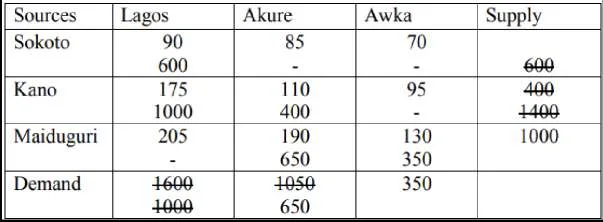
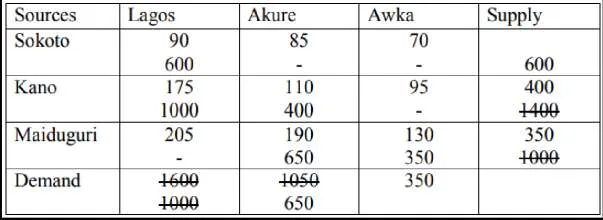
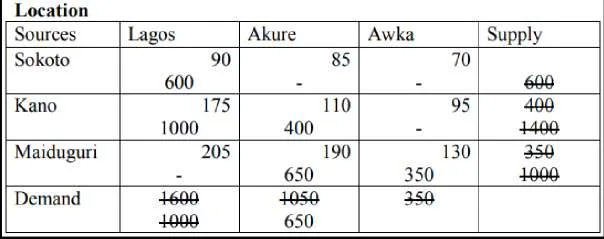
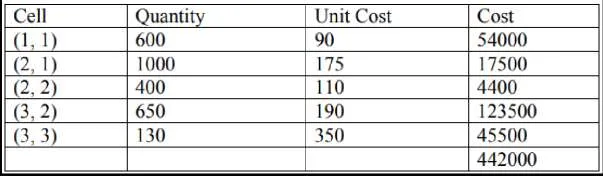
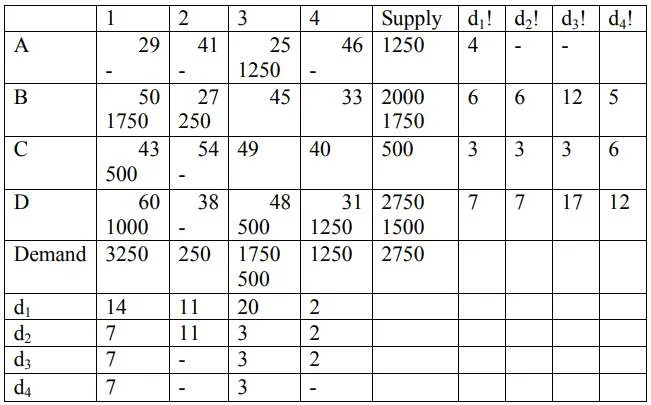
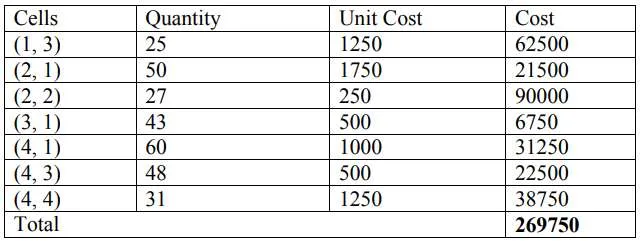
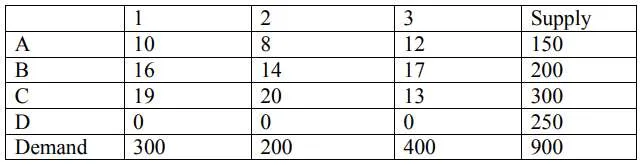
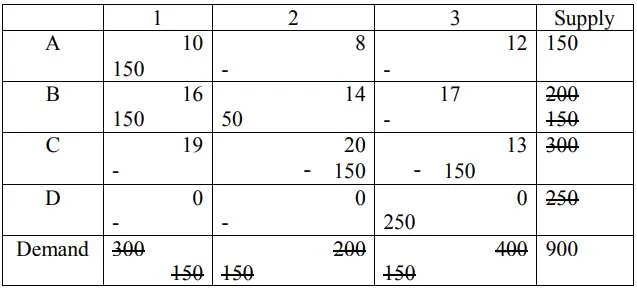
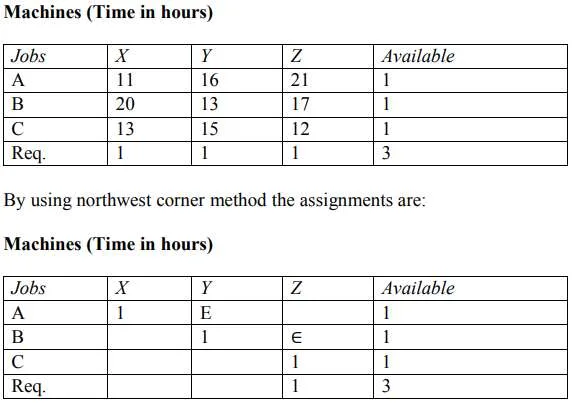
How is the transportation problem solved using the North West Corner Method?
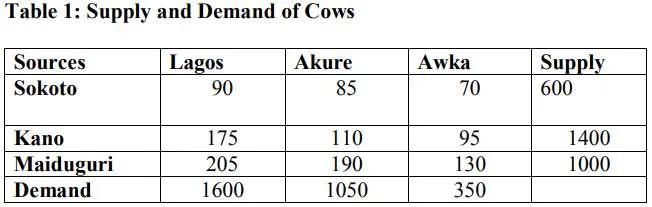
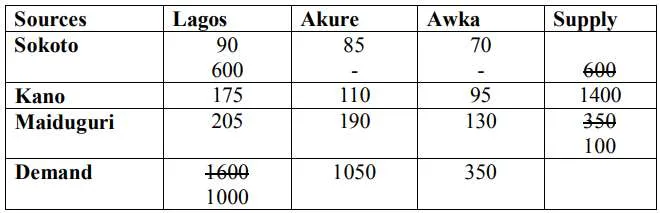
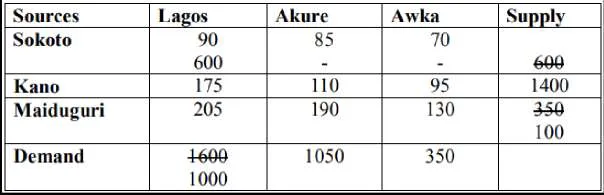
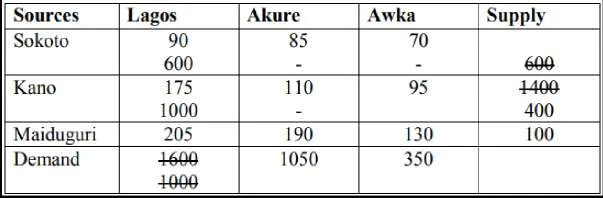
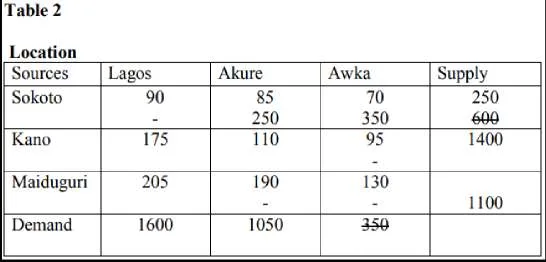
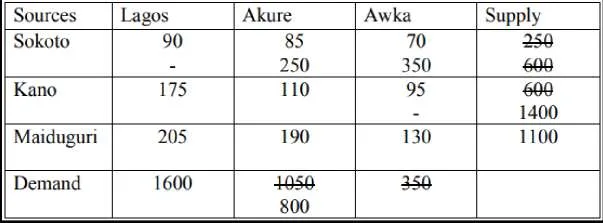
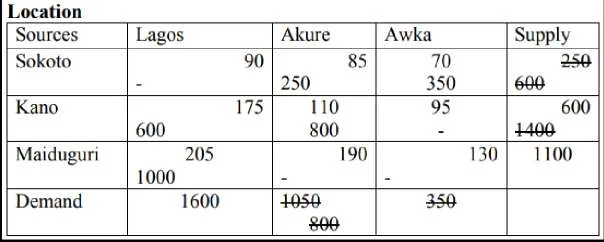
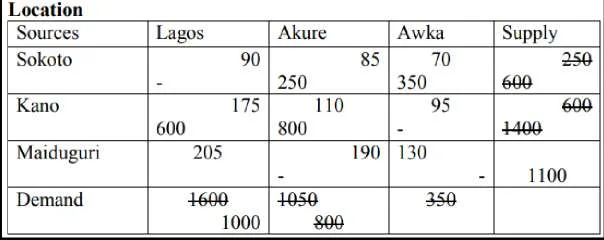
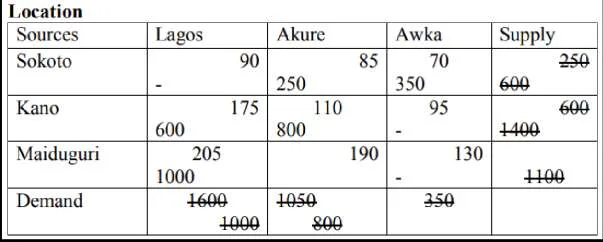
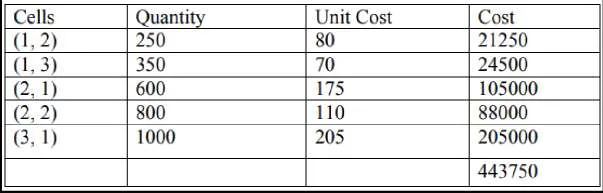
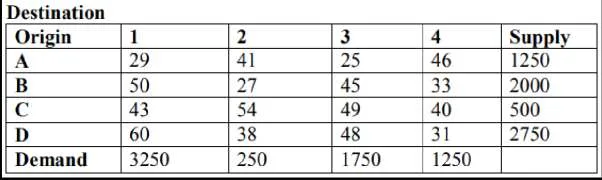
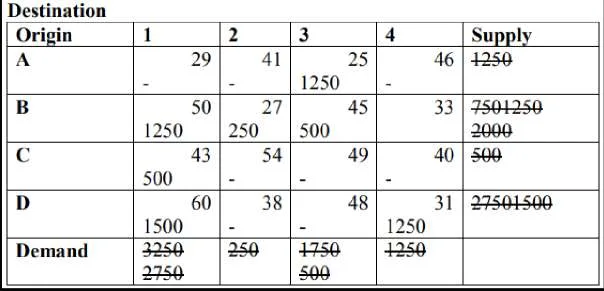
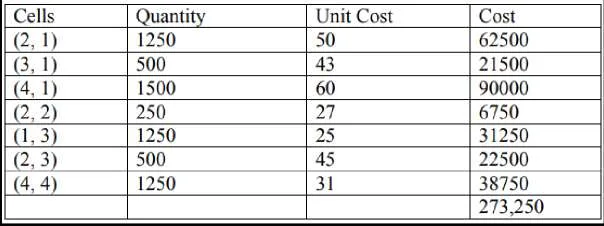
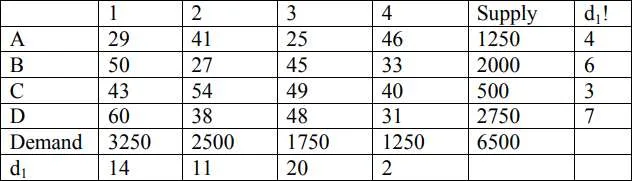
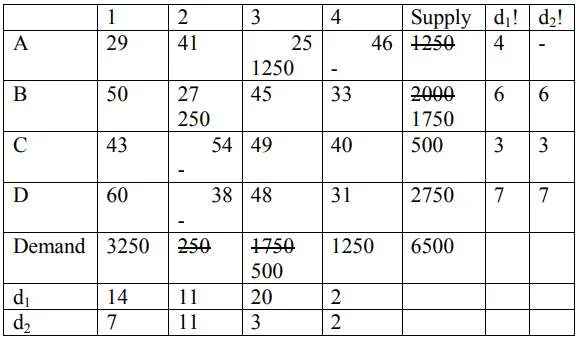
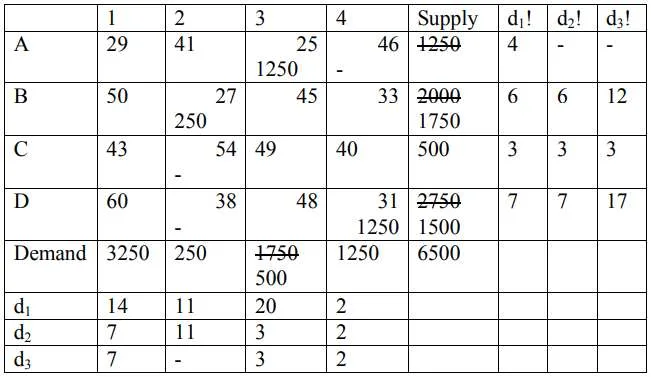
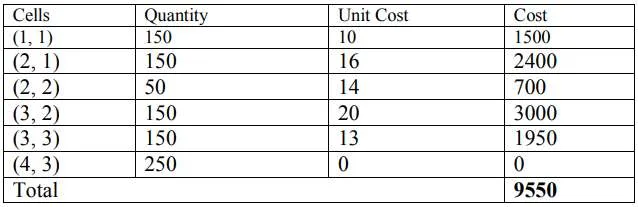
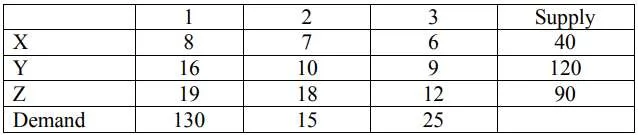
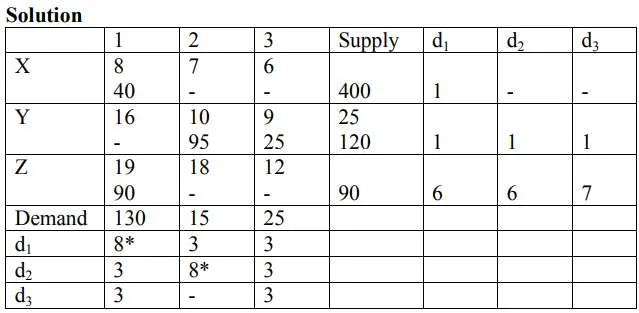
The North West Corner Method begins by allocating as many resources as possible to the top-left cell of the transportation table, which represents the first source and destination. The allocation continues until either the supply or demand is exhausted. The process is repeated by moving to the next cell in the row or column, ensuring that all supply and demand constraints are met. This method typically results in a feasible solution, although it may not be optimal.
What are the advantages of linear programming methods?
Linear programming methods offer several advantages, including optimal use of productive factors, which helps managers allocate resources more effectively. They improve decision-making quality by providing a systematic approach to complex problems. Additionally, linear programming models can easily handle data variations through sensitivity analysis, allowing businesses to adapt to changing conditions and constraints.
What are the applications of linear programming in management?
Linear programming is widely applied in various management areas, including media selection for advertising, where it helps determine the optimal mix of media to maximise exposure within budget constraints. It is also used in portfolio selection by financial institutions to allocate investments among various options to maximise returns or minimise risks. Additionally, linear programming aids in profit planning and transportation problems, optimising the distribution of goods from multiple sources to destinations.
What is the significance of the objective function in linear programming?
The objective function in linear programming is crucial as it defines the goal of the optimization problem, whether it is to maximise profit or minimise costs. This function is expressed as a linear equation of decision variables, guiding the decision-making process. The effectiveness of the solution is measured against this function, and it is subject to constraints that represent limitations in resources or requirements.
What are the limitations of linear programming models?
Despite their advantages, linear programming models have limitations. For large problems with numerous constraints, computational difficulties can arise, even with advanced digital computers. Additionally, linear programming may yield fractional values for decision variables, which can be impractical if only integer values are logical. Lastly, these models are applicable primarily to static situations and do not account for time variations.
Related
PDFTextbook
Immunization: Comprehensive Guide to Vaccines and ProceduresTextbook
PDFTextbook
Annual Planning Spotlight 1 and 2 – 2025/2026Textbook
PDFTextbook
SG 1 Flashcards for Learning ColorsTextbook
PDFTextbook
Personas en el Derecho Romano: Fuentes y RequisitosTextbook
PDFTextbook
Banking: Understanding Financial Systems and ServicesTextbook
PDFTextbook
Strength of Materials for Technicians – J. G. DrotskyTextbook
PDFTextbook
Computer Parts – Chapter 2b UpdatedTextbook
PDFTextbook
The Elements of Style by William Strunk Jr.Textbook
PDFTextbook
Introductory Computer Science – Chapter One: Introduction and History of ComputersTextbook
PDFTextbook
Communication Skills Project: Importance and TechniquesTextbook
PDFTextbook
Introduction to Information Technology – Unit 1: Introduction To ComputerTextbook