Banking explores the essential functions and services of financial institutions, including the acceptance of deposits and the provision of loans. It covers various types of credit facilities, such as fund-based and non-fund-based lending, and delves into the principles of sound lending practices. This comprehensive overview is beneficial for students and professionals seeking to understand banking operations, risk management, and financial regulations. Key topics include advances, guarantees, and the role of banks in economic development. Ideal for finance students and banking professionals looking to enhance their knowledge of the sector.

Key Points

  • Explains the primary functions of banking, including deposit acceptance and loan provision.
  • Covers various types of credit facilities, including fund-based and non-fund-based lending.
  • Discusses principles of sound lending practices to minimize risk.
  • Details the role of banks in economic development and financial stability.
Subhathra Murali
27 pages
Language:English
Type:Textbook
Subhathra Murali
27 pages
Language:English
Type:Textbook
289
/ 27
1
UNIT IV
BANKS AND LIQUIDITY, ADVANCES
The main business of a banking company is;
1) Accepting or Receiving Deposits, and
2) Lending of Loans and Advance,
The primary function of a commercial bank is lending of funds mainly to
trade and industry. The major portion of bank’s fund is profitably employed
by way of loans and advance.
TYPES / FORMS OF ADVANCES / CREDIT FACILITIES
The business of lending is carried on by the bank by offering various
credit facilities to its customers. Credit facilities may be broadly classified
into two types;
I . Fund based credit facilities
II. Non-fund based credit facilities
I . Fund based credit facilities:
Fund based credit facilities involve the outflow of funds from banks.
The money of the banker of the banker is lent to the customer. They can be
generally of following types:
a. Cash Credit
b. Overdraft
c. Term Loans / Demand loans
d. Bill Finance
e. Money at Call and Short notice
a. Cash Credit:
A cash credit is an arrangement under which a borrower is allowed
to borrow up to a certain limit.
Cash credit is similarly to an overdraft bearing a few differences.
A separate account is opened and without keeping cash balance
At any time the customer can withdraw up to the amount agreed upon
and he may repay whenever he has surplus.
Cash credit is a permanent arrangement and usually made against
pledge or hypothecation of goods.
A customer can continuously avail of this facility.
Interest is charged only for the amount withdrawn and not for the
whole amount charged if the amount is not utilized.
b. Overdraft
Overdraft is usually a temporary arrangement and is granted to the
customers having current accounts.
Overdraft is an arrangement between a banker and his customer by
which the customer is allowed to withdraw over and above his credit
balance in the current account up to an agreed limit.
The borrower is permitted to draw and repay any number of times.
The interest is charged only for the amount drawn and not for the
whole amount sanctioned
overdraft accounts may be unsecured, partly secured or fully secured.
Cash Credit Vs. Overdraft:
Basis Cash Credit Overdraft
Permanent
or
Temporary
Cash credit is a
permanent arrangement
Overdraft is only temporary
accommodation
Duration Cash credit is made for
long period.
Overdraft is made for short
duration
Purpose It should be used for the
purpose of business
Can be used for any purpose
Security It is normally given on
security of stock, debtors
etc.
It is normally given on
security of a fixed asset
Rate of
Interest
Interest rate is normally
lower than overdraft
account
Interest rate is normally
higher than cash credit
account
c. Term/Demand loans:
2
In this form, the banker advances a lump sum for a certain period at
an agreed rate of interest. The loan may be repaid in installments or at the
expiry of a certain period.
The interest is charged for the full amount sanctioned.
The loan may be made with or without security.
Loan may be a demand loan or a term loan.
Demand loan is payable on demand. It is for a short period.
Term loans may be medium term or long term.
Medium term loans are granted for a period ranging from one year
to five years and
Long term loans are granted above five years.
d. Bill Finance:
Basically, a banker offers following types of bill finance
i. Bill Discounting:
Banks grant advances to their customers by discounting bill of
exchange or promissory note. After deducting the interest from the face
value of the instrument, the amount is credited in the account of the
customer. In this form of the lending, the interest is received by the banker
in advance.
ii. Bill Purchasing:
Banks, sometimes, purchase the bills instead of discounting them.
The bank purchases the bill at a discount. Once the bills purchased, the bank
becomes the purchaser and owner of such bills.
e. Money at Call and Short notice:
Money at call and short notice is a very short-term loan that does not
have a set repayment schedule, but is payable immediately and in full upon
demand
II. Non-Fund based Facilities:
In the business of lending, a banker also extends non-fund based
facilities. Non-fund based facilities
of funds. The baker undertakes a risk to pay amounts on happening of a
contingency. Non-fund based can be of following types:
a. Guarantee Facility
Under this facility, the banker undertakes to discharge the liability of
the borrower to third parties. The nature of guarantees include: Performance
guarantee, deferred payment guarantees, advance payment guarantees,
guarantees to government departments, etc.
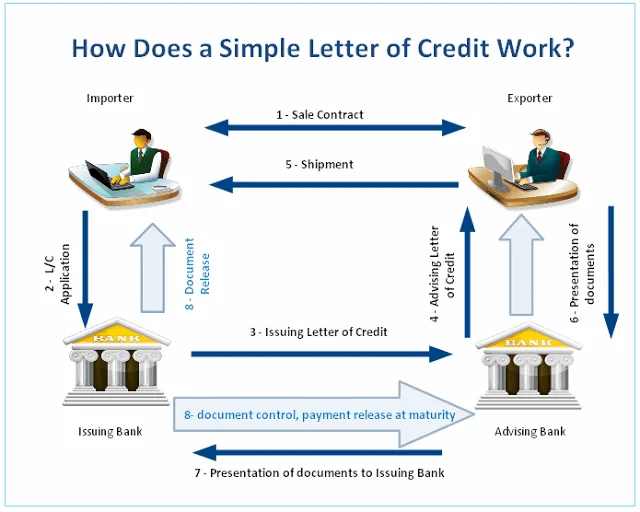
b. Letter of Credit Facility
Letter of credit or documentary credit facility is another non-fund
based facility extended by the bankers to their constituents. Under this
facility the baker undertakes to pay on presentation of documents as
specified in the letter of credit.
c. Underwriting and credit guarantee:
Banks also do underwriting and credit guarantee business. Under
underwriting facility the obligation of the baker to provide funds or pay in
the event of the failure of the borrower to raise money or to repay money.
Credit guarantees are issued by banks on behalf of the customers. These
kinds of guarantees are mostly issued on behalf of customers/contractors
dealing with government departments.
Consortium Advances:
Consortium advances mean advancing loans to a borrower by two or
more Banks jointly by forming a Consortium i.e., two or more lenders join
together to finance a single borrower.
Under Consortium advances lending banks formally join together,
by way of an inter-se agreement to meet the credit needs of a borrower.
There is no restriction on the number of banks for participation in
consortium.
Lead Bank:

3
The borrower company gives a mandate to a bank to lead the
consortium, which is commonly referred as a consortium lead (leader)
bank. The Role of Lead Bank in Consortium advances are:
1 Convening of consortium meetings.
2 Obtaining of necessary documents, clarification etc. from the
borrowing unit.
3 Making arrangements for joint appraisal of loan proposal by all
member Banks. Preparation of joint appraisal report and sending the
same to all member Banks and finalization of decision after
discussions.
4 Fixation of loan limit.
5 Finalization of loan documents to be obtained from borrower
6 Convening of Consortium meeting for execution of documents and
Registration of Charge on the assets of the loanee.
7 Custody of documents, securities etc., on behalf of itself and
consortium Banks.
8 Verification of documents/securities pledged by itself or jointly with
consortium Banks.
9 To maintain mutual interest between consortium Banks and term loan
lending institutions, making correspondence with National/State level
Financial Institutions.
10 Obtaining stock statement every month and ensuring maintenance of
adequate stock for the loan.
11 Obtaining insurance coverage for the entire stock and ensuring renewal
of insurance coverage from time to time.
12 Passing on recoveries on pro rata basis to the entire consortium Banks.
13 Ensuring of all transactions by borrower through Cash Credit A/c
maintained with the Lead Bank.
14 Ensuring of utilisation of working capital sanctioned limit only for
production activities.
Role of Consortium Banks
1. Participating in consortium meetings and using their expertise in the
general interest of consortium.
2. The consortium members shou ld authorize the Lead Bank to take
decision in the interest of consortium Banks.
3. Consortium Banks should give firm decision regarding their share in
the consortium.
4. The Consortium Banks are not supposed to change their lending share
without obtaining prior approval from the consortium members.
5. The consortium Banks should not demand the refund of loans by taking
own decision.
6. Verification of stock pledged and submitting of verification report to
lead Bank and other consortium Banks.
7. If any adverse points observed in respect of the loanee, the same should
be brought to the notice of Lead Bank and other consortium members.
8. Annual or ad hoc share should be taken on the basis of original ratio in
consortium.
9. A Senior Officer, who is authorized to take spot decision, in the event
of necessity, should be deputed to the consortium meeting
PRINCIPLES OF SOUND LENDING
Banking is a business dealing with money and credit. A bank lends
its funds in many ways to earn income. Banks make loans and advances
mainly to traders, businessmen and industrialists against the security of
some assets or on the personal security of the borrower. In either case, the
bank faces the risk of default in repayment. Hence to minimize such risk,
the banks have to follow a cautious policy of lending and sound lending
principles. The following are the principles of sound lending.
1) Safety
2) Liquidity
3) Profitability
4) Purpose of the loan
5) Sources of Repayment
6) Diversification of Risks
7) Productivity of the loan
8) Adequacy of margin
9) 3-C’s of customer.
1. Safety
/ 27
End of Document
289

FAQs

What are the main functions of a commercial bank?
The primary functions of a commercial bank include accepting deposits and lending loans and advances. Banks profitably employ a significant portion of their funds by providing loans mainly to trade and industry. This lending activity is crucial for the bank's profitability and overall functioning within the financial system.
What are the types of fund-based credit facilities offered by banks?
Fund-based credit facilities involve the outflow of funds from banks and can be classified into several types, including cash credit, overdraft, term loans, bill finance, and money at call and short notice. Cash credit allows borrowers to withdraw funds up to an agreed limit, while overdrafts permit customers to withdraw beyond their credit balance. Term loans are typically provided for a specific period, and bill finance includes both bill discounting and bill purchasing.
What principles guide sound lending practices in banking?
The principles of sound lending include safety, liquidity, profitability, purpose of the loan, sources of repayment, diversification of risks, productivity of the loan, adequacy of margin, and the 3-C's of the customer: character, capacity, and capital. These principles help banks minimize risks associated with lending and ensure that loans are granted to creditworthy borrowers.
What is the difference between cash credit and overdraft facilities?
Cash credit is a permanent arrangement allowing borrowers to withdraw funds up to a specified limit, typically secured against inventory or receivables. In contrast, an overdraft is a temporary facility granted to current account holders, allowing them to withdraw beyond their account balance. Interest is charged only on the amount utilized in both cases, but cash credit generally has a lower interest rate compared to overdrafts.
How do banks secure loans through charges?
Banks create security for loans by establishing charges on the borrower's assets. This can be done through various methods, including lien, pledge, mortgage, and hypothecation. A lien allows the bank to retain possession of goods until debts are paid, while a pledge involves the bailment of goods as security for a loan. Mortgages apply to immovable properties, and hypothecation involves creating a charge over movable assets without transferring ownership.
What types of non-fund based credit facilities do banks offer?
Non-fund based credit facilities include guarantees and letters of credit. Under a guarantee facility, a bank undertakes to discharge the liability of the borrower to third parties, while a letter of credit assures payment to the seller upon presentation of specified documents. These facilities do not involve an immediate outflow of funds but represent a commitment by the bank to honor obligations if certain conditions are met.
What role does the Lead Bank play in consortium advances?
The Lead Bank in a consortium advance arrangement is responsible for coordinating the lending process among multiple banks. Its duties include convening meetings, obtaining necessary documents, preparing joint appraisal reports, and finalizing loan limits. The Lead Bank also ensures that all consortium members are kept informed and that the borrower's financial activities are monitored effectively.