Devotional Paths to the Divine explores the evolution of religious devotion in India, focusing on the Bhakti movement and its key figures such as the Nayanars and Alvars. This chapter delves into the teachings of prominent saints like Kabir and Mirabai, highlighting their rejection of caste and ritualism. It also examines the influence of Sufism and the integration of diverse religious practices. Ideal for students studying Indian history and religious studies, this chapter provides insights into the social and spiritual dynamics of devotion from the 8th century onwards.

Key Points

  • Explores the Bhakti movement and its impact on Indian spirituality
  • Highlights key figures like Kabir, Mirabai, and the Nayanars
  • Discusses the integration of Sufism into Indian religious practices
  • Examines the rejection of caste and ritualism in devotional paths
Ayaati Jain
18 pages
Language:English
Type:Textbook
Ayaati Jain
18 pages
Language:English
Type:Textbook
313
/ 18
61
DEVOTIONAL PATHS
TO
THE DIVINE
Y
ou may have seen people perform rituals of
worship, or singing , or ,
or even repeating the name of God in silence, and
noticed that some of them are moved to tears. Such
intense devotion or love of God is the legacy of various
since the eighth century.
The Idea of a Supreme God
Before large kingdoms emerged, different groups
of people worshipped their own gods and goddesses.
As people were brought together through the growth
of towns, trade and empires, new ideas began to
develop. The idea that all living things pass through
countless cycles of birth and rebirth performing good
deeds and bad came to be widely accepted. Similarly,
the idea that all human beings are not equal even at
birth gained ground during this period. The belief that
social privileges came from birth in a noble” family or
a high” caste was the subject of many learned texts.
Many people were uneasy with such ideas and
turned to the teachings of the Buddha or the Jainas
according to which it was possible to overcome social
differences and break the cycle of rebirth through
personal effort. Others felt attracted to the idea of a
Supreme God who could deliver humans from such
bondage if approached with devotion (or bhakti).
This idea, advocated in the grew in
popularity in the early centuries of the Common Era.
DEVOTIONAL PATHS
TO THE DIVINE
The beginning of
Bhakti
Worship of certain
deities, which
became a central
feature of later
Hinduism, gained in
importance. These
deities included
Shiva, Vishnu, and
goddesses such as
Durga. These deities
were worshipped
through Bhakti, an
idea that became
very popular at
this time. Bhakti is
generally understood
as a persons
devotion to his or
her chosen deity.
Anybody, whether
rich or poor, belonging
to the so-called high
or low castes, man
or woman, could
follow the path of
Bhakti. The idea of
Bhakti is present in
the Bhagavad Gita, a
sacred book of
the Hindus.

62
Shiva, Vishnu and
Durga as supreme
deities came to
b e w o r s h i p p e d
through elaborate
r i t u a ls . A t th e
same time, gods
a n d g o d d e s s e s
w o r s h i p p e d i n
d i f f e r e nt ar eas
c a m e t o b e
i d e nt if i e d w it h
S h i v a , V i s h n u
or Durga. In the
process, local myths and legends became a part of the
Puranic stories, and methods of worship recommended
in the Puranas were introduced into the local cults.
Eventually the Puranas also laid down that it was
possible for devotees to receive the grace of God
regardless of their caste status. The idea of bhakti

became so popular that even Buddhists and Jainas
adopted these beliefs.
Bhakti in South India
Nayanars and Alvars
The seventh to ninth centuries saw the emergence of
new religious movements, led by the Nayanars (saints
devoted to Shiva) and Alvars (saints devoted to Vishnu)
who came from all castes including those considered
untouchable” like the Pulaiyar and the Panars. They
were sharply critical of the Buddhists and Jainas
and preached ardent love of Shiva or Vishnu as the
path to salvation. They drew upon the ideals of love
and heroism as found in the Sangam literature (the
earliest example of Tamil literature, composed during
the early centuries of the Common Era) and blended
them with the values of bhakti. The Nayanars and
Alvars went from place to place composing exquisite
poems in praise of the deities enshrined in the villages
they visited, and set them to music.
You can observe
this process of
local myths and
legends receiving
wider acceptance
even today. Can
you find some
examples
around you?
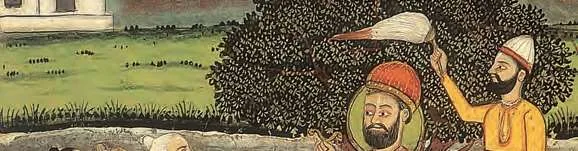
Fig. 1
A page from a south
Indian manuscript of
the Bhagavad Gita.
?
63
DEVOTIONAL PATHS
TO
THE DIVINE
Nayanars and Alvars
There were 63 Nayanars, who belonged to different
social backgrounds, such as potters, untouchable
workers, peasants, hunters, soldiers, Brahmanas and
chiefs. The best known among them were Appar,
Sambandar, Sundarar and Manikkavasagar. There are
two sets of compilations of their songs Tevaram and
Tiruvacakam.
There were 12 Alvars, who came from equally
divergent backgrounds, the best known being
Periyalvar, his daughter Andal, Tondaradippodi Alvar
and Nammalvar. Their songs were compiled in the Divya
Prabandham.
Between the tenth and twelfth centuries, the Chola
and Pandya kings built elaborate temples around many
of the shrines visited by the saint-poets, strengthening
the links between the bhakti tradition and temple
worship. This was also the time when their poems
were compiled. Besides, hagiographies or religious
biographies of the Alvars and Nayanars were also
composed. Today we use these texts as sources for
writing histories of the bhakti tradition.
The devotee and the Lord
This is a composition of Manikkavasagar:
How does the poet describe his relationship
with the deity?
Hagiography
?
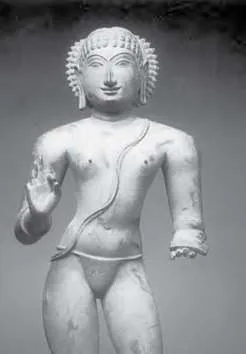
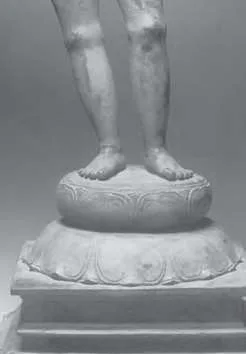
Fig. 2
A bronze image of
Manikkavasagar.
/ 18
End of Document
313

FAQs

What is the concept of Bhakti in Hinduism?
Bhakti is understood as a person's devotion to their chosen deity, which became a central feature of later Hinduism. It allowed individuals from all backgrounds, regardless of caste or gender, to pursue a personal relationship with the divine. The idea of Bhakti is prominently featured in the Bhagavad Gita, highlighting how devotion transcends social barriers and emphasizes personal connection with God.
Who were the Nayanars and Alvars?
The Nayanars and Alvars were saint-poets from the seventh to ninth centuries who played a crucial role in the Bhakti movement. The Nayanars were devoted to Shiva, while the Alvars focused on Vishnu. They came from diverse social backgrounds, including those considered 'untouchable,' and their compositions, such as Tevaram and Divya Prabandham, emphasized love and devotion as paths to salvation.
How did the Bhakti movement challenge social norms?
The Bhakti movement, particularly through figures like the Nayanars and Alvars, challenged existing social hierarchies and caste distinctions. They preached that devotion to God was accessible to all, regardless of caste, and criticized the ritualistic practices of contemporary religions. This movement fostered a sense of equality and inclusivity, allowing individuals from lower castes to participate in spiritual practices and temple worship.
What role did Mirabai play in the Bhakti movement?
Mirabai was a prominent figure in the Bhakti movement, known for her intense devotion to Krishna. A Rajput princess, she defied societal norms and openly challenged the upper caste's expectations through her songs and poetry. Her compositions became popular among the masses in Rajasthan and Gujarat, emphasizing personal devotion over rigid social structures.
What teachings did Kabir emphasize in his poetry?
Kabir's teachings were centered on a rejection of orthodox religious practices and the caste system. He emphasized the importance of a formless Supreme God and advocated for devotion as the sole path to salvation. His poetry, written in a widely understood form of spoken Hindi, critiqued both Hindu and Islamic rituals, promoting a message of unity and the search for the divine within one's heart.
How did the Virashaiva movement differ from traditional Hindu practices?
The Virashaiva movement, initiated by Basavanna in the mid-twelfth century, rejected traditional Brahmanical ideas about caste and ritual worship. It advocated for the equality of all individuals and emphasized direct devotion to God without intermediaries. This movement marked a significant shift in spiritual practice, focusing on personal experience and community over established religious hierarchy.
What impact did Sufism have in India during the Bhakti movement?
Sufism, which emerged alongside the Bhakti movement, emphasized love and devotion to God, transcending orthodox religious boundaries. Sufi saints like Nizamuddin Auliya promoted compassion and sought union with the divine, attracting followers from various backgrounds. Their teachings contributed to a syncretic culture in India, blending Islamic and Hindu devotional practices.