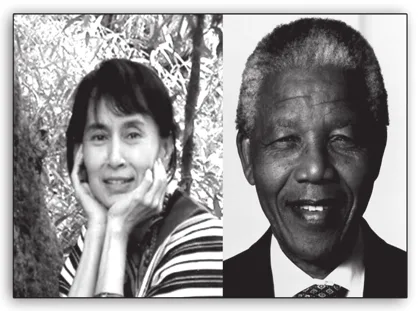
Freedom explores the concept of liberty, examining both its negative and positive dimensions. The text discusses the struggles for freedom, referencing historical figures like Nelson Mandela and Aung San Suu Kyi, and highlights the importance of constraints in society. It delves into the harm principle as articulated by John Stuart Mill, distinguishing between self-regarding and other-regarding actions. This work is essential for students of political theory and anyone interested in the philosophical underpinnings of freedom and social justice.

Key Points

  • Analyzes the historical struggles for freedom, including figures like Nelson Mandela.
  • Explores the harm principle and its implications for individual liberty.
  • Discusses the difference between negative and positive dimensions of freedom.
  • Examines the role of social constraints in maintaining order and justice.
Sreeja
14 pages
Language:English
Type:Textbook
Sreeja
14 pages
Language:English
Type:Textbook
101
/ 14
Chapter 2
Freedom
Human history provides many examples of people and communities which have been
dominated, or enslaved, or exploited, by more powerful groups. But it also provides us
with inspiring examples of heroic struggles against such domination. What is this freedom
for which people have been willing to sacrifice and die? In its essence, the struggle for
freedom represents the desire of people to be in control of their own lives and destinies
and to have the opportunity to express themselves freely through their choices and
activities. Not just individuals but societies also value their independence and wish to
protect their culture and future.
However, given the diverse interests and ambitions of people any form of social
living requires some rules and regulation. These rules may require some constraints
to be imposed on the freedom of individuals but it is recognised that such constraints
may also free us from insecurity and provide us with the conditions in which we can
develop ourselves. In political theory much of the discussion regarding freedom has
therefore focused on trying to evolve principles by which we can distinguish between
socially necessary constraints and other restrictions. There has also been debate about
possible limitations on freedom which may result from the social and economic
structures of a society. In this chapter we will look at some of these debates.
After studying this chapter you should be able to:
o Understand the importance of freedom for individuals and societies.
o Explain the difference between the negative and positive dimensions of freedom.
o Explain what is meant by the term ‘harm principle’.
Overview
Reprint 2025-26
Freedom
Freedom
Political Theory
18
2.1 THE IDEAL OF FREEDOM
Before we set out to answer these questions, let us stop for a
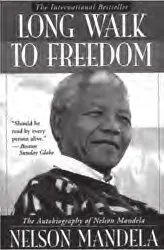
moment and consider this. The autobiography of one of the greatest
persons of the twentieth century, Nelson Mandela, is titled Long
Walk to Freedom. In this book he talks about his personal struggle
against the apartheid regime in South Africa, about the resistance
of his people to the segregationist policies of the white regime,
about the humiliations, hardships and police brutalities suffered
by the black people of South Africa. These ranged from being
bundled into townships and being denied easy movement about
the country, to being denied a free choice of whom to marry.
Collectively, such measures constituted a body of constraints
imposed by the apartheid regime that discriminated between citizens
based on their race. For Mandela and his colleagues it was the
struggle against such unjust constraints, the struggle to remove
the obstacles to the freedom of all the people of South Africa (not
just the black or the coloured but also the white people), that was
the Long Walk to Freedom.
For this freedom, Mandela spent twenty-seven
years of his life in jail, often in solitary
confinement. Imagine
what it meant to give up
one’s youth for an ideal,
to voluntarily give up the
pleasure of talking with
one’s friends, of playing
one’s favourite game
(Mandela loved boxing), of wearing one’s
favourite clothes, of listening to one’s
favourite music, of enjoying the many
festivals that are part of one’s life. Imagine
giving all these up and choosing instead
to be locked up alone in a room, not
knowing when one would be released, only
because one campaigned for the freedom
of one’s people. For freedom Mandela paid
Do only great men
and women fight
for great principles
like freedom? What
does this principle
mean to me?
Reprint 2025-26
Freedom
Freedom
Political Theory
19
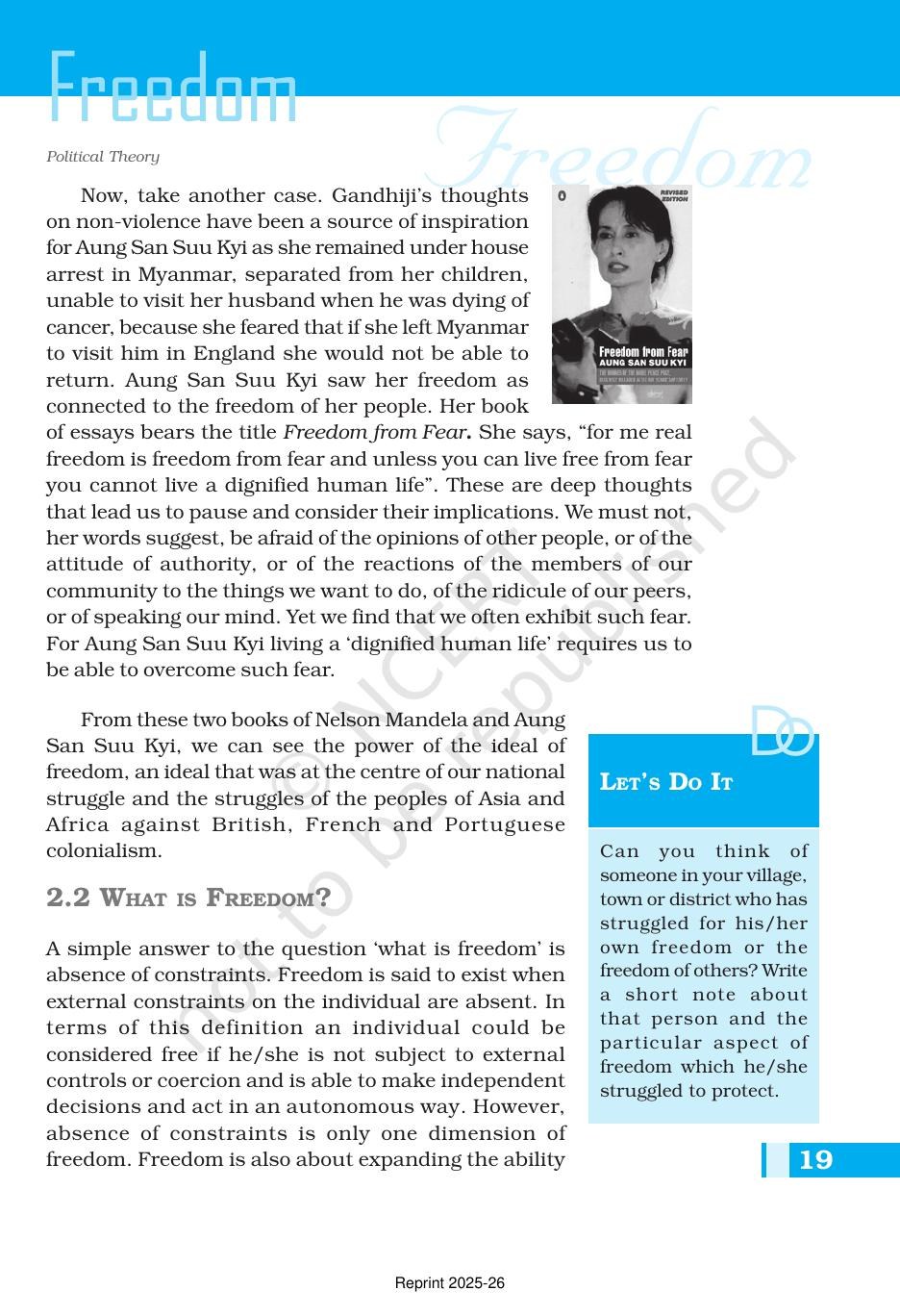
Now, take another case. Gandhiji’s thoughts
on non-violence have been a source of inspiration
for Aung San Suu Kyi as she remained under house
arrest in Myanmar, separated from her childr
en,
unable to visit her husband when he was dying of
cancer, because she feared that if she left Myanmar
to visit him in England she would not be able to
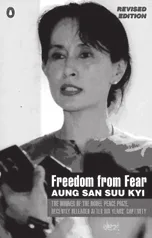
return. Aung San Suu Kyi saw her freedom as
connected to the freedom of her people. Her book
of essays bears the title Freedom from Fear. She says, “for me real
freedom is freedom from fear and unless you can live free from fear
you cannot live a dignified human life”. These are deep thoughts
that lead us to pause and consider their implications. We must not,
her words suggest, be afraid of the opinions of other people, or of the
attitude of authority, or of the reactions of the members of our
community to the things we want to do, of the ridicule of our peers,
or of speaking our mind. Yet we find that we often exhibit such fear.
For Aung San Suu Kyi living a ‘dignified human life’ requires us to
be able to overcome such fear.
From these two books of Nelson Mandela and Aung
San Suu Kyi, we can see the power of the ideal of
freedom, an ideal that was at the centre of our national
struggle and the struggles of the peoples of Asia and
Africa against British, French and Portuguese
colonialism.
2.2 WHAT IS FREEDOM?
A simple answer to the question ‘what is freedom’ is
absence of constraints. Freedom is said to exist when
external constraints on the individual are absent. In
terms of this definition an individual could be
considered free if he/she is not subject to external
controls or coercion and is able to make independent
decisions and act in an autonomous way. However,
absence of constraints is only one dimension of
freedom. Freedom is also about expanding the ability
Can you think of
someone in your village,
town or district who has
struggled for his/her
own freedom or the
freedom of others? Write
a short note about
that person and the
particular aspect of
freedom which he/she
struggled to protect.
LETS DO IT
Do
Reprint 2025-26
/ 14
End of Document
101

FAQs

What is the essence of freedom according to the document?
The essence of freedom is the desire of individuals and societies to control their own lives and destinies. It encompasses the ability to express oneself freely through choices and activities. The struggle for freedom often involves overcoming constraints imposed by more powerful groups, as seen in historical contexts like apartheid in South Africa. Freedom is not just about the absence of constraints but also about creating conditions that allow individuals to develop their potential.
What are the two dimensions of freedom discussed in the text?
The two dimensions of freedom discussed are negative and positive liberty. Negative liberty refers to the absence of external constraints, allowing individuals to act without interference. In contrast, positive liberty emphasizes the expansion of opportunities for individuals to express themselves and develop their capabilities. Both dimensions are crucial for understanding the concept of freedom in a societal context.
What does the term 'harm principle' mean in the context of freedom?
The 'harm principle,' articulated by John Stuart Mill, states that the only justification for interfering with an individual's liberty is to prevent harm to others. It distinguishes between self-regarding actions, which only affect the individual, and other-regarding actions, which impact others. According to this principle, external authority should not interfere in self-regarding actions, but may intervene in cases where actions cause serious harm to others.
How does the document define social constraints and their necessity?
Social constraints are limitations imposed on individuals by societal norms, laws, or structures that can affect their freedom. The document argues that some constraints are necessary to prevent chaos and ensure social order, as they help manage conflicts and protect individuals from harm. However, it emphasizes the importance of differentiating between justified and unjustified constraints, aiming to minimize unnecessary restrictions on individual freedom.
What is the significance of Swaraj in relation to freedom?
Swaraj, a concept in Indian political thought, signifies both self-rule and self-control. It was a key rallying cry during India's freedom struggle, emphasizing not just political independence but also social and individual liberation. Mahatma Gandhi highlighted Swaraj as the ability to rule oneself, which includes self-respect and self-realization. This understanding of Swaraj remains relevant today, reflecting the interconnectedness of individual freedom and societal conditions.
What role does the state play in upholding freedom according to the text?
The state plays a crucial role in upholding the freedom of its citizens by establishing laws and mechanisms that protect individual rights. A democratic government is particularly significant, as it allows citizens to retain some control over their rulers. The document suggests that while some form of government is inevitable, it is essential that the state's authority does not infringe upon the freedoms of individuals, thereby maintaining a balance between order and liberty.
What are the implications of negative and positive liberty in society?
Negative liberty focuses on creating a minimum area of non-interference where individuals can act freely, while positive liberty emphasizes the need for societal conditions that enable personal development. The document suggests that both concepts support each other; however, they can also conflict. For instance, while negative liberty advocates for minimal constraints, positive liberty seeks to ensure that individuals have the resources and opportunities necessary to thrive, highlighting the complexity of freedom in societal contexts.