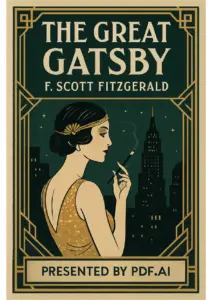
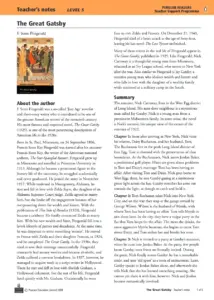
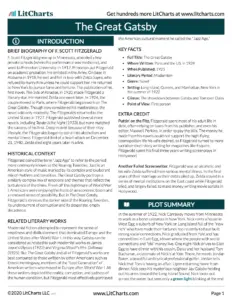
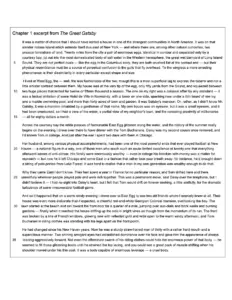
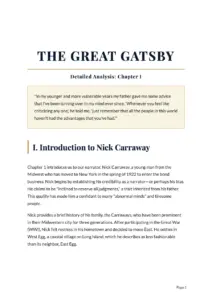
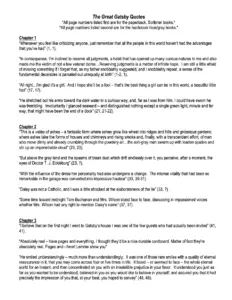
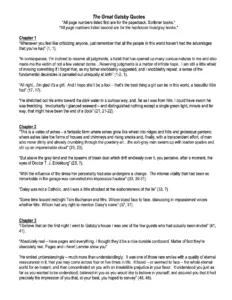
Explore key questions from Chapter 1 of 'The Great Gatsby' by F. Scott Fitzgerald. This resource delves into character backgrounds, social class distinctions, and thematic elements present in the opening chapter. Ideal for students analyzing the novel's setting and character dynamics. Use these questions to enhance your understanding of Nick Carraway's perspective and the world of East and West Egg.
Key Points
Includes discussion questions focused on Nick's social class and motivations in Chapter 1 of 'The Great Gatsby'.
Analyzes the differences between East Egg and West Egg, highlighting class distinctions in the novel.
Explores character insights, including Tom Buchanan's background and Daisy's emotional state.
Provides context for understanding the significance of the green light as a symbol in Gatsby's journey.
This link leads to an external site. We do not know or endorse its content, and are not responsible for its safety. Click the link to proceed only if you trust this site.
The Great Gatsby – F. Scott FitzgeraldBook Summary
PDFBook Summary
The Great Gatsby QuotesBook Summary
PDFStudy Guide
The Great Gatsby: Themes and AnalysisStudy Guide
PDFStudy Guide
The Connell Guide to F. Scott Fitzgerald’s The Great Gatsby: A Literary AnalysisStudy Guide
PDFStudy Guide
The Connell Guide to F. Scott Fitzgerald’s The Great GatsbyStudy Guide
PDFStudy Guide
The Great Gatsby OverviewStudy Guide
PDFBook Summary
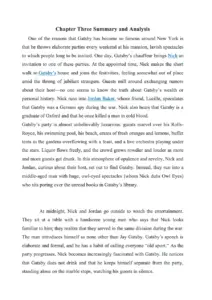
The Great Gatsby – Chapter 3 Summary and AnalysisBook Summary
FAQs
What advice does Nick's father give him in Chapter 1?
Nick's father advises him not to judge others, as everyone has their own struggles and challenges. This advice shapes Nick's perspective throughout the novel, allowing him to approach the people he meets with a level of understanding and empathy. It sets the tone for his observations of the characters and the events that unfold in the story.
How does Nick describe his social class and background?
Nick describes himself as coming from a well-to-do family in the Midwest. He mentions that his family has been prominent, well-to-do people for three generations. This background gives him a sense of privilege, yet he is also aware of the complexities of wealth and social status, which becomes a recurring theme in the novel.
What distinguishes East Egg from West Egg in the story?
East Egg and West Egg represent two different social classes in the novel. East Egg is home to the old-money elite, characterized by established wealth and social status, while West Egg is where the new-money individuals live, often seen as less refined. This distinction highlights the themes of class and social stratification that are central to the narrative.
What do we learn about Tom Buchanan before meeting him?
Before meeting Tom Buchanan, we learn that he is a wealthy and arrogant man, characterized by his physical strength and dominance. Nick hears about Tom's affair, which paints him as unfaithful and morally questionable. This sets the stage for Tom's complex character, revealing his entitlement and the tensions in his marriage to Daisy.
How does Daisy feel about her relationship with Tom?
Daisy's emotional state is complex; she appears to be unhappy and somewhat trapped in her marriage to Tom. During the dinner, her demeanor suggests a longing for something more, and she exhibits signs of sadness and frustration. This emotional turmoil foreshadows the conflicts that arise later in the story regarding love and loyalty.
Who is Jordan Baker, and what does Nick hear about her?
Jordan Baker is a professional golfer and a friend of Daisy's. Nick hears that she is somewhat dishonest, as she was rumored to have cheated in a golf tournament. This reputation adds to the theme of moral ambiguity in the novel, as Nick finds himself drawn to her despite her questionable character.
What symbolic meaning is associated with the color green in the story?
The color green is often associated with hope and the unattainable dreams of the characters, particularly Gatsby. It symbolizes Gatsby's longing for Daisy and the American Dream itself. This symbolism becomes increasingly significant as the narrative unfolds, representing both aspiration and disillusionment.