Recent Developments in Indian Politics explores the political landscape of India over the last two decades, focusing on significant events and transformations. Key themes include the rise of coalition politics, the Mandalisation movement, and the impact of the Ram Janmabhoomi movement on secularism and democracy. This analysis provides insights into the changing nature of political representation and the emergence of new policy consensus. Aimed at students and scholars of political science, this resource is essential for understanding contemporary Indian politics and its complexities.

Key Points

  • Analyzes the rise of coalition politics in India since 1989
  • Explores the implications of the Mandalisation movement on political representation
  • Discusses the legacy of the Ram Janmabhoomi movement on secularism
  • Examines the impact of economic policy changes on political choices
Ayaati Jain
25 pages
Language:English
Type:Textbook
Ayaati Jain
25 pages
Language:English
Type:Textbook
57
/ 25
I ts chptr…
In this last chapter we take a synoptic view of the last two decades of
politics in India. These developments are complex, for various kinds of
factors came together to produce unanticipated outcomes in this period.
The new era in politics was impossible to foresee; it is still very difficult to
understand. These developments are also controversial, for these involve
deep conflicts and we are still too close to the events. Yet we can ask
some questions central to the political change in this period.
• What are the implications of the rise of coalition politics for our
democracy?
• What is Mandalisation all about? In which ways will it change the
nature of political representation?
• WhatisthelegacyoftheRamJanmabhoomimovement?
• What does the rise of a new policy consensus do to the nature of
political choices?
The chapter does not answer these questions. It simply gives you the
necessary information and some tools so that you can ask and answer
thesequestionswhenyouarethroughwiththisbook.Wecannotavoid
asking these questions just because they are politically sensitive, for the
whole point of studying the history of politics in India since Independence
is to make sense of our present.
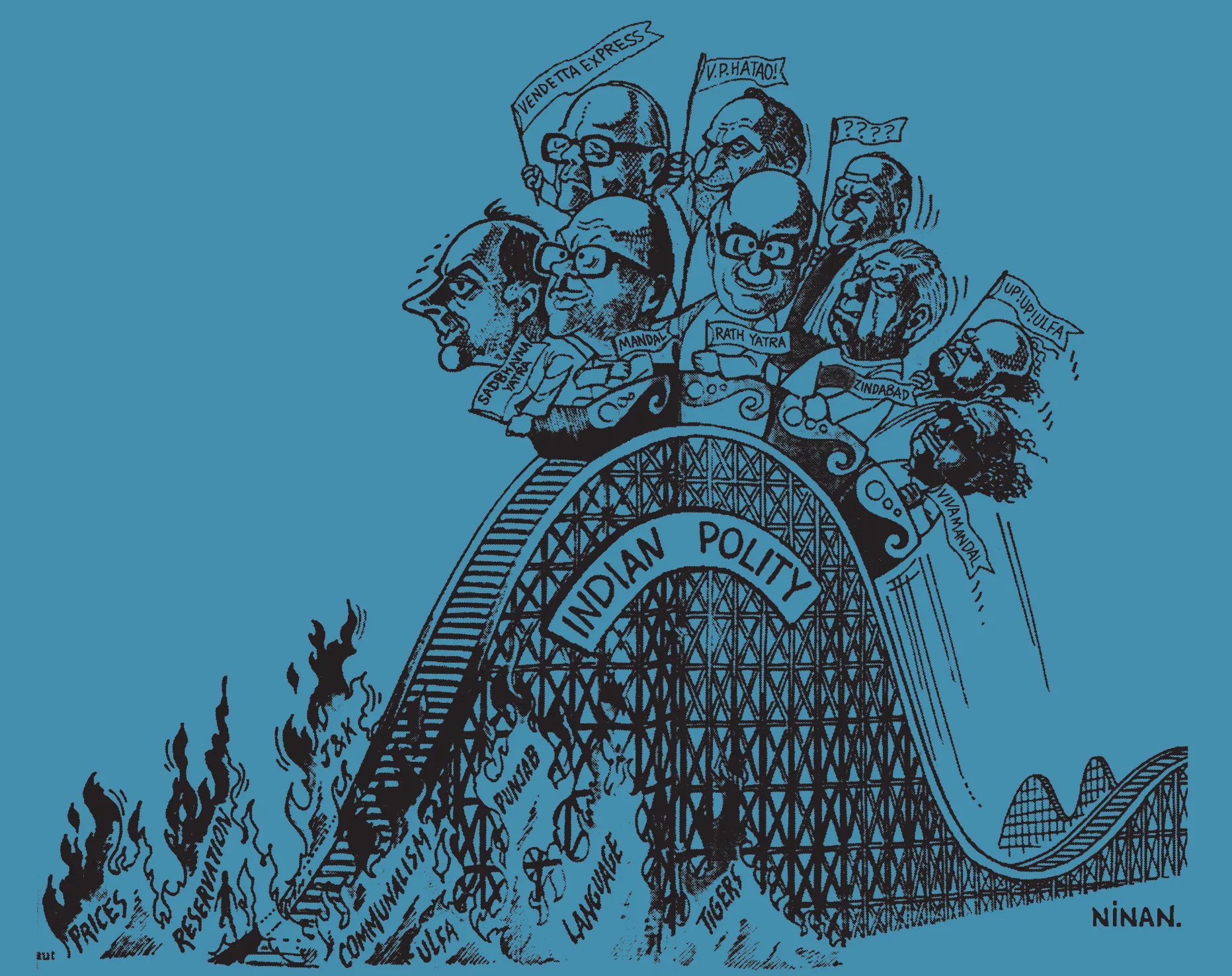
Ups and downs of
various political parties
in the 1990s appeared
to many, like this
cartoon drawn in 1990,
as a roller coaster ride.
Riding the roller coaster
are Rajiv Gandhi, V.
P. Singh, L. K. Advani,
Chandrashekhar, Jyoti
Basu, N. T. Rama Rao,
Devi Lal, P. K. Mahanta
and K. Karunanidhi.
Reprint 2025-26
Ctext of t 1990s
You have read in the last chapter that Rajiv Gandhi became the Prime
Minister after the assassination of Indira Gandhi. He led the Congress
to a massive victory in the Lok Sabha elections held immediately
thereafter in 1984. As the decade of the eighties came to a close, the
country witnessed five developments that were to make a long-lasting
impact on our politics.
F
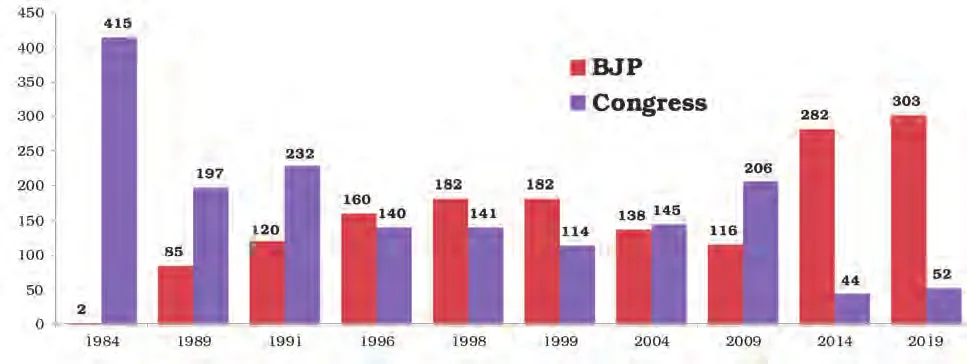
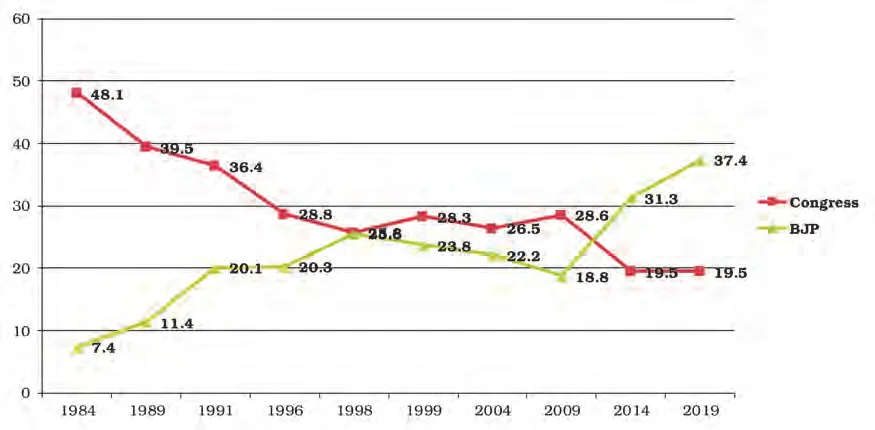
irst the most crucial development of this period was the defeat
of the Congress party in the elections held in 1989. The party
that had won as many as 415 seats in the Lok Sabha in 1984
was reduced to only 197 in this election. The Congress improved
its performance and came back to power soon after the mid-term
elections held in 1991. But the elections of 1989 marked the end of
what political scientists have called the ‘Congress system’. To be sure,
the Congress remained an important party and ruled the country
more than any other party even in this period since 1989. But it lost
the kind of centrality it earlier enjoyed in the party system.
S
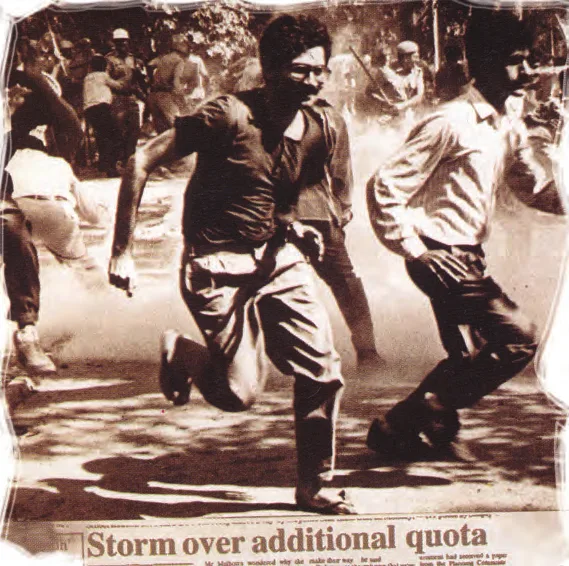
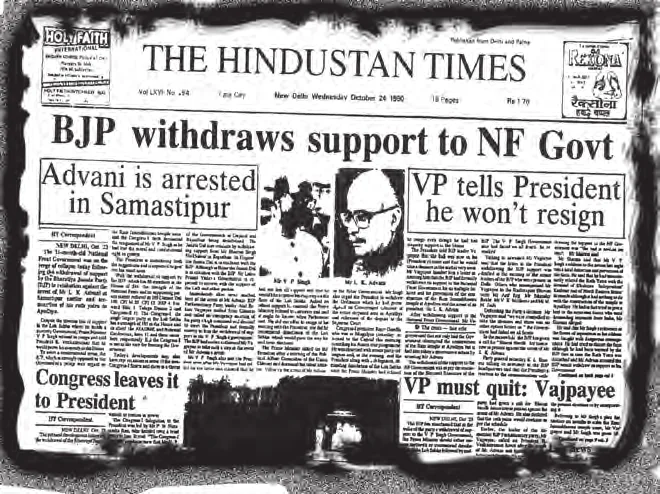
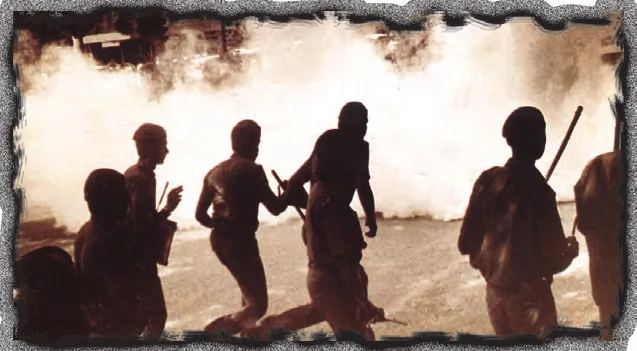
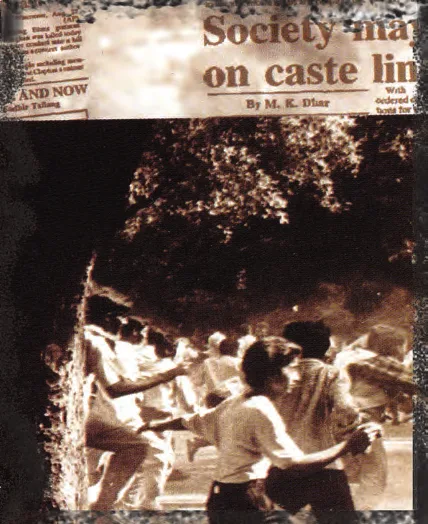
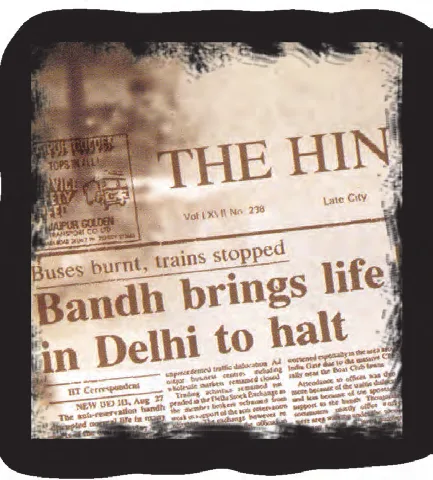
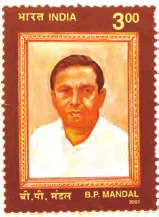
econd development was the rise of the ‘Mandal issue’ in national
politics. This followed the decision by the new National Front
government in 1990, to implement the recommendation of
the Mandal Commission that jobs in central government should be
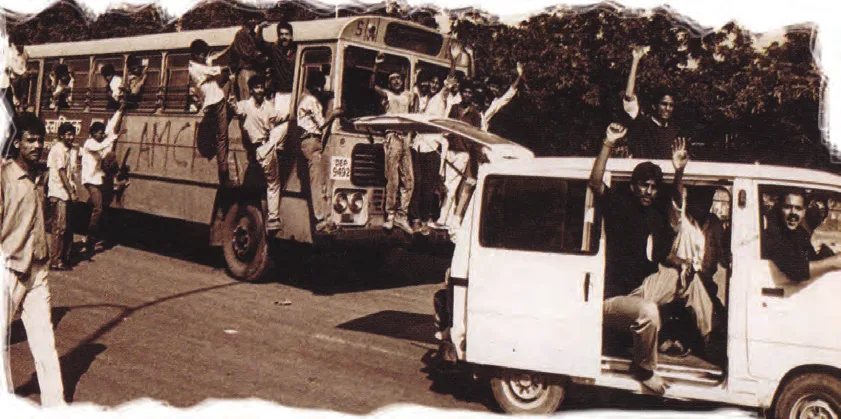
reserved for the Other Backward Classes. This led to violent ‘anti-
Mandal’ protests in different parts of the country. This dispute between
the supporters and opponents of OBC reservations was known as the
‘Mandal issue’ and was to play an important role in shaping politics
since 1989.
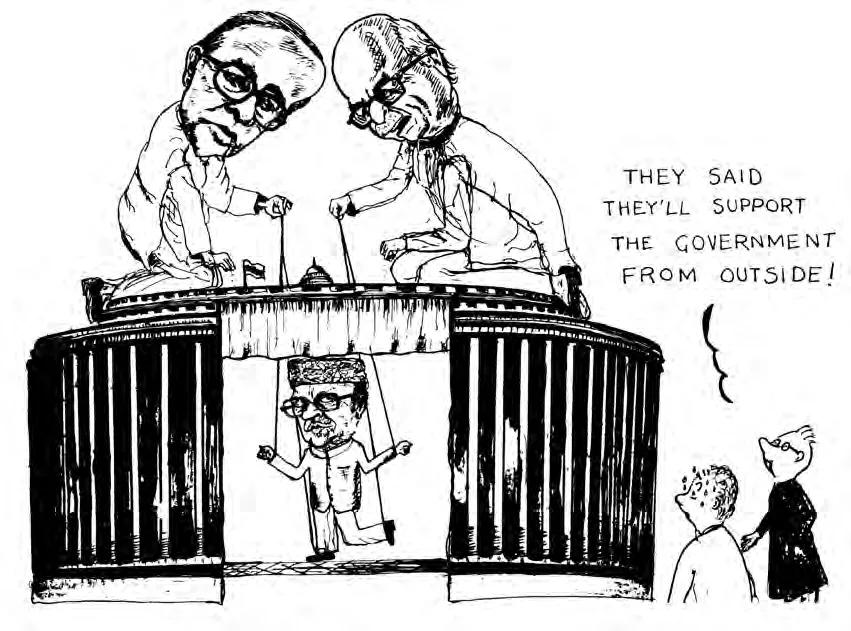
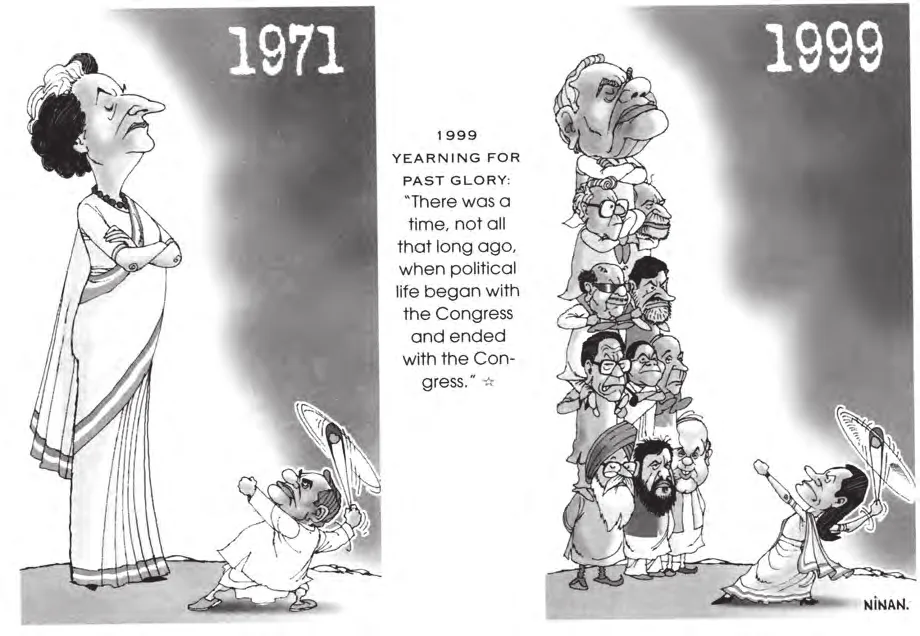
I wish to find
out if the Congress
can still bounce back
to its old glory.
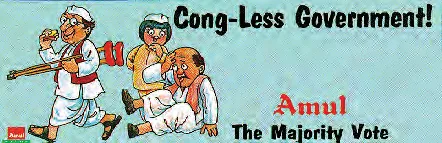
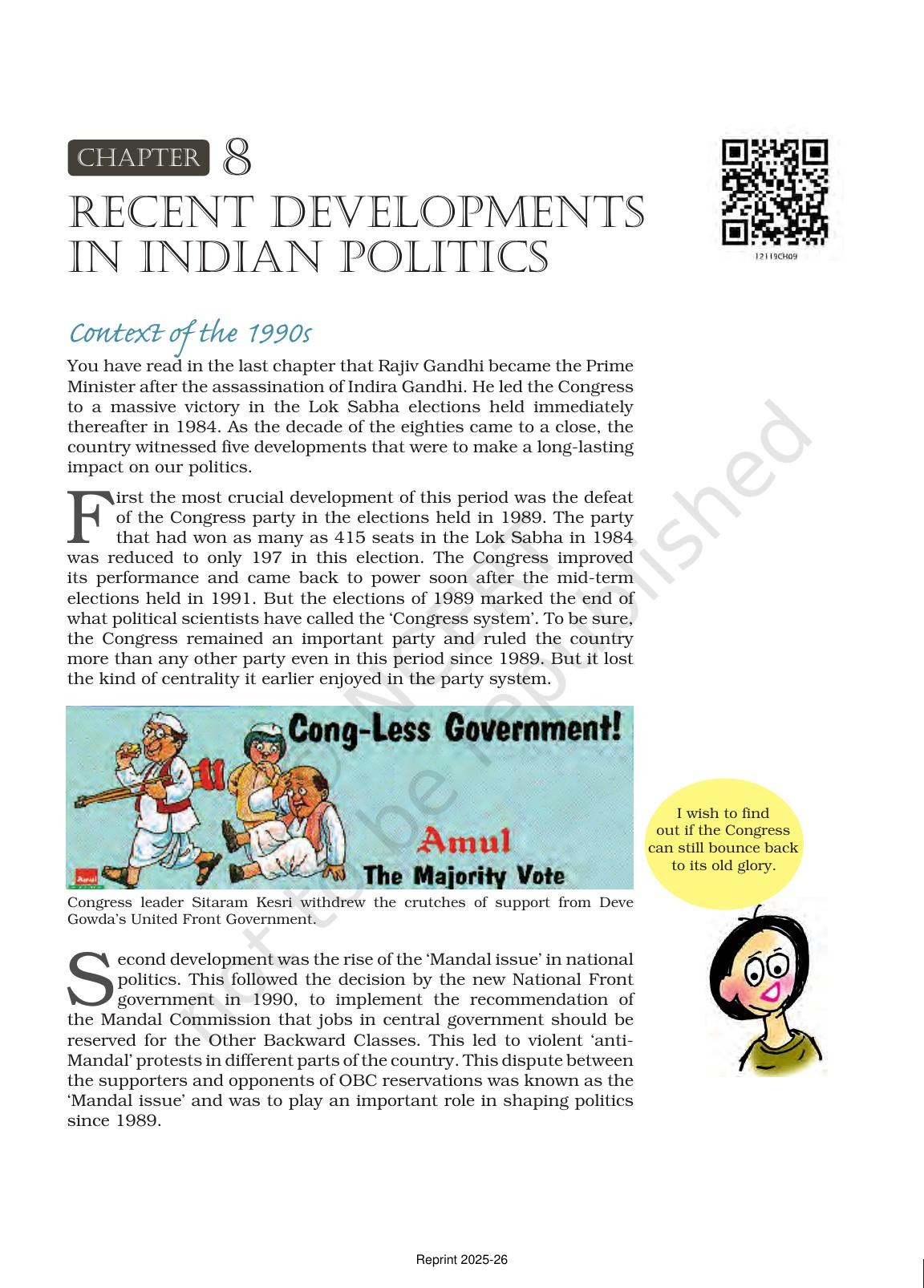
Congress leader Sitaram Kesri withdrew the crutches of support from Deve
Gowda’s United Front Government.
8
chapter
recent Developments
in inDian politics
chap 8_PF.indd 137 8/5/2022 3:12:41 PM

Reprint 2025-26
138 Ps  Ini nc Indpndnc
T
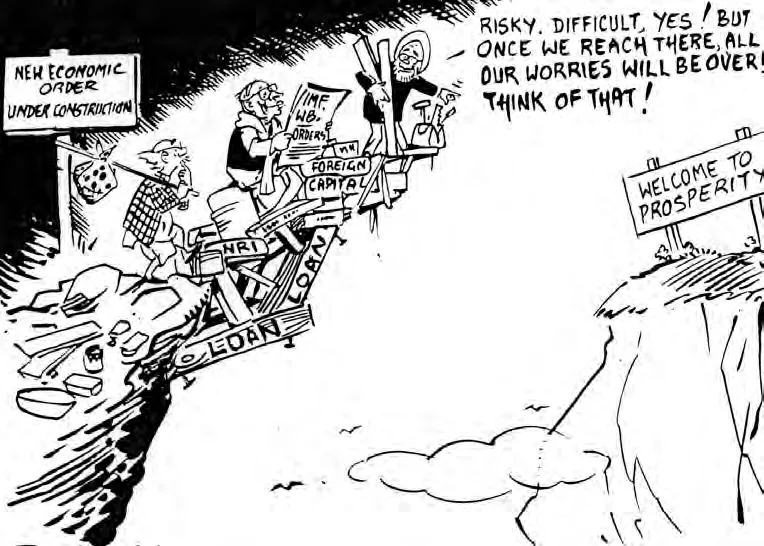
hird, the economic policy followed by the various governments
took a radically different turn. This is known as the initiation
of the structural adjustment programme or the new economic
reforms. Started by Rajiv Gandhi, these changes first became very
visible in 1991 and radically changed the direction that the Indian
economy had pursued since Independence. These policies have been
widely criticised by various movements and organisations. But the
various governments that came to power in this period have continued
to follow these.
I wish to be sure
if this phenomenon
would have a long-term
effect.
I am not clear
if this will make a
difference to politics,
especially if everyone has
the same policy.
Manmohan Singh, the then Finance Minister, with Prime Minister Narsimha Rao, in
the initial phase of the ‘New Economic Policy’.
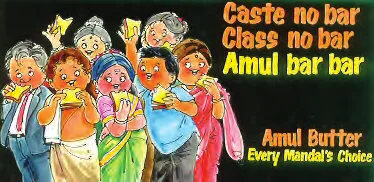
A reaction to Mandalisation.
Credit: R. K. Laxman in the Times of India
chap 8_PF.indd 138 8/5/2022 3:12:41 PM

Reprint 2025-26
/ 25
End of Document
57

FAQs

What were the key developments in Indian politics during the 1990s?
The 1990s saw several significant developments in Indian politics, including the defeat of the Congress party in the 1989 elections, marking the end of the 'Congress system.' The rise of the 'Mandal issue' emerged with the implementation of the Mandal Commission's recommendations for OBC reservations, leading to widespread protests. Additionally, economic policies shifted towards structural adjustments initiated in 1991, which transformed the Indian economy. The Ram Janmabhoomi movement also gained prominence, influencing the political landscape, culminating in the construction of the Ram Temple in Ayodhya.
What is the significance of the Mandal Commission in Indian politics?
The Mandal Commission, established in 1978, aimed to investigate the social and educational backwardness of various communities in India. Its recommendations in 1980 included reserving 27% of government jobs for Other Backward Classes (OBCs). The decision to implement these recommendations in 1990 by the National Front government sparked intense national debates and protests, known as the 'Mandal issue.' This development significantly mobilized OBC communities and reshaped political representation, leading to the emergence of parties advocating for OBC rights and recognition.
How did coalition politics evolve in India after 1989?
After the 1989 elections, no single party secured a majority, leading to the formation of coalition governments. The National Front, supported by both the BJP and the Left Front, marked the beginning of this era. This trend continued with the United Front government in 1996, which included various regional parties and was supported by the Congress. The emergence of multiple parties diminished the Congress's centrality in politics, leading to a multi-party system where regional parties played crucial roles in governance, culminating in the BJP's coalition governments in the late 1990s.
What role did the Ram Janmabhoomi movement play in Indian politics?
The Ram Janmabhoomi movement significantly impacted Indian politics by transforming the discourse on secularism and democracy. The movement centered around the legal and political dispute over the Ayodhya site, believed to be the birthplace of Lord Ram. It gained momentum in the late 1980s and culminated in the demolition of the Babri Masjid in 1992, which heightened communal tensions. The Supreme Court's ruling in 2019, which allowed the construction of the Ram Temple, further solidified its political significance, showcasing the intertwining of religion and politics in India.
What were the electoral outcomes for Congress and BJP in the 1990s?
In the 1990s, the Congress party experienced a decline, losing its majority in the 1989 elections, where it won only 197 seats compared to 415 in 1984. The BJP, on the other hand, began consolidating its position, emerging as a significant political force by the mid-1990s. In the elections of 1996, the BJP became the largest party but could not form a government due to lack of support. This period marked a shift in political dynamics, with the BJP and other regional parties gaining prominence, leading to a more competitive political landscape.
What were the implications of the rise of coalition politics for Indian democracy?
The rise of coalition politics in India has led to a more fragmented political landscape where no single party can dominate. This has encouraged the representation of diverse interests, particularly from regional and caste-based parties. However, it has also raised questions about governance stability and policy implementation, as coalition governments often require compromises on ideological positions. While this has led to a broader representation of voices in democracy, it has also resulted in challenges related to effective governance and decision-making.
How did the economic policy shift in India during the 1990s?
The economic policy in India underwent a radical transformation in the 1990s, particularly with the initiation of the structural adjustment program in 1991. This shift, which began under Prime Minister Rajiv Gandhi, aimed at liberalizing the economy and reducing state control. The reforms included deregulation, privatization, and opening up to foreign investment, fundamentally changing the direction of the Indian economy. Despite criticism from various movements, these policies have been largely continued by successive governments, marking a significant departure from the earlier economic strategies.