Kech101 serves as a detailed study guide for students looking to enhance their understanding of key concepts. This resource covers essential topics, including foundational principles and practical applications relevant to the course. Ideal for learners preparing for exams, it provides structured insights and examples to facilitate comprehension. The guide is designed to support both individual study and group discussions, making it a versatile tool for academic success.

Key Points

  • Covers foundational concepts in Kech101 for effective learning
  • Includes practical examples to illustrate key principles
  • Structured insights designed for exam preparation
  • Supports both individual and group study sessions
Bhumika Rajput
28 pages
Language:English
Type:Textbook
Bhumika Rajput
28 pages
Language:English
Type:Textbook
243
/ 28
UNIT 1
SOME BASIC CONCEPTS OF CHEMISTRY
Science can be viewed as a continuing human effort to
systematise knowledge for describing and understanding
nature. You have learnt in your previous classes that we
come across diverse substances present in nature and
changes in them in daily life. Curd formation from milk,
formation of vinegar from sugarcane juice on keeping
for prolonged time and rusting of iron are some of the
examples of changes which we come across many times.
For the sake of convenience, science is sub-divided into
various disciplines: chemistry, physics, biology, geology,
etc. The branch of science that studies the preparation,
properties, structure and reactions of material substances
is called chemistry.
DEVELOPMENT OF CHEMISTRY
Chemistry, as we understand it today, is not a very old
discipline. Chemistry was not studied for its own sake, rather
it came up as a result of search for two interesting things:
i. Philosopher’s stone (Paras) which would convert
all baser metals e.g., iron and copper into gold.
ii. ‘Elixir of life’ which would grant immortality.
People in ancient India, already had the knowledge of
many scientific phenomenon much before the advent of
modern science. They applied that knowledge in various
walks of life. Chemistry developed mainly in the form
of Alchemy and Iatrochemistry during 1300-1600 CE.
Modern chemistry took shape in the 18
th
century Europe,
after a few centuries of alchemical traditions which were
introduced in Europe by the Arabs.
After studying this unit, you will be
able to
appreciate the contribution of India
in the development of chemistry
understand the role of chemistry
in different spheres of life;
explain the characteristics of three
states of matter;
classify different substances
into elements, compounds and
mixtures;
use scientific notations and
determine significant figures;
differentiate between precision and
accuracy;
define SI base units and convert
physical quantities from one
system of units to another;
explain various laws of chemical
combination;
appreciate significance of atomic
mass, average atomic mass,
molecular mass and formula mass;
describe the terms mole and
molar mass;
calculate the mass per cent of
component elements constituting
a compound;
determine empirical formula and
molecular formula for a compound
from the given experimental data;
and
perform the stoichiometric
calculations.
Chemistry is the science of molecules and their
transformations. It is the science not so much of the one
hundred elements but of the infinite variety of molecules
that may be built from them.
Roald Hoffmann
2024-25
2
chemistry
Other cultures especially the Chinese
and the Indian had their own alchemical
traditions. These included much knowledge of
chemical processes and techniques.
In ancient India, chemistry was called
Rasayan Shastra, Rastantra, Ras Kriya or
Rasvidya. It included metallurgy, medicine,
manufacture of cosmetics, glass, dyes, etc.
Systematic excavations at Mohenjodaro in
Sindh and Harappa in Punjab prove that the
story of development of chemistry in India
is very old. Archaeological findings show
that baked bricks were used in construction
work. It shows the mass production of
pottery, which can be regarded as the earliest
chemical process, in which materials were
mixed, moulded and subjected to heat by
using fire to achieve desirable qualities.
Remains of glazed pottery have been found in
Mohenjodaro. Gypsum cement has been used
in the construction work. It contains lime,
sand and traces of CaCO
3
.
Harappans made
faience, a sort of glass which was used in
ornaments. They melted and forged a variety
of objects from metals, such as lead, silver,
gold and copper. They improved the hardness
of copper for making artefacts by using tin
and arsenic. A number of glass objects were
found in Maski in South India (1000–900
BCE), and Hastinapur and Taxila in North
India (1000–200 BCE). Glass and glazes were
coloured by addition of colouring agents like
metal oxides.
Copper metallurgy in India dates back to
the beginning of chalcolithic cultures in the
subcontinent. There are much archeological
evidences to support the view that technologies
for extraction of copper and iron were
developed indigenously.
According to Rigveda, tanning of leather
and dying of cotton were practised during
1000–400 BCE. The golden gloss of the
black polished ware of northen India could
not be replicated and is still a chemical
mystery. These wares indicate the mastery
with which kiln temperatures could be
controlled. Kautilya’s Arthashastra describes
the production of salt from sea.
A vast number of statements and material
described in the ancient Vedic literature can
be shown to agree with modern scientific
findings. Copper utensils, iron, gold, silver
ornaments and terracotta discs and painted
grey pottery have been found in many
archaeological sites in north India. Sushruta
Samhita explains the importance of Alkalies.
The Charaka Samhita mentions ancient
indians who knew how to prepare sulphuric
acid, nitric acid and oxides of copper, tin and
zinc; the sulphates of copper, zinc and iron
and the carbonates of lead and iron.
Rasopanishada describes the preparation
of gunpowder mixture. Tamil texts also
describe the preparation of fireworks using
sulphur, charcoal, saltpetre (i.e., potassium
nitrate), mercury, camphor, etc.
Nagarjuna was a great Indian scientist. He
was a reputed chemist, an alchemist and a
metallurgist. His work Rasratnakar deals with
the formulation of mercury compounds. He
has also discussed methods for the extraction
of metals, like gold, silver, tin and copper. A
book, Rsarnavam, appeared around 800 CE.
It discusses the uses of various furnaces,
ovens and crucibles for different purposes. It
describes methods by which metals could be
identified by flame colour.
Chakrapani discovered mercury sulphide.
The credit for inventing soap also goes to him.
He used mustard oil and some alkalies as
ingredients for making soap. Indians began
making soaps in the 18
th
century CE. Oil of
Eranda and seeds of Mahua plant and calcium
carbonate were used for making soap.
The paintings found on the walls of Ajanta
and Ellora, which look fresh even after ages,
testify to a high level of science achieved in
ancient India. Varähmihir’s Brihat Samhita is
a sort of encyclopaedia, which was composed
in the sixth century CE. It informs about the
preparation of glutinous material to be applied
on walls and roofs of houses and temples. It
was prepared entirely from extracts of various
plants, fruits, seeds and barks, which were
concentrated by boiling, and then, treated
with various resins. It will be interesting to
test such materials scientifically and assess
them for use.
Unit 1.indd 2 9/9/2022 4:27:29 PM
2024-25
3
Some BaSic conceptS of chemiStry
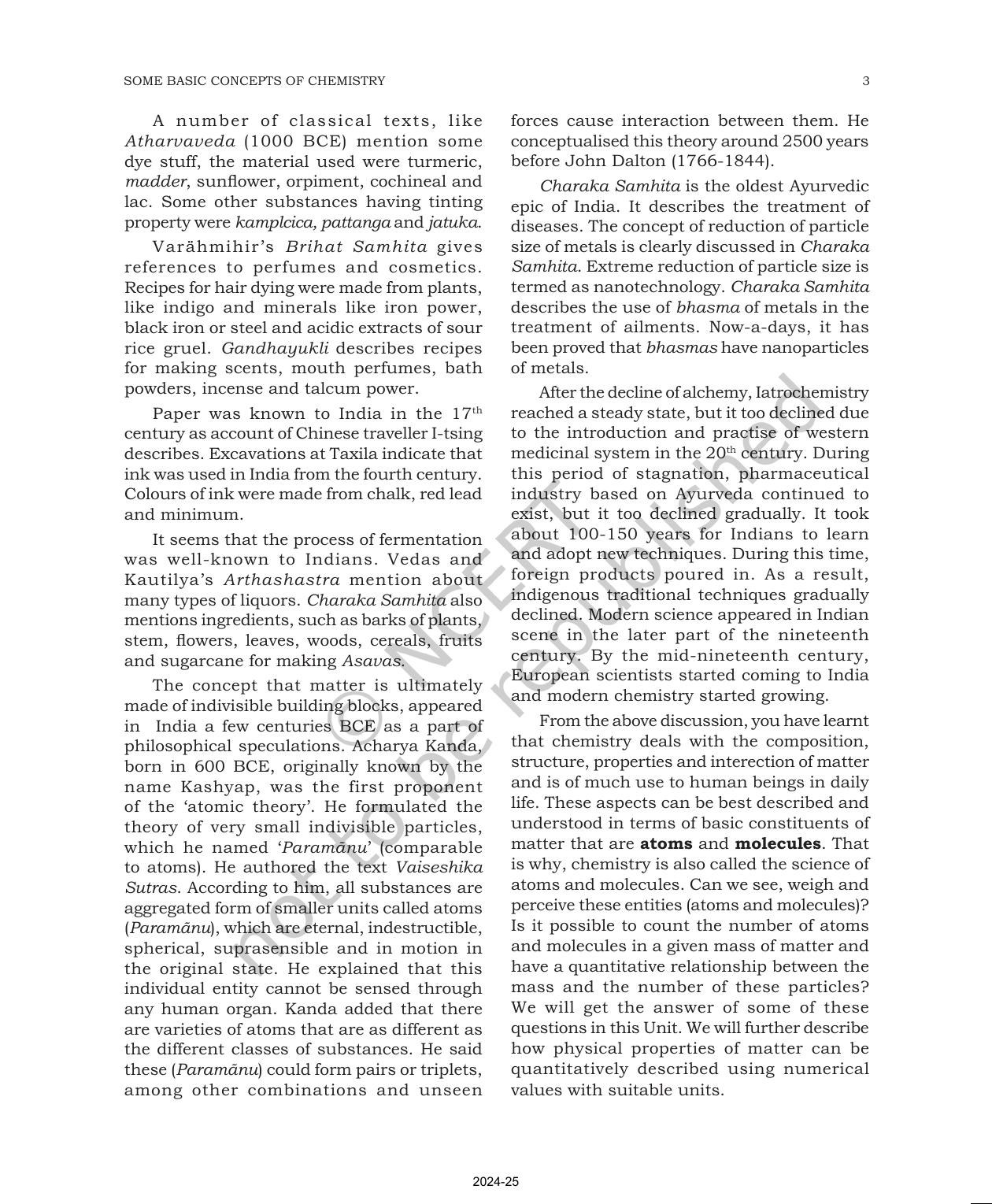
A number of classical texts, like
Atharvaveda (1000 BCE) mention some
dye stuff, the material used were turmeric,
madder, sunflower, orpiment, cochineal and
lac. Some other substances having tinting
property were kamplcica, pattanga and jatuka.
Varähmihir’s Brihat Samhita gives
references to perfumes and cosmetics.
Recipes for hair dying were made from plants,
like indigo and minerals like iron power,
black iron or steel and acidic extracts of sour
rice gruel. Gandhayukli describes recipes
for making scents, mouth perfumes, bath
powders, incense and talcum power.
Paper was known to India in the 17
th
century as account of Chinese traveller I-tsing
describes. Excavations at Taxila indicate that
ink was used in India from the fourth century.
Colours of ink were made from chalk, red lead
and minimum.
It seems that the process of fermentation
was well-known to Indians. Vedas and
Kautilya’s Arthashastra mention about
many types of liquors. Charaka Samhita also
mentions ingredients, such as barks of plants,
stem, flowers, leaves, woods, cereals, fruits
and sugarcane for making Asavas.
The concept that matter is ultimately
made of indivisible building blocks, appeared
in India a few centuries BCE as a part of
philosophical speculations. Acharya Kanda,
born in 600 BCE, originally known by the
name Kashyap, was the first proponent
of the ‘atomic theory’. He formulated the
theory of very small indivisible particles,
which he named ‘Paramãnu’ (comparable
to atoms). He authored the text Vaiseshika
Sutras. According to him, all substances are
aggregated form of smaller units called atoms
(Paramãnu), which are eternal, indestructible,
spherical, suprasensible and in motion in
the original state. He explained that this
individual entity cannot be sensed through
any human organ. Kanda added that there
are varieties of atoms that are as different as
the different classes of substances. He said
these (Paramãnu) could form pairs or triplets,
among other combinations and unseen
forces cause interaction between them. He
conceptualised this theory around 2500 years
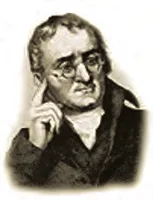
before John Dalton (1766-1844).
Charaka Samhita is the oldest Ayurvedic
epic of India. It describes the treatment of
diseases. The concept of reduction of particle
size of metals is clearly discussed in Charaka
Samhita. Extreme reduction of particle size is
termed as nanotechnology. Charaka Samhita
describes the use of bhasma of metals in the
treatment of ailments. Now-a-days, it has
been proved that bhasmas have nanoparticles
of metals.
After the decline of alchemy, Iatrochemistry
reached a steady state, but it too declined due
to the introduction and practise of western
medicinal system in the 20
th
century. During
this period of stagnation, pharmaceutical
industry based on Ayurveda continued to
exist, but it too declined gradually. It took
about 100-150 years for Indians to learn
and adopt new techniques. During this time,
foreign products poured in. As a result,
indigenous traditional techniques gradually
declined. Modern science appeared in Indian
scene in the later part of the nineteenth
century. By the mid-nineteenth century,
European scientists started coming to India
and modern chemistry started growing.
From the above discussion, you have learnt
that chemistry deals with the composition,
structure, properties and interection of matter
and is of much use to human beings in daily
life. These aspects can be best described and
understood in terms of basic constituents of
matter that are atoms and molecules. That
is why, chemistry is also called the science of
atoms and molecules. Can we see, weigh and
perceive these entities (atoms and molecules)?
Is it possible to count the number of atoms
and molecules in a given mass of matter and
have a quantitative relationship between the
mass and the number of these particles?
We will get the answer of some of these
questions in this Unit. We will further describe
how physical properties of matter can be
quantitatively described using numerical
values with suitable units.
Unit 1.indd 3 9/9/2022 4:27:29 PM

2024-25
/ 28
End of Document
243

FAQs

What are the key characteristics of the three states of matter?
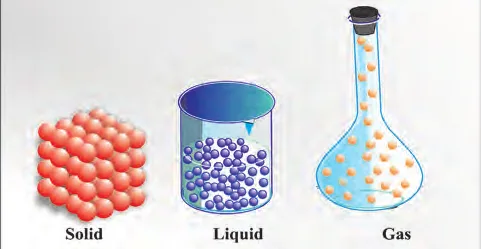
The three states of matter are solid, liquid, and gas. In solids, particles are held closely together in an orderly fashion, resulting in a definite shape and volume. Liquids have particles that are close but can move around, giving them a definite volume but no fixed shape. Gases have particles that are far apart and move freely, leading to neither a definite volume nor shape, as they completely fill the container they are in.
How does the Law of Conservation of Mass apply to chemical reactions?
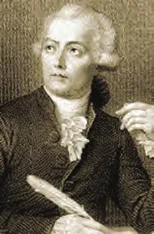
The Law of Conservation of Mass, proposed by Antoine Lavoisier, states that in any physical or chemical change, the total mass remains constant. This means that matter cannot be created or destroyed during a reaction. For example, when reactants undergo a reaction to form products, the mass of the products will equal the mass of the reactants, ensuring that the total mass before and after the reaction remains the same.
What is the significance of Avogadro's Law in chemistry?
Avogadro's Law states that equal volumes of gases, at the same temperature and pressure, contain an equal number of molecules. This principle is crucial for understanding gas reactions and stoichiometry, as it allows chemists to predict the volumes of gases involved in reactions. For instance, in the combustion of hydrogen and oxygen to form water, Avogadro's Law helps to establish that two volumes of hydrogen will react with one volume of oxygen to produce two volumes of water vapor.
What is the empirical formula and how is it determined?
An empirical formula represents the simplest whole number ratio of the elements in a compound. To determine it, one must first convert the mass percentages of each element into moles by dividing by their respective atomic masses. Then, the mole values are divided by the smallest number of moles to obtain the simplest ratio. This ratio is then used to write the empirical formula, which reflects the proportion of each element present in the compound.
What are the methods to calculate the molarity of a solution?
Molarity is calculated by dividing the number of moles of solute by the volume of the solution in liters. For example, if a solution contains 0.5 moles of solute in 1 liter of solution, the molarity would be 0.5 M. Additionally, when diluting a concentrated solution, the formula M1 × V1 = M2 × V2 can be used, where M1 and V1 are the molarity and volume of the concentrated solution, and M2 and V2 are those of the diluted solution.
How do you calculate the percentage composition of elements in a compound?
To calculate the percentage composition of elements in a compound, first determine the molar mass of the compound. Then, find the mass of each element in one mole of the compound. The percentage composition is calculated by dividing the mass of each element by the total molar mass of the compound and multiplying by 100. This gives the mass percent of each element, providing insight into the composition of the compound.