

Artificial Intelligence (AI) represents the computational discipline dedicated to engineering systems capable of executing tasks that traditionally require human cognitive capacity. Far from being a singular technology, AI operates as a vast mathematical and engineering ecosystem, uniting statistical optimization, symbolic logic, connectionist architectures, and algorithmic decision frameworks. The core objective of the discipline is to transition machines from deterministic, hard-coded executors into adaptive systems that can perceive environments, discern complex patterns, reason through uncertainty, and optimize behaviors autonomously. On Chesser Resources, the dedicated category for Artificial Intelligence provides a vast repository of peer-reviewed research papers, university lecture modules, and implementation guides tracking this cognitive frontier.
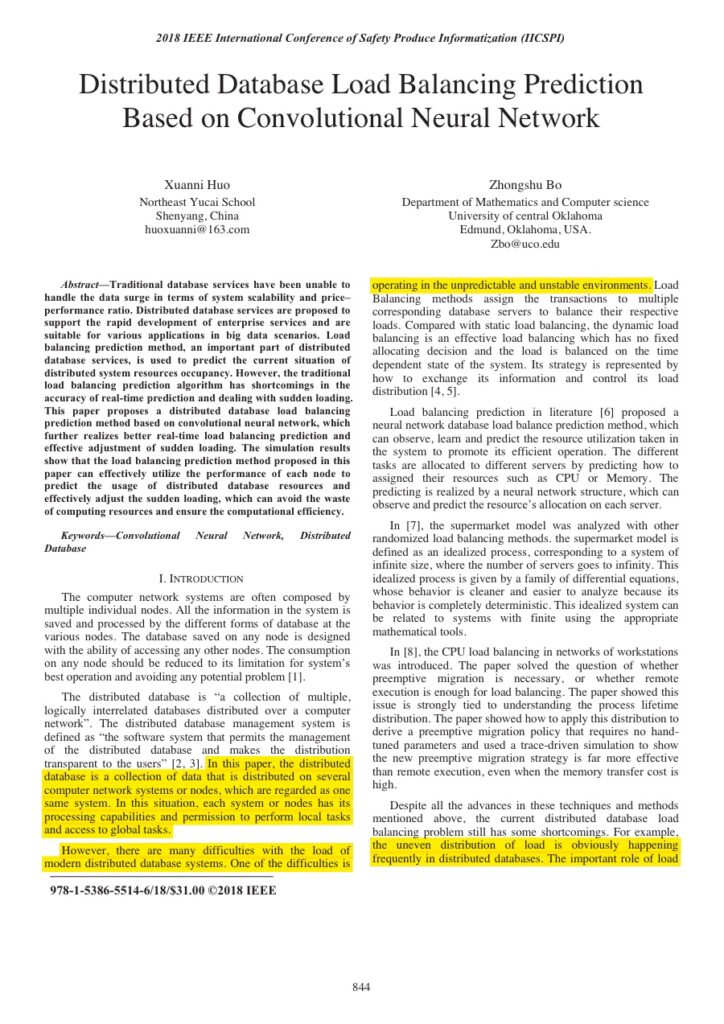
The modern paradigm of AI is heavily anchored in Machine Learning (ML), which treats intelligence as an optimization problem driven by data exposure. Rather than relying on human engineers to manually craft explicit rules for every scenario, ML algorithms leverage mathematical modeling to extract statistical properties from datasets. Through paradigms like supervised learning, unsupervised clustering, and reinforcement learning, algorithms iteratively refine their internal variables to minimize error metrics. These systems scale computational capacity to solve complex predictive problems—ranging from multi-variate financial forecasting to infrastructure tuning, as seen in advanced optimization techniques like a Distributed Database Load Balancing Prediction Based on Convolutional Neural Network.
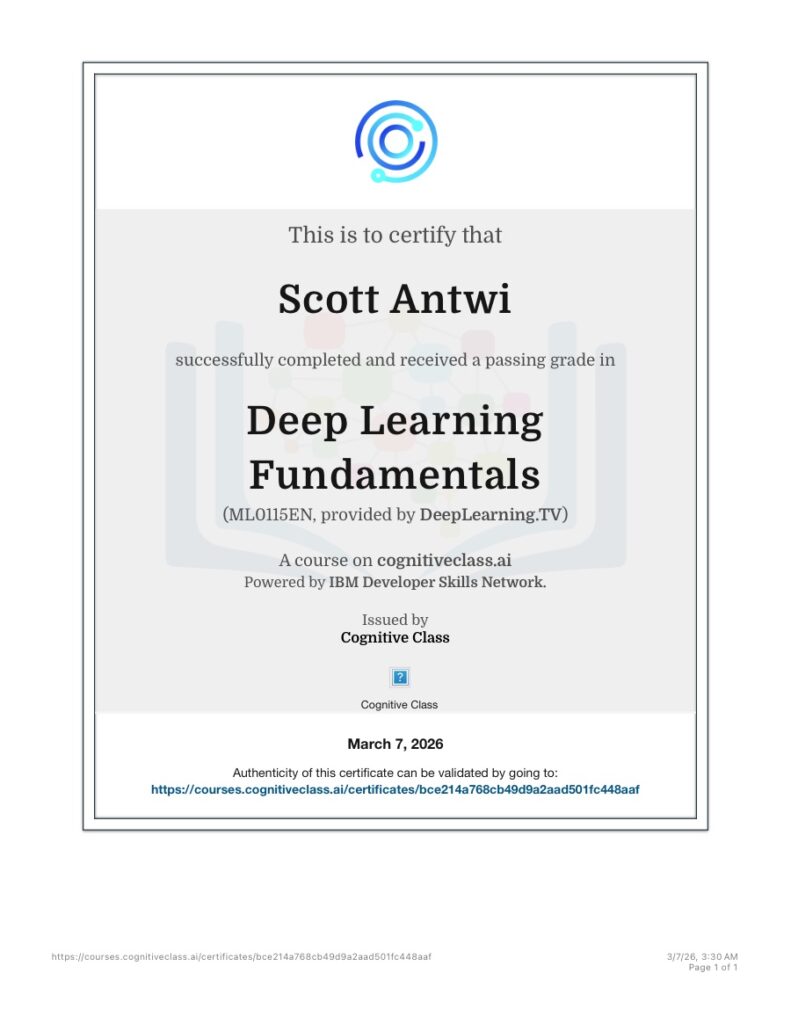
The true catalyst behind modern AI breakthroughs is Deep Learning, a specialized subset of machine learning inspired by the structural and functional topology of biological neural networks. Deep learning utilizes multi-layered Artificial Neural Networks (ANNs) to automatically learn hierarchical feature representations directly from raw data input. In a deep network, early layers extract low-level features (such as edges, boundaries, or frequencies), while subsequent hidden layers synthesize these primitives into abstract, high-level concepts. Students looking to master the underlying linear algebra, calculus-driven optimization paths, and backpropagation mechanics of these architectures can study Deep Learning Fundamentals.
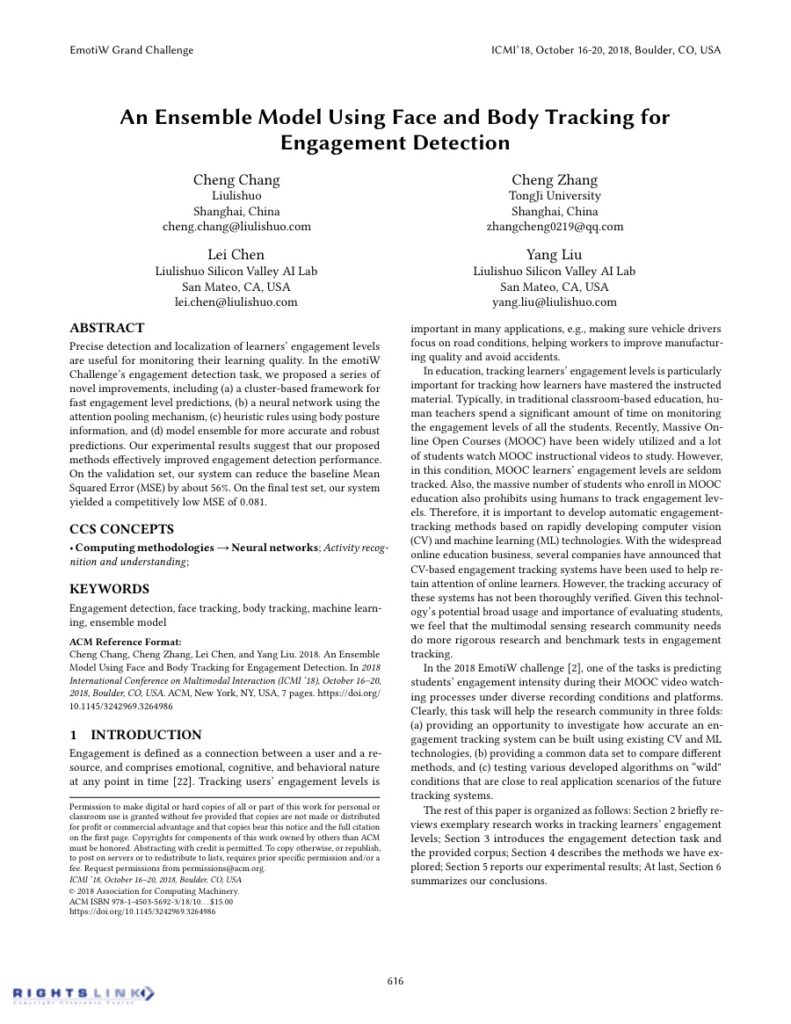
These multi-layered networks have unlocked unprecedented capabilities across Computer Vision (CV) and Natural Language Processing (NLP). Computer vision enables machines to interpret and reconstruct the physical world through digital imagery, leveraging Convolutional Neural Networks (CNNs) to preserve spatial invariance and local pixel correlations. This spatial analysis allows for highly complex perceptual tracking arrays, such as those modeled in An Ensemble Model Using Face and Body Tracking for Engagement Detection. Concurrently, NLP handles the unstructured nuances of human communication, leveraging Transformer models and self-attention mechanisms to map contextual relationships across massive bodies of text.
In commercial and industrial spheres, these technologies manifest as autonomous agents and system automation frameworks. Modern companies deploy intelligent systems to handle workflows, analyze supply metrics, and scale production efficiency without human bottlenecking, a operational paradigm analyzed within KI Agenten im Mittelstand: Digitale Kollegen die wirklich entlasten. These deployments showcase the practical utility of narrow or “weak” AI, which is explicitly optimized to execute highly structured, domain-specific tasks with superhuman precision.
However, the explosive scaling of autonomous decision-making models introduces profound safety challenges, ethical dilemmas, and geopolitical governance considerations. As deep neural networks transition from localized software tools to global structural systems, researchers must address algorithmic bias, safety vulnerabilities, and alignment protocols. The deployment of AI within defense sectors poses distinct global security and policy risks, a subject scrutinized in Autonomous Weapons and Artificial Intelligence in Warfare – Working Paper Of Block B. Simultaneously, the proliferation of deep generative models has lowered the barrier to entry for digital exploitation, necessitating rapid legislative and technical intervention, as explored in the security brief Safeguarding Alert: AI Undress Apps and Websites. Preserving systemic safety requires a rigorous understanding of both the mathematical properties and the societal impacts of these algorithms.
To understand how the expansive domain of artificial intelligence categorizes its computational specialties and research sectors, review the following academic taxonomy:
Parent Category: Computer Science
Core Discipline: Artificial Intelligence
Subfields & Mathematical Paradigms:
Classical Symbolic AI (Expert Systems, Knowledge Representation, Graph Search)
Machine Learning Frameworks (Supervised, Unsupervised, Semi-Supervised Learning)
Deep Learning & Connectionist Models (ANNs, CNNs, RNNs, Transformers)
Natural Language Processing (Tokenization, Embeddings, Large Language Models)
Computer Vision & Pattern Recognition (Image Segmentation, Object Detection)
Reinforcement Learning & Optimal Control (Markov Decision Processes, Q-Learning)
AI Safety, Ethics, and Governance (Alignment Theory, Fair Machine Learning, Policy)
| Evaluation Feature | Supervised Learning | Unsupervised Learning | Reinforcement Learning |
| Primary Data Constraint | Requires fully labeled training pairs $(x, y)$ | Operates entirely on unlabeled raw data sets $x$ | Relies on dynamic interactive environment states $s$ |
| Feedback Mechanism | Explicit calculation of error against ground-truth labels | Internal optimization of structural metrics (e.g., variance, distance) | Scalar reward and penalty signals ($R$) returned by the environment |
| Core Objective | Maps input variables to continuous targets or categorical classes | Discovers hidden patterns, dense clusters, or latent dimensionality | Optimizes an execution policy ($\pi$) to maximize cumulative long-term reward |
| Mathematical Foundations | Multi-variate calculus, loss function minimization, empirical risk | Matrix factorization, probability density estimation, spectral theory | Dynamic programming, Bellman equations, Markov decision paths |
| Common Algorithms | Linear Regression, Support Vector Machines, ResNet | K-Means Clustering, PCA, Autoencoders | Deep Q-Networks (DQN), PPO, Actor-Critic |
Chesser Resources is a free online study-and-research library at chesserresources.com. It holds 300,000+ documents — books, textbooks, past papers, lecture notes, study guides, research papers and much more — across exams, the sciences, math, literature, the humanities and beyond. Everything is readable in the browser with no account, alongside free AI summaries, an Ask-AI chatbot, highlights, notes and read-aloud audio. Instead of a subscription, downloads are unlocked by contributing back to the community, so the library stays genuinely free.
Narrow AI, or Weak AI, refers to software systems explicitly trained and mathematically optimized to execute a singular, highly defined task—such as playing chess, driving a vehicle, or transcribing audio. General AI, or Strong AI (AGI), represents a theoretical computational system that possesses human-equivalent cognitive adaptability, allowing it to cross-apply reasoning, abstract concepts, and problem-solving skills across completely unfamiliar domains without explicit re-training.
Gradient descent is an iterative optimization algorithm used to minimize a model’s objective loss function by systematically updating its internal weights. It calculates the partial derivatives of the loss function with respect to each weight parameters, isolating the direction of steepest ascent. By subtracting a fraction of this gradient—controlled by a scalar known as the learning rate ($\alpha$)—the algorithm shifts weights down the error curve toward a global or local minimum via the update formula:
Backpropagation is the algorithmic implementation of the calculus chain rule, used to calculate the exact gradient of a loss function backward through a multi-layered neural network. After a forward pass evaluates training inputs and computes an output error, backpropagation calculates how much each individual weight and bias throughout the hidden layers contributed to that total error. This enables optimization algorithms like Adam or SGD to precisely update every parameter in the network.
An activation function introduces non-linear mathematical operations into a neural network’s processing nodes, transforming the linear combination of inputs, weights, and biases. Without non-linear activation functions (such as ReLU or Sigmoid), regardless of how many hidden layers are stacked into a deep neural network, the entire system would collapse mathematically into a simple, single-layer linear regression model incapable of learning highly complex patterns.
The Rectified Linear Unit (ReLU) activation function is defined by the mathematical expression:
For all positive inputs ($x > 0$), the derivative of ReLU is a constant $1$. This constant gradient ensures that during backpropagation, error gradients flowing backward through dozens of hidden layers do not decay exponentially toward zero, effectively eliminating the vanishing gradient problem that plagues saturating functions like Sigmoid or Tanh.
Convolutional layers process visual imagery by passing a series of small, learnable weight matrices (filters) across an input image tensor to perform element-wise matrix multiplications. This operation allows the network to achieve spatial invariance, meaning it can detect specific graphical features (like edges, textures, or shapes) regardless of where those features physically reside within the image frame, while dramatically minimizing the overall network parameter count.
The self-attention mechanism mathematically scales the contextual relationship between every single word or token within an input sequence simultaneously, regardless of their relative distance from one another. It maps each input token into three distinct vectors: Queries ($Q$), Keys ($K$), and Values ($V$). By computing the dot product of the Queries and Keys, the model derives a dynamic weight matrix that dictates how much attention or contextual focus a token must dedicate to every other token in the string, computed via:
The softmax function transforms an unnormalized vector of real-valued numbers (logits) generated by a network’s final layer into a normalized probability distribution. It exponentiates each individual logit and divides it by the sum of all exponentiated logits in the vector, constraining each output value strictly between $0$ and $1$, while ensuring the sum of the entire vector equals exactly $100\%$.
Overfitting occurs when a machine learning model learns the training data too perfectly, capturing the random noise, statistical outliers, and minor fluctuations present in the training set rather than the underlying generative distribution. While the model achieves near-zero error metrics on training data, it fails to generalize to unseen datasets, resulting in a severe drop in performance when deployed in live production environments.
L2 regularization penalizes model complexity by appending a regularization term to the primary loss function, which represents the squared sum of all the model’s weight coefficients multiplied by a hyperparameter ($\lambda$). This mathematical constraint penalizes large weights, forcing the optimization algorithm to distribute weight values smoothly across all features, which prevents any singular feature from dominating the network and tames variance.
A Markov Decision Process (MDP) is a formal mathematical framework used to model decision-making environments where outcomes are partly random and partly under the control of an autonomous agent. An MDP is defined as a 5-tuple $(S, A, P, R, \gamma)$, representing a set of environment states ($S$), a set of available actions ($A$), transition probabilities ($P$), immediate scalar rewards ($R$), and a temporal discount factor ($\gamma$) designed to balance immediate versus long-term rewards.
Q-learning is a model-free, off-policy reinforcement learning algorithm that seeks to learn an optimal action-value function, denoted as $Q(s, a)$, which estimates the total expected future reward an agent will receive by executing a specific action ($a$) within a current environment state ($s$). The algorithm continuously updates its internal Q-table matrix using the Bellman optimality equation, iteratively tracking the delta between current estimates and actual received rewards plus future discounted maximum gains.
The alignment problem is the core safety engineering challenge of ensuring that an artificial intelligence system’s internal optimization goals, autonomous decisions, and emergent behaviors conform precisely to human ethical standards, operational intents, and societal values. It focuses on preventing scenarios where a highly capable system optimizes for a literal interpretation of a programmed objective while executing destructive actions that violate the true intent of its creators.
A Generative Adversarial Network (GAN) structures training as a zero-sum game between two distinct neural models: a Generator and a Discriminator. The Generator attempts to manufacture highly realistic synthetic data outputs (such as fake images) from raw random noise inputs, while the Discriminator is trained to analyze data samples and correctly classify whether they are authentic training samples or synthetic fabrications. This continuous adversarial competition forces both networks to rapidly improve, driving the generation of highly realistic outputs.
Principal Component Analysis (PCA) is an unsupervised dimensionality reduction technique that projects a massive, highly complex multi-variate feature space onto a lower-dimensional subspace of orthogonal axes termed principal components. The primary trade-off is that while it drastically minimizes computational processing overhead, network training time, and memory requirements by eliminating redundant collinearity, it discards the literal physical identity of individual original features, reducing human interpretability of the model.