Sensation and perception explore how humans interpret sensory information from the environment. This chapter discusses key concepts such as sensory thresholds, sensory adaptation, and the processes of perception including attention, form, and depth perception. It also examines perceptual constancies and illusions, providing insights into how we perceive the world around us. Ideal for psychology students and those interested in cognitive processes, this chapter serves as a foundational resource in understanding sensory experiences.

Key Points

  • Explains the concepts of sensation and perception, including transduction.
  • Covers sensory thresholds and adaptation, detailing absolute and difference thresholds.
  • Discusses the selectivity of perception and factors influencing attention.
  • Examines depth perception through binocular and monocular cues.
  • Describes perceptual constancies and the nature of perceptual illusions.
Suud Fuad
29 pages
Language:English
Type:Lecture Notes
Suud Fuad
29 pages
Language:English
Type:Lecture Notes
388
/ 29
Chapter Two: Sensation and Perception
Meanings of Sensation and perception
Sensory thresholds and sensory adaption
Perception
Selectivity of perception: Attention
Form perception
Depth perception
Perceptual Constancies
Perceptual Illusion
2.1 Meanings of Sensation and Perception
What do these statements suggest to you?
“I heard but I didn’t listen”
“I touched but I didn’t grasp”
Sensation is the process through which sense organs detects
stimulus from the environment and the receptor cells in the
sense organs recode the physical energy or stimulations in to a
neural message a phenomenon called transduction and sends
the nerve impulses to the brain.
Perception is the process that organizes sensations into
meaningful patterns. It is the process whereby the brain
interprets sensations, giving them order and meaning.
Thus, hearing sounds and seeing colors is largely a sensory
process, but forming a melody and detecting patterns and
shapes is largely a perceptual process.
2.2 The Sensory Laws
Sensory threshold and sensory adaptation are the two general
laws of sensation, that explain how sensation works.
How much intense must a stimulus be for you to detect it?
Sensory threshold is the minimum point of intensity that
produces a response in half of the trials. There are two laws of
sensory threshold: The law of absolute threshold and the law of
difference threshold.
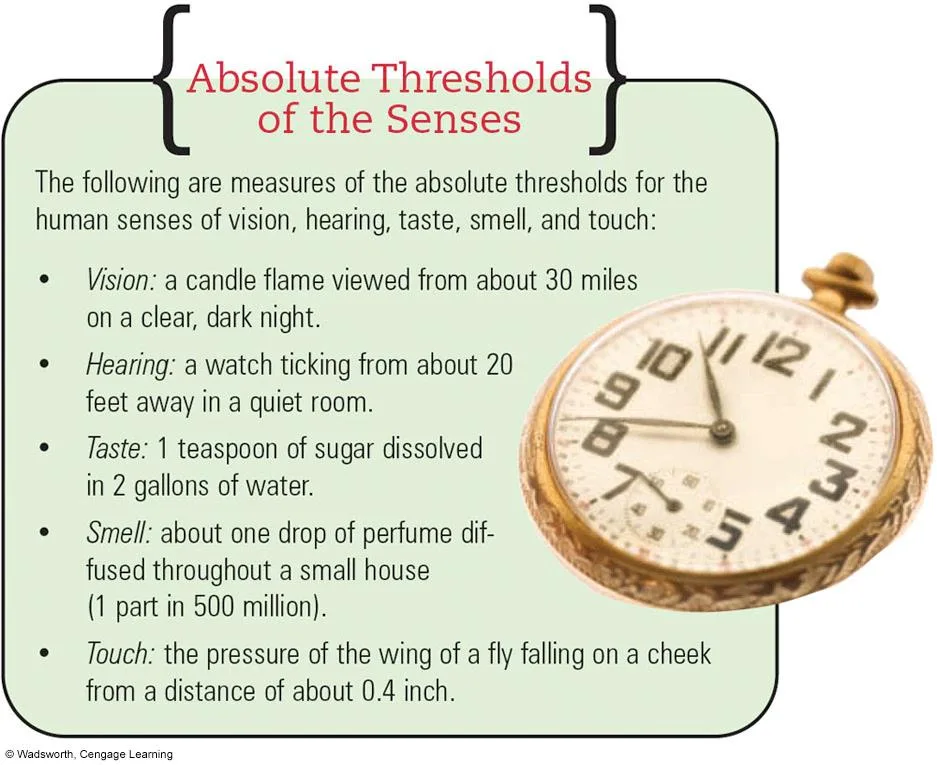
Absolute threshold (Limen) is the minimum level of stimulation
that can be detected. E.g., a cup of coffee require a certain
amount of sugar before we could detect a sweet taste.
In addition to the intensity of the stimulus, absolute threshold
is also affected by physical and psychological factors of the
individual such as response-bias.
Thus, psychologists define absolute threshold as the
minimum level of stimulation that can be detected 50 % of
the time when a stimulus is presented again and again.
/ 29
End of Document
388

FAQs

what is sensation and perception

Sensation and perception are two fundamental processes through which we experience the world around us.

Sensation involves the detection of physical stimuli by our sensory organs, which then convert these stimuli into neural messages through a process called transduction. Perception, on the other hand, is how our brain organizes and interprets these sensory signals to create meaningful experiences.

how do sensation and perception work together

Sensation and perception work together to help us understand our environment.

Sensation provides the raw data from our surroundings through our senses, while perception organizes and interprets this data. For example, when you hear music (sensation), your brain identifies the melody and rhythm (perception), allowing you to enjoy the song.

  • Sensation: Detection of stimuli.
  • Perception: Interpretation of sensory information.

what are the types of sensory thresholds

There are two main types of sensory thresholds: absolute threshold and difference threshold.

The absolute threshold is the minimum intensity of a stimulus that can be detected 50% of the time, while the difference threshold, also known as just noticeable difference (JND), is the smallest change in intensity that can be detected. These thresholds are crucial for understanding how we perceive stimuli in our environment.

  • Absolute Threshold: Minimum detectable stimulus intensity.
  • Difference Threshold: Minimum change in stimulus intensity detectable.

what is sensory adaptation

Sensory adaptation refers to the process by which our sensory receptors become less responsive to constant stimuli over time.

This phenomenon allows us to focus on changes in our environment rather than constant, unchanging stimuli. For example, if you move to a new house near a busy road, you might initially notice the sound of traffic, but over time, you may hardly notice it at all.

  • Function: Helps detect important changes.
  • Example: Not noticing a persistent smell.

how does attention affect perception

Attention plays a critical role in perception by determining which sensory inputs are selected for processing.

Our field of experience is divided into focus and margin, where items in focus are clearly perceived while those in the margin are less so. Factors influencing attention include the size, intensity, and novelty of stimuli, as well as our psychological readiness to attend to them.

  • Focus: Clear perception of stimuli.
  • Margin: Vague perception of stimuli.

what are the laws of perceptual organization

The laws of perceptual organization explain how we group visual stimuli into coherent patterns.

Key principles include the law of proximity, similarity, good figure, continuity, closure, and common fate. These laws help us make sense of complex visual information by organizing it into familiar shapes and patterns.

  • Law of Proximity: Objects close together are perceived as a group.
  • Law of Similarity: Similar items are grouped together.
  • Law of Closure: We perceive incomplete shapes as complete.

what is depth perception

Depth perception is the ability to perceive the distance of objects in our environment.

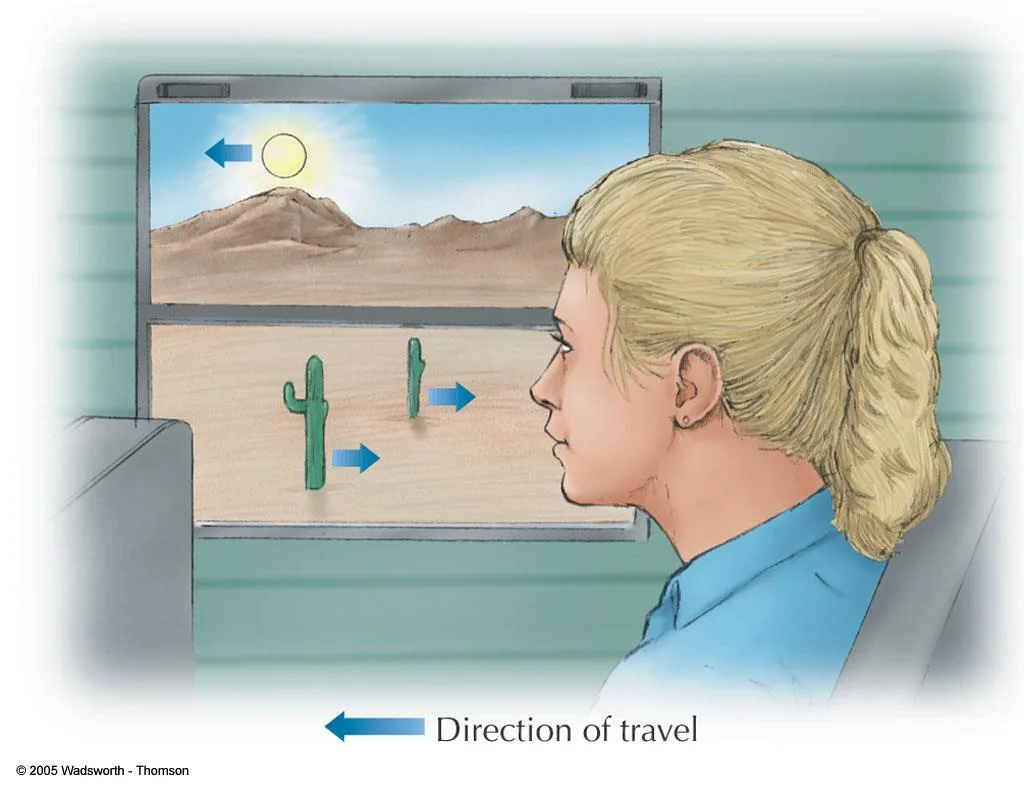
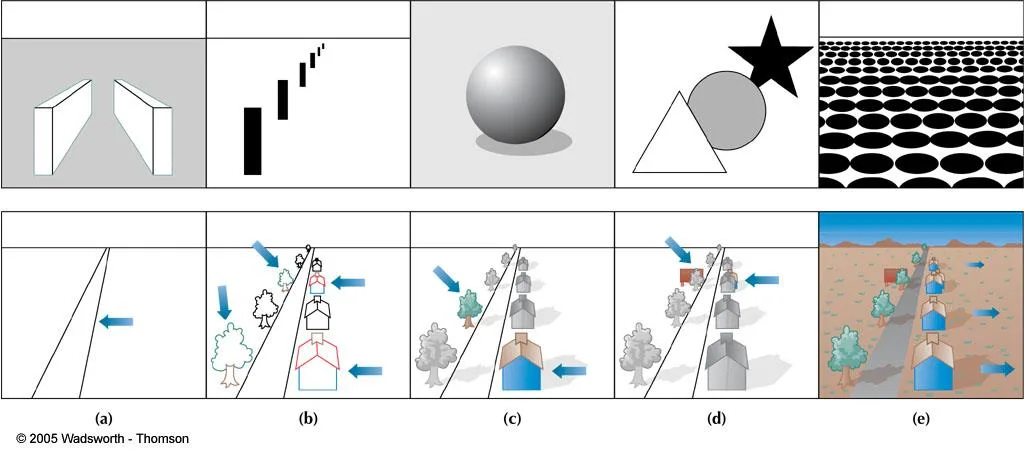
It relies on both binocular cues, which require two eyes, such as retinal disparity and convergence, and monocular cues, which require just one eye, such as motion parallax and pictorial cues. These cues help us understand the three-dimensional layout of our surroundings.

  • Binocular Cues: Retinal disparity, convergence.
  • Monocular Cues: Motion parallax, pictorial cues.

what are perceptual constancies

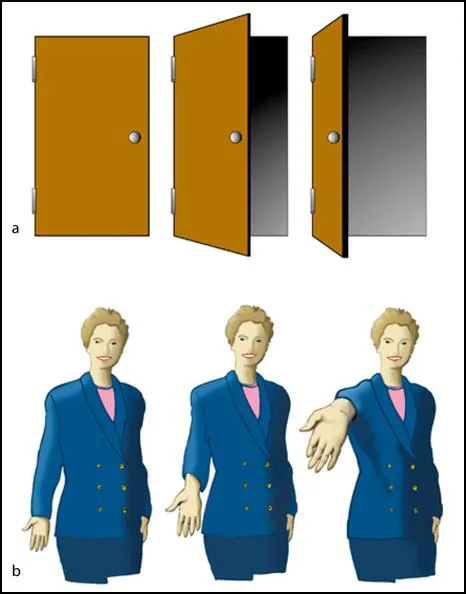
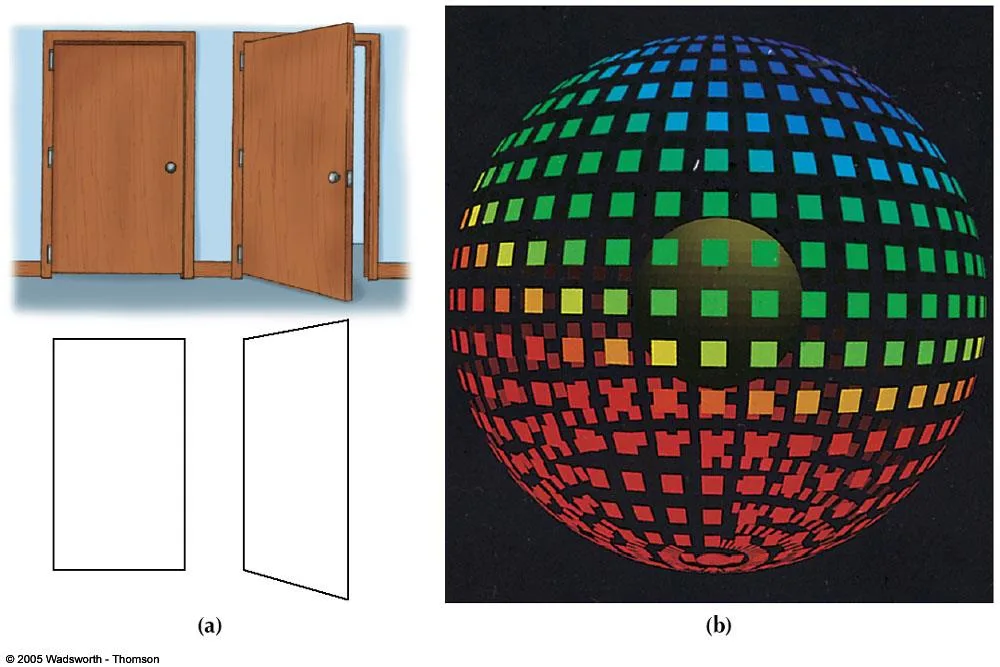
Perceptual constancies allow us to perceive objects as stable despite changes in sensory input.

This includes size constancy (interpreting size changes based on distance), shape constancy (maintaining perception of shape despite angle changes), and brightness constancy (perceiving brightness consistently despite lighting changes). These constancies are essential for navigating and understanding our environment.

  • Size Constancy: Perceived size remains constant despite distance.
  • Shape Constancy: Perceived shape remains constant despite angle.
  • Brightness Constancy: Perceived brightness remains constant despite lighting.

what are perceptual illusions

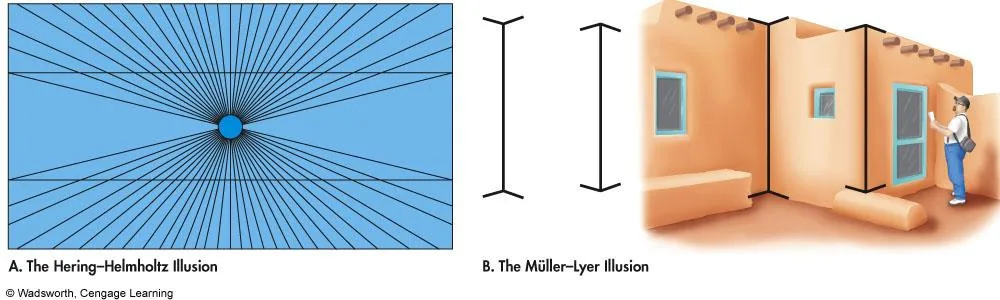
Perceptual illusions are misinterpretations of sensory information that can lead to false perceptions.

Common examples include visual or optical illusions, where physical stimuli create consistent errors in perception, such as the Müller-Lyer illusion. Understanding these illusions helps us learn about the limitations and processes of our perceptual systems.

  • Visual Illusions: Examples include the Moon illusion and Müller-Lyer illusion.
  • Auditory Hallucinations: Perceptions without corresponding reality.

what is extra sensory perception (ESP)

Extra Sensory Perception (ESP) refers to the ability to perceive information beyond the known sensory processes.

Common types of ESP include telepathy (mind reading), clairvoyance (seeing events without being present), and precognition (seeing into the future). While ESP remains a controversial topic, it captures interest in psychology and paranormal studies.

  • Telepathy: Mind reading abilities.
  • Clairvoyance: Awareness of events not present.
  • Precognition: Ability to foresee future events.