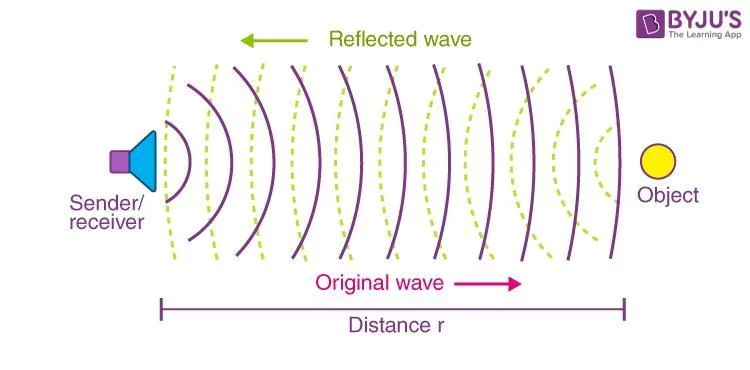
medical ultrasound, reflected sound waves from body tissues are detected and used to
form images of internal organs and structures.
2. Explain how ultrasound is produced and its use.
Production:
Ultrasound is a type of sound wave with a frequency above 20,000 Hz, which is beyond the
upper limit of human hearing. Because of its high frequency, ultrasound has many
important applications in medicine, industry, and navigation. The production of ultrasound
is based mainly on the piezoelectric effect, a phenomenon exhibited by certain crystals.
The most common method of producing ultrasound involves the use of piezoelectric
crystals such as quartz or lead zirconate titanate (PZT). When an alternating electrical
voltage is applied across a piezoelectric crystal, the crystal undergoes rapid expansion and
contraction. These repeated changes in shape cause the crystal to vibrate at very high
frequencies. If the frequency of vibration is greater than 20,000 Hz, ultrasound waves are
generated. The frequency of the ultrasound produced depends on factors such as the
thickness, size, and material properties of the crystal.
In medical ultrasound equipment, the crystal is housed within a device known as a
transducer. The transducer converts electrical energy into mechanical vibrations,
producing ultrasound waves that are directed into the body. As these waves travel through
body tissues, they encounter boundaries between different organs and tissues. Some of
the waves are reflected back as echoes, while others continue to travel deeper into the
body. The same transducer then receives the reflected echoes and converts them back into
electrical signals through the piezoelectric effect. These signals are processed by a
computer to produce detailed images of internal body structures.
The efficiency of ultrasound production depends on the resonance of the crystal. When the
frequency of the applied electrical signal matches the natural frequency of the crystal, the
amplitude of vibration increases, resulting in the production of strong ultrasound waves.
This principle is widely used in modern ultrasound devices to ensure high-quality imaging
and accurate diagnostic results.
Uses in Medicine: