The IB SEHS Internal Assessment rubric outlines the criteria for evaluating student investigations in Sport, Exercise, and Health Science. It emphasizes the importance of personal engagement, exploration, analysis, evaluation, and application of findings. Students are guided on how to formulate a focused research question and develop appropriate methodologies for data collection. This resource is essential for IB students aiming to excel in their internal assessments, providing clarity on expectations and grading criteria.

Key Points

  • Details the assessment criteria for IB SEHS Internal Assessment, focusing on personal engagement and research question formulation.
  • Explains the importance of data collection methods and ethical considerations in the investigation process.
  • Outlines the analysis and evaluation requirements for reaching valid conclusions based on collected data.
  • Provides guidance on applying investigation outcomes to broader sporting contexts.
newtopiccyclegrowin
5 pages
Language:English
Type:Lab Report
newtopiccyclegrowin
5 pages
Language:English
Type:Lab Report
52
/ 5
IB SEHS Internal Assessment Outline
This year, the IB SEHS IA will consist of ONE full lab report that you create from beginning to end. It is graded on all
parts of a lab beginning with a research question that you design and then carry out. Below is how the assessment
criteria are graded by both me and the IB Gods. If you are testing in this subject, your IA will go to the IB Gods.
Regardless of whether you are testing or not, your IA will go in the lab grade portion of this class. It is the heaviest
weighted lab of the year, so, therefore, will have the most impact on your grade for the lab category section.
As you look at the criteria on the next pages, notice the difference between how the points are rewarded based on the
depth in which you cover the criteria. It is the difference between, for example listing vs. explaining. You should refer to
your “IB Glossary of Command Terms” given to you at the beginning of the year to make sure that you are meeting the
requirements for the command statements (what does outline, state, discuss, explain mean?).
The internal assessment should take you a total of about 10 hours. This includes developing the research question,
consultation with the teacher, creating and refining the methodology (procedure) and data collection. You will need to
spend additional hours typing up the report, analyzing and concluding.
The report should be between 1,500 to 2,250 words long. Your report should not be longer than 2,250 words. You will
lose points for going over or under the
word count.
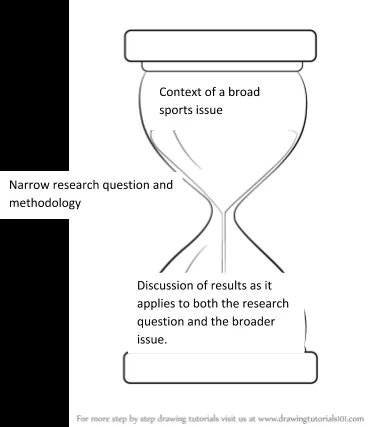
The overall structure of the report is
that of an hourglass.
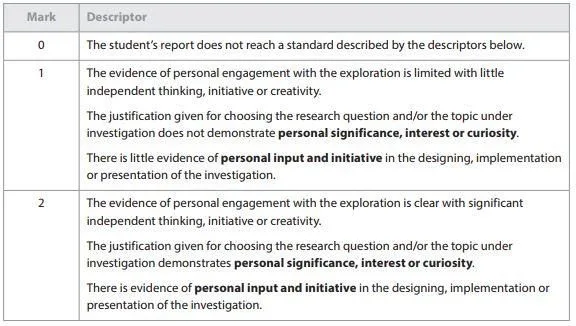
1. Personal Engagement
This criterion assesses the extent to which you establish and explore a topic or issue related to Sport, Exercise or Health
Science for an investigation and develops this to state a relevant and focused research question. Most important is why
you are interested in this.
So to get the top marks here
you need to:
Discuss and explain its
relevance within a
sporting context
Develop a
focused/marrow
research question
Explain how the issue is
linked to the research
question
Why it matters to you.
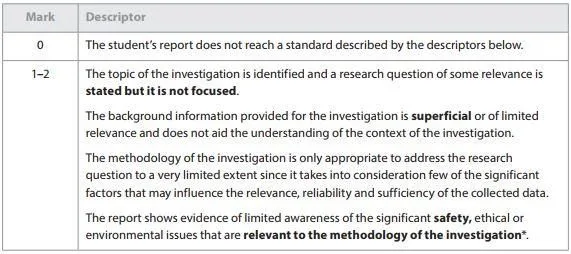
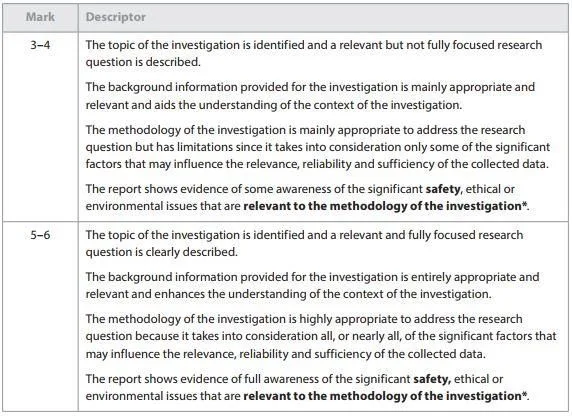
2. Exploration
This criterion assesses the extent to which the student has developed appropriate methods to gather data that is
relevant to the research question. This data could be primary or secondary, qualitative or quantitative and may utilize
techniques associated with either experiential or social science methods of inquiry. There is an assessment of safety,
environmental and ethical considerations where applicable.
So to get the top marks here you need to:
Design an appropriate way
to collect enough data to
study your research
question. Depending on
your research question; this
means you need to do as
many trials as possible/
More data = more conclusive
results.
Explain your method so that
someone else could repeat
the data collection in
another environment.
Explain why you have used
the methods you have used
Show that you have looked at any ethical issues or risks.
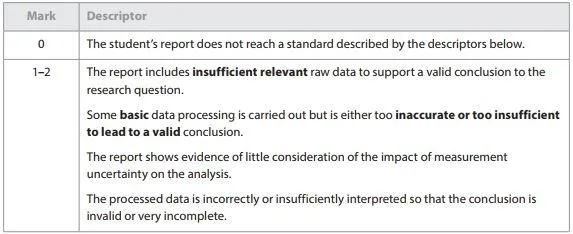
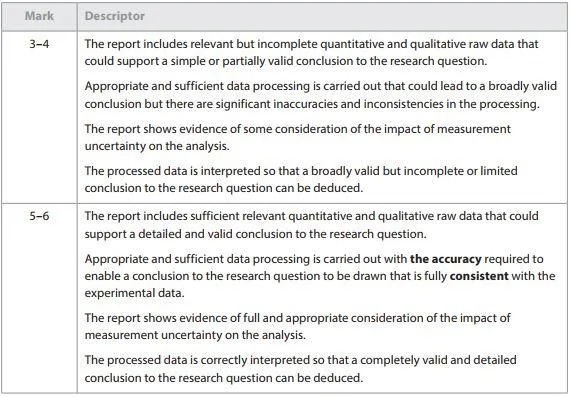
3. Analysis
This criterion assesses the extent to which you have collected, recorded, processed, and interpreted the data in ways
that are relevant to the research question. The patterns in the data are correctly interpreted in order to reach a valid
conclusion.
To get the top marks here you need to:
Record your data in a way that is clear to everyone else—remember the moderators reading your report do not know as
much about the report as you do.
Present the data in a clear way so that it helps you and others interpret it—remember axes titles and clear labels for
everything.
Spot the trends and patterns and describe and explain them
/ 5
End of Document
52

FAQs

What is the structure of the IB SEHS Internal Assessment report?
The overall structure of the IB SEHS Internal Assessment report is described as that of an hourglass. This means it starts with a broad context of a sport issue, narrows down to a focused research question, and then expands again to discuss the results in relation to the broader context. This structure helps to clearly present the investigation and its findings in a coherent manner.
What are the criteria for Personal Engagement in the IB SEHS IA?
The Personal Engagement criterion assesses how well a student establishes and explores a topic related to Sport, Exercise, or Health Science. To achieve top marks, students must discuss the relevance of their topic within a sporting context, develop a focused research question, explain the link between the issue and the research question, and articulate why the topic matters to them personally.
How should data be presented in the IB SEHS IA?
Data presentation in the IB SEHS Internal Assessment should be clear and accessible to ensure that others can interpret it easily. This includes recording data in a well-organized manner, using clear labels and titles for axes, and effectively spotting trends and patterns within the data. The clarity of data presentation is crucial for reaching valid conclusions based on the research.
What is evaluated in the Analysis criterion of the IB SEHS IA?
The Analysis criterion evaluates how well the student collects, records, processes, and interprets data relevant to the research question. To achieve high marks, students must present their data clearly, identify trends and patterns, and provide explanations for these observations. This thorough analysis is essential for drawing valid conclusions from the investigation.
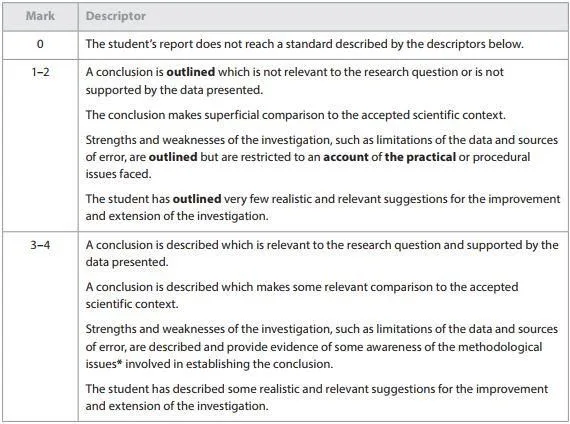
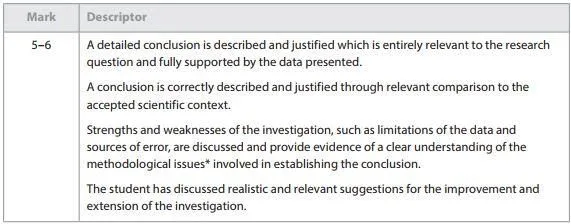
What does the Evaluation criterion focus on in the IB SEHS IA?
The Evaluation criterion focuses on the student's ability to create a conclusion that is relevant to the sporting context and evaluate the investigation itself. To earn top marks, students need to ensure their conclusion is supported by the data, even if it differs from their initial expectations, and they must also assess the effectiveness of their methods and suggest improvements for future research.
How can students demonstrate Application and Communication in their IA?
In the Application and Communication criterion, students must identify and evaluate one way to apply the outcomes of their investigation to a broader sporting context. This includes providing a solution to the problem studied, explaining its effectiveness, evaluating the investigation's strengths and weaknesses, and suggesting improvements or extensions for future research.