The Social Science Class IX Summative Assessment 1 from October 2011 evaluates students on key historical, geographical, political, and economic concepts. It covers topics such as the French Revolution, Russian Revolution, and contemporary India, providing a comprehensive assessment framework. This assessment is designed for Class IX students preparing for their examinations, focusing on critical thinking and application of knowledge. It includes multiple-choice questions, short answers, long answers, and map-related queries to ensure a well-rounded evaluation.

Key Points

  • Evaluates knowledge on the French and Russian Revolutions for Class IX students.
  • Includes multiple-choice, short answer, long answer, and map questions.
  • Covers contemporary India and democratic politics in the assessment.
  • Designed to enhance critical thinking and application of social science concepts.
ARTI KANNAUJIYA
16 pages
Language:English
Type:Past Paper
ARTI KANNAUJIYA
16 pages
Language:English
Type:Past Paper
87
/ 16
1
Sample Question Paper
SOCIAL SCIENCE
Class-IX
Summative Assessment-1
October 2011
Design of Question paper
TIME : 3 Hrs MM : 90
1. WEIGHTAGE TO FORM OF QUESTIONS
Form of Questions Marks of Number of Total Marks
Each Question Questions
1. M.C.Q. 1 10 10
2. Short Answer (S.A.) 3 12 36
3. Long Answer (L.A.) 5 8 40
4. Map Question 4 1 04
Total - 31 90
2. UNIT-WISE DIVISION OF QUESTIONS
Unit No. (Subject) Unit- No. of No. of No. of Map Total
wise 1 mark 3 marks 5 marks Question
Marks Questions Questions Questions
1. India and the
Contemporary 23 2 2 3 - 23 (7)
World I (History)
2. Contemporary
India I (Geography) 23 2 4 1 1 23 (8)
3. Democratic
Politics I (Pol. Sc.) 22 3 3 2 - 22 (8)
4. Economics I 22 3 3 2 - 22(8)
TOTAL 90 10 12 8 1 90(31)
2
SOCIAL SCIENCE SYLLABUS
CLASS IX
Term-I (April to September 2011)
Time : 3 hours Maximum Marks : 90
UNIT 1 (HISTORY ) India and the Contemporary World - I
Section 1 : Events and Processes
1. The French Revolution (Chapter 1) Compulsory
2. Russian Revolution (Chapter 2)
OR OR
3. Rise of Nazism (Chapter 3)
UNIT 2 (GEOGRAPHY) : India-Land and the People
1 India (Chapter 1 and 2)
2 Drainage (Chapter 3)
UNIT 3 (POLITICAL SCIENCE) : Democratic Politics - I
1 What is Democracy? Why Democracy? (Chapter 1 and 2)
2 Designing of democracy in India (Chapter 3)
UNIT 4 (ECONOMICS) : Understanding Economic Development - I
1 The economic Story of Palampore (Chapter 1)
2 People as Resource (Chapter 2)
UNIT 5 DISASTER MANAGEMENT (For projects and Assignments only)
1 Introduction to Disaster Management (Chapter 1)
2 Common Hazards (Chapter 2)
Note : (i) Chapter 1 and 2 of Disaster Management are meant for project and assign-
ments only to be assessed through Formative Assessment.
(ii) Page 10-18 (Part 1.3 and 1.4) of Democratic Politics - 1 are to be assessed
through Formative Assessment only.
3
TERM-I
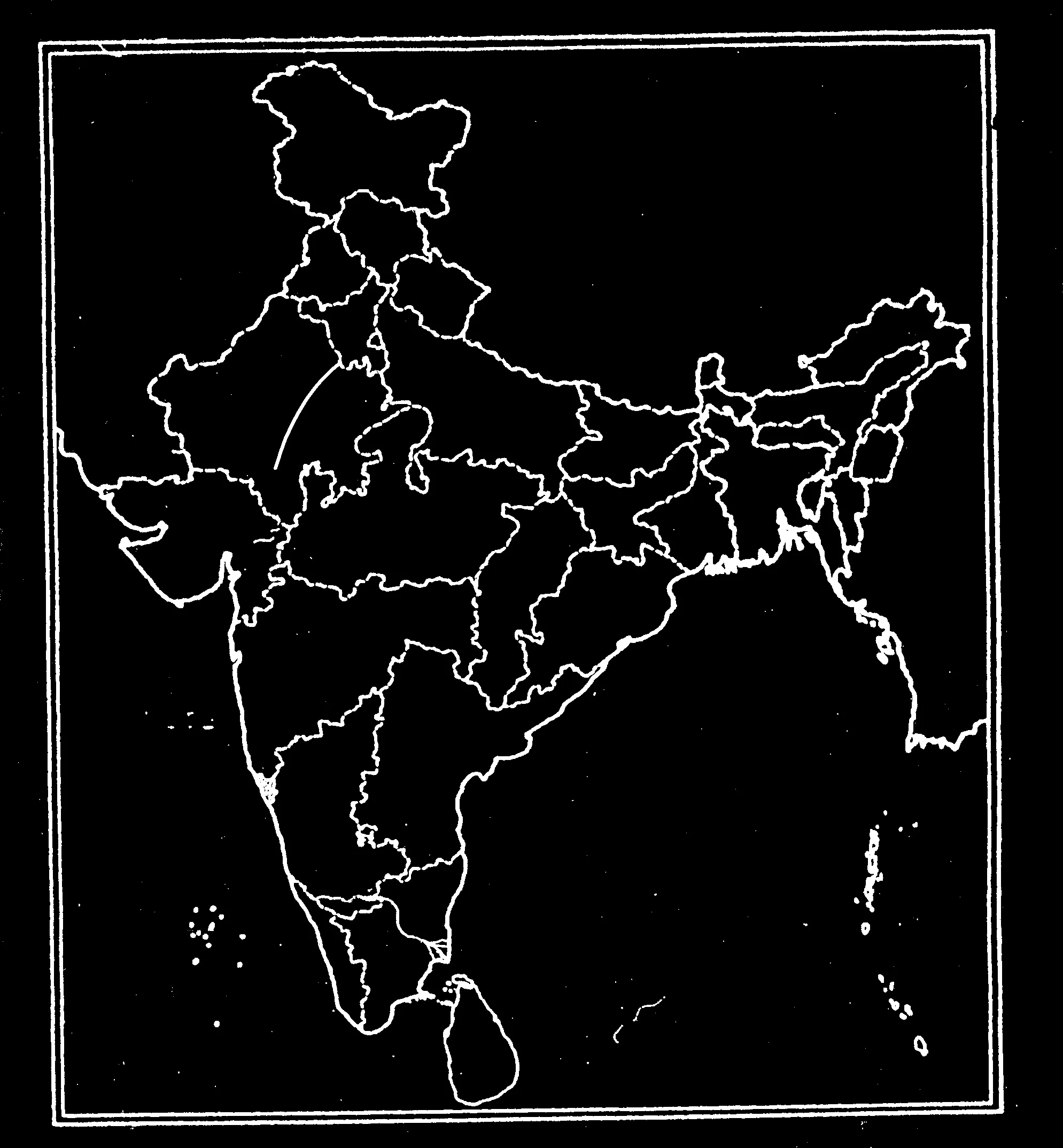
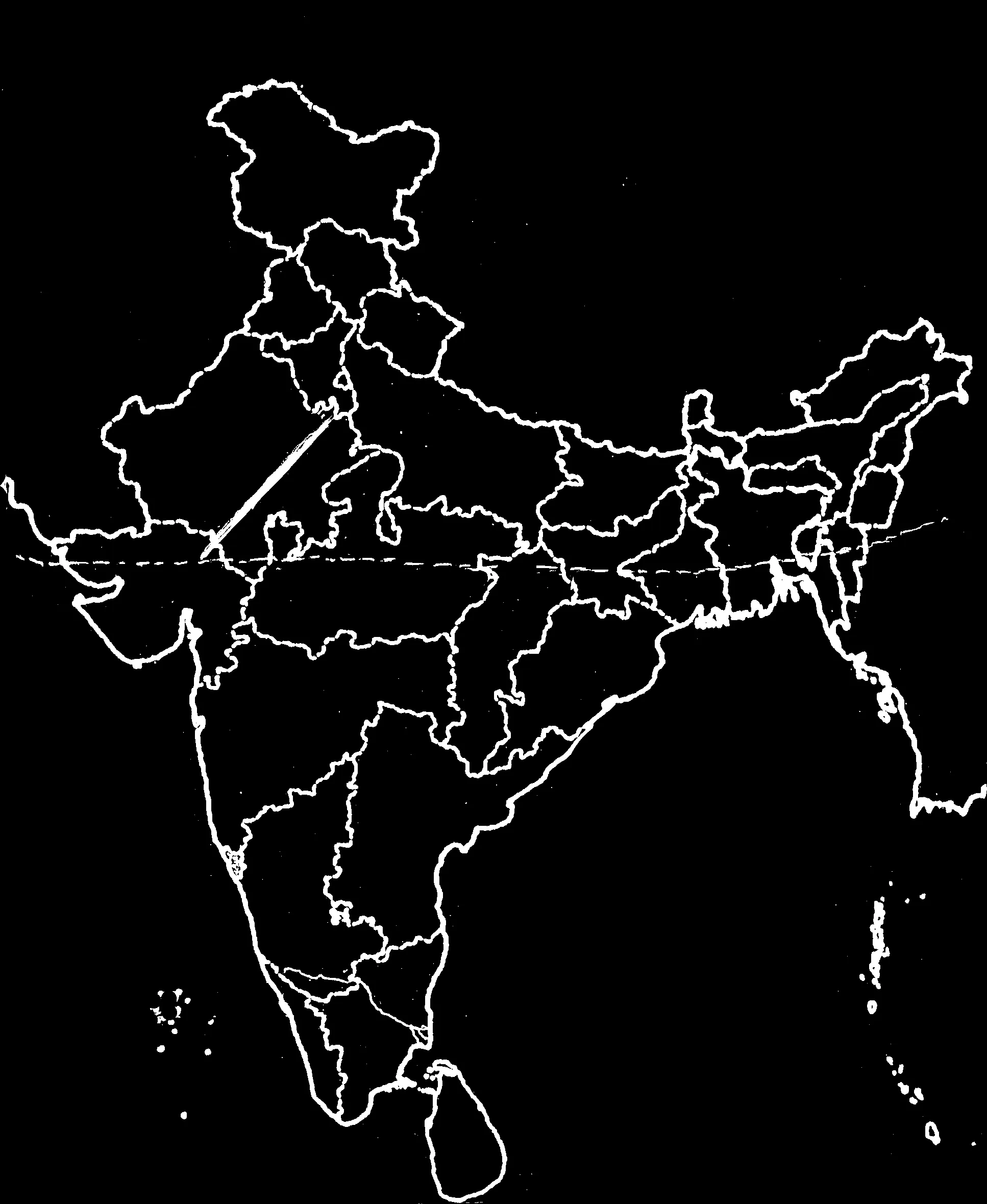
List of Map Items
(For Identification and Locating and labelling on
the political outline map of India)
CHAPTER 1: India - Size & Location
For locating and labelling : Tropic of Cancer, Standard Meridian of India, Southern most
point of India, Southern most point of mainland of India, Northern most point of India, Eastern
most meridian of India, Western most Meridian of India.
CHAPTER 2 : Physical Features of India
(a) For locating & labelling
(i) Mt. peaks : K2, Kanchenjunga, Nanda Devi, Anai Mudi and Nanga Parbat
(ii) Passes : Bomdi-La and Shipkila.
(iii) Hills : Garo, Khasi, Jaintia, Naga Hills, Mizo Hills and Nilgiri
(b) For identification :
(i) Mountain ranges : The Karakoram, Zaskar, Shivaliks, Aravali, Vindhya, Satpura,
Western Ghats and Eastern Ghats,
(ii) Plateaus : Deccan plateau, Chotanagpur plateau and Malwa plateau.
(iii) Coastal strips : Coromandel, Northern Circar, Malabar and Konkan.
Chapter 3 : Drainage
(a) For Locating & labelling :
(i) Lakes : Chilka, Pulicat, Kolleru, Vembanad and Sambhar.
(b) For identification :
(i) Rivers : Indus, Ganga, Brahmaputra, Satluj, Narmada, Tapi, Mahanadi, Godavari,
Krishna and Kaveri.
The map question will consist of
(1) Two items for identificaton.
and
(2) Two items for locating and labelling to be marked in the same map
Note : Items for locating and labelling may also be asked for identification.
/ 16
End of Document
87

FAQs

What are the main topics covered in the Social Science syllabus for Class IX?
The Social Science syllabus for Class IX includes four main units: History, Geography, Political Science, and Economics. Unit 1 focuses on 'India and the Contemporary World - I,' covering events like the French Revolution and the Russian Revolution. Unit 2 is about 'India - Land and the People,' discussing physical features and drainage. Unit 3 explores 'Democratic Politics - I,' which includes the nature of democracy and constitutional design. Lastly, Unit 4 addresses 'Understanding Economic Development - I,' highlighting topics such as the economic story of Palampore and the concept of people as resources.
What types of questions are included in the Summative Assessment for Class IX Social Science?
The Summative Assessment for Class IX Social Science consists of multiple choice questions (MCQs), short answer questions (SA), long answer questions (LA), and map-related questions. Specifically, there are 10 MCQs worth 1 mark each, 12 short answer questions worth 3 marks each, 8 long answer questions worth 5 marks each, and 1 map question worth 4 marks. This structure ensures a comprehensive evaluation of students' understanding of the subject matter.
What is the significance of the 'April Theses' in the context of the Russian Revolution?
Lenin's 'April Theses' played a crucial role in the Russian Revolution by outlining three key demands: the immediate end to the war, the transfer of land to the peasants, and the nationalization of banks. These demands aimed to address the needs of the working class and peasantry, galvanizing support for the Bolshevik movement. The 'April Theses' emphasized the necessity of a radical change in governance, which resonated with the widespread discontent among the Russian populace during the tumultuous period following World War I.
What are the characteristics of the Northern most range of the Himalayas?
The Northern most range of the Himalayas, known as the Himadri or Greater Himalaya, is characterized by its continuous stretch and the presence of the loftiest peaks, averaging around 6000 meters in height. This range is primarily composed of granite and is perennially snow-bound, contributing to its unique climatic conditions. The asymmetrical folds of the Himadri highlight its geological significance, making it a critical area for both ecological studies and geographical understanding.
What are the main features of Stalin's collectivization program?
Stalin's collectivization program aimed to consolidate individual landholdings into collective farms, known as Kolkhozes. This program forced peasants to work on collective farms, where the bulk of land and agricultural implements were transferred to collective ownership. The initiative faced resistance, leading to severe repercussions for those who opposed it, including deportation and imprisonment. The collectivization process significantly altered the agricultural landscape of the Soviet Union, aiming to increase production efficiency and state control over agriculture.
Which rivers are significant in the drainage system of India according to the syllabus?
The drainage system of India includes several significant rivers, as outlined in the syllabus. Major rivers such as the Indus, Ganga, Brahmaputra, and others like the Narmada, Tapi, Mahanadi, Godavari, Krishna, and Kaveri are highlighted. These rivers play a crucial role in the geography and ecology of India, influencing agriculture, transportation, and cultural practices. Understanding these rivers is essential for comprehending India's physical geography and resource management.
What are the arguments against democracy mentioned in the assessment?
The assessment outlines several arguments against democracy, including the potential for instability due to frequent changes in leadership. Critics argue that democracy can lead to corruption as it relies on electoral competition, and elected leaders may not always act in the best interests of the populace, resulting in poor decision-making. Additionally, the democratic process can delay important decisions, which may hinder timely governance and effective policy implementation.