Physics Investigatory Project: Transformer Voltage Ratio
The physics investigatory project explores the relationship between output and input voltage in a transformer, focusing on the number of turns in the primary and secondary coils. Conducted by Shantanu Gupta under the guidance of Krishn K. Viswakarma, this project includes detailed experimental procedures, observations, and analysis. It is designed for students studying physics at the 12th-grade level, particularly those interested in electrical engineering concepts. The project demonstrates the principles of mutual induction and electromagnetic induction through practical experimentation.
Key Points
Investigates the relationship between transformer voltage and coil turns.
Includes experimental setup and detailed procedure for measuring voltages.
Demonstrates principles of mutual induction in electrical engineering.
Provides observations and results that confirm transformer equations.
This link leads to an external site. We do not know or endorse its content, and are not responsible for its safety. Click the link to proceed only if you trust this site.
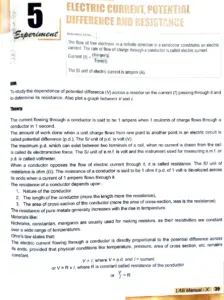
Physics Practical: Electric Current, Potential Difference, and ResistanceLab Report
PDF
Project Mary Hail: A Sci-Fi Exploration of Consciousness
PDF
Chemistry Investigatory Project on Acetic Acid in Vinegar
PDF
AP Physics 2 Equations Sheet for Exam Preparation
PDF
AP Physics 1 Equations Sheet for Exam Preparation
PDFLab Report
Data Science and Analytics Laboratory GuideLab Report
PDFLab Report
Programming for Problem Solving Lab Manual BCS-151Lab Report
PDFLab Report
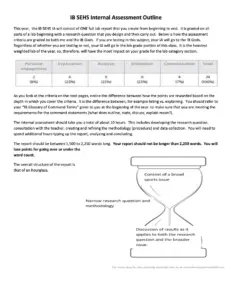
IB SEHS Internal Assessment Rubric and GuidelinesLab Report
PDFLecture Notes
Fish Migration NotesLecture Notes
PDFPast Paper
Physics Unit 5 Question PaperPast Paper
PDFPast Paper
Pearson Edexcel International Advanced Level Physics Mark Scheme Summer 2025Past Paper
PDFGuide
Eleven Labs: Voice Generation Techniques and ApplicationsGuide
FAQs
What is the aim of the physics investigatory project on transformers?
The aim of the project is to investigate the relation between the ratio of output voltage to input voltage and the number of turns in the secondary coil and primary coil of a self-designed transformer. This exploration helps in understanding how transformers function and the principles behind their operation.
What apparatus is required for the transformer experiment?
The apparatus required for the experiment includes a soft iron core, insulated copper wire, an AC power supply, a voltmeter (AC), connecting wires, and a switch. These components are essential for constructing the transformer and measuring the voltages accurately during the experiment.
What principle does the transformer operate on?
The transformer operates on the principle of electromagnetic induction. The relationship between the secondary voltage (Vs) and primary voltage (Vp) is given by the equation Vs/Vp = Ns/Np, where Ns is the number of turns in the secondary coil and Np is the number of turns in the primary coil. This principle is fundamental in understanding how transformers can step up or step down voltage.
What were the results of the voltage ratio experiments?
The results of the experiments showed that the ratio of output voltage to input voltage is directly proportional to the ratio of the number of turns in the secondary coil to the primary coil. For example, in one trial with 100 primary turns and 200 secondary turns, the output voltage was 12V, resulting in a ratio of 2. This confirms the theoretical relationship outlined in the project.
What precautions should be taken during the transformer experiment?
Precautions during the experiment include using only an AC supply, ensuring tight connections, not exceeding the rated voltage, and handling wires carefully. These measures are crucial to ensure safety and the accuracy of the experimental results.
What are some applications of transformers mentioned in the project?
The project highlights several applications of transformers, including power transmission, mobile chargers, adapters, and electrical substations. These applications demonstrate the importance of transformers in everyday electrical systems and their role in efficiently managing voltage levels.
What sources of error were identified in the transformer experiment?
The sources of error identified in the experiment include energy losses due to heat, imperfect magnetic coupling, and instrumental errors. Recognizing these potential errors is important for improving the accuracy and reliability of experimental outcomes.