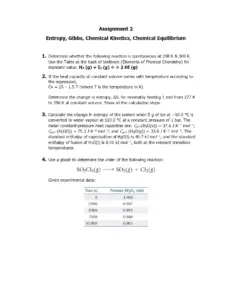
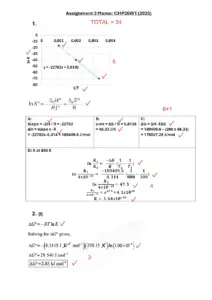
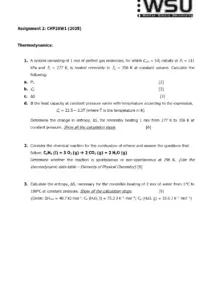
Physical Chemistry II Assignment 1 for 2024 focuses on thermodynamic processes involving ideal gases. It includes calculations for internal energy changes, work done, and enthalpy variations. This assignment is designed for students studying physical chemistry at the university level. It covers key concepts such as isothermal compression and free expansion, providing a comprehensive understanding of gas behavior under various conditions. Ideal for students preparing for exams or seeking to reinforce their knowledge in thermodynamics.

Key Points

  • Calculates internal energy change for ideal gas processes.
  • Explores work done during isothermal compression.
  • Determines enthalpy changes using variable heat capacities.
  • Covers free expansion of gases in thermodynamic systems.
Sihle Usisa mpongwana
2 pages
Language:English
Type:Assignment
Sihle Usisa mpongwana
2 pages
Language:English
Type:Assignment
312
/ 2
Physical Chemistry II: CHP26W1 (2024)
Assignment 1 (72 Marks)
Important: If you have challenges, ask!!!!!
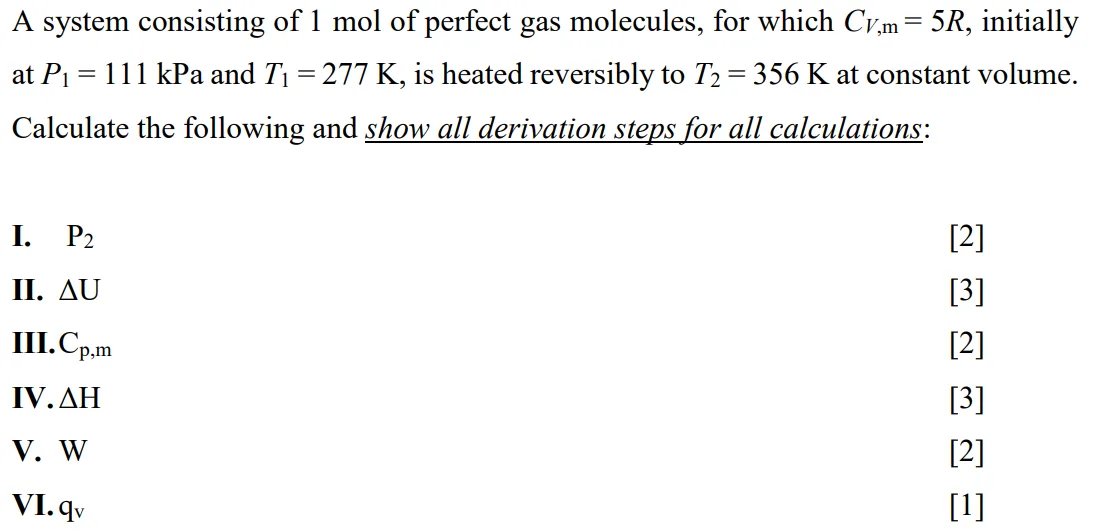
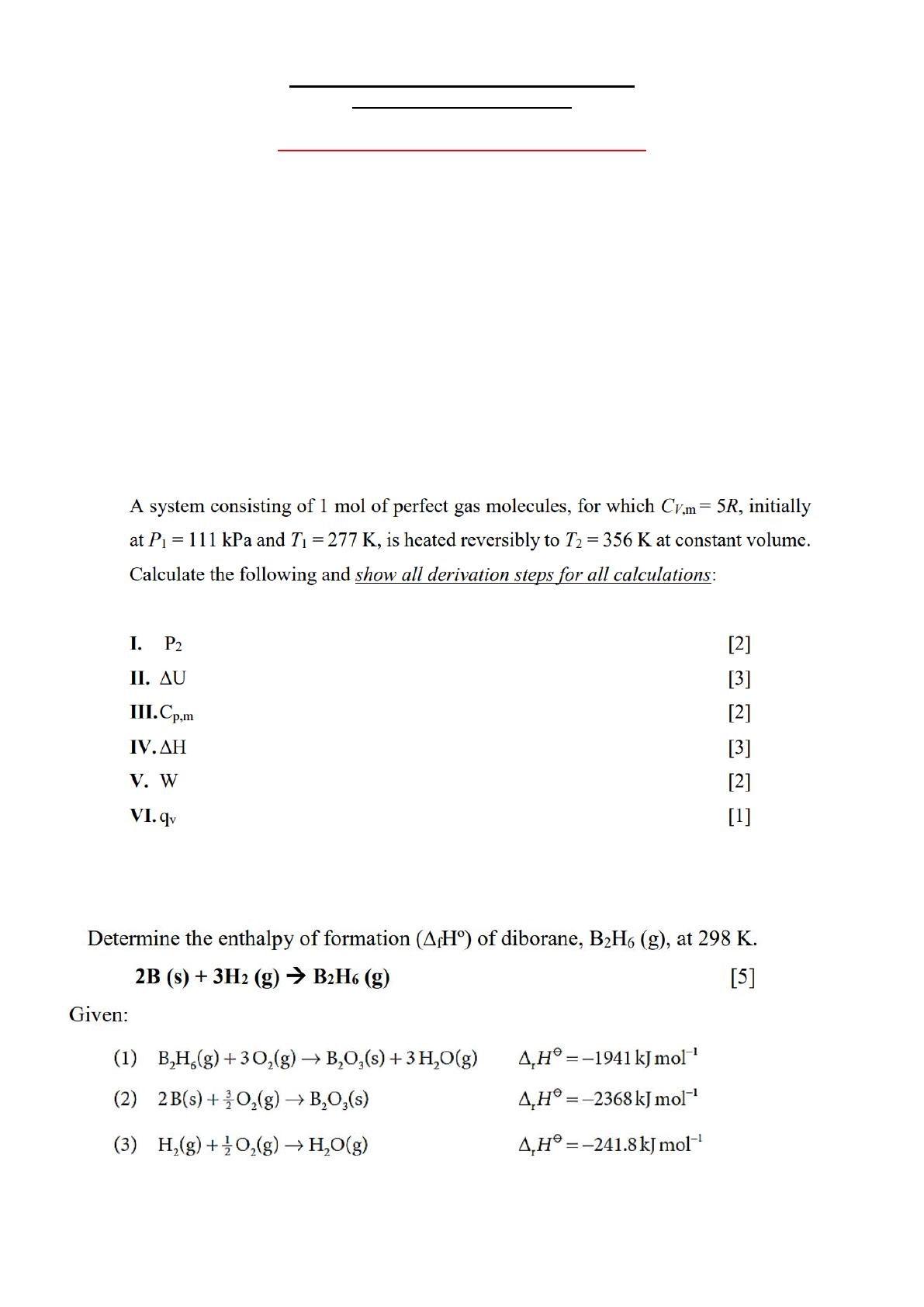
1. One (1) mole of ideal gas molecules with C
V
= 41.5 JK
-1
mol
-1
is initially held at P
1
= 111 kPa and
T
1
= 277 K. The gas is taken through the following processes: It is first heated reversibly to T
2
=
356 K at constant volume, then it is reversibly compressed isothermally from 0.5 m
3
to 0.1 m
3
,
then
it is finally allowed to expand freely.
Calculate the following parameters:
a. ΔU [3]
b. w, derive all equation used. [8]
c. H, if the heat capacity at constant pressure varies with temperature according to the
expression, C
p
= 23.5 3.3T (where T is the temperature in K) [5]
2.
3.
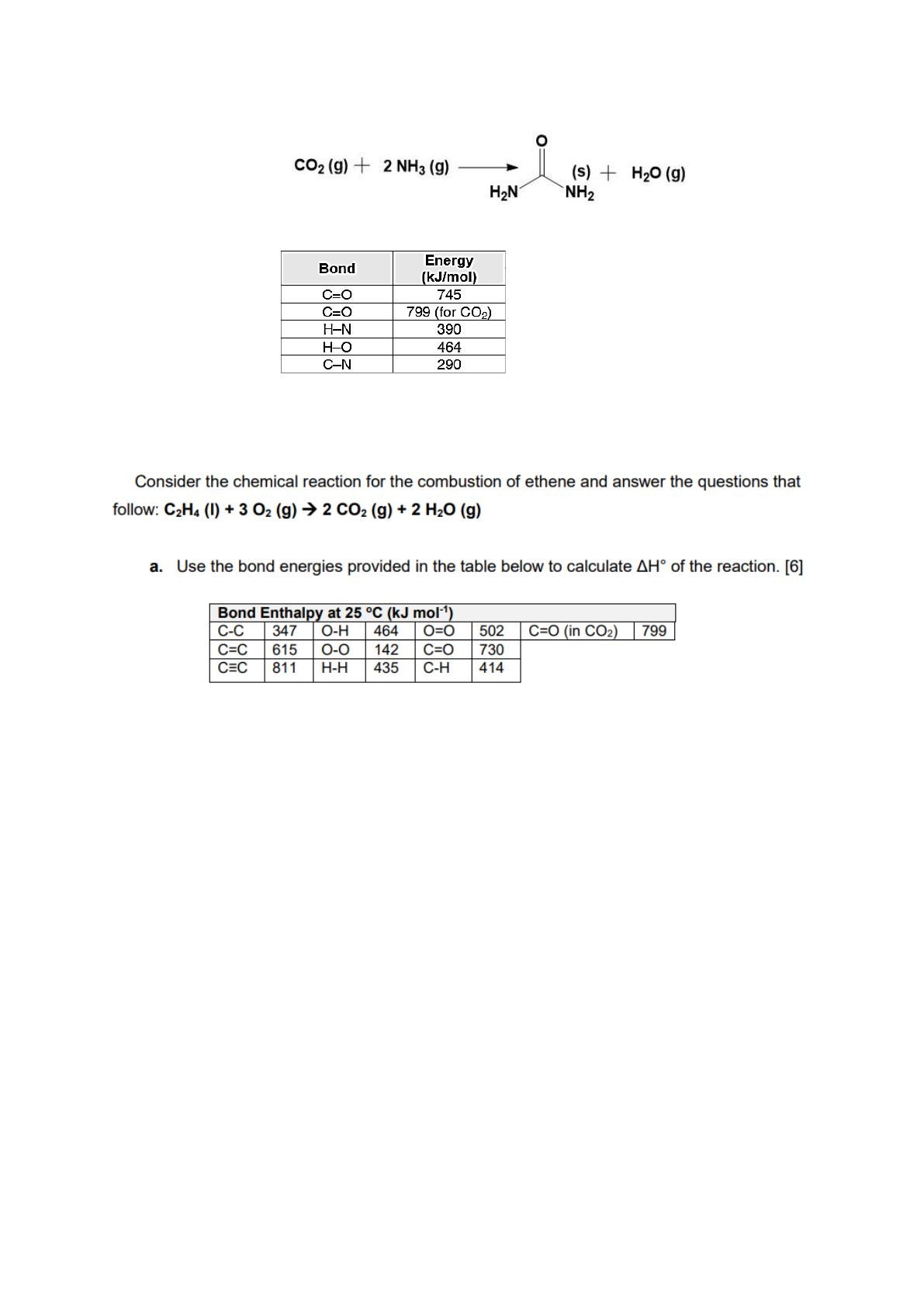
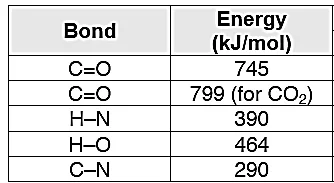
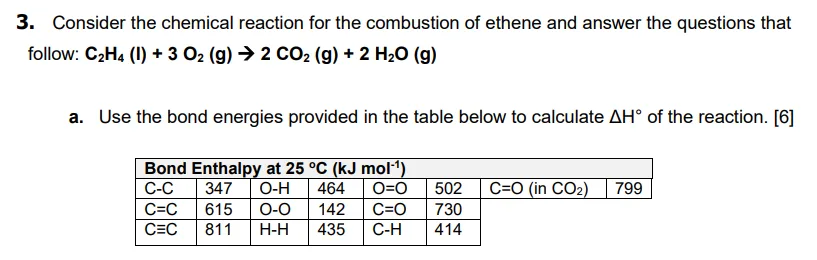
4. Using the average bond energy values given in the table below, calculate the value of ΔH
for the formation of urea, CO(NH
2
)
2
, in the following reaction: [8]
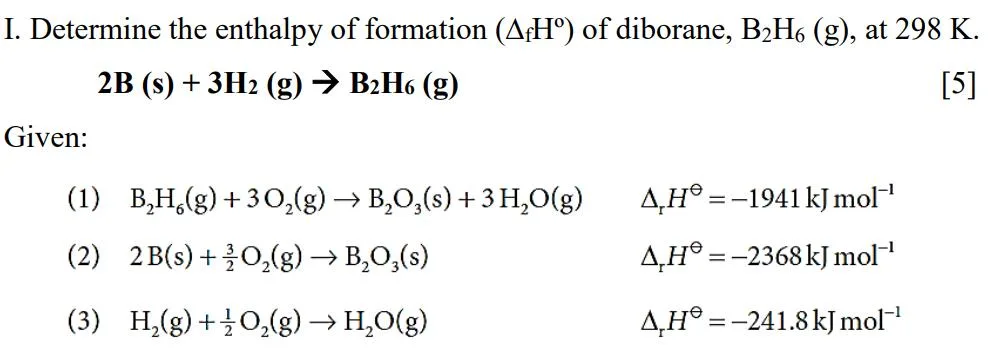
5. Use the thermodynamic data table and calculate the ∆
f
H° for the reaction in No 4. [3]
6.
7. Calcium carbide (CaC2) reacts with water to form acetylene and carbon hydroxide
(Ca(OH)2) according to the reaction given below.
CaC
2
(s) + 2 H
2
O (l) Ca(OH)
2
(s) + C
2
H
2
(g)
Answer the questions below.
a. Use the thermodynamic data table and calculate the
f
for the reaction. [3]
b. Calculate ∆U° at 298 K. [3]
c. Calculate the ∆H at 300 K. [6]
8. Determine the ∆U for reversibly heating 1 mol H
2
(g) from 7°C to 70°C.
[9]
Given: C
p
(H
2
(g)) = 20 2T + 0.1/T
2
***Marks = 72 Marks***
/ 2
End of Document
312

FAQs

what is Physical Chemistry II Assignment 1 2024 about

The Physical Chemistry II Assignment 1 2024 focuses on various thermodynamic processes involving ideal gases and calculations related to internal energy, work, and enthalpy.

  • It includes problems on heating, isothermal compression, and free expansion of gases.
  • Key topics covered include the calculation of ΔU, work done, and variations in heat capacity.
  • The assignment also explores the enthalpy of formation for specific reactions, providing a comprehensive understanding of physical chemistry principles.

how to calculate ΔU in Physical Chemistry II Assignment 1 2024

To calculate ΔU in the Physical Chemistry II Assignment 1 2024, you will use the formula ΔU = nC_VΔT, where n is the number of moles, C_V is the molar heat capacity at constant volume, and ΔT is the change in temperature.

  • Given that 1 mole of gas has C_V = 41.5 J/K·mol and the temperature changes from 277 K to 356 K, the calculation is straightforward.
  • Substituting the values, you find ΔU = 1 mol * 41.5 J/K·mol * (356 K - 277 K).
  • This approach allows you to determine the change in internal energy for the gas during the heating process.

what are the key processes in Physical Chemistry II Assignment 1 2024

The key processes in the Physical Chemistry II Assignment 1 2024 include heating at constant volume, isothermal compression, and free expansion of an ideal gas.

  • Heating is done reversibly, increasing the temperature from 277 K to 356 K.
  • The isothermal compression occurs between volumes of 0.5 m³ and 0.1 m³, maintaining constant temperature.
  • Finally, the gas undergoes free expansion, which is an irreversible process.

how to find enthalpy change in Physical Chemistry II Assignment 1 2024

To find the enthalpy change (∆H) in the Physical Chemistry II Assignment 1 2024, you can use the formula ∆H = ∆U + ∆(PV), where ∆U is the change in internal energy and ∆(PV) accounts for pressure-volume work.

  • In cases where heat capacity varies with temperature, you may need to integrate the heat capacity function over the temperature range.
  • The assignment provides specific expressions for Cp, which can be used to calculate ∆H accurately.
  • Understanding these relationships is crucial for solving thermodynamic problems effectively.

what is the significance of ideal gas in Physical Chemistry II Assignment 1 2024

The significance of the ideal gas model in the Physical Chemistry II Assignment 1 2024 lies in its simplification of real gas behavior, allowing for easier calculations of thermodynamic properties.

  • Ideal gases follow the ideal gas law, PV = nRT, which simplifies the analysis of processes like heating and compression.
  • This model helps in understanding concepts such as internal energy, enthalpy, and work done during various thermodynamic processes.
  • By applying the ideal gas assumptions, students can focus on the fundamental principles of physical chemistry without the complexities of real gas interactions.