This quiz for grades 7 to 9 covers essential topics in geography, history, science, and mathematics, designed for students preparing for assessments in May 2026. It includes questions on geographical features, historical events, scientific principles, and mathematical concepts. Ideal for educators and students seeking comprehensive review materials, this quiz helps reinforce knowledge across multiple subjects. Each section is tailored to align with curriculum standards for middle school education.

Key Points

  • Includes questions on geography, history, science, and math for grades 7 to 9.
  • Covers essential topics such as the capital of South Africa and the boiling point of water.
  • Designed for students preparing for May 2026 assessments.
  • Offers a variety of question formats to test knowledge and understanding.
Blessing Ruvimbo
12 pages
Language:English
Type:Study Guide
Blessing Ruvimbo
12 pages
Language:English
Type:Study Guide
265
/ 12
EX CELLA ACADEMY
GRADE S 7 to 9 QUIZ
May 2026
_________________________________________________________________________ _________
Geograph y
1. What is the capital city of South Africa's administrative government?
Answer: Pret oria
2. Name the largest ocean in the world.
Answer: Pacific Ocean
3. What do we call molten rock beneath the Earth’s surface?
Answer: Magma
4. Which line divides the Earth into Northern and Southern Hemispheres?
Answer: Equa tor
5. What instrument measures earthquakes?
Answer: S eismograph
6. What is the process by which water changes into vapour?
Answer: Evaporation
7. Name the longest river in the world.
Answer: Nile R iver
8. What is a population pyramid used for?
Answer: S howing age an d sex structure of a population
9. What do we call people moving from one country to another?
Answer: Migration
10. Which continent is the Sahara Des ert found on?
Answer: Afri ca
11. What is overpopulation?
Answer: When peop le exceed ava ilable resources
12. Name the layer of gases surrounding Earth.
Answer: Atmosphere
13. What is the source of a river?
Answer : The starting point, usually in highlands or mountains
14. Name the process where a river drops its load of sediment.
Answer : Deposition
15. What landform is created when a river deposits sediment at its mouth?
Answer : A delta
16. What instrument measures rainfall?
Answer: Rain gauge
17. What instrument measures wind speed?
Answer : Anemometer
18. What do we call the average weather conditions in a place over 30 years?
Answer : Climate
19. What type of cloud produces heavy rain and thunderstorms?
Answer : Cumulonimbus
20. In which climate zone are tropical rainforests found?
Answer : Equatorial climate zone
21. Name one country with a large area of tro pical rainforest.
Answer : Brazil / DRC / Indonesia
22.. What is the top layer of the rainforest called?
Answer : Emergent layer
23. What is the process of cutting down large areas of forest called?
Answer : Defore statration
24.. What is the daily range of temperature like in hot deser ts?
Answer : Very large / Hot days and cold nights
25 . Name one adaptation plants have to survive in hot deserts.
Answer : Thick waxy leaves / Lo ng roots / Store water in stems
26. What is the name of the largest island in the world?
Answer : Greenland
27. What is the number o f live births per 1000 people in year called?
Answer : Birth rate
29. What is the term for shaking of the Earth’s crust?
Answer: Earthqua ke
30. What is a settlement?
Answer: A place wher e people live
______________________________________________________________________________________________
History
1. What event directly triggered the start of World War I in 1914?
A. Germany invading Poland
B. The sinking of the Titanic
C. The assassination of Archduke Franz Ferdinand
D. The Russian Revolution
Answer : C. The assassination of Ar chduke Franz Ferdinand.
2. Which weapons were used on a large scale fo r the first time in World War I?
A. Nuclear weapons
B. Swords and bows
C. Cannons only
D. Machine guns, poison gas, tanks, airplanes, submarines
Answer : D. Machine guns,poison gas,tanks,airplanes,submarines
3. In World War I context, what did "nationalism" mean?
Answer : Extreme pride in ones na tion and desire for independence
4. How did imperialism cause tension before World War 1?
Answer : Powers comp eted to control colonies in Africa and Asia
5. The treaty that officially ended World War I was called ..........
Answer : Tr eaty of Versailles
6. What does M.A.I.N stand for ?
Answer : Millitarism,Alliance sy stem,Imperalism,Nationalism
7. "Militarism" contributed to World War 1 by:
A. Reducing t he size of European armies
B. Stopping colonial expansion
C. Encouraging arms races and making war seem acceptable
D. Promoting peace talks between nations
Answer : C. Encouragin g arms races and making war seem ac ceptable
8. Why did the USA enter World W ar I in 1917?
A. Britain declared war on the USA
B. Russia asked for help
C. Germany attacked New York
D. Due to unrestricted submarine warfare and the Zimmermann T elegram
Answer : D. Due to unres tric ted submarine warfare and the Zimmermann Telegram
9. Which were the two main alliance sys tems before World War I?
Answer : Triple Entente a nd Triple Alliance
10. One major social effect of World War I on women was:
Answer : More women entered the workforce and gained voting rights
11. The two sides in Wo rld War I were:
Answer : Allies and Central Powers
12.The League of Nations was:
/ 12
End of Document
265

FAQs

what is the capital city of South Africa's administrative government in the Grades 7 to 9 Geography, History, Science, and Math Quiz May 2026

The capital city of South Africa's administrative government is Pretoria.

  • South Africa has three capital cities: Pretoria (administrative), Bloemfontein (judicial), and Cape Town (legislative).
  • Pretoria is located in the northern part of Gauteng province.
  • The city is known for its historical significance and beautiful jacaranda trees.

what are the key topics covered in the Grades 7 to 9 Geography, History, Science, and Math Quiz May 2026

The Grades 7 to 9 Quiz covers essential topics in Geography, History, Science, and Math.

  • Geography: Includes questions about capitals, rivers, climates, and geographical processes.
  • History: Focuses on significant events like World War I and its causes.
  • Science: Covers fundamental concepts such as the water cycle, ecosystems, and human anatomy.
  • Math: Involves arithmetic, geometry, and basic algebra.

what is the longest river in the world according to the Grades 7 to 9 Geography, History, Science, and Math Quiz May 2026

The longest river in the world is the Nile River.

  • The Nile flows through northeastern Africa, primarily through countries like Egypt and Sudan.
  • It is approximately 6,650 kilometers (4,130 miles) long.
  • The river has been an essential water source for civilizations throughout history.

what is photosynthesis in the Grades 7 to 9 Geography, History, Science, and Math Quiz May 2026

Photosynthesis is the process by which plants make food using sunlight.

  • During photosynthesis, plants convert carbon dioxide and water into glucose and oxygen.
  • This process occurs mainly in the leaves, utilizing chlorophyll to capture sunlight.
  • Photosynthesis is crucial for life on Earth as it produces oxygen and serves as the foundation of the food chain.

what does the Treaty of Versailles signify in the Grades 7 to 9 Geography, History, Science, and Math Quiz May 2026

The Treaty of Versailles officially ended World War I.

  • Signed in 1919, it imposed heavy reparations and territorial losses on Germany.
  • The treaty aimed to prevent future conflicts but is often criticized for sowing the seeds of World War II.
  • It established the League of Nations, an early attempt at international cooperation.

what is the boiling point of water in the Grades 7 to 9 Geography, History, Science, and Math Quiz May 2026

The boiling point of water is 100°C.

  • This temperature is reached at standard atmospheric pressure (1 atm).
  • At higher altitudes, the boiling point decreases due to lower atmospheric pressure.
  • Understanding boiling points is essential in various scientific applications, including cooking and chemical reactions.

what is the average weather conditions over 30 years called in the Grades 7 to 9 Geography, History, Science, and Math Quiz May 2026

The average weather conditions over 30 years is called climate.

  • Climate encompasses long-term patterns of temperature, humidity, wind, and precipitation.
  • It differs from weather, which describes short-term atmospheric conditions.
  • Understanding climate is crucial for studying environmental changes and planning agricultural practices.

what is the main function of roots in plants according to the Grades 7 to 9 Geography, History, Science, and Math Quiz May 2026

The main function of roots in plants is to absorb water and minerals.

  • Roots anchor the plant in the soil, providing stability.
  • They also store nutrients and energy for the plant's growth.
  • Healthy root systems are vital for the overall health of the plant.

what are the two main alliance systems before World War I in the Grades 7 to 9 Geography, History, Science, and Math Quiz May 2026

The two main alliance systems before World War I were the Triple Entente and the Triple Alliance.

  • The Triple Entente included France, Russia, and Britain.
  • The Triple Alliance consisted of Germany, Austria-Hungary, and Italy.
  • These alliances contributed to the escalation of the war when conflicts arose.

what is the formula for calculating the area of a rectangle in the Grades 7 to 9 Geography, History, Science, and Math Quiz May 2026

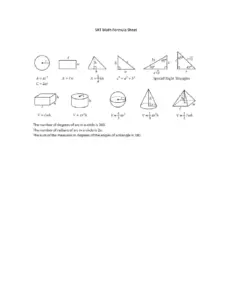
The formula for calculating the area of a rectangle is length multiplied by width.

  • Area = Length × Width
  • For example, if a rectangle has a length of 5 cm and a width of 8 cm, the area would be 40 cm².
  • This formula is fundamental in geometry and is used in various applications, including architecture and design.