Explore over ten exceptional Common App essay examples that showcase diverse backgrounds, challenges, and personal growth. These essays provide insight into how students articulate their identities, values, and experiences, making their applications stand out. Ideal for high school seniors preparing for college applications, these examples cover various prompts and themes, offering inspiration and guidance for crafting compelling narratives. Learn how to effectively convey your unique story and enhance your college application with these illustrative essays.

Key Points

  • Includes over ten diverse Common App essay examples for college applications.
  • Showcases personal growth, challenges, and unique student identities.
  • Provides insights into various Common App prompts and effective responses.
  • Ideal for high school seniors seeking inspiration for their college essays.
Scott Antwi
20 pages
Language:English
Type:Essay
Scott Antwi
20 pages
Language:English
Type:Essay
142
/ 20
10+ OUTSTANDING COMMON APP ESSAY EXAMPLES
If you’re working on your college application, the Common Application prompts are in your
future.
Even if you aren’t using the Common App, many schools require you to answer some version of
the question “Who are you, and what do you value?”
Having helped thousands of students answer this question, I thought it would help to share some
of my favorite Common App essay examples.
But first..
What is the Common Application?
The Common App is the most popular online system used by colleges and universities to help
students apply to their college.
Hundreds of colleges and universities accept the Common App, and using it can save you a ton
of time. Why? The essay you write for the Common App is sent to basically every school that
you apply to.
The Common App essay is 650 words, and you have 7 prompts to pick from. (But note: It
doesn’t matter which prompt you pick. In fact, I recommend you write your essay first and then
choose the prompt to match it.)
Here are those Common App prompts:
1. Some students have a background, identity, interest, or talent that is so meaningful they
believe their application would be incomplete without it. If this sounds like you, then
please share your story.
2. The lessons we take from obstacles we encounter can be fundamental to later success.
Recount a time when you faced a challenge, setback, or failure. How did it affect you,
and what did you learn from the experience?
3. Reflect on a time when you questioned or challenged a belief or idea. What prompted
your thinking? What was the outcome?
4. Reflect on something that someone has done for you that has made you happy or thankful
in a surprising way. How has this gratitude affected or motivated you?
5. Discuss an accomplishment, event, or realization that sparked a period of personal growth
and a new understanding of yourself or others.
6. Describe a topic, idea, or concept you find so engaging that it makes you lose all track of
time. Why does it captivate you? What or who do you turn to when you want to learn
more?
7. Share an essay on any topic of your choice. It can be one you've already written, one that
responds to a different prompt, or one of your own design.
So before diving into our Common App essay examples, here’s what to keep an eye on.
College admissions officers are looking for three things in your essay:
1. Who is this person?
2. Will this person contribute something of value to our campus?
3. Can this person write?
The reader should get a clear picture of what you value and how you’ll put those values into
action.
How do you write a great common app essay?
I’ve got so much to say about this it would make your head spin. But, here are the basics.
1. Brainstorm (I think it’s the most important step).
2. Structure your essay according to your topic.
3. Draft. Revise. Repeat.
If you just want to see some great Common App essay examples, keep scrolling.
Be warned: some of these common application essay examples may inspire you.
Common App Essay Example #1
Home
As I enter the double doors, the smell of freshly rolled biscuits hits me almost instantly. I trace
the fan blades as they swing above me, emitting a low, repetitive hum resembling a faint melody.
After bringing our usual order, the “Tailgate Special,” to the table, my father begins discussing
the recent performance of Apple stock with my mother, myself, and my older eleven year old
sister. Bojangle’s, a Southern establishment well known for its fried chicken and reliable fast
food, is my family’s Friday night restaurant, often accompanied by trips to Eva Perry, the nearby
library. With one hand on my breaded chicken and the other on Nancy Drew: Mystery of
Crocodile Island, I can barely sit still as the thriller unfolds. They’re imprisoned! Reptiles! Not
the enemy’s boat! As I delve into the narrative with a sip of sweet tea, I feel at home.
“Five, six, seven, eight!” As I shout the counts, nineteen dancers grab and begin to spin the
tassels attached to their swords while walking heel-to-toe to the next formation of the classical
Chinese sword dance. A glance at my notebook reveals a collection of worn pages covered with
meticulously planned formations, counts, and movements. Through sharing videos of my
performances with my relatives or discovering and choreographing the nuances of certain
regional dances and their reflection on the region’s distinct culture, I deepen my relationship
with my parents, heritage, and community. When I step on stage, the hours I’ve spent
choreographing, creating poses, teaching, and polishing are all worthwhile, and the stage
becomes my home.
Set temperature. Calibrate. Integrate. Analyze. Set temperature. Calibrate. Integrate. Analyze.
This pulse mimics the beating of my heart, a subtle rhythm that persists each day I come into the
lab. Whether I am working under the fume hood with platinum nanoparticles, manipulating raw
integration data, or spraying a thin platinum film over pieces of copper, it is in Lab 304 in
Hudson Hall that I first feel the distinct sensation, and I’m home. After spending several weeks
attempting to synthesize platinum nanoparticles with a diameter between 10 and 16 nm, I finally
achieve nanoparticles with a diameter of 14.6 nm after carefully monitoring the sulfuric acid
bath. That unmistakable tingling sensation dances up my arm as I scribble into my notebook: I
am overcome with a feeling of unbridled joy.
Styled in a t-shirt, shorts, and a worn, dark green lanyard, I sprint across the quad from the
elective ‘Speaking Arabic through the Rassias Method’ to ‘Knitting Nirvana’. This afternoon is
just one of many at Governor’s School East, where I have been transformed from a high school
student into a philosopher, a thinker, and an avid learner. While I attend GS at Meredith College
for Natural Science, the lessons learned and experiences gained extend far beyond physics
concepts, serial dilutions, and toxicity. I learn to trust myself to have difficult yet necessary
conversations about the political and economic climate. Governor’s School breeds a culture of
inclusivity and multidimensionality, and I am transformed from “girl who is hardworking” or
“science girl” to someone who indulges in the sciences, debates about psychology and the
economy, and loves to swing and salsa dance. As I form a slip knot and cast on, I’m at home.
My home is a dynamic and eclectic entity. Although I’ve lived in the same house in Cary, North
Carolina for 10 years, I have found and carved homes and communities that are filled with and
enriched by tradition, artists, researchers, and intellectuals. While I may not always live within a
5 mile radius of a Bojangle’s or in close proximity to Lab 304, learning to become a more
perceptive daughter and sister, to share the beauty of my heritage, and to take risks and redefine
scientific and personal expectations will continue to impact my sense of home.
Common App Essay Example #2
Easter
It was Easter and we should’ve been celebrating with our family, but my father had locked us in
the house. If he wasn’t going out, neither were my mother and I.
My mother came to the U.S. from Mexico to study English. She’d been an exceptional student
and had a bright future ahead of her. But she fell in love and eloped with the man that eventually
became my father. He loved her in an unhealthy way, and was both physically and verbally
abusive. My mother lacked the courage to start over so she stayed with him and slowly let go of
her dreams and aspirations. But she wouldn’t allow for the same to happen to me.

/ 20
End of Document
142

FAQs

What are the Common App essay prompts available to students?
The Common App offers seven essay prompts for students to choose from. These include topics such as sharing a meaningful background, recounting a challenge faced, reflecting on a belief questioned, and discussing an accomplishment that led to personal growth. Additionally, students can describe a topic they find engaging or write on any topic of their choice. Each essay is limited to 650 words.
What key elements do college admissions officers look for in a Common App essay?
College admissions officers focus on three main aspects when evaluating Common App essays. They seek to understand who the applicant is, whether the applicant will contribute positively to the campus community, and the applicant's writing ability. The essay should provide a clear picture of the applicant's values and how they plan to put those values into action.
How should students approach writing a Common App essay?
Students should start by brainstorming ideas, as this is considered the most important step in the writing process. After brainstorming, they should structure their essay according to the chosen topic, followed by drafting and revising multiple times. It is recommended that students write their essay first before selecting the prompt that best fits their narrative.
What is the significance of the 'Home' essay example in the document?
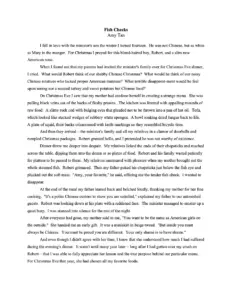
The 'Home' essay example illustrates how the author connects various aspects of their life, including family traditions, cultural heritage, and academic pursuits. It emphasizes the importance of community and personal growth through experiences in different environments, such as their family restaurant and science lab. The narrative showcases how these experiences shape their identity and sense of belonging.
What themes are explored in the 'Easter' essay example?
The 'Easter' essay example explores themes of freedom, independence, and the impact of familial relationships. It recounts the author's journey from being restricted by an abusive father to embracing opportunities for personal growth, such as studying abroad. The essay highlights the author's determination to not let past experiences dictate their future and the empowerment gained through education and travel.
How does the 'Makeup' essay example reflect the author's journey?
In the 'Makeup' essay example, the author shares their passion for cosmetics and how it evolved into a deeper understanding of cosmetic science. Initially embarrassed by their interest, they later embrace it as a means of self-expression and confidence. The essay illustrates their journey from superficiality to a commitment to safety and awareness in the cosmetics industry, showcasing personal growth and intellectual curiosity.
What challenges does the author face in the 'Transformers Are Not Just for Boys' essay?
In the 'Transformers Are Not Just for Boys' essay, the author confronts cultural and gender stereotypes while pursuing their passion for robotics. They face initial doubts about fitting into a male-dominated field and later encounter resistance from authorities when trying to help others in China. The essay highlights their determination to break barriers and promote inclusivity in STEM, despite facing challenges related to gender and cultural expectations.