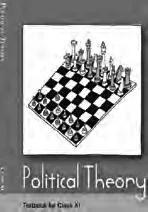
NCERT Class 11 Political Science Part 2 explores key concepts in political theory, including freedom, equality, social justice, rights, citizenship, nationalism, secularism, peace, and development. This resource is essential for students preparing for their Class 11 examinations, providing a comprehensive overview of political ideologies and frameworks. Each chapter delves into significant themes and theories that shape political discourse, making it a valuable tool for understanding contemporary political issues. Ideal for students seeking to enhance their knowledge in political science and succeed in their academic pursuits.
Key Points
Covers essential political concepts such as freedom, equality, and justice for Class 11 students
Includes detailed discussions on rights, citizenship, and nationalism
Explains the significance of secularism and peace in contemporary politics
Focuses on development as a key theme in political theory
This link leads to an external site. We do not know or endorse its content, and are not responsible for its safety. Click the link to proceed only if you trust this site.
India’s External Relations – Political Science OverviewTextbook
PDFOther
NCERT Class 10 ScienceOther
PDFTextbook
Class 9 Math: Exploring Algebraic IdentitiesTextbook
PDFTextbook
Class 9 Hindi – Comprehensive Study GuideTextbook
PDFTextbook
Class 9 English – Comprehensive Study GuideTextbook
PDFTextbook
Maths Class 9 Competency Question BookTextbook
PDFTextbook
Computer Parts – Chapter 2b UpdatedTextbook
PDFTextbook
Introductory Computer Science – Chapter One: Introduction and History of ComputersTextbook
PDFTextbook
The Crisis of Democratic Order – Political Developments in IndiaTextbook
PDFTextbook
Freedom – Political TheoryTextbook
FAQs
What are the main themes discussed in NCERT Class 11 Political Science Part 2?
The textbook covers several key themes in political science, including political theory, freedom, equality, social justice, rights, citizenship, nationalism, secularism, peace, and development. Each theme is explored in detail, providing foundational concepts and discussions relevant to understanding political structures and ideologies.
How does the textbook define freedom in the context of political theory?
In the textbook, freedom is discussed as a fundamental concept that encompasses various dimensions, including personal, political, and social freedoms. It emphasizes the importance of individual liberty while also addressing the balance between freedom and social responsibility, highlighting how freedom can be constrained by laws and societal norms.
What is the significance of social justice as presented in the textbook?
Social justice is portrayed as a crucial element in achieving a fair and equitable society. The textbook outlines how social justice involves the distribution of resources and opportunities to ensure that all individuals, regardless of their background, have access to rights and benefits. It emphasizes the role of the state in promoting social justice through policies and reforms.
What concepts of citizenship are explored in NCERT Class 11 Political Science Part 2?
The textbook explores citizenship as a legal status that grants individuals rights and responsibilities within a state. It discusses different forms of citizenship, including national and global citizenship, and examines the implications of citizenship on identity, participation in governance, and civic duties.
How does the textbook approach the topic of nationalism?
Nationalism is examined as a powerful political ideology that fosters a sense of belonging and identity among individuals within a nation. The textbook discusses the historical development of nationalism, its various forms, and its impact on state formation and international relations, highlighting both positive and negative aspects.
What role does secularism play in the political framework discussed in the textbook?
Secularism is presented as a principle that advocates for the separation of religion from political affairs. The textbook discusses how secularism aims to ensure equal treatment of all religions by the state, promoting religious freedom and preventing discrimination based on religious beliefs. It highlights the challenges and debates surrounding secularism in various contexts.
What is the relationship between peace and development according to the textbook?
The textbook establishes a connection between peace and development, arguing that sustainable development is essential for maintaining peace within and between nations. It discusses how socio-economic development can reduce conflicts and promote stability, while also addressing the need for peace-building initiatives to support development efforts.